🎉 Up to 70% Off Selected ItemsShop Sale

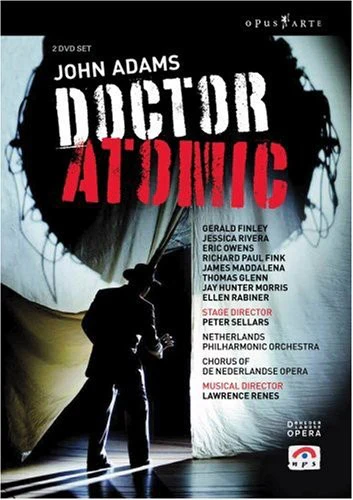
Adams: Doctor Atomic / Finley, Rivera, Renes
Also available on Blu-ray
3243540.zz80_ADAMS_Doctor_Atomic.html
ADAMS Doctor Atomic & • Lawrence Renes, cond; Gerald Finley ( Oppenheimer ); Jessica Rivera ( Kitty ); Eric Owens ( General Groves ); Richard Paul Fink ( Teller ); James Maddalena ( Hubbard ); Thomas Glenn ( Wilson ); Ellen Rabiner ( Pasqualita ); Netherlands PO & Op Ch • BBC/OPUS ARTE 998 (2 DVDs: 168:09)
& Illustrated synopsis; documentaries on opera, cast, composer, and director; interview with director
John Adams has already analyzed Nixon as he visited China and scrutinized terrorists and cruise ship passengers in extremis. Now, Doctor Atomic focuses on the final days of the Manhattan Project as J. Robert Oppenheimer and his colleagues struggle to produce the first atomic bomb. The moral dilemmas presented by that weapon drive the conflict, but though the effects of its future use are made starkly obvious and are central to the purpose of the creators, no conclusion is imposed. Rather, Doctor Atomic is an exploration of the extraordinarily gifted people who, for the cause of good, created a diabolical device that irrevocably changed them and the world that summer of 1945.
Long-time Adams collaborator Peter Sellars fashioned the libretto. Using historical sources throughout, he gives the work a strongly documentary flavor, allowing the viewer to piece together the events, personalities, and conflicts. However, it is Sellars’s use of poetry that is the most striking. Oppenheimer makes love to his wife Kitty with Baudelaire’s sensual verse, and quotes him again as the final countdown stretches time agonizingly. Kitty voices Muriel Rukeyser’s vision of peace in a world facing inescapable death. Pasqualita sings evocative Native American verse as a lullaby; and the atomic blast is anticipated with quotes from the Bhagavad Gita . In the finale to act I—a stunning piece of theater—Oppenheimer cries out his personal agony in the words of John Donne’s sonnet “Batter my heart,” as the enemy, the “Gadget,” hangs shrouded Ark-like behind him. That many of these poems and poets were significant to Oppenheimer—the Donne sonnet inspired the project’s code name “Trinity,” and he learned Sanskrit in order to read the Bhagavad Gita —adds yet another layer to this strikingly profound work.
The role of the intense and driven Oppenheimer was created by Gerald Finley, a singer who inhabits every part with his superb acting and his tightly focused, richly expressive baritone. Other excellent artists from the San Francisco Opera premiere include sonorous bass Richard Paul Fink, a Mephistophelian Edward Teller, cynical and provocative; lyric tenor Thomas Glenn, whose sensitively performed Robert Wilson is uneasy but likeable; baritone Eric Owens, a physically and vocally imposing General Leslie Groves, the no-nonsense military commander of the project; and baritone James Maddalena—Nixon in Adams’s earlier opera—a long-suffering meteorologist Jack Hubbard. New to this production are mezzo-soprano Jessica Rivera and contralto Ellen Rabiner. Rivera’s Cassandra-like Kitty Oppenheimer, the conscience of the work, is vocally vivid, though some of the acting seems posed. Pasqualita, the Oppenheimer’s Tewa Indian housekeeper, is the only fictional character. Rabiner sings her role with a rich, if not always steady, voice, balancing Kitty’s intensity with quiet compassion. The fine Netherlands Opera Chorus, playing scientists and project personnel, serves as Greek chorus, intoning the opening scientific credo, chanting the targets, crying out in fright at the vision of Vishnu and staring into the blast in stunned silence at the culminating moment.
Edgard Varèse and 1950s science-fiction movie scores are John Adams’s acknowledged inspirations, and the combination is winning. The ostinatos of traditional minimalism are used sparingly and are often disjointed and irregular, creating an undercurrent of disequilibrium. More often, Adams employs extended chords, late Romantic in their chromatic richness, punctuated with bells, shrieks of brass, snatches of melody, and electronic roars and rumbles. Above this, Adams’s lyrical vocal lines wheel, often fraught with tension. This compelling score is by far the richest and most complex Adams has created.
Not all is perfect. Well as it recreates the anxiety of the night of the test, with its portentous storm, the second act occasionally makes repetitious dramatic points and is in need of some tightening. More troubling, there are a number of visual distractions, especially the rather silly choreography, expressing heaven knows what, and the frenzied video editing with its constant cutting, panning, and zooming, and continual, often shaky, tight close-ups. The editing seems to highlight the mechanics of vocal production as much as the acting and often leaves one with no sense of what is happening on the stage as a whole. Peter Sellars was both stage and video director, so I have to assume these were important parts of his conception. There is much to admire in that vision, but sometimes less is more.
By this time, many interested readers will either have seen the Metropolitan Opera broadcast of this work in the movie theater or heard it on the radio. Despite the similarities in casting and the typically small audience for modern operas, I hope it appears on DVD. This powerful opera deserves the documentation of both directorial visions. This Netherlands Opera production, in any case, should not be overlooked. It presents Sellars’s original concept, more abstract than the Met’s, well sung, conducted, and played, and with several fine performances not reprised in the Met production. Give it a try.
FANFARE: Ronald E. Grames
CAST:
J. Robert Oppenheimer – Gerald Finley
Kitty Oppenheimer – Jessica Rivera
General Leslie Groves – Eric Owens
Edward Teller – Richard Paul Fink
Jack Hubbard – James Maddalena
Robert Wilson – Thomas Glenn
Captain James Nolan – Jay Hunter Morris
Pasqualita – Ellen Rabiner
Bonus:
- Interview with Peter Sellars
- Illustrated synopsis and cast gallery
Picture format: NTSC 16:9 anamorphic
Sound format: Dolby Digital 2.0 / DTS 5.1
Region code: 0 (All Regions)
Menu language: English
Subtitles: English, German, French, Spanish, Dutch
Running time: 228 mins
Number of DVDs: 2
ADAMS Doctor Atomic & • Lawrence Renes, cond; Gerald Finley ( Oppenheimer ); Jessica Rivera ( Kitty ); Eric Owens ( General Groves ); Richard Paul Fink ( Teller ); James Maddalena ( Hubbard ); Thomas Glenn ( Wilson ); Ellen Rabiner ( Pasqualita ); Netherlands PO & Op Ch • BBC/OPUS ARTE 998 (2 DVDs: 168:09)
& Illustrated synopsis; documentaries on opera, cast, composer, and director; interview with director
John Adams has already analyzed Nixon as he visited China and scrutinized terrorists and cruise ship passengers in extremis. Now, Doctor Atomic focuses on the final days of the Manhattan Project as J. Robert Oppenheimer and his colleagues struggle to produce the first atomic bomb. The moral dilemmas presented by that weapon drive the conflict, but though the effects of its future use are made starkly obvious and are central to the purpose of the creators, no conclusion is imposed. Rather, Doctor Atomic is an exploration of the extraordinarily gifted people who, for the cause of good, created a diabolical device that irrevocably changed them and the world that summer of 1945.
Long-time Adams collaborator Peter Sellars fashioned the libretto. Using historical sources throughout, he gives the work a strongly documentary flavor, allowing the viewer to piece together the events, personalities, and conflicts. However, it is Sellars’s use of poetry that is the most striking. Oppenheimer makes love to his wife Kitty with Baudelaire’s sensual verse, and quotes him again as the final countdown stretches time agonizingly. Kitty voices Muriel Rukeyser’s vision of peace in a world facing inescapable death. Pasqualita sings evocative Native American verse as a lullaby; and the atomic blast is anticipated with quotes from the Bhagavad Gita . In the finale to act I—a stunning piece of theater—Oppenheimer cries out his personal agony in the words of John Donne’s sonnet “Batter my heart,” as the enemy, the “Gadget,” hangs shrouded Ark-like behind him. That many of these poems and poets were significant to Oppenheimer—the Donne sonnet inspired the project’s code name “Trinity,” and he learned Sanskrit in order to read the Bhagavad Gita —adds yet another layer to this strikingly profound work.
The role of the intense and driven Oppenheimer was created by Gerald Finley, a singer who inhabits every part with his superb acting and his tightly focused, richly expressive baritone. Other excellent artists from the San Francisco Opera premiere include sonorous bass Richard Paul Fink, a Mephistophelian Edward Teller, cynical and provocative; lyric tenor Thomas Glenn, whose sensitively performed Robert Wilson is uneasy but likeable; baritone Eric Owens, a physically and vocally imposing General Leslie Groves, the no-nonsense military commander of the project; and baritone James Maddalena—Nixon in Adams’s earlier opera—a long-suffering meteorologist Jack Hubbard. New to this production are mezzo-soprano Jessica Rivera and contralto Ellen Rabiner. Rivera’s Cassandra-like Kitty Oppenheimer, the conscience of the work, is vocally vivid, though some of the acting seems posed. Pasqualita, the Oppenheimer’s Tewa Indian housekeeper, is the only fictional character. Rabiner sings her role with a rich, if not always steady, voice, balancing Kitty’s intensity with quiet compassion. The fine Netherlands Opera Chorus, playing scientists and project personnel, serves as Greek chorus, intoning the opening scientific credo, chanting the targets, crying out in fright at the vision of Vishnu and staring into the blast in stunned silence at the culminating moment.
Edgard Varèse and 1950s science-fiction movie scores are John Adams’s acknowledged inspirations, and the combination is winning. The ostinatos of traditional minimalism are used sparingly and are often disjointed and irregular, creating an undercurrent of disequilibrium. More often, Adams employs extended chords, late Romantic in their chromatic richness, punctuated with bells, shrieks of brass, snatches of melody, and electronic roars and rumbles. Above this, Adams’s lyrical vocal lines wheel, often fraught with tension. This compelling score is by far the richest and most complex Adams has created.
Not all is perfect. Well as it recreates the anxiety of the night of the test, with its portentous storm, the second act occasionally makes repetitious dramatic points and is in need of some tightening. More troubling, there are a number of visual distractions, especially the rather silly choreography, expressing heaven knows what, and the frenzied video editing with its constant cutting, panning, and zooming, and continual, often shaky, tight close-ups. The editing seems to highlight the mechanics of vocal production as much as the acting and often leaves one with no sense of what is happening on the stage as a whole. Peter Sellars was both stage and video director, so I have to assume these were important parts of his conception. There is much to admire in that vision, but sometimes less is more.
By this time, many interested readers will either have seen the Metropolitan Opera broadcast of this work in the movie theater or heard it on the radio. Despite the similarities in casting and the typically small audience for modern operas, I hope it appears on DVD. This powerful opera deserves the documentation of both directorial visions. This Netherlands Opera production, in any case, should not be overlooked. It presents Sellars’s original concept, more abstract than the Met’s, well sung, conducted, and played, and with several fine performances not reprised in the Met production. Give it a try.
FANFARE: Ronald E. Grames
CAST:
J. Robert Oppenheimer – Gerald Finley
Kitty Oppenheimer – Jessica Rivera
General Leslie Groves – Eric Owens
Edward Teller – Richard Paul Fink
Jack Hubbard – James Maddalena
Robert Wilson – Thomas Glenn
Captain James Nolan – Jay Hunter Morris
Pasqualita – Ellen Rabiner
Bonus:
- Interview with Peter Sellars
- Illustrated synopsis and cast gallery
Picture format: NTSC 16:9 anamorphic
Sound format: Dolby Digital 2.0 / DTS 5.1
Region code: 0 (All Regions)
Menu language: English
Subtitles: English, German, French, Spanish, Dutch
Running time: 228 mins
Number of DVDs: 2
Also available on Blu-ray
3243540.zz80_ADAMS_Doctor_Atomic.html
ADAMS Doctor Atomic & • Lawrence Renes, cond; Gerald Finley ( Oppenheimer ); Jessica Rivera ( Kitty ); Eric Owens ( General Groves ); Richard Paul Fink ( Teller ); James Maddalena ( Hubbard ); Thomas Glenn ( Wilson ); Ellen Rabiner ( Pasqualita ); Netherlands PO & Op Ch • BBC/OPUS ARTE 998 (2 DVDs: 168:09)
& Illustrated synopsis; documentaries on opera, cast, composer, and director; interview with director
John Adams has already analyzed Nixon as he visited China and scrutinized terrorists and cruise ship passengers in extremis. Now, Doctor Atomic focuses on the final days of the Manhattan Project as J. Robert Oppenheimer and his colleagues struggle to produce the first atomic bomb. The moral dilemmas presented by that weapon drive the conflict, but though the effects of its future use are made starkly obvious and are central to the purpose of the creators, no conclusion is imposed. Rather, Doctor Atomic is an exploration of the extraordinarily gifted people who, for the cause of good, created a diabolical device that irrevocably changed them and the world that summer of 1945.
Long-time Adams collaborator Peter Sellars fashioned the libretto. Using historical sources throughout, he gives the work a strongly documentary flavor, allowing the viewer to piece together the events, personalities, and conflicts. However, it is Sellars’s use of poetry that is the most striking. Oppenheimer makes love to his wife Kitty with Baudelaire’s sensual verse, and quotes him again as the final countdown stretches time agonizingly. Kitty voices Muriel Rukeyser’s vision of peace in a world facing inescapable death. Pasqualita sings evocative Native American verse as a lullaby; and the atomic blast is anticipated with quotes from the Bhagavad Gita . In the finale to act I—a stunning piece of theater—Oppenheimer cries out his personal agony in the words of John Donne’s sonnet “Batter my heart,” as the enemy, the “Gadget,” hangs shrouded Ark-like behind him. That many of these poems and poets were significant to Oppenheimer—the Donne sonnet inspired the project’s code name “Trinity,” and he learned Sanskrit in order to read the Bhagavad Gita —adds yet another layer to this strikingly profound work.
The role of the intense and driven Oppenheimer was created by Gerald Finley, a singer who inhabits every part with his superb acting and his tightly focused, richly expressive baritone. Other excellent artists from the San Francisco Opera premiere include sonorous bass Richard Paul Fink, a Mephistophelian Edward Teller, cynical and provocative; lyric tenor Thomas Glenn, whose sensitively performed Robert Wilson is uneasy but likeable; baritone Eric Owens, a physically and vocally imposing General Leslie Groves, the no-nonsense military commander of the project; and baritone James Maddalena—Nixon in Adams’s earlier opera—a long-suffering meteorologist Jack Hubbard. New to this production are mezzo-soprano Jessica Rivera and contralto Ellen Rabiner. Rivera’s Cassandra-like Kitty Oppenheimer, the conscience of the work, is vocally vivid, though some of the acting seems posed. Pasqualita, the Oppenheimer’s Tewa Indian housekeeper, is the only fictional character. Rabiner sings her role with a rich, if not always steady, voice, balancing Kitty’s intensity with quiet compassion. The fine Netherlands Opera Chorus, playing scientists and project personnel, serves as Greek chorus, intoning the opening scientific credo, chanting the targets, crying out in fright at the vision of Vishnu and staring into the blast in stunned silence at the culminating moment.
Edgard Varèse and 1950s science-fiction movie scores are John Adams’s acknowledged inspirations, and the combination is winning. The ostinatos of traditional minimalism are used sparingly and are often disjointed and irregular, creating an undercurrent of disequilibrium. More often, Adams employs extended chords, late Romantic in their chromatic richness, punctuated with bells, shrieks of brass, snatches of melody, and electronic roars and rumbles. Above this, Adams’s lyrical vocal lines wheel, often fraught with tension. This compelling score is by far the richest and most complex Adams has created.
Not all is perfect. Well as it recreates the anxiety of the night of the test, with its portentous storm, the second act occasionally makes repetitious dramatic points and is in need of some tightening. More troubling, there are a number of visual distractions, especially the rather silly choreography, expressing heaven knows what, and the frenzied video editing with its constant cutting, panning, and zooming, and continual, often shaky, tight close-ups. The editing seems to highlight the mechanics of vocal production as much as the acting and often leaves one with no sense of what is happening on the stage as a whole. Peter Sellars was both stage and video director, so I have to assume these were important parts of his conception. There is much to admire in that vision, but sometimes less is more.
By this time, many interested readers will either have seen the Metropolitan Opera broadcast of this work in the movie theater or heard it on the radio. Despite the similarities in casting and the typically small audience for modern operas, I hope it appears on DVD. This powerful opera deserves the documentation of both directorial visions. This Netherlands Opera production, in any case, should not be overlooked. It presents Sellars’s original concept, more abstract than the Met’s, well sung, conducted, and played, and with several fine performances not reprised in the Met production. Give it a try.
FANFARE: Ronald E. Grames
CAST:
J. Robert Oppenheimer – Gerald Finley
Kitty Oppenheimer – Jessica Rivera
General Leslie Groves – Eric Owens
Edward Teller – Richard Paul Fink
Jack Hubbard – James Maddalena
Robert Wilson – Thomas Glenn
Captain James Nolan – Jay Hunter Morris
Pasqualita – Ellen Rabiner
Bonus:
- Interview with Peter Sellars
- Illustrated synopsis and cast gallery
Picture format: NTSC 16:9 anamorphic
Sound format: Dolby Digital 2.0 / DTS 5.1
Region code: 0 (All Regions)
Menu language: English
Subtitles: English, German, French, Spanish, Dutch
Running time: 228 mins
Number of DVDs: 2
ADAMS Doctor Atomic & • Lawrence Renes, cond; Gerald Finley ( Oppenheimer ); Jessica Rivera ( Kitty ); Eric Owens ( General Groves ); Richard Paul Fink ( Teller ); James Maddalena ( Hubbard ); Thomas Glenn ( Wilson ); Ellen Rabiner ( Pasqualita ); Netherlands PO & Op Ch • BBC/OPUS ARTE 998 (2 DVDs: 168:09)
& Illustrated synopsis; documentaries on opera, cast, composer, and director; interview with director
John Adams has already analyzed Nixon as he visited China and scrutinized terrorists and cruise ship passengers in extremis. Now, Doctor Atomic focuses on the final days of the Manhattan Project as J. Robert Oppenheimer and his colleagues struggle to produce the first atomic bomb. The moral dilemmas presented by that weapon drive the conflict, but though the effects of its future use are made starkly obvious and are central to the purpose of the creators, no conclusion is imposed. Rather, Doctor Atomic is an exploration of the extraordinarily gifted people who, for the cause of good, created a diabolical device that irrevocably changed them and the world that summer of 1945.
Long-time Adams collaborator Peter Sellars fashioned the libretto. Using historical sources throughout, he gives the work a strongly documentary flavor, allowing the viewer to piece together the events, personalities, and conflicts. However, it is Sellars’s use of poetry that is the most striking. Oppenheimer makes love to his wife Kitty with Baudelaire’s sensual verse, and quotes him again as the final countdown stretches time agonizingly. Kitty voices Muriel Rukeyser’s vision of peace in a world facing inescapable death. Pasqualita sings evocative Native American verse as a lullaby; and the atomic blast is anticipated with quotes from the Bhagavad Gita . In the finale to act I—a stunning piece of theater—Oppenheimer cries out his personal agony in the words of John Donne’s sonnet “Batter my heart,” as the enemy, the “Gadget,” hangs shrouded Ark-like behind him. That many of these poems and poets were significant to Oppenheimer—the Donne sonnet inspired the project’s code name “Trinity,” and he learned Sanskrit in order to read the Bhagavad Gita —adds yet another layer to this strikingly profound work.
The role of the intense and driven Oppenheimer was created by Gerald Finley, a singer who inhabits every part with his superb acting and his tightly focused, richly expressive baritone. Other excellent artists from the San Francisco Opera premiere include sonorous bass Richard Paul Fink, a Mephistophelian Edward Teller, cynical and provocative; lyric tenor Thomas Glenn, whose sensitively performed Robert Wilson is uneasy but likeable; baritone Eric Owens, a physically and vocally imposing General Leslie Groves, the no-nonsense military commander of the project; and baritone James Maddalena—Nixon in Adams’s earlier opera—a long-suffering meteorologist Jack Hubbard. New to this production are mezzo-soprano Jessica Rivera and contralto Ellen Rabiner. Rivera’s Cassandra-like Kitty Oppenheimer, the conscience of the work, is vocally vivid, though some of the acting seems posed. Pasqualita, the Oppenheimer’s Tewa Indian housekeeper, is the only fictional character. Rabiner sings her role with a rich, if not always steady, voice, balancing Kitty’s intensity with quiet compassion. The fine Netherlands Opera Chorus, playing scientists and project personnel, serves as Greek chorus, intoning the opening scientific credo, chanting the targets, crying out in fright at the vision of Vishnu and staring into the blast in stunned silence at the culminating moment.
Edgard Varèse and 1950s science-fiction movie scores are John Adams’s acknowledged inspirations, and the combination is winning. The ostinatos of traditional minimalism are used sparingly and are often disjointed and irregular, creating an undercurrent of disequilibrium. More often, Adams employs extended chords, late Romantic in their chromatic richness, punctuated with bells, shrieks of brass, snatches of melody, and electronic roars and rumbles. Above this, Adams’s lyrical vocal lines wheel, often fraught with tension. This compelling score is by far the richest and most complex Adams has created.
Not all is perfect. Well as it recreates the anxiety of the night of the test, with its portentous storm, the second act occasionally makes repetitious dramatic points and is in need of some tightening. More troubling, there are a number of visual distractions, especially the rather silly choreography, expressing heaven knows what, and the frenzied video editing with its constant cutting, panning, and zooming, and continual, often shaky, tight close-ups. The editing seems to highlight the mechanics of vocal production as much as the acting and often leaves one with no sense of what is happening on the stage as a whole. Peter Sellars was both stage and video director, so I have to assume these were important parts of his conception. There is much to admire in that vision, but sometimes less is more.
By this time, many interested readers will either have seen the Metropolitan Opera broadcast of this work in the movie theater or heard it on the radio. Despite the similarities in casting and the typically small audience for modern operas, I hope it appears on DVD. This powerful opera deserves the documentation of both directorial visions. This Netherlands Opera production, in any case, should not be overlooked. It presents Sellars’s original concept, more abstract than the Met’s, well sung, conducted, and played, and with several fine performances not reprised in the Met production. Give it a try.
FANFARE: Ronald E. Grames
CAST:
J. Robert Oppenheimer – Gerald Finley
Kitty Oppenheimer – Jessica Rivera
General Leslie Groves – Eric Owens
Edward Teller – Richard Paul Fink
Jack Hubbard – James Maddalena
Robert Wilson – Thomas Glenn
Captain James Nolan – Jay Hunter Morris
Pasqualita – Ellen Rabiner
Bonus:
- Interview with Peter Sellars
- Illustrated synopsis and cast gallery
Picture format: NTSC 16:9 anamorphic
Sound format: Dolby Digital 2.0 / DTS 5.1
Region code: 0 (All Regions)
Menu language: English
Subtitles: English, German, French, Spanish, Dutch
Running time: 228 mins
Number of DVDs: 2
$10.50
Original: $29.99
-65%Adams: Doctor Atomic / Finley, Rivera, Renes—
$29.99
$10.50Description
Also available on Blu-ray
3243540.zz80_ADAMS_Doctor_Atomic.html
ADAMS Doctor Atomic & • Lawrence Renes, cond; Gerald Finley ( Oppenheimer ); Jessica Rivera ( Kitty ); Eric Owens ( General Groves ); Richard Paul Fink ( Teller ); James Maddalena ( Hubbard ); Thomas Glenn ( Wilson ); Ellen Rabiner ( Pasqualita ); Netherlands PO & Op Ch • BBC/OPUS ARTE 998 (2 DVDs: 168:09)
& Illustrated synopsis; documentaries on opera, cast, composer, and director; interview with director
John Adams has already analyzed Nixon as he visited China and scrutinized terrorists and cruise ship passengers in extremis. Now, Doctor Atomic focuses on the final days of the Manhattan Project as J. Robert Oppenheimer and his colleagues struggle to produce the first atomic bomb. The moral dilemmas presented by that weapon drive the conflict, but though the effects of its future use are made starkly obvious and are central to the purpose of the creators, no conclusion is imposed. Rather, Doctor Atomic is an exploration of the extraordinarily gifted people who, for the cause of good, created a diabolical device that irrevocably changed them and the world that summer of 1945.
Long-time Adams collaborator Peter Sellars fashioned the libretto. Using historical sources throughout, he gives the work a strongly documentary flavor, allowing the viewer to piece together the events, personalities, and conflicts. However, it is Sellars’s use of poetry that is the most striking. Oppenheimer makes love to his wife Kitty with Baudelaire’s sensual verse, and quotes him again as the final countdown stretches time agonizingly. Kitty voices Muriel Rukeyser’s vision of peace in a world facing inescapable death. Pasqualita sings evocative Native American verse as a lullaby; and the atomic blast is anticipated with quotes from the Bhagavad Gita . In the finale to act I—a stunning piece of theater—Oppenheimer cries out his personal agony in the words of John Donne’s sonnet “Batter my heart,” as the enemy, the “Gadget,” hangs shrouded Ark-like behind him. That many of these poems and poets were significant to Oppenheimer—the Donne sonnet inspired the project’s code name “Trinity,” and he learned Sanskrit in order to read the Bhagavad Gita —adds yet another layer to this strikingly profound work.
The role of the intense and driven Oppenheimer was created by Gerald Finley, a singer who inhabits every part with his superb acting and his tightly focused, richly expressive baritone. Other excellent artists from the San Francisco Opera premiere include sonorous bass Richard Paul Fink, a Mephistophelian Edward Teller, cynical and provocative; lyric tenor Thomas Glenn, whose sensitively performed Robert Wilson is uneasy but likeable; baritone Eric Owens, a physically and vocally imposing General Leslie Groves, the no-nonsense military commander of the project; and baritone James Maddalena—Nixon in Adams’s earlier opera—a long-suffering meteorologist Jack Hubbard. New to this production are mezzo-soprano Jessica Rivera and contralto Ellen Rabiner. Rivera’s Cassandra-like Kitty Oppenheimer, the conscience of the work, is vocally vivid, though some of the acting seems posed. Pasqualita, the Oppenheimer’s Tewa Indian housekeeper, is the only fictional character. Rabiner sings her role with a rich, if not always steady, voice, balancing Kitty’s intensity with quiet compassion. The fine Netherlands Opera Chorus, playing scientists and project personnel, serves as Greek chorus, intoning the opening scientific credo, chanting the targets, crying out in fright at the vision of Vishnu and staring into the blast in stunned silence at the culminating moment.
Edgard Varèse and 1950s science-fiction movie scores are John Adams’s acknowledged inspirations, and the combination is winning. The ostinatos of traditional minimalism are used sparingly and are often disjointed and irregular, creating an undercurrent of disequilibrium. More often, Adams employs extended chords, late Romantic in their chromatic richness, punctuated with bells, shrieks of brass, snatches of melody, and electronic roars and rumbles. Above this, Adams’s lyrical vocal lines wheel, often fraught with tension. This compelling score is by far the richest and most complex Adams has created.
Not all is perfect. Well as it recreates the anxiety of the night of the test, with its portentous storm, the second act occasionally makes repetitious dramatic points and is in need of some tightening. More troubling, there are a number of visual distractions, especially the rather silly choreography, expressing heaven knows what, and the frenzied video editing with its constant cutting, panning, and zooming, and continual, often shaky, tight close-ups. The editing seems to highlight the mechanics of vocal production as much as the acting and often leaves one with no sense of what is happening on the stage as a whole. Peter Sellars was both stage and video director, so I have to assume these were important parts of his conception. There is much to admire in that vision, but sometimes less is more.
By this time, many interested readers will either have seen the Metropolitan Opera broadcast of this work in the movie theater or heard it on the radio. Despite the similarities in casting and the typically small audience for modern operas, I hope it appears on DVD. This powerful opera deserves the documentation of both directorial visions. This Netherlands Opera production, in any case, should not be overlooked. It presents Sellars’s original concept, more abstract than the Met’s, well sung, conducted, and played, and with several fine performances not reprised in the Met production. Give it a try.
FANFARE: Ronald E. Grames
CAST:
J. Robert Oppenheimer – Gerald Finley
Kitty Oppenheimer – Jessica Rivera
General Leslie Groves – Eric Owens
Edward Teller – Richard Paul Fink
Jack Hubbard – James Maddalena
Robert Wilson – Thomas Glenn
Captain James Nolan – Jay Hunter Morris
Pasqualita – Ellen Rabiner
Bonus:
- Interview with Peter Sellars
- Illustrated synopsis and cast gallery
Picture format: NTSC 16:9 anamorphic
Sound format: Dolby Digital 2.0 / DTS 5.1
Region code: 0 (All Regions)
Menu language: English
Subtitles: English, German, French, Spanish, Dutch
Running time: 228 mins
Number of DVDs: 2
ADAMS Doctor Atomic & • Lawrence Renes, cond; Gerald Finley ( Oppenheimer ); Jessica Rivera ( Kitty ); Eric Owens ( General Groves ); Richard Paul Fink ( Teller ); James Maddalena ( Hubbard ); Thomas Glenn ( Wilson ); Ellen Rabiner ( Pasqualita ); Netherlands PO & Op Ch • BBC/OPUS ARTE 998 (2 DVDs: 168:09)
& Illustrated synopsis; documentaries on opera, cast, composer, and director; interview with director
John Adams has already analyzed Nixon as he visited China and scrutinized terrorists and cruise ship passengers in extremis. Now, Doctor Atomic focuses on the final days of the Manhattan Project as J. Robert Oppenheimer and his colleagues struggle to produce the first atomic bomb. The moral dilemmas presented by that weapon drive the conflict, but though the effects of its future use are made starkly obvious and are central to the purpose of the creators, no conclusion is imposed. Rather, Doctor Atomic is an exploration of the extraordinarily gifted people who, for the cause of good, created a diabolical device that irrevocably changed them and the world that summer of 1945.
Long-time Adams collaborator Peter Sellars fashioned the libretto. Using historical sources throughout, he gives the work a strongly documentary flavor, allowing the viewer to piece together the events, personalities, and conflicts. However, it is Sellars’s use of poetry that is the most striking. Oppenheimer makes love to his wife Kitty with Baudelaire’s sensual verse, and quotes him again as the final countdown stretches time agonizingly. Kitty voices Muriel Rukeyser’s vision of peace in a world facing inescapable death. Pasqualita sings evocative Native American verse as a lullaby; and the atomic blast is anticipated with quotes from the Bhagavad Gita . In the finale to act I—a stunning piece of theater—Oppenheimer cries out his personal agony in the words of John Donne’s sonnet “Batter my heart,” as the enemy, the “Gadget,” hangs shrouded Ark-like behind him. That many of these poems and poets were significant to Oppenheimer—the Donne sonnet inspired the project’s code name “Trinity,” and he learned Sanskrit in order to read the Bhagavad Gita —adds yet another layer to this strikingly profound work.
The role of the intense and driven Oppenheimer was created by Gerald Finley, a singer who inhabits every part with his superb acting and his tightly focused, richly expressive baritone. Other excellent artists from the San Francisco Opera premiere include sonorous bass Richard Paul Fink, a Mephistophelian Edward Teller, cynical and provocative; lyric tenor Thomas Glenn, whose sensitively performed Robert Wilson is uneasy but likeable; baritone Eric Owens, a physically and vocally imposing General Leslie Groves, the no-nonsense military commander of the project; and baritone James Maddalena—Nixon in Adams’s earlier opera—a long-suffering meteorologist Jack Hubbard. New to this production are mezzo-soprano Jessica Rivera and contralto Ellen Rabiner. Rivera’s Cassandra-like Kitty Oppenheimer, the conscience of the work, is vocally vivid, though some of the acting seems posed. Pasqualita, the Oppenheimer’s Tewa Indian housekeeper, is the only fictional character. Rabiner sings her role with a rich, if not always steady, voice, balancing Kitty’s intensity with quiet compassion. The fine Netherlands Opera Chorus, playing scientists and project personnel, serves as Greek chorus, intoning the opening scientific credo, chanting the targets, crying out in fright at the vision of Vishnu and staring into the blast in stunned silence at the culminating moment.
Edgard Varèse and 1950s science-fiction movie scores are John Adams’s acknowledged inspirations, and the combination is winning. The ostinatos of traditional minimalism are used sparingly and are often disjointed and irregular, creating an undercurrent of disequilibrium. More often, Adams employs extended chords, late Romantic in their chromatic richness, punctuated with bells, shrieks of brass, snatches of melody, and electronic roars and rumbles. Above this, Adams’s lyrical vocal lines wheel, often fraught with tension. This compelling score is by far the richest and most complex Adams has created.
Not all is perfect. Well as it recreates the anxiety of the night of the test, with its portentous storm, the second act occasionally makes repetitious dramatic points and is in need of some tightening. More troubling, there are a number of visual distractions, especially the rather silly choreography, expressing heaven knows what, and the frenzied video editing with its constant cutting, panning, and zooming, and continual, often shaky, tight close-ups. The editing seems to highlight the mechanics of vocal production as much as the acting and often leaves one with no sense of what is happening on the stage as a whole. Peter Sellars was both stage and video director, so I have to assume these were important parts of his conception. There is much to admire in that vision, but sometimes less is more.
By this time, many interested readers will either have seen the Metropolitan Opera broadcast of this work in the movie theater or heard it on the radio. Despite the similarities in casting and the typically small audience for modern operas, I hope it appears on DVD. This powerful opera deserves the documentation of both directorial visions. This Netherlands Opera production, in any case, should not be overlooked. It presents Sellars’s original concept, more abstract than the Met’s, well sung, conducted, and played, and with several fine performances not reprised in the Met production. Give it a try.
FANFARE: Ronald E. Grames
CAST:
J. Robert Oppenheimer – Gerald Finley
Kitty Oppenheimer – Jessica Rivera
General Leslie Groves – Eric Owens
Edward Teller – Richard Paul Fink
Jack Hubbard – James Maddalena
Robert Wilson – Thomas Glenn
Captain James Nolan – Jay Hunter Morris
Pasqualita – Ellen Rabiner
Bonus:
- Interview with Peter Sellars
- Illustrated synopsis and cast gallery
Picture format: NTSC 16:9 anamorphic
Sound format: Dolby Digital 2.0 / DTS 5.1
Region code: 0 (All Regions)
Menu language: English
Subtitles: English, German, French, Spanish, Dutch
Running time: 228 mins
Number of DVDs: 2