🎉 Up to 70% Off Selected ItemsShop Sale

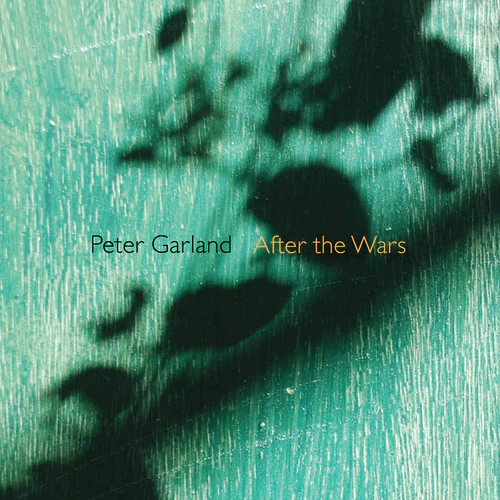
After the Wars
Peter Garland is a composer, world traveler, musicologist, writer whose music is always informed by his well-traveled ear and strong sense of personal vision. (His music has appeared on five previous Cold Blue CDs.) After the Wars, a resonant, sometimes clangorous four-movement piano solo performed by new-music champion Sarah Cahill, displays a unique sense of grace and a sincerity of expression. Garland writes about the piece: “Each of the transparent and self-contained movements takes as inspiration a Chinese poem or Japanese haiku.... I explore the quality of resonance in the piano: not just the notes played on the keyboard, but the sense of echo and fade produced by a very deliberate use of pedaling, and the sustaining and release of piano keys after notes and chords are sounded. It creates a sense of timbral color and acoustic perspective (proximity and distance).... Each movement is like a single image, simply stated with relatively little temporal or thematic development—very much like the poems they are based on.” After the Wars is a 20-minute CD EP/single. MusicWeb Int’l wrote of it, “There is an interesting use of space and time in this work. On the surface, it’s quite simple, but the sounds develop over the span of the four movements as you slowly grow accustomed to the underlying structure…and after listening to this disc several times, I wanted to hear more.” Julien Cowley wrote in The Wire, “Pianistic shell bursts interspersed with wounded reflection …. Garland’s After The Wars… alternates ruggedness and delicacy, oppressive weight fringed with luminosity in a powerful evocation of desolation and scarred hope.” And Gapplegate Classical-Modern Review wrote, “Garland weaves a web of expressive, muted magic and we readily fall under its spell. Very recommended.”
Peter Garland is a composer, world traveler, musicologist, writer whose music is always informed by his well-traveled ear and strong sense of personal vision. (His music has appeared on five previous Cold Blue CDs.) After the Wars, a resonant, sometimes clangorous four-movement piano solo performed by new-music champion Sarah Cahill, displays a unique sense of grace and a sincerity of expression. Garland writes about the piece: “Each of the transparent and self-contained movements takes as inspiration a Chinese poem or Japanese haiku.... I explore the quality of resonance in the piano: not just the notes played on the keyboard, but the sense of echo and fade produced by a very deliberate use of pedaling, and the sustaining and release of piano keys after notes and chords are sounded. It creates a sense of timbral color and acoustic perspective (proximity and distance).... Each movement is like a single image, simply stated with relatively little temporal or thematic development—very much like the poems they are based on.” After the Wars is a 20-minute CD EP/single. MusicWeb Int’l wrote of it, “There is an interesting use of space and time in this work. On the surface, it’s quite simple, but the sounds develop over the span of the four movements as you slowly grow accustomed to the underlying structure…and after listening to this disc several times, I wanted to hear more.” Julien Cowley wrote in The Wire, “Pianistic shell bursts interspersed with wounded reflection …. Garland’s After The Wars… alternates ruggedness and delicacy, oppressive weight fringed with luminosity in a powerful evocation of desolation and scarred hope.” And Gapplegate Classical-Modern Review wrote, “Garland weaves a web of expressive, muted magic and we readily fall under its spell. Very recommended.”
$5.49
After the Wars—
$5.49
Description
Peter Garland is a composer, world traveler, musicologist, writer whose music is always informed by his well-traveled ear and strong sense of personal vision. (His music has appeared on five previous Cold Blue CDs.) After the Wars, a resonant, sometimes clangorous four-movement piano solo performed by new-music champion Sarah Cahill, displays a unique sense of grace and a sincerity of expression. Garland writes about the piece: “Each of the transparent and self-contained movements takes as inspiration a Chinese poem or Japanese haiku.... I explore the quality of resonance in the piano: not just the notes played on the keyboard, but the sense of echo and fade produced by a very deliberate use of pedaling, and the sustaining and release of piano keys after notes and chords are sounded. It creates a sense of timbral color and acoustic perspective (proximity and distance).... Each movement is like a single image, simply stated with relatively little temporal or thematic development—very much like the poems they are based on.” After the Wars is a 20-minute CD EP/single. MusicWeb Int’l wrote of it, “There is an interesting use of space and time in this work. On the surface, it’s quite simple, but the sounds develop over the span of the four movements as you slowly grow accustomed to the underlying structure…and after listening to this disc several times, I wanted to hear more.” Julien Cowley wrote in The Wire, “Pianistic shell bursts interspersed with wounded reflection …. Garland’s After The Wars… alternates ruggedness and delicacy, oppressive weight fringed with luminosity in a powerful evocation of desolation and scarred hope.” And Gapplegate Classical-Modern Review wrote, “Garland weaves a web of expressive, muted magic and we readily fall under its spell. Very recommended.”