🎉 Up to 70% Off Selected ItemsShop Sale

1 / 2
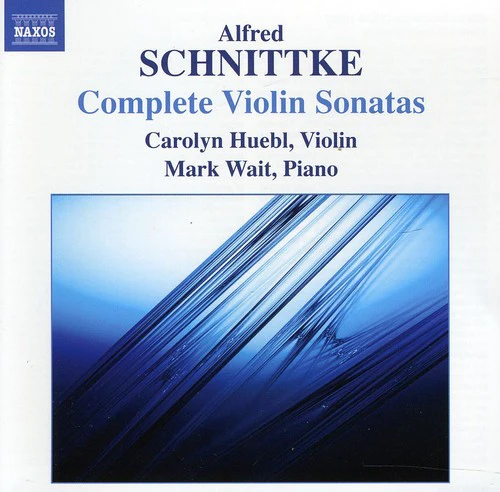
Alfred Schnittke: Complete Violin Sonatas
SCHNITTKE Violin Sonatas: Nos. 1–3. Violin Sonata (1955) • Carolyn Huebl (vn); Mark Wait (pn) • NAXOS 8.570978 (69:20)
The four violin sonatas by Alfred Schnittke (1934–98) could be seen as representing four distinct periods in his life and career. The newly discovered Violin Sonata (1955) was a student work, so it did not receive a place in his official catalog. It anticipates none of Schnittke’s later experimental or dramatically extravagant devices, consisting of a largely romantic first movement featuring an adept and impulsive, if generic, development of his material, and a folk-like second-movement theme subjected to three distinct variations. The so-called First Sonata (1963) is a large leap forward in risk-taking and character, the first movement beginning with a 12-tone theme presented in concisely lyrical and eloquent fashion, followed by a gnomish dance; a reserved, hymnlike movement with Messiaenic piano accompaniment; and a lilting, quasi-fugal finale. The Sonata No. 2 (1968), subtitled “Quasi una Sonata,” was one of his breakthrough works—a single, extended, intuitively designed movement that plays with the conventional relationship between the two instruments, breaks apart and juxtaposes material of varying stylistic demeanor and mood, and employs advanced techniques, especially in the violin. By the time of his Sonata No. 3 (1994), Schnittke had suffered several near-death illnesses and many of his works of this period, such as this one, display a deeply contemplative melancholy and passionate outbursts suggesting a metaphysical struggle. There are moments here, especially in the stark, sparse passages of the final two movements, reminiscent of Shostakovich’s late-in-life violin and viola sonatas.
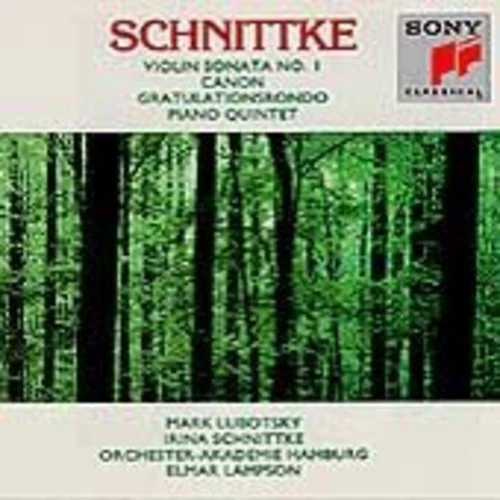
This being the only currently available collection of all four sonatas on a single disc, it is fortunate that violinist Carolyn Huebl and pianist Mark Wait make such a convincing argument for each of these distinctive works. They handle the variety and contrasts of Schnittke’s polystylistic perspective with sensitivity and security, and adapt their impressive tonal resources to every demand the composer makes. It’s a shame that Gidon Kremer, such a strong advocate for Schnittke’s violin concertos, has not (yet?) turned his attention to the sonatas, although he has recorded the orchestral version of the Sonata No. 2 that Schnittke made in 1987. (There is also an orchestral version of the Sonata No. 1, dating from 1968.) For the historically minded, Mark Lubotsky, who premiered the three numbered sonatas, recorded the First and Second for Ondine with pianist Ralf Gothóni, and, on another Ondine disc, documented the Third with the added bonus of the composer’s wife, Irina Schnittke, on piano. The Joanna Kurkowicz/Sergey Schepkin duo has received praise in these pages for their Bridge recording of the first two as well. But if you’re in the market for an engaging and inexpensive introduction to this music, you need look no further.
FANFARE: Art Lange
SCHNITTKE Violin Sonatas: Nos. 1–3. Violin Sonata (1955) • Carolyn Huebl (vn); Mark Wait (pn) • NAXOS 8.570978 (69:20)
The four violin sonatas by Alfred Schnittke (1934–98) could be seen as representing four distinct periods in his life and career. The newly discovered Violin Sonata (1955) was a student work, so it did not receive a place in his official catalog. It anticipates none of Schnittke’s later experimental or dramatically extravagant devices, consisting of a largely romantic first movement featuring an adept and impulsive, if generic, development of his material, and a folk-like second-movement theme subjected to three distinct variations. The so-called First Sonata (1963) is a large leap forward in risk-taking and character, the first movement beginning with a 12-tone theme presented in concisely lyrical and eloquent fashion, followed by a gnomish dance; a reserved, hymnlike movement with Messiaenic piano accompaniment; and a lilting, quasi-fugal finale. The Sonata No. 2 (1968), subtitled “Quasi una Sonata,” was one of his breakthrough works—a single, extended, intuitively designed movement that plays with the conventional relationship between the two instruments, breaks apart and juxtaposes material of varying stylistic demeanor and mood, and employs advanced techniques, especially in the violin. By the time of his Sonata No. 3 (1994), Schnittke had suffered several near-death illnesses and many of his works of this period, such as this one, display a deeply contemplative melancholy and passionate outbursts suggesting a metaphysical struggle. There are moments here, especially in the stark, sparse passages of the final two movements, reminiscent of Shostakovich’s late-in-life violin and viola sonatas.
This being the only currently available collection of all four sonatas on a single disc, it is fortunate that violinist Carolyn Huebl and pianist Mark Wait make such a convincing argument for each of these distinctive works. They handle the variety and contrasts of Schnittke’s polystylistic perspective with sensitivity and security, and adapt their impressive tonal resources to every demand the composer makes. It’s a shame that Gidon Kremer, such a strong advocate for Schnittke’s violin concertos, has not (yet?) turned his attention to the sonatas, although he has recorded the orchestral version of the Sonata No. 2 that Schnittke made in 1987. (There is also an orchestral version of the Sonata No. 1, dating from 1968.) For the historically minded, Mark Lubotsky, who premiered the three numbered sonatas, recorded the First and Second for Ondine with pianist Ralf Gothóni, and, on another Ondine disc, documented the Third with the added bonus of the composer’s wife, Irina Schnittke, on piano. The Joanna Kurkowicz/Sergey Schepkin duo has received praise in these pages for their Bridge recording of the first two as well. But if you’re in the market for an engaging and inexpensive introduction to this music, you need look no further.
FANFARE: Art Lange
$7.00
Original: $19.99
-65%Alfred Schnittke: Complete Violin Sonatas—
$19.99
$7.00Description
SCHNITTKE Violin Sonatas: Nos. 1–3. Violin Sonata (1955) • Carolyn Huebl (vn); Mark Wait (pn) • NAXOS 8.570978 (69:20)
The four violin sonatas by Alfred Schnittke (1934–98) could be seen as representing four distinct periods in his life and career. The newly discovered Violin Sonata (1955) was a student work, so it did not receive a place in his official catalog. It anticipates none of Schnittke’s later experimental or dramatically extravagant devices, consisting of a largely romantic first movement featuring an adept and impulsive, if generic, development of his material, and a folk-like second-movement theme subjected to three distinct variations. The so-called First Sonata (1963) is a large leap forward in risk-taking and character, the first movement beginning with a 12-tone theme presented in concisely lyrical and eloquent fashion, followed by a gnomish dance; a reserved, hymnlike movement with Messiaenic piano accompaniment; and a lilting, quasi-fugal finale. The Sonata No. 2 (1968), subtitled “Quasi una Sonata,” was one of his breakthrough works—a single, extended, intuitively designed movement that plays with the conventional relationship between the two instruments, breaks apart and juxtaposes material of varying stylistic demeanor and mood, and employs advanced techniques, especially in the violin. By the time of his Sonata No. 3 (1994), Schnittke had suffered several near-death illnesses and many of his works of this period, such as this one, display a deeply contemplative melancholy and passionate outbursts suggesting a metaphysical struggle. There are moments here, especially in the stark, sparse passages of the final two movements, reminiscent of Shostakovich’s late-in-life violin and viola sonatas.
This being the only currently available collection of all four sonatas on a single disc, it is fortunate that violinist Carolyn Huebl and pianist Mark Wait make such a convincing argument for each of these distinctive works. They handle the variety and contrasts of Schnittke’s polystylistic perspective with sensitivity and security, and adapt their impressive tonal resources to every demand the composer makes. It’s a shame that Gidon Kremer, such a strong advocate for Schnittke’s violin concertos, has not (yet?) turned his attention to the sonatas, although he has recorded the orchestral version of the Sonata No. 2 that Schnittke made in 1987. (There is also an orchestral version of the Sonata No. 1, dating from 1968.) For the historically minded, Mark Lubotsky, who premiered the three numbered sonatas, recorded the First and Second for Ondine with pianist Ralf Gothóni, and, on another Ondine disc, documented the Third with the added bonus of the composer’s wife, Irina Schnittke, on piano. The Joanna Kurkowicz/Sergey Schepkin duo has received praise in these pages for their Bridge recording of the first two as well. But if you’re in the market for an engaging and inexpensive introduction to this music, you need look no further.
FANFARE: Art Lange