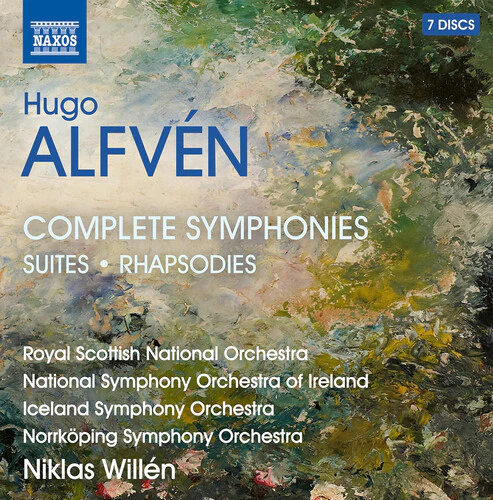
Alfvén: Complete Symphonies; Suites; Rhapsodies / Willén
Hugo Alfvén’s music has always been close to the hearts of the Swedish people, and ranks among some of the most significant and representative of the spirit of the country. Alfvén is known as a cheerful entertainer in compositions such as Den forlorade sonen (‘The Prodigal Son’), but his symphonies reveal a different, more elegiac and often more dramatic side. The success of Alfvén’s symphonies fundamentally changed Sweden’s musical climate and, with a substantial collection of further orchestral music representing his gloriously rich and varied style, these recordings sweep us into the remarkable world of Scandinavian landscape and culture.
Past praise for previously released volumes included in this set:
Symphony No. 5; Andante Religioso / Willén, Norrköping Symphony
The Norrköping Symphony plays with confidence and fervor. Alfvén was nothing if not expansive, and if his formal touch was never all that deft, he did know how to fill up time with arresting ideas, glowingly scored. A serenely lovely Andante religioso makes a perfect encore, one that puts the finale of the symphony’s straining for heroic effect in its proper perspective in the gentlest and most affecting way. Naxos’ sonics for this production are also excellent. Very enjoyable indeed.
-- ClassicsToday.com (David Hurwitz)
The Prodigal Son, Symphony No. 2 in D major, Op. 11 / Willén, Ireland NSO
Listen as Niklas Willén teases the skittish polka from “The Prodigal Son” ballet suite, or steers his players through the vehement fugue that rounds out his Symphony No. 2, and you’ll appreciate why this release commands unreserved praise. These works come to life in Willén’s hands.
Willén’s reading of the Symphony's Andante conjures a huge range of textures and sonorities, with the dark-hued horns and sombre lower winds particularly impressive. The players give all they have in music that’s probably new to them, and that extra effort is just one of the factors that makes these performances so compelling.
-- ClassicsToday.com (10/10; David Hurwitz)
Symphony No. 3; Skerries; Dalecarlien Rhapsody / Willén, RNSO
If you haven’t heard these charming, folk-music-inspired gems of late Romantic music, then here’s an excellent place to start. The Symphony also sounds consistently fresh and lively, though it’s hard to shake the impression that the composer was happier writing programmatic works in free form than in indulging the more intellectual rigors of symphonic development. In Willén’s sympathetic hands, however, none of its four movements outstays its welcome. In any event, the Royal Scottish National Orchestra plays with confidence and evident enjoyment, and the recorded sound is very good.
-- ClassicsToday.com
Hugo Alfvén’s music has always been close to the hearts of the Swedish people, and ranks among some of the most significant and representative of the spirit of the country. Alfvén is known as a cheerful entertainer in compositions such as Den forlorade sonen (‘The Prodigal Son’), but his symphonies reveal a different, more elegiac and often more dramatic side. The success of Alfvén’s symphonies fundamentally changed Sweden’s musical climate and, with a substantial collection of further orchestral music representing his gloriously rich and varied style, these recordings sweep us into the remarkable world of Scandinavian landscape and culture.
Past praise for previously released volumes included in this set:
Symphony No. 5; Andante Religioso / Willén, Norrköping Symphony
The Norrköping Symphony plays with confidence and fervor. Alfvén was nothing if not expansive, and if his formal touch was never all that deft, he did know how to fill up time with arresting ideas, glowingly scored. A serenely lovely Andante religioso makes a perfect encore, one that puts the finale of the symphony’s straining for heroic effect in its proper perspective in the gentlest and most affecting way. Naxos’ sonics for this production are also excellent. Very enjoyable indeed.
-- ClassicsToday.com (David Hurwitz)
The Prodigal Son, Symphony No. 2 in D major, Op. 11 / Willén, Ireland NSO
Listen as Niklas Willén teases the skittish polka from “The Prodigal Son” ballet suite, or steers his players through the vehement fugue that rounds out his Symphony No. 2, and you’ll appreciate why this release commands unreserved praise. These works come to life in Willén’s hands.
Willén’s reading of the Symphony's Andante conjures a huge range of textures and sonorities, with the dark-hued horns and sombre lower winds particularly impressive. The players give all they have in music that’s probably new to them, and that extra effort is just one of the factors that makes these performances so compelling.
-- ClassicsToday.com (10/10; David Hurwitz)
Symphony No. 3; Skerries; Dalecarlien Rhapsody / Willén, RNSO
If you haven’t heard these charming, folk-music-inspired gems of late Romantic music, then here’s an excellent place to start. The Symphony also sounds consistently fresh and lively, though it’s hard to shake the impression that the composer was happier writing programmatic works in free form than in indulging the more intellectual rigors of symphonic development. In Willén’s sympathetic hands, however, none of its four movements outstays its welcome. In any event, the Royal Scottish National Orchestra plays with confidence and evident enjoyment, and the recorded sound is very good.
-- ClassicsToday.com
Original: $38.99
-65%$38.99
$13.65Description
Hugo Alfvén’s music has always been close to the hearts of the Swedish people, and ranks among some of the most significant and representative of the spirit of the country. Alfvén is known as a cheerful entertainer in compositions such as Den forlorade sonen (‘The Prodigal Son’), but his symphonies reveal a different, more elegiac and often more dramatic side. The success of Alfvén’s symphonies fundamentally changed Sweden’s musical climate and, with a substantial collection of further orchestral music representing his gloriously rich and varied style, these recordings sweep us into the remarkable world of Scandinavian landscape and culture.
Past praise for previously released volumes included in this set:
Symphony No. 5; Andante Religioso / Willén, Norrköping Symphony
The Norrköping Symphony plays with confidence and fervor. Alfvén was nothing if not expansive, and if his formal touch was never all that deft, he did know how to fill up time with arresting ideas, glowingly scored. A serenely lovely Andante religioso makes a perfect encore, one that puts the finale of the symphony’s straining for heroic effect in its proper perspective in the gentlest and most affecting way. Naxos’ sonics for this production are also excellent. Very enjoyable indeed.
-- ClassicsToday.com (David Hurwitz)
The Prodigal Son, Symphony No. 2 in D major, Op. 11 / Willén, Ireland NSO
Listen as Niklas Willén teases the skittish polka from “The Prodigal Son” ballet suite, or steers his players through the vehement fugue that rounds out his Symphony No. 2, and you’ll appreciate why this release commands unreserved praise. These works come to life in Willén’s hands.
Willén’s reading of the Symphony's Andante conjures a huge range of textures and sonorities, with the dark-hued horns and sombre lower winds particularly impressive. The players give all they have in music that’s probably new to them, and that extra effort is just one of the factors that makes these performances so compelling.
-- ClassicsToday.com (10/10; David Hurwitz)
Symphony No. 3; Skerries; Dalecarlien Rhapsody / Willén, RNSO
If you haven’t heard these charming, folk-music-inspired gems of late Romantic music, then here’s an excellent place to start. The Symphony also sounds consistently fresh and lively, though it’s hard to shake the impression that the composer was happier writing programmatic works in free form than in indulging the more intellectual rigors of symphonic development. In Willén’s sympathetic hands, however, none of its four movements outstays its welcome. In any event, the Royal Scottish National Orchestra plays with confidence and evident enjoyment, and the recorded sound is very good.
-- ClassicsToday.com