🎉 Up to 70% Off Selected ItemsShop Sale

1 / 2
Algonguin / Cecil Taylor - Great Performances From The Library Of Congress 18
You don't listen to Cecil Taylor (my favorite living pianist) as much as experience him. More often than not he begins one of his extended solo or group pieces with thematic cells stated in quiet, restless octaves, single notes, or sparse clusters of chords. Since the early 1980s he's been sneaking in bits of spoken word. As he gets going, the material slips and slides up and down several octaves and eventually envelops the entire instrument at super speeds. A musician friend of mine once described Taylor's high-velocity keyboard prowess as treating the piano like a punching bag. That's not really true. There's certainly a percussive side to Taylor's decisive, frighteningly ambidextrous articulation, yet the phrase shapes always seem to arise from melodic impulses no matter how fast they transpire. Think of Erroll Garner's rolling, unpredictable solo introductions blown up to feature size, and you'll realize that Taylor is not so avant-garde as he appears on the surface.
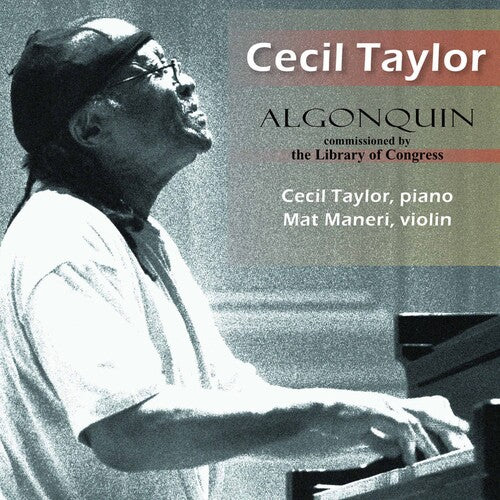
Algonquin, commissioned for the Library of Congress and premiered there on February 12, 1999, features the pianist in duet with violinist Mat Maneri. The 55-minute performance is typical of Taylor's collaborative modus operandi in that he plays the way he plays, and the rest of you try to fit in. Rather than offer a violinistic counterpart to Taylor's virtuosity and visceral power, Maneri courageously sticks to his understated, soft-spoken style, which fuses free jazz, traditional folk fiddling, and baroque bowing techniques in a compelling, organic whole. He also employs an electronic pedal that expands the violin's range below its unplugged parameters into viola and cello territory.
Two larger duet sections bracket a pair of unaccompanied solos that reveal each player's mature lyrical inventiveness to telling advantage. That said, I don't think Maneri challenges Taylor to the extent that more dynamic or iconoclastic improvisers have done in the past. Cases in point include Taylor's stimulating recorded collaborations with guitarist Derek Bailey, his wide-ranging duets with percussionist Max Roach, and the 1998 trio session with tenor saxophonist Dewey Redman and the late, great drum icon Elvin Jones--plus, of course, his working trio from the '60s and '70s that included alto saxophonist Jimmy Lyons and percussionist Andrew Cyrille.
Newcomers to Cecil Taylor's unique artistry should start with one of his extended live solo performances on CD, like Silent Tongues (Freedom/Black Lion), Air Above Mountains (Enja), or Erzulie Maketh Scent (FMP). Get to know these discs first, then investigate the Bridge release. The engineering is of good archival quality, and the annotations cogently discuss this performance in the context of Taylor's long career.
--Jed Distler, ClassicsToday.com
Algonquin, commissioned for the Library of Congress and premiered there on February 12, 1999, features the pianist in duet with violinist Mat Maneri. The 55-minute performance is typical of Taylor's collaborative modus operandi in that he plays the way he plays, and the rest of you try to fit in. Rather than offer a violinistic counterpart to Taylor's virtuosity and visceral power, Maneri courageously sticks to his understated, soft-spoken style, which fuses free jazz, traditional folk fiddling, and baroque bowing techniques in a compelling, organic whole. He also employs an electronic pedal that expands the violin's range below its unplugged parameters into viola and cello territory.
Two larger duet sections bracket a pair of unaccompanied solos that reveal each player's mature lyrical inventiveness to telling advantage. That said, I don't think Maneri challenges Taylor to the extent that more dynamic or iconoclastic improvisers have done in the past. Cases in point include Taylor's stimulating recorded collaborations with guitarist Derek Bailey, his wide-ranging duets with percussionist Max Roach, and the 1998 trio session with tenor saxophonist Dewey Redman and the late, great drum icon Elvin Jones--plus, of course, his working trio from the '60s and '70s that included alto saxophonist Jimmy Lyons and percussionist Andrew Cyrille.
Newcomers to Cecil Taylor's unique artistry should start with one of his extended live solo performances on CD, like Silent Tongues (Freedom/Black Lion), Air Above Mountains (Enja), or Erzulie Maketh Scent (FMP). Get to know these discs first, then investigate the Bridge release. The engineering is of good archival quality, and the annotations cogently discuss this performance in the context of Taylor's long career.
--Jed Distler, ClassicsToday.com
You don't listen to Cecil Taylor (my favorite living pianist) as much as experience him. More often than not he begins one of his extended solo or group pieces with thematic cells stated in quiet, restless octaves, single notes, or sparse clusters of chords. Since the early 1980s he's been sneaking in bits of spoken word. As he gets going, the material slips and slides up and down several octaves and eventually envelops the entire instrument at super speeds. A musician friend of mine once described Taylor's high-velocity keyboard prowess as treating the piano like a punching bag. That's not really true. There's certainly a percussive side to Taylor's decisive, frighteningly ambidextrous articulation, yet the phrase shapes always seem to arise from melodic impulses no matter how fast they transpire. Think of Erroll Garner's rolling, unpredictable solo introductions blown up to feature size, and you'll realize that Taylor is not so avant-garde as he appears on the surface.
Algonquin, commissioned for the Library of Congress and premiered there on February 12, 1999, features the pianist in duet with violinist Mat Maneri. The 55-minute performance is typical of Taylor's collaborative modus operandi in that he plays the way he plays, and the rest of you try to fit in. Rather than offer a violinistic counterpart to Taylor's virtuosity and visceral power, Maneri courageously sticks to his understated, soft-spoken style, which fuses free jazz, traditional folk fiddling, and baroque bowing techniques in a compelling, organic whole. He also employs an electronic pedal that expands the violin's range below its unplugged parameters into viola and cello territory.
Two larger duet sections bracket a pair of unaccompanied solos that reveal each player's mature lyrical inventiveness to telling advantage. That said, I don't think Maneri challenges Taylor to the extent that more dynamic or iconoclastic improvisers have done in the past. Cases in point include Taylor's stimulating recorded collaborations with guitarist Derek Bailey, his wide-ranging duets with percussionist Max Roach, and the 1998 trio session with tenor saxophonist Dewey Redman and the late, great drum icon Elvin Jones--plus, of course, his working trio from the '60s and '70s that included alto saxophonist Jimmy Lyons and percussionist Andrew Cyrille.
Newcomers to Cecil Taylor's unique artistry should start with one of his extended live solo performances on CD, like Silent Tongues (Freedom/Black Lion), Air Above Mountains (Enja), or Erzulie Maketh Scent (FMP). Get to know these discs first, then investigate the Bridge release. The engineering is of good archival quality, and the annotations cogently discuss this performance in the context of Taylor's long career.
--Jed Distler, ClassicsToday.com
Algonquin, commissioned for the Library of Congress and premiered there on February 12, 1999, features the pianist in duet with violinist Mat Maneri. The 55-minute performance is typical of Taylor's collaborative modus operandi in that he plays the way he plays, and the rest of you try to fit in. Rather than offer a violinistic counterpart to Taylor's virtuosity and visceral power, Maneri courageously sticks to his understated, soft-spoken style, which fuses free jazz, traditional folk fiddling, and baroque bowing techniques in a compelling, organic whole. He also employs an electronic pedal that expands the violin's range below its unplugged parameters into viola and cello territory.
Two larger duet sections bracket a pair of unaccompanied solos that reveal each player's mature lyrical inventiveness to telling advantage. That said, I don't think Maneri challenges Taylor to the extent that more dynamic or iconoclastic improvisers have done in the past. Cases in point include Taylor's stimulating recorded collaborations with guitarist Derek Bailey, his wide-ranging duets with percussionist Max Roach, and the 1998 trio session with tenor saxophonist Dewey Redman and the late, great drum icon Elvin Jones--plus, of course, his working trio from the '60s and '70s that included alto saxophonist Jimmy Lyons and percussionist Andrew Cyrille.
Newcomers to Cecil Taylor's unique artistry should start with one of his extended live solo performances on CD, like Silent Tongues (Freedom/Black Lion), Air Above Mountains (Enja), or Erzulie Maketh Scent (FMP). Get to know these discs first, then investigate the Bridge release. The engineering is of good archival quality, and the annotations cogently discuss this performance in the context of Taylor's long career.
--Jed Distler, ClassicsToday.com
$18.99
Algonguin / Cecil Taylor - Great Performances From The Library Of Congress 18—
$18.99
Description
You don't listen to Cecil Taylor (my favorite living pianist) as much as experience him. More often than not he begins one of his extended solo or group pieces with thematic cells stated in quiet, restless octaves, single notes, or sparse clusters of chords. Since the early 1980s he's been sneaking in bits of spoken word. As he gets going, the material slips and slides up and down several octaves and eventually envelops the entire instrument at super speeds. A musician friend of mine once described Taylor's high-velocity keyboard prowess as treating the piano like a punching bag. That's not really true. There's certainly a percussive side to Taylor's decisive, frighteningly ambidextrous articulation, yet the phrase shapes always seem to arise from melodic impulses no matter how fast they transpire. Think of Erroll Garner's rolling, unpredictable solo introductions blown up to feature size, and you'll realize that Taylor is not so avant-garde as he appears on the surface.
Algonquin, commissioned for the Library of Congress and premiered there on February 12, 1999, features the pianist in duet with violinist Mat Maneri. The 55-minute performance is typical of Taylor's collaborative modus operandi in that he plays the way he plays, and the rest of you try to fit in. Rather than offer a violinistic counterpart to Taylor's virtuosity and visceral power, Maneri courageously sticks to his understated, soft-spoken style, which fuses free jazz, traditional folk fiddling, and baroque bowing techniques in a compelling, organic whole. He also employs an electronic pedal that expands the violin's range below its unplugged parameters into viola and cello territory.
Two larger duet sections bracket a pair of unaccompanied solos that reveal each player's mature lyrical inventiveness to telling advantage. That said, I don't think Maneri challenges Taylor to the extent that more dynamic or iconoclastic improvisers have done in the past. Cases in point include Taylor's stimulating recorded collaborations with guitarist Derek Bailey, his wide-ranging duets with percussionist Max Roach, and the 1998 trio session with tenor saxophonist Dewey Redman and the late, great drum icon Elvin Jones--plus, of course, his working trio from the '60s and '70s that included alto saxophonist Jimmy Lyons and percussionist Andrew Cyrille.
Newcomers to Cecil Taylor's unique artistry should start with one of his extended live solo performances on CD, like Silent Tongues (Freedom/Black Lion), Air Above Mountains (Enja), or Erzulie Maketh Scent (FMP). Get to know these discs first, then investigate the Bridge release. The engineering is of good archival quality, and the annotations cogently discuss this performance in the context of Taylor's long career.
--Jed Distler, ClassicsToday.com
Algonquin, commissioned for the Library of Congress and premiered there on February 12, 1999, features the pianist in duet with violinist Mat Maneri. The 55-minute performance is typical of Taylor's collaborative modus operandi in that he plays the way he plays, and the rest of you try to fit in. Rather than offer a violinistic counterpart to Taylor's virtuosity and visceral power, Maneri courageously sticks to his understated, soft-spoken style, which fuses free jazz, traditional folk fiddling, and baroque bowing techniques in a compelling, organic whole. He also employs an electronic pedal that expands the violin's range below its unplugged parameters into viola and cello territory.
Two larger duet sections bracket a pair of unaccompanied solos that reveal each player's mature lyrical inventiveness to telling advantage. That said, I don't think Maneri challenges Taylor to the extent that more dynamic or iconoclastic improvisers have done in the past. Cases in point include Taylor's stimulating recorded collaborations with guitarist Derek Bailey, his wide-ranging duets with percussionist Max Roach, and the 1998 trio session with tenor saxophonist Dewey Redman and the late, great drum icon Elvin Jones--plus, of course, his working trio from the '60s and '70s that included alto saxophonist Jimmy Lyons and percussionist Andrew Cyrille.
Newcomers to Cecil Taylor's unique artistry should start with one of his extended live solo performances on CD, like Silent Tongues (Freedom/Black Lion), Air Above Mountains (Enja), or Erzulie Maketh Scent (FMP). Get to know these discs first, then investigate the Bridge release. The engineering is of good archival quality, and the annotations cogently discuss this performance in the context of Taylor's long career.
--Jed Distler, ClassicsToday.com