🎉 Up to 70% Off Selected ItemsShop Sale

1 / 2
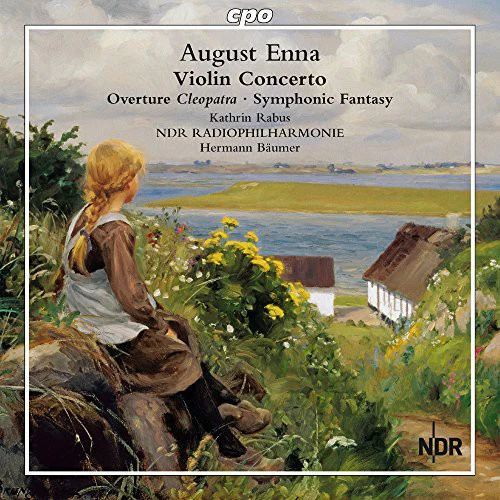
August Enna: Violin Concerto; Overture To Cleopatra; Symphonic Fantasy
Based on Henry Rider Haggard’s novel of the same name, August Enna’s Cleopatra immediately followed Heksen (The Witch), his most successful opera. + In his Violin Concerto, Enna stands with one foot in Nordic music and with the other in the Italian opera. In the second movement, we encounter the work’s greatest surprise: it is introduced by beginning of the famous aria “Vesti la giubba” from Leoncavallo’s Pagliacci, which Enna develops into a highly expressive cantilena. + In his Symphonic Fantasy (1930-31), the composer’s talent for instrumentation, virtually unrivaled in the Danish music of his times, stands out.
Based on Henry Rider Haggard’s novel of the same name, August Enna’s Cleopatra immediately followed Heksen (The Witch), his most successful opera. + In his Violin Concerto, Enna stands with one foot in Nordic music and with the other in the Italian opera. In the second movement, we encounter the work’s greatest surprise: it is introduced by beginning of the famous aria “Vesti la giubba” from Leoncavallo’s Pagliacci, which Enna develops into a highly expressive cantilena. + In his Symphonic Fantasy (1930-31), the composer’s talent for instrumentation, virtually unrivaled in the Danish music of his times, stands out.
$18.99
August Enna: Violin Concerto; Overture To Cleopatra; Symphonic Fantasy—
$18.99
Description
Based on Henry Rider Haggard’s novel of the same name, August Enna’s Cleopatra immediately followed Heksen (The Witch), his most successful opera. + In his Violin Concerto, Enna stands with one foot in Nordic music and with the other in the Italian opera. In the second movement, we encounter the work’s greatest surprise: it is introduced by beginning of the famous aria “Vesti la giubba” from Leoncavallo’s Pagliacci, which Enna develops into a highly expressive cantilena. + In his Symphonic Fantasy (1930-31), the composer’s talent for instrumentation, virtually unrivaled in the Danish music of his times, stands out.