🎉 Up to 70% Off Selected ItemsShop Sale

1 / 2
Avanti l'Opera - An A-Z of Italian Baroque Overtures
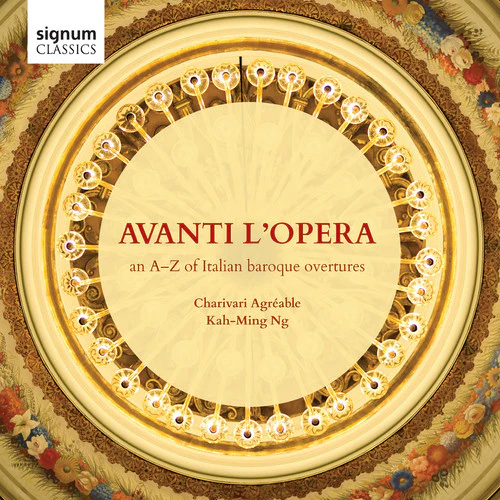
I had the good fortune, last week, to see someone buy this CD in my local music shop. She studied the back of it for some time, scratched her head, and tentatively handed over her credit card to pay for it. The man at the counter said. “You won’t regret this; it is lovely,” to which the lady buying it responded, “I hope so.” I hoped so, too: It promises so much with that glossy front cover.
It is quite a comprehensive anthology of overtures. There are 17 of them in total. The range of composers is also satisfying, from Albioni to Ziani. Music ranges from the outré and the slapstick, to the coy and simple. Alexander Pope, in his large epic The Dunciad, once called Italian opera a “harlot form, with mincing step and languid eye,” which is a witticism amply revealed here in the range of aural tricks. As overtures, they are designed to arrest, and like Pope’s “harlot form” the overture has enough to cover the subject, but little enough to remain interesting. We flit between composers, works, time periods, tones, methodologies, keys and characters throughout the course of CD, and it is a genuine pleasure to be thrown hither and thither. A highlight, for me, was Bononcini’s sad and threatening Cefalo, which is full of a cello player’s sense of darkness.
Great credit has to go to Charivari Agréable, the group whose technical proficiency has given life to a series of very obscure opera overtures. This CD is a worthy companion piece to other opera anthologies, both popular and obscure, since it nestles happily in the genre of “introductory” rather than “exhaustive”: an intention highlighted by the obvious fun the orchestra has with its solo moments and general camaraderie. As a window into the period, it makes one realise just how formulaic and repetitive the vogue for Italian opera could be, but it is also refreshingly representative of the variety and nuances composers could inject into the form. It is a confusing collection, in many ways: Scarlatti, Ariosti, Bononcini, Pasquini, and Ziani on one CD is a little baffling. But, I suggest, that is irrelevant, and that the CD is satisfying regardless.
– Dan Sperrin, Fanfare [5-6/2015]
It is quite a comprehensive anthology of overtures. There are 17 of them in total. The range of composers is also satisfying, from Albioni to Ziani. Music ranges from the outré and the slapstick, to the coy and simple. Alexander Pope, in his large epic The Dunciad, once called Italian opera a “harlot form, with mincing step and languid eye,” which is a witticism amply revealed here in the range of aural tricks. As overtures, they are designed to arrest, and like Pope’s “harlot form” the overture has enough to cover the subject, but little enough to remain interesting. We flit between composers, works, time periods, tones, methodologies, keys and characters throughout the course of CD, and it is a genuine pleasure to be thrown hither and thither. A highlight, for me, was Bononcini’s sad and threatening Cefalo, which is full of a cello player’s sense of darkness.
Great credit has to go to Charivari Agréable, the group whose technical proficiency has given life to a series of very obscure opera overtures. This CD is a worthy companion piece to other opera anthologies, both popular and obscure, since it nestles happily in the genre of “introductory” rather than “exhaustive”: an intention highlighted by the obvious fun the orchestra has with its solo moments and general camaraderie. As a window into the period, it makes one realise just how formulaic and repetitive the vogue for Italian opera could be, but it is also refreshingly representative of the variety and nuances composers could inject into the form. It is a confusing collection, in many ways: Scarlatti, Ariosti, Bononcini, Pasquini, and Ziani on one CD is a little baffling. But, I suggest, that is irrelevant, and that the CD is satisfying regardless.
– Dan Sperrin, Fanfare [5-6/2015]
I had the good fortune, last week, to see someone buy this CD in my local music shop. She studied the back of it for some time, scratched her head, and tentatively handed over her credit card to pay for it. The man at the counter said. “You won’t regret this; it is lovely,” to which the lady buying it responded, “I hope so.” I hoped so, too: It promises so much with that glossy front cover.
It is quite a comprehensive anthology of overtures. There are 17 of them in total. The range of composers is also satisfying, from Albioni to Ziani. Music ranges from the outré and the slapstick, to the coy and simple. Alexander Pope, in his large epic The Dunciad, once called Italian opera a “harlot form, with mincing step and languid eye,” which is a witticism amply revealed here in the range of aural tricks. As overtures, they are designed to arrest, and like Pope’s “harlot form” the overture has enough to cover the subject, but little enough to remain interesting. We flit between composers, works, time periods, tones, methodologies, keys and characters throughout the course of CD, and it is a genuine pleasure to be thrown hither and thither. A highlight, for me, was Bononcini’s sad and threatening Cefalo, which is full of a cello player’s sense of darkness.
Great credit has to go to Charivari Agréable, the group whose technical proficiency has given life to a series of very obscure opera overtures. This CD is a worthy companion piece to other opera anthologies, both popular and obscure, since it nestles happily in the genre of “introductory” rather than “exhaustive”: an intention highlighted by the obvious fun the orchestra has with its solo moments and general camaraderie. As a window into the period, it makes one realise just how formulaic and repetitive the vogue for Italian opera could be, but it is also refreshingly representative of the variety and nuances composers could inject into the form. It is a confusing collection, in many ways: Scarlatti, Ariosti, Bononcini, Pasquini, and Ziani on one CD is a little baffling. But, I suggest, that is irrelevant, and that the CD is satisfying regardless.
– Dan Sperrin, Fanfare [5-6/2015]
It is quite a comprehensive anthology of overtures. There are 17 of them in total. The range of composers is also satisfying, from Albioni to Ziani. Music ranges from the outré and the slapstick, to the coy and simple. Alexander Pope, in his large epic The Dunciad, once called Italian opera a “harlot form, with mincing step and languid eye,” which is a witticism amply revealed here in the range of aural tricks. As overtures, they are designed to arrest, and like Pope’s “harlot form” the overture has enough to cover the subject, but little enough to remain interesting. We flit between composers, works, time periods, tones, methodologies, keys and characters throughout the course of CD, and it is a genuine pleasure to be thrown hither and thither. A highlight, for me, was Bononcini’s sad and threatening Cefalo, which is full of a cello player’s sense of darkness.
Great credit has to go to Charivari Agréable, the group whose technical proficiency has given life to a series of very obscure opera overtures. This CD is a worthy companion piece to other opera anthologies, both popular and obscure, since it nestles happily in the genre of “introductory” rather than “exhaustive”: an intention highlighted by the obvious fun the orchestra has with its solo moments and general camaraderie. As a window into the period, it makes one realise just how formulaic and repetitive the vogue for Italian opera could be, but it is also refreshingly representative of the variety and nuances composers could inject into the form. It is a confusing collection, in many ways: Scarlatti, Ariosti, Bononcini, Pasquini, and Ziani on one CD is a little baffling. But, I suggest, that is irrelevant, and that the CD is satisfying regardless.
– Dan Sperrin, Fanfare [5-6/2015]
$19.99
Avanti l'Opera - An A-Z of Italian Baroque Overtures—
$19.99
Description
I had the good fortune, last week, to see someone buy this CD in my local music shop. She studied the back of it for some time, scratched her head, and tentatively handed over her credit card to pay for it. The man at the counter said. “You won’t regret this; it is lovely,” to which the lady buying it responded, “I hope so.” I hoped so, too: It promises so much with that glossy front cover.
It is quite a comprehensive anthology of overtures. There are 17 of them in total. The range of composers is also satisfying, from Albioni to Ziani. Music ranges from the outré and the slapstick, to the coy and simple. Alexander Pope, in his large epic The Dunciad, once called Italian opera a “harlot form, with mincing step and languid eye,” which is a witticism amply revealed here in the range of aural tricks. As overtures, they are designed to arrest, and like Pope’s “harlot form” the overture has enough to cover the subject, but little enough to remain interesting. We flit between composers, works, time periods, tones, methodologies, keys and characters throughout the course of CD, and it is a genuine pleasure to be thrown hither and thither. A highlight, for me, was Bononcini’s sad and threatening Cefalo, which is full of a cello player’s sense of darkness.
Great credit has to go to Charivari Agréable, the group whose technical proficiency has given life to a series of very obscure opera overtures. This CD is a worthy companion piece to other opera anthologies, both popular and obscure, since it nestles happily in the genre of “introductory” rather than “exhaustive”: an intention highlighted by the obvious fun the orchestra has with its solo moments and general camaraderie. As a window into the period, it makes one realise just how formulaic and repetitive the vogue for Italian opera could be, but it is also refreshingly representative of the variety and nuances composers could inject into the form. It is a confusing collection, in many ways: Scarlatti, Ariosti, Bononcini, Pasquini, and Ziani on one CD is a little baffling. But, I suggest, that is irrelevant, and that the CD is satisfying regardless.
– Dan Sperrin, Fanfare [5-6/2015]
It is quite a comprehensive anthology of overtures. There are 17 of them in total. The range of composers is also satisfying, from Albioni to Ziani. Music ranges from the outré and the slapstick, to the coy and simple. Alexander Pope, in his large epic The Dunciad, once called Italian opera a “harlot form, with mincing step and languid eye,” which is a witticism amply revealed here in the range of aural tricks. As overtures, they are designed to arrest, and like Pope’s “harlot form” the overture has enough to cover the subject, but little enough to remain interesting. We flit between composers, works, time periods, tones, methodologies, keys and characters throughout the course of CD, and it is a genuine pleasure to be thrown hither and thither. A highlight, for me, was Bononcini’s sad and threatening Cefalo, which is full of a cello player’s sense of darkness.
Great credit has to go to Charivari Agréable, the group whose technical proficiency has given life to a series of very obscure opera overtures. This CD is a worthy companion piece to other opera anthologies, both popular and obscure, since it nestles happily in the genre of “introductory” rather than “exhaustive”: an intention highlighted by the obvious fun the orchestra has with its solo moments and general camaraderie. As a window into the period, it makes one realise just how formulaic and repetitive the vogue for Italian opera could be, but it is also refreshingly representative of the variety and nuances composers could inject into the form. It is a confusing collection, in many ways: Scarlatti, Ariosti, Bononcini, Pasquini, and Ziani on one CD is a little baffling. But, I suggest, that is irrelevant, and that the CD is satisfying regardless.
– Dan Sperrin, Fanfare [5-6/2015]