🎉 Up to 70% Off Selected ItemsShop Sale

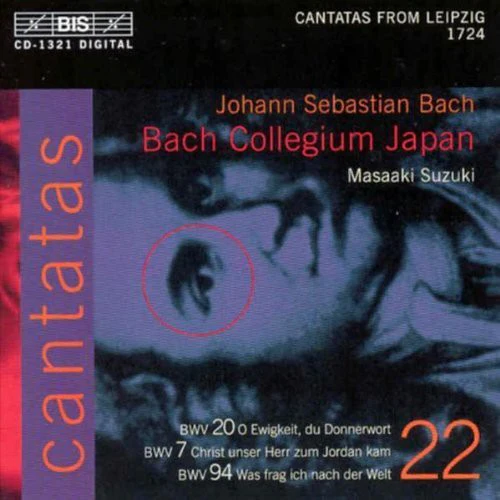
Bach: Cantatas Vol 22 / Suzuki, Bach Collegium Japan
This volume heralds the beginning of the most substantial and ambitious compositional exercise in Bach’s career: an annual series of cantatas in which the composer planned that every Sunday in the church calendar would be identified, textually and musically, by the appropriate chorale for the season. Bach’s second annual cycle – or Jahrgang 2 – was never completed but it contains around 40 chorale cantatas in which, most notably, the first stanza of the chorale is presented variously as an intricate fantasia on the chosen hymn, proclaimed with stirring fervour, usually by the sopranos. While Bach sought new compositional challenges here, he also knew that his boys at St Thomas’s would cope better with familiar chorale-based material than the highly complex choruses which characterise the earlier cycle.
Suzuki’s approach to these cantatas is not strictly chronological as has often been the case. He starts with the first piece in the cycle, the splendid O Ewigkeit, du Donnerwort (No 20), which Bach performed on the first Sunday of Trinity (June 11, 1724) but jumps a week by missing out No 2 (with its strikingly austere stilo antico opening movement) and goes for No 7, and then chooses No 94 from a few weeks later. None of this has much bearing on the performances except that this formula seems to juxtapose deftly the wide range of forms used by Bach. The extended and graphic description of Christ’s baptism in Christ unser Herr zum Jordan kam (No 7), articulated by two concertante violin parts, is contrasted with the dazzling French overture of No 20. If the playing in the former is somewhat prosaic, Suzuki gives the majestic opening movement of O Ewigkeit such apt propulsion in the bass line that one only intermittently yearns for the more secularised elegance of Herreweghe.
It seems curious that two performances of No 20, released so closely, should employ the same tenor and bass soloists in Jan Kobow and Peter Kooy. Suzuki’s approach with both singers is rather more rhetorical than Herreweghe, who tends to irradiate the music for its own sake, enhanced by the cultivated strings of Collegium Vocale. Both have something interesting to say but Suzuki connects language and music with greater depth of sentiment.
As exemplary a work is Was frag ich nach der Welt (No 94), a substantial cantata whose librettist clearly worked in close collaboration with Bach, ensuring that each stanza of the chorale could be presented with disarming invention. The work is as eager to provide telling dramatic imagery as it is to ruminate on the transience of life and Mammon’s vanity. Bach makes instant demands on his virtuoso flute player who, judging by the number of obbligato parts from this period, was no slouch. It is a marvellous, fresh and abiding testament to Bach’s increasing obsession with unified and economical means. Suzuki realises its quizzical turns and relishes the enriching set-pieces.
Pieter Jan Leusink and Ton Koopman’s readings are full of character and ruddy energy (in the case of Koopman and the Amsterdammers, particularly distinguished instrumental performances) but neither can boast Robin Blaze’s commentary on our deluded world, Betorte Welt. All told, another success chalked up for this continually impressive Bach series.
Jonathan Freeman-Attwood, Gramophone [5/2004]
Suzuki’s approach to these cantatas is not strictly chronological as has often been the case. He starts with the first piece in the cycle, the splendid O Ewigkeit, du Donnerwort (No 20), which Bach performed on the first Sunday of Trinity (June 11, 1724) but jumps a week by missing out No 2 (with its strikingly austere stilo antico opening movement) and goes for No 7, and then chooses No 94 from a few weeks later. None of this has much bearing on the performances except that this formula seems to juxtapose deftly the wide range of forms used by Bach. The extended and graphic description of Christ’s baptism in Christ unser Herr zum Jordan kam (No 7), articulated by two concertante violin parts, is contrasted with the dazzling French overture of No 20. If the playing in the former is somewhat prosaic, Suzuki gives the majestic opening movement of O Ewigkeit such apt propulsion in the bass line that one only intermittently yearns for the more secularised elegance of Herreweghe.
It seems curious that two performances of No 20, released so closely, should employ the same tenor and bass soloists in Jan Kobow and Peter Kooy. Suzuki’s approach with both singers is rather more rhetorical than Herreweghe, who tends to irradiate the music for its own sake, enhanced by the cultivated strings of Collegium Vocale. Both have something interesting to say but Suzuki connects language and music with greater depth of sentiment.
As exemplary a work is Was frag ich nach der Welt (No 94), a substantial cantata whose librettist clearly worked in close collaboration with Bach, ensuring that each stanza of the chorale could be presented with disarming invention. The work is as eager to provide telling dramatic imagery as it is to ruminate on the transience of life and Mammon’s vanity. Bach makes instant demands on his virtuoso flute player who, judging by the number of obbligato parts from this period, was no slouch. It is a marvellous, fresh and abiding testament to Bach’s increasing obsession with unified and economical means. Suzuki realises its quizzical turns and relishes the enriching set-pieces.
Pieter Jan Leusink and Ton Koopman’s readings are full of character and ruddy energy (in the case of Koopman and the Amsterdammers, particularly distinguished instrumental performances) but neither can boast Robin Blaze’s commentary on our deluded world, Betorte Welt. All told, another success chalked up for this continually impressive Bach series.
Jonathan Freeman-Attwood, Gramophone [5/2004]
This volume heralds the beginning of the most substantial and ambitious compositional exercise in Bach’s career: an annual series of cantatas in which the composer planned that every Sunday in the church calendar would be identified, textually and musically, by the appropriate chorale for the season. Bach’s second annual cycle – or Jahrgang 2 – was never completed but it contains around 40 chorale cantatas in which, most notably, the first stanza of the chorale is presented variously as an intricate fantasia on the chosen hymn, proclaimed with stirring fervour, usually by the sopranos. While Bach sought new compositional challenges here, he also knew that his boys at St Thomas’s would cope better with familiar chorale-based material than the highly complex choruses which characterise the earlier cycle.
Suzuki’s approach to these cantatas is not strictly chronological as has often been the case. He starts with the first piece in the cycle, the splendid O Ewigkeit, du Donnerwort (No 20), which Bach performed on the first Sunday of Trinity (June 11, 1724) but jumps a week by missing out No 2 (with its strikingly austere stilo antico opening movement) and goes for No 7, and then chooses No 94 from a few weeks later. None of this has much bearing on the performances except that this formula seems to juxtapose deftly the wide range of forms used by Bach. The extended and graphic description of Christ’s baptism in Christ unser Herr zum Jordan kam (No 7), articulated by two concertante violin parts, is contrasted with the dazzling French overture of No 20. If the playing in the former is somewhat prosaic, Suzuki gives the majestic opening movement of O Ewigkeit such apt propulsion in the bass line that one only intermittently yearns for the more secularised elegance of Herreweghe.
It seems curious that two performances of No 20, released so closely, should employ the same tenor and bass soloists in Jan Kobow and Peter Kooy. Suzuki’s approach with both singers is rather more rhetorical than Herreweghe, who tends to irradiate the music for its own sake, enhanced by the cultivated strings of Collegium Vocale. Both have something interesting to say but Suzuki connects language and music with greater depth of sentiment.
As exemplary a work is Was frag ich nach der Welt (No 94), a substantial cantata whose librettist clearly worked in close collaboration with Bach, ensuring that each stanza of the chorale could be presented with disarming invention. The work is as eager to provide telling dramatic imagery as it is to ruminate on the transience of life and Mammon’s vanity. Bach makes instant demands on his virtuoso flute player who, judging by the number of obbligato parts from this period, was no slouch. It is a marvellous, fresh and abiding testament to Bach’s increasing obsession with unified and economical means. Suzuki realises its quizzical turns and relishes the enriching set-pieces.
Pieter Jan Leusink and Ton Koopman’s readings are full of character and ruddy energy (in the case of Koopman and the Amsterdammers, particularly distinguished instrumental performances) but neither can boast Robin Blaze’s commentary on our deluded world, Betorte Welt. All told, another success chalked up for this continually impressive Bach series.
Jonathan Freeman-Attwood, Gramophone [5/2004]
Suzuki’s approach to these cantatas is not strictly chronological as has often been the case. He starts with the first piece in the cycle, the splendid O Ewigkeit, du Donnerwort (No 20), which Bach performed on the first Sunday of Trinity (June 11, 1724) but jumps a week by missing out No 2 (with its strikingly austere stilo antico opening movement) and goes for No 7, and then chooses No 94 from a few weeks later. None of this has much bearing on the performances except that this formula seems to juxtapose deftly the wide range of forms used by Bach. The extended and graphic description of Christ’s baptism in Christ unser Herr zum Jordan kam (No 7), articulated by two concertante violin parts, is contrasted with the dazzling French overture of No 20. If the playing in the former is somewhat prosaic, Suzuki gives the majestic opening movement of O Ewigkeit such apt propulsion in the bass line that one only intermittently yearns for the more secularised elegance of Herreweghe.
It seems curious that two performances of No 20, released so closely, should employ the same tenor and bass soloists in Jan Kobow and Peter Kooy. Suzuki’s approach with both singers is rather more rhetorical than Herreweghe, who tends to irradiate the music for its own sake, enhanced by the cultivated strings of Collegium Vocale. Both have something interesting to say but Suzuki connects language and music with greater depth of sentiment.
As exemplary a work is Was frag ich nach der Welt (No 94), a substantial cantata whose librettist clearly worked in close collaboration with Bach, ensuring that each stanza of the chorale could be presented with disarming invention. The work is as eager to provide telling dramatic imagery as it is to ruminate on the transience of life and Mammon’s vanity. Bach makes instant demands on his virtuoso flute player who, judging by the number of obbligato parts from this period, was no slouch. It is a marvellous, fresh and abiding testament to Bach’s increasing obsession with unified and economical means. Suzuki realises its quizzical turns and relishes the enriching set-pieces.
Pieter Jan Leusink and Ton Koopman’s readings are full of character and ruddy energy (in the case of Koopman and the Amsterdammers, particularly distinguished instrumental performances) but neither can boast Robin Blaze’s commentary on our deluded world, Betorte Welt. All told, another success chalked up for this continually impressive Bach series.
Jonathan Freeman-Attwood, Gramophone [5/2004]
$7.70
Original: $21.99
-65%Bach: Cantatas Vol 22 / Suzuki, Bach Collegium Japan—
$21.99
$7.70Description
This volume heralds the beginning of the most substantial and ambitious compositional exercise in Bach’s career: an annual series of cantatas in which the composer planned that every Sunday in the church calendar would be identified, textually and musically, by the appropriate chorale for the season. Bach’s second annual cycle – or Jahrgang 2 – was never completed but it contains around 40 chorale cantatas in which, most notably, the first stanza of the chorale is presented variously as an intricate fantasia on the chosen hymn, proclaimed with stirring fervour, usually by the sopranos. While Bach sought new compositional challenges here, he also knew that his boys at St Thomas’s would cope better with familiar chorale-based material than the highly complex choruses which characterise the earlier cycle.
Suzuki’s approach to these cantatas is not strictly chronological as has often been the case. He starts with the first piece in the cycle, the splendid O Ewigkeit, du Donnerwort (No 20), which Bach performed on the first Sunday of Trinity (June 11, 1724) but jumps a week by missing out No 2 (with its strikingly austere stilo antico opening movement) and goes for No 7, and then chooses No 94 from a few weeks later. None of this has much bearing on the performances except that this formula seems to juxtapose deftly the wide range of forms used by Bach. The extended and graphic description of Christ’s baptism in Christ unser Herr zum Jordan kam (No 7), articulated by two concertante violin parts, is contrasted with the dazzling French overture of No 20. If the playing in the former is somewhat prosaic, Suzuki gives the majestic opening movement of O Ewigkeit such apt propulsion in the bass line that one only intermittently yearns for the more secularised elegance of Herreweghe.
It seems curious that two performances of No 20, released so closely, should employ the same tenor and bass soloists in Jan Kobow and Peter Kooy. Suzuki’s approach with both singers is rather more rhetorical than Herreweghe, who tends to irradiate the music for its own sake, enhanced by the cultivated strings of Collegium Vocale. Both have something interesting to say but Suzuki connects language and music with greater depth of sentiment.
As exemplary a work is Was frag ich nach der Welt (No 94), a substantial cantata whose librettist clearly worked in close collaboration with Bach, ensuring that each stanza of the chorale could be presented with disarming invention. The work is as eager to provide telling dramatic imagery as it is to ruminate on the transience of life and Mammon’s vanity. Bach makes instant demands on his virtuoso flute player who, judging by the number of obbligato parts from this period, was no slouch. It is a marvellous, fresh and abiding testament to Bach’s increasing obsession with unified and economical means. Suzuki realises its quizzical turns and relishes the enriching set-pieces.
Pieter Jan Leusink and Ton Koopman’s readings are full of character and ruddy energy (in the case of Koopman and the Amsterdammers, particularly distinguished instrumental performances) but neither can boast Robin Blaze’s commentary on our deluded world, Betorte Welt. All told, another success chalked up for this continually impressive Bach series.
Jonathan Freeman-Attwood, Gramophone [5/2004]
Suzuki’s approach to these cantatas is not strictly chronological as has often been the case. He starts with the first piece in the cycle, the splendid O Ewigkeit, du Donnerwort (No 20), which Bach performed on the first Sunday of Trinity (June 11, 1724) but jumps a week by missing out No 2 (with its strikingly austere stilo antico opening movement) and goes for No 7, and then chooses No 94 from a few weeks later. None of this has much bearing on the performances except that this formula seems to juxtapose deftly the wide range of forms used by Bach. The extended and graphic description of Christ’s baptism in Christ unser Herr zum Jordan kam (No 7), articulated by two concertante violin parts, is contrasted with the dazzling French overture of No 20. If the playing in the former is somewhat prosaic, Suzuki gives the majestic opening movement of O Ewigkeit such apt propulsion in the bass line that one only intermittently yearns for the more secularised elegance of Herreweghe.
It seems curious that two performances of No 20, released so closely, should employ the same tenor and bass soloists in Jan Kobow and Peter Kooy. Suzuki’s approach with both singers is rather more rhetorical than Herreweghe, who tends to irradiate the music for its own sake, enhanced by the cultivated strings of Collegium Vocale. Both have something interesting to say but Suzuki connects language and music with greater depth of sentiment.
As exemplary a work is Was frag ich nach der Welt (No 94), a substantial cantata whose librettist clearly worked in close collaboration with Bach, ensuring that each stanza of the chorale could be presented with disarming invention. The work is as eager to provide telling dramatic imagery as it is to ruminate on the transience of life and Mammon’s vanity. Bach makes instant demands on his virtuoso flute player who, judging by the number of obbligato parts from this period, was no slouch. It is a marvellous, fresh and abiding testament to Bach’s increasing obsession with unified and economical means. Suzuki realises its quizzical turns and relishes the enriching set-pieces.
Pieter Jan Leusink and Ton Koopman’s readings are full of character and ruddy energy (in the case of Koopman and the Amsterdammers, particularly distinguished instrumental performances) but neither can boast Robin Blaze’s commentary on our deluded world, Betorte Welt. All told, another success chalked up for this continually impressive Bach series.
Jonathan Freeman-Attwood, Gramophone [5/2004]