🎉 Up to 70% Off Selected ItemsShop Sale

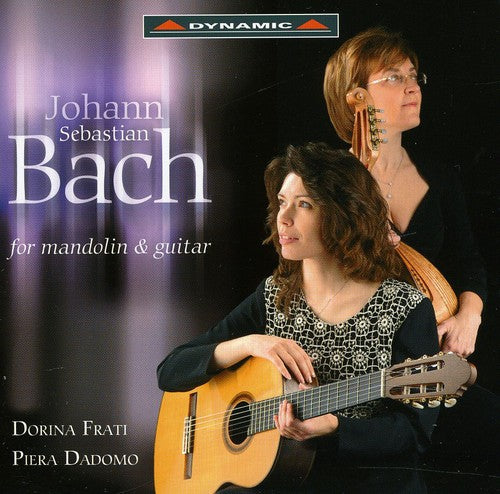
Bach For Mandolin And Guitar / Dorina Frati, Piera Dadomo
BACH Sonata in a, BWV 1020. Little Preludes: Excerpts. Partita No. 2 in d, BWV 1004: Chaconne. Italian Concerto, BWV 971 . Sonata No. 1 in g, BWV 1001: Presto. Sonata No. 1 in C, BWV 1033 • Dorina Frati (man); Piera Dadomo (gtr) • DYNAMIC 514 (74:09)
This is a lovely disc. The combination of mandolin and guitar brings a sparkling vivacity to the faster movements and a delicate charm to the slower ones. The mandolin is not able to sustain long melodies and so must fall back on tremolos to prolong the notes: it can’t compete with the flute or the violin’s abilities in this regard. However, if the listener accepts this limitation, the music is still well served. The silvery sound of the mandolin contrasts nicely with the more resonant guitar: imagine a harpsichord’s lute stop but with added piquancy in the upper register. Bach’s works have probably been transcribed for more instruments and ensembles than any other composer’s, and they fare well here. And of course, one doesn’t have to look too far to justify transcription, as Bach was so fond of it himself. The musicians also perform as soloists. Piera Dadomo’s Chaconne may be less forceful than some, but I found its gentle, intimate approach most persuasive: it’s an alternate view of a familiar masterpiece. Dorina Frati plays the Presto with engaging virtuosity, and left me eager to hear more solo Bach on the mandolin. There’s often a festive quality to this recording, joyful and spontaneous, and I found it a pleasing alternative to the original versions.
Just in case you haven’t memorized all the BWV numbers, 1020 and 1033 are for flute and harpsichord, 1001 is for the violin, as is the famous Chaconne from 1004, and the Italian Concerto is a perennial favorite with harpsichordists and pianists. Seven of the Little Preludes are included, short but “expressive little masterpieces” (Forkel). If you think you would enjoy hearing Bach expertly played by this musical duo, then don’t have any qualms about acquiring this CD.
FANFARE: Robert Schulslaper
BACH Sonata in a, BWV 1020. Little Preludes: Excerpts. Partita No. 2 in d, BWV 1004: Chaconne. Italian Concerto, BWV 971 . Sonata No. 1 in g, BWV 1001: Presto. Sonata No. 1 in C, BWV 1033 • Dorina Frati (man); Piera Dadomo (gtr) • DYNAMIC 514 (74:09)
This is a lovely disc. The combination of mandolin and guitar brings a sparkling vivacity to the faster movements and a delicate charm to the slower ones. The mandolin is not able to sustain long melodies and so must fall back on tremolos to prolong the notes: it can’t compete with the flute or the violin’s abilities in this regard. However, if the listener accepts this limitation, the music is still well served. The silvery sound of the mandolin contrasts nicely with the more resonant guitar: imagine a harpsichord’s lute stop but with added piquancy in the upper register. Bach’s works have probably been transcribed for more instruments and ensembles than any other composer’s, and they fare well here. And of course, one doesn’t have to look too far to justify transcription, as Bach was so fond of it himself. The musicians also perform as soloists. Piera Dadomo’s Chaconne may be less forceful than some, but I found its gentle, intimate approach most persuasive: it’s an alternate view of a familiar masterpiece. Dorina Frati plays the Presto with engaging virtuosity, and left me eager to hear more solo Bach on the mandolin. There’s often a festive quality to this recording, joyful and spontaneous, and I found it a pleasing alternative to the original versions.
Just in case you haven’t memorized all the BWV numbers, 1020 and 1033 are for flute and harpsichord, 1001 is for the violin, as is the famous Chaconne from 1004, and the Italian Concerto is a perennial favorite with harpsichordists and pianists. Seven of the Little Preludes are included, short but “expressive little masterpieces” (Forkel). If you think you would enjoy hearing Bach expertly played by this musical duo, then don’t have any qualms about acquiring this CD.
FANFARE: Robert Schulslaper
$6.65
Original: $18.99
-65%Bach For Mandolin And Guitar / Dorina Frati, Piera Dadomo—
$18.99
$6.65Description
BACH Sonata in a, BWV 1020. Little Preludes: Excerpts. Partita No. 2 in d, BWV 1004: Chaconne. Italian Concerto, BWV 971 . Sonata No. 1 in g, BWV 1001: Presto. Sonata No. 1 in C, BWV 1033 • Dorina Frati (man); Piera Dadomo (gtr) • DYNAMIC 514 (74:09)
This is a lovely disc. The combination of mandolin and guitar brings a sparkling vivacity to the faster movements and a delicate charm to the slower ones. The mandolin is not able to sustain long melodies and so must fall back on tremolos to prolong the notes: it can’t compete with the flute or the violin’s abilities in this regard. However, if the listener accepts this limitation, the music is still well served. The silvery sound of the mandolin contrasts nicely with the more resonant guitar: imagine a harpsichord’s lute stop but with added piquancy in the upper register. Bach’s works have probably been transcribed for more instruments and ensembles than any other composer’s, and they fare well here. And of course, one doesn’t have to look too far to justify transcription, as Bach was so fond of it himself. The musicians also perform as soloists. Piera Dadomo’s Chaconne may be less forceful than some, but I found its gentle, intimate approach most persuasive: it’s an alternate view of a familiar masterpiece. Dorina Frati plays the Presto with engaging virtuosity, and left me eager to hear more solo Bach on the mandolin. There’s often a festive quality to this recording, joyful and spontaneous, and I found it a pleasing alternative to the original versions.
Just in case you haven’t memorized all the BWV numbers, 1020 and 1033 are for flute and harpsichord, 1001 is for the violin, as is the famous Chaconne from 1004, and the Italian Concerto is a perennial favorite with harpsichordists and pianists. Seven of the Little Preludes are included, short but “expressive little masterpieces” (Forkel). If you think you would enjoy hearing Bach expertly played by this musical duo, then don’t have any qualms about acquiring this CD.
FANFARE: Robert Schulslaper