🎉 Up to 70% Off Selected ItemsShop Sale

1 / 2
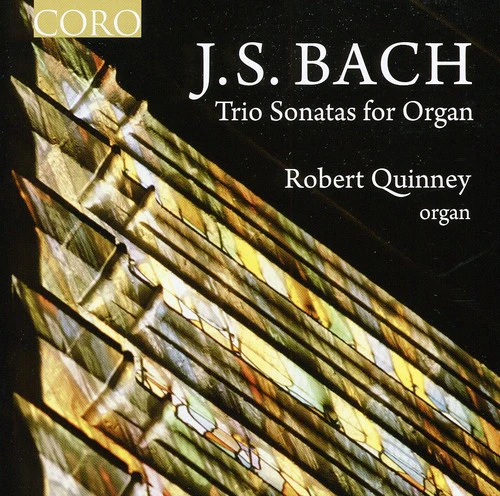
Bach: Trio Sonatas For Organ / Robert Quinney
Among Bach’s organ works none are more purely enjoyable to listen to or embody the spirit, the voice(s), the vitality inherent in the instrument more than the six Trio Sonatas. Although I prefer the somewhat brighter, “flutier” sound and generally quicker tempos of Lionel Rogg, who performs on the historic Silbermann organ at Arlesheim, Switzerland (Harmonia Mundi), Robert Quinney (currently the sub-organist at Westminster Abbey) gives solid and informed interpretations of these formidably difficult works. (Apparently Albert Schweitzer—who as an organist and Bach scholar certainly knew his Bach and his organ works—is said to have claimed that anyone who masters the trio sonatas has achieved the height of technical virtuosity. If you can find it, there’s a wonderful old EMI recording of Schweitzer playing Bach—no trio sonatas, however!)
Quinney performs on the Frobenius organ of Oxford’s Queen’s College, in Quinney’s words not a “historically accurate instrument for Bach”, but nevertheless possessing “exquisite voicing, superb mechanical action, and modest size.” Quinney employs these features mostly very effectively, especially in the last two sonatas, where both the playing and registration choices are freer and more imaginative. Quinney’s performance of the C major sonata most thrillingly captures those traits mentioned above—vitality, spirit, and pure enjoyment. In other places—the opening E-flat sonata, the first movement of the D minor, most of the slow movements—tempos just seem too slow, the registration choices too “plain”. The E-flat sonata is one of the most exuberant creations in the organ repertoire, but here that joyful edge is off. Overall, however, Quinney must be commended—and should be listened to—for his impressive technique and his mostly successful management of Bach's particular demands regarding time and space (Schweitzer--and Einstein--would have approved!), captured in excellent sound (never an easy thing with organs and organ venues).
-- David Vernier, ClassicsToday.com
Quinney performs on the Frobenius organ of Oxford’s Queen’s College, in Quinney’s words not a “historically accurate instrument for Bach”, but nevertheless possessing “exquisite voicing, superb mechanical action, and modest size.” Quinney employs these features mostly very effectively, especially in the last two sonatas, where both the playing and registration choices are freer and more imaginative. Quinney’s performance of the C major sonata most thrillingly captures those traits mentioned above—vitality, spirit, and pure enjoyment. In other places—the opening E-flat sonata, the first movement of the D minor, most of the slow movements—tempos just seem too slow, the registration choices too “plain”. The E-flat sonata is one of the most exuberant creations in the organ repertoire, but here that joyful edge is off. Overall, however, Quinney must be commended—and should be listened to—for his impressive technique and his mostly successful management of Bach's particular demands regarding time and space (Schweitzer--and Einstein--would have approved!), captured in excellent sound (never an easy thing with organs and organ venues).
-- David Vernier, ClassicsToday.com
Among Bach’s organ works none are more purely enjoyable to listen to or embody the spirit, the voice(s), the vitality inherent in the instrument more than the six Trio Sonatas. Although I prefer the somewhat brighter, “flutier” sound and generally quicker tempos of Lionel Rogg, who performs on the historic Silbermann organ at Arlesheim, Switzerland (Harmonia Mundi), Robert Quinney (currently the sub-organist at Westminster Abbey) gives solid and informed interpretations of these formidably difficult works. (Apparently Albert Schweitzer—who as an organist and Bach scholar certainly knew his Bach and his organ works—is said to have claimed that anyone who masters the trio sonatas has achieved the height of technical virtuosity. If you can find it, there’s a wonderful old EMI recording of Schweitzer playing Bach—no trio sonatas, however!)
Quinney performs on the Frobenius organ of Oxford’s Queen’s College, in Quinney’s words not a “historically accurate instrument for Bach”, but nevertheless possessing “exquisite voicing, superb mechanical action, and modest size.” Quinney employs these features mostly very effectively, especially in the last two sonatas, where both the playing and registration choices are freer and more imaginative. Quinney’s performance of the C major sonata most thrillingly captures those traits mentioned above—vitality, spirit, and pure enjoyment. In other places—the opening E-flat sonata, the first movement of the D minor, most of the slow movements—tempos just seem too slow, the registration choices too “plain”. The E-flat sonata is one of the most exuberant creations in the organ repertoire, but here that joyful edge is off. Overall, however, Quinney must be commended—and should be listened to—for his impressive technique and his mostly successful management of Bach's particular demands regarding time and space (Schweitzer--and Einstein--would have approved!), captured in excellent sound (never an easy thing with organs and organ venues).
-- David Vernier, ClassicsToday.com
Quinney performs on the Frobenius organ of Oxford’s Queen’s College, in Quinney’s words not a “historically accurate instrument for Bach”, but nevertheless possessing “exquisite voicing, superb mechanical action, and modest size.” Quinney employs these features mostly very effectively, especially in the last two sonatas, where both the playing and registration choices are freer and more imaginative. Quinney’s performance of the C major sonata most thrillingly captures those traits mentioned above—vitality, spirit, and pure enjoyment. In other places—the opening E-flat sonata, the first movement of the D minor, most of the slow movements—tempos just seem too slow, the registration choices too “plain”. The E-flat sonata is one of the most exuberant creations in the organ repertoire, but here that joyful edge is off. Overall, however, Quinney must be commended—and should be listened to—for his impressive technique and his mostly successful management of Bach's particular demands regarding time and space (Schweitzer--and Einstein--would have approved!), captured in excellent sound (never an easy thing with organs and organ venues).
-- David Vernier, ClassicsToday.com
$7.35
Original: $20.99
-65%Bach: Trio Sonatas For Organ / Robert Quinney—
$20.99
$7.35Description
Among Bach’s organ works none are more purely enjoyable to listen to or embody the spirit, the voice(s), the vitality inherent in the instrument more than the six Trio Sonatas. Although I prefer the somewhat brighter, “flutier” sound and generally quicker tempos of Lionel Rogg, who performs on the historic Silbermann organ at Arlesheim, Switzerland (Harmonia Mundi), Robert Quinney (currently the sub-organist at Westminster Abbey) gives solid and informed interpretations of these formidably difficult works. (Apparently Albert Schweitzer—who as an organist and Bach scholar certainly knew his Bach and his organ works—is said to have claimed that anyone who masters the trio sonatas has achieved the height of technical virtuosity. If you can find it, there’s a wonderful old EMI recording of Schweitzer playing Bach—no trio sonatas, however!)
Quinney performs on the Frobenius organ of Oxford’s Queen’s College, in Quinney’s words not a “historically accurate instrument for Bach”, but nevertheless possessing “exquisite voicing, superb mechanical action, and modest size.” Quinney employs these features mostly very effectively, especially in the last two sonatas, where both the playing and registration choices are freer and more imaginative. Quinney’s performance of the C major sonata most thrillingly captures those traits mentioned above—vitality, spirit, and pure enjoyment. In other places—the opening E-flat sonata, the first movement of the D minor, most of the slow movements—tempos just seem too slow, the registration choices too “plain”. The E-flat sonata is one of the most exuberant creations in the organ repertoire, but here that joyful edge is off. Overall, however, Quinney must be commended—and should be listened to—for his impressive technique and his mostly successful management of Bach's particular demands regarding time and space (Schweitzer--and Einstein--would have approved!), captured in excellent sound (never an easy thing with organs and organ venues).
-- David Vernier, ClassicsToday.com
Quinney performs on the Frobenius organ of Oxford’s Queen’s College, in Quinney’s words not a “historically accurate instrument for Bach”, but nevertheless possessing “exquisite voicing, superb mechanical action, and modest size.” Quinney employs these features mostly very effectively, especially in the last two sonatas, where both the playing and registration choices are freer and more imaginative. Quinney’s performance of the C major sonata most thrillingly captures those traits mentioned above—vitality, spirit, and pure enjoyment. In other places—the opening E-flat sonata, the first movement of the D minor, most of the slow movements—tempos just seem too slow, the registration choices too “plain”. The E-flat sonata is one of the most exuberant creations in the organ repertoire, but here that joyful edge is off. Overall, however, Quinney must be commended—and should be listened to—for his impressive technique and his mostly successful management of Bach's particular demands regarding time and space (Schweitzer--and Einstein--would have approved!), captured in excellent sound (never an easy thing with organs and organ venues).
-- David Vernier, ClassicsToday.com