🎉 Up to 70% Off Selected ItemsShop Sale

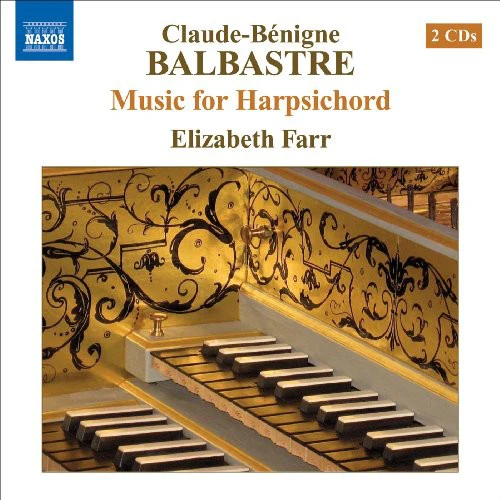
Balbastre: Music For Harpsichord / Elizabeth Farr
An enterprising and convincing set of performances; Naxos rescues another neglected composer.
I was somewhat lukewarm about Elizabeth Farr’s recording of the Bach solo harpsichord concertos (Naxos 8.572006-7), largely because I found the use of the 16' stop on her Keith Hill harpsichord obtrusive. I ended that review by fearing that there would be an even greater problem with the use of such an instrument on this Balbastre recording, since, by Hill’s own admission “no French harpsichords with 16' stops remain from [this] time.”
Since writing that review, I have read another review of the Bach which doesn’t even mention the offending stop, so, clearly, not everyone is going to be troubled by it. Paradoxically, too, though I dislike its use in Bach, where there is some historical evidence to support its use, I was less unhappy to hear it employed for Balbastre, where the evidence is non-existent. De gustibus non est disputandum.
We aren’t exactly well off for recordings of Balbastre: there seems currently to be only one other recording completely dedicated to his music, a 2-CD set of what Glossa call his ‘Salon Music’, another recital of his keyboard music by Mitzi Meyerson (fortepiano and harpsichord, GCD921803), on which much of the music, including the Marche des Marseillois et Ça-ira from Elizabeth Farr’s recording, are duplicated. Otherwise, we have just odd pieces by him on collections, especially on anthologies of that French Christmas phenomenon the instrumental Noël.
Naxos have on their website an interview with Elizabeth Farr, headed ‘My passion is my profession’, in which she speaks of her marvel at the creativity and individuality of the music of the eighteenth century. I’m not sure that I find Balbastre’s music quite as individual as that – perhaps you have to know it as thoroughly as Farr clearly does to distinguish it from that of Rameau or François Couperin – but her performances certainly make a strong case for its inventiveness and attractiveness. The interview was conducted before she set down the recent Bach recording and this of Balbastre, but her love of his music and her understanding of it are apparent from the CDs.
I queried some of Farr’s tempi on the Bach CDs: by comparison with Robert Woolley on Hyperion, some of them sound rather erratic. I wonder if I would have been as critical if I had not had Woolley’s recordings of some of those works for comparison, though I note that the reviewer who seemed untroubled by the use of 16' tone also referred to the problematic tempi.
Not having heard any rival recordings of any significant portion of Balbastre’s repertoire, I can’t make comparisons as I did with Bach. I can only say that I found the playing here much more convincing than I did before. I do just note en passant, however, that Farr’s timings seem to differ from Meyerson’s, sometimes considerably slower, sometimes faster. The brief excerpts which are all that I have been able to hear from those Glossa CDs serve as a reminder that Meyerson alternates between the fortepiano and the harpsichord, which you may find makes for more variety; equally, you may be irritated by repeated change from one instrument to the other. Also, Farr plays the pieces in the order in which they appear in print; Meyerson rearranges them.
Two CDs of this repertoire may look like a case of over-egging the pudding, but I didn’t find it so. If you like the keyboard music of Rameau and Couperin, you should find these CDs to your liking. Indeed, the concluding tracks of CD1 (trs.13-16) offer music from Rameau’s 1748 opera Pygmalion, arranged by Balbastre for the keyboard. Such arrangements, like the wind-band conflations of Mozart’s operas, served as souvenirs for those who had heard the original and as tasters for those who had not. This is some of the most dramatic music on the CDs; the tone of the Overture is particularly well caught here.
Most of the rest of the music is as benign and affable as Balbastre’s second name would imply. I don’t wish to imply, however, that it sounds derivative or banal; as the notes point out, the French harpsichord tradition is modified by the influence of Scarlatti.
The pieces from Book I of the Pièces de clavecin are character portraits. The whole book is dedicated to his pupil Mme de la Caze and her portrait opens the collection and the first of these CDs. It’s a strong piece, though with moments of tenderness, and the contrast between it and its successor on track 2, la d’Héricourt, is well brought out by Farr. Indeed, such variety as there is in the music – probably more apparent to contemporaries than to modern listeners – is well conveyed in these performances.
The last of the aristocratic portraits here is la d’Esclignac of 1787 (CD1, tr.12). The revolution two years later put paid to Balbastre’s employment as a composer of salon pieces; he was to die in poverty ten years later. The final work on the second CD (tr.16) represents his attempt to come to terms with the new régime, a set of variations of the revolutionary tunes la Marseillaise and Ça ira (we will succeed). As played here, it makes a fine conclusion to a recommendable set; I was very happy to pardon the liberty which Elizabeth Farr admits in the notes of repeating la Marseillaise at the end. Meyerson plays the piece as written, which is less dramatic, though you may think her use here of the newer instrument, the fortepiano, more appropriate for music written after the demise of the ancien régime.
The Naxos recording is a little close for my liking, but it captures the big sound of the instrument well – at times in that final Marche the bass sonorities almost sound like those of a grand piano. The documentation is informative and readable and sets the seal on a recommendable pair of CDs.
-- Brian Wilson, MusicWeb International
I was somewhat lukewarm about Elizabeth Farr’s recording of the Bach solo harpsichord concertos (Naxos 8.572006-7), largely because I found the use of the 16' stop on her Keith Hill harpsichord obtrusive. I ended that review by fearing that there would be an even greater problem with the use of such an instrument on this Balbastre recording, since, by Hill’s own admission “no French harpsichords with 16' stops remain from [this] time.”
Since writing that review, I have read another review of the Bach which doesn’t even mention the offending stop, so, clearly, not everyone is going to be troubled by it. Paradoxically, too, though I dislike its use in Bach, where there is some historical evidence to support its use, I was less unhappy to hear it employed for Balbastre, where the evidence is non-existent. De gustibus non est disputandum.
We aren’t exactly well off for recordings of Balbastre: there seems currently to be only one other recording completely dedicated to his music, a 2-CD set of what Glossa call his ‘Salon Music’, another recital of his keyboard music by Mitzi Meyerson (fortepiano and harpsichord, GCD921803), on which much of the music, including the Marche des Marseillois et Ça-ira from Elizabeth Farr’s recording, are duplicated. Otherwise, we have just odd pieces by him on collections, especially on anthologies of that French Christmas phenomenon the instrumental Noël.
Naxos have on their website an interview with Elizabeth Farr, headed ‘My passion is my profession’, in which she speaks of her marvel at the creativity and individuality of the music of the eighteenth century. I’m not sure that I find Balbastre’s music quite as individual as that – perhaps you have to know it as thoroughly as Farr clearly does to distinguish it from that of Rameau or François Couperin – but her performances certainly make a strong case for its inventiveness and attractiveness. The interview was conducted before she set down the recent Bach recording and this of Balbastre, but her love of his music and her understanding of it are apparent from the CDs.
I queried some of Farr’s tempi on the Bach CDs: by comparison with Robert Woolley on Hyperion, some of them sound rather erratic. I wonder if I would have been as critical if I had not had Woolley’s recordings of some of those works for comparison, though I note that the reviewer who seemed untroubled by the use of 16' tone also referred to the problematic tempi.
Not having heard any rival recordings of any significant portion of Balbastre’s repertoire, I can’t make comparisons as I did with Bach. I can only say that I found the playing here much more convincing than I did before. I do just note en passant, however, that Farr’s timings seem to differ from Meyerson’s, sometimes considerably slower, sometimes faster. The brief excerpts which are all that I have been able to hear from those Glossa CDs serve as a reminder that Meyerson alternates between the fortepiano and the harpsichord, which you may find makes for more variety; equally, you may be irritated by repeated change from one instrument to the other. Also, Farr plays the pieces in the order in which they appear in print; Meyerson rearranges them.
Two CDs of this repertoire may look like a case of over-egging the pudding, but I didn’t find it so. If you like the keyboard music of Rameau and Couperin, you should find these CDs to your liking. Indeed, the concluding tracks of CD1 (trs.13-16) offer music from Rameau’s 1748 opera Pygmalion, arranged by Balbastre for the keyboard. Such arrangements, like the wind-band conflations of Mozart’s operas, served as souvenirs for those who had heard the original and as tasters for those who had not. This is some of the most dramatic music on the CDs; the tone of the Overture is particularly well caught here.
Most of the rest of the music is as benign and affable as Balbastre’s second name would imply. I don’t wish to imply, however, that it sounds derivative or banal; as the notes point out, the French harpsichord tradition is modified by the influence of Scarlatti.
The pieces from Book I of the Pièces de clavecin are character portraits. The whole book is dedicated to his pupil Mme de la Caze and her portrait opens the collection and the first of these CDs. It’s a strong piece, though with moments of tenderness, and the contrast between it and its successor on track 2, la d’Héricourt, is well brought out by Farr. Indeed, such variety as there is in the music – probably more apparent to contemporaries than to modern listeners – is well conveyed in these performances.
The last of the aristocratic portraits here is la d’Esclignac of 1787 (CD1, tr.12). The revolution two years later put paid to Balbastre’s employment as a composer of salon pieces; he was to die in poverty ten years later. The final work on the second CD (tr.16) represents his attempt to come to terms with the new régime, a set of variations of the revolutionary tunes la Marseillaise and Ça ira (we will succeed). As played here, it makes a fine conclusion to a recommendable set; I was very happy to pardon the liberty which Elizabeth Farr admits in the notes of repeating la Marseillaise at the end. Meyerson plays the piece as written, which is less dramatic, though you may think her use here of the newer instrument, the fortepiano, more appropriate for music written after the demise of the ancien régime.
The Naxos recording is a little close for my liking, but it captures the big sound of the instrument well – at times in that final Marche the bass sonorities almost sound like those of a grand piano. The documentation is informative and readable and sets the seal on a recommendable pair of CDs.
-- Brian Wilson, MusicWeb International
An enterprising and convincing set of performances; Naxos rescues another neglected composer.
I was somewhat lukewarm about Elizabeth Farr’s recording of the Bach solo harpsichord concertos (Naxos 8.572006-7), largely because I found the use of the 16' stop on her Keith Hill harpsichord obtrusive. I ended that review by fearing that there would be an even greater problem with the use of such an instrument on this Balbastre recording, since, by Hill’s own admission “no French harpsichords with 16' stops remain from [this] time.”
Since writing that review, I have read another review of the Bach which doesn’t even mention the offending stop, so, clearly, not everyone is going to be troubled by it. Paradoxically, too, though I dislike its use in Bach, where there is some historical evidence to support its use, I was less unhappy to hear it employed for Balbastre, where the evidence is non-existent. De gustibus non est disputandum.
We aren’t exactly well off for recordings of Balbastre: there seems currently to be only one other recording completely dedicated to his music, a 2-CD set of what Glossa call his ‘Salon Music’, another recital of his keyboard music by Mitzi Meyerson (fortepiano and harpsichord, GCD921803), on which much of the music, including the Marche des Marseillois et Ça-ira from Elizabeth Farr’s recording, are duplicated. Otherwise, we have just odd pieces by him on collections, especially on anthologies of that French Christmas phenomenon the instrumental Noël.
Naxos have on their website an interview with Elizabeth Farr, headed ‘My passion is my profession’, in which she speaks of her marvel at the creativity and individuality of the music of the eighteenth century. I’m not sure that I find Balbastre’s music quite as individual as that – perhaps you have to know it as thoroughly as Farr clearly does to distinguish it from that of Rameau or François Couperin – but her performances certainly make a strong case for its inventiveness and attractiveness. The interview was conducted before she set down the recent Bach recording and this of Balbastre, but her love of his music and her understanding of it are apparent from the CDs.
I queried some of Farr’s tempi on the Bach CDs: by comparison with Robert Woolley on Hyperion, some of them sound rather erratic. I wonder if I would have been as critical if I had not had Woolley’s recordings of some of those works for comparison, though I note that the reviewer who seemed untroubled by the use of 16' tone also referred to the problematic tempi.
Not having heard any rival recordings of any significant portion of Balbastre’s repertoire, I can’t make comparisons as I did with Bach. I can only say that I found the playing here much more convincing than I did before. I do just note en passant, however, that Farr’s timings seem to differ from Meyerson’s, sometimes considerably slower, sometimes faster. The brief excerpts which are all that I have been able to hear from those Glossa CDs serve as a reminder that Meyerson alternates between the fortepiano and the harpsichord, which you may find makes for more variety; equally, you may be irritated by repeated change from one instrument to the other. Also, Farr plays the pieces in the order in which they appear in print; Meyerson rearranges them.
Two CDs of this repertoire may look like a case of over-egging the pudding, but I didn’t find it so. If you like the keyboard music of Rameau and Couperin, you should find these CDs to your liking. Indeed, the concluding tracks of CD1 (trs.13-16) offer music from Rameau’s 1748 opera Pygmalion, arranged by Balbastre for the keyboard. Such arrangements, like the wind-band conflations of Mozart’s operas, served as souvenirs for those who had heard the original and as tasters for those who had not. This is some of the most dramatic music on the CDs; the tone of the Overture is particularly well caught here.
Most of the rest of the music is as benign and affable as Balbastre’s second name would imply. I don’t wish to imply, however, that it sounds derivative or banal; as the notes point out, the French harpsichord tradition is modified by the influence of Scarlatti.
The pieces from Book I of the Pièces de clavecin are character portraits. The whole book is dedicated to his pupil Mme de la Caze and her portrait opens the collection and the first of these CDs. It’s a strong piece, though with moments of tenderness, and the contrast between it and its successor on track 2, la d’Héricourt, is well brought out by Farr. Indeed, such variety as there is in the music – probably more apparent to contemporaries than to modern listeners – is well conveyed in these performances.
The last of the aristocratic portraits here is la d’Esclignac of 1787 (CD1, tr.12). The revolution two years later put paid to Balbastre’s employment as a composer of salon pieces; he was to die in poverty ten years later. The final work on the second CD (tr.16) represents his attempt to come to terms with the new régime, a set of variations of the revolutionary tunes la Marseillaise and Ça ira (we will succeed). As played here, it makes a fine conclusion to a recommendable set; I was very happy to pardon the liberty which Elizabeth Farr admits in the notes of repeating la Marseillaise at the end. Meyerson plays the piece as written, which is less dramatic, though you may think her use here of the newer instrument, the fortepiano, more appropriate for music written after the demise of the ancien régime.
The Naxos recording is a little close for my liking, but it captures the big sound of the instrument well – at times in that final Marche the bass sonorities almost sound like those of a grand piano. The documentation is informative and readable and sets the seal on a recommendable pair of CDs.
-- Brian Wilson, MusicWeb International
I was somewhat lukewarm about Elizabeth Farr’s recording of the Bach solo harpsichord concertos (Naxos 8.572006-7), largely because I found the use of the 16' stop on her Keith Hill harpsichord obtrusive. I ended that review by fearing that there would be an even greater problem with the use of such an instrument on this Balbastre recording, since, by Hill’s own admission “no French harpsichords with 16' stops remain from [this] time.”
Since writing that review, I have read another review of the Bach which doesn’t even mention the offending stop, so, clearly, not everyone is going to be troubled by it. Paradoxically, too, though I dislike its use in Bach, where there is some historical evidence to support its use, I was less unhappy to hear it employed for Balbastre, where the evidence is non-existent. De gustibus non est disputandum.
We aren’t exactly well off for recordings of Balbastre: there seems currently to be only one other recording completely dedicated to his music, a 2-CD set of what Glossa call his ‘Salon Music’, another recital of his keyboard music by Mitzi Meyerson (fortepiano and harpsichord, GCD921803), on which much of the music, including the Marche des Marseillois et Ça-ira from Elizabeth Farr’s recording, are duplicated. Otherwise, we have just odd pieces by him on collections, especially on anthologies of that French Christmas phenomenon the instrumental Noël.
Naxos have on their website an interview with Elizabeth Farr, headed ‘My passion is my profession’, in which she speaks of her marvel at the creativity and individuality of the music of the eighteenth century. I’m not sure that I find Balbastre’s music quite as individual as that – perhaps you have to know it as thoroughly as Farr clearly does to distinguish it from that of Rameau or François Couperin – but her performances certainly make a strong case for its inventiveness and attractiveness. The interview was conducted before she set down the recent Bach recording and this of Balbastre, but her love of his music and her understanding of it are apparent from the CDs.
I queried some of Farr’s tempi on the Bach CDs: by comparison with Robert Woolley on Hyperion, some of them sound rather erratic. I wonder if I would have been as critical if I had not had Woolley’s recordings of some of those works for comparison, though I note that the reviewer who seemed untroubled by the use of 16' tone also referred to the problematic tempi.
Not having heard any rival recordings of any significant portion of Balbastre’s repertoire, I can’t make comparisons as I did with Bach. I can only say that I found the playing here much more convincing than I did before. I do just note en passant, however, that Farr’s timings seem to differ from Meyerson’s, sometimes considerably slower, sometimes faster. The brief excerpts which are all that I have been able to hear from those Glossa CDs serve as a reminder that Meyerson alternates between the fortepiano and the harpsichord, which you may find makes for more variety; equally, you may be irritated by repeated change from one instrument to the other. Also, Farr plays the pieces in the order in which they appear in print; Meyerson rearranges them.
Two CDs of this repertoire may look like a case of over-egging the pudding, but I didn’t find it so. If you like the keyboard music of Rameau and Couperin, you should find these CDs to your liking. Indeed, the concluding tracks of CD1 (trs.13-16) offer music from Rameau’s 1748 opera Pygmalion, arranged by Balbastre for the keyboard. Such arrangements, like the wind-band conflations of Mozart’s operas, served as souvenirs for those who had heard the original and as tasters for those who had not. This is some of the most dramatic music on the CDs; the tone of the Overture is particularly well caught here.
Most of the rest of the music is as benign and affable as Balbastre’s second name would imply. I don’t wish to imply, however, that it sounds derivative or banal; as the notes point out, the French harpsichord tradition is modified by the influence of Scarlatti.
The pieces from Book I of the Pièces de clavecin are character portraits. The whole book is dedicated to his pupil Mme de la Caze and her portrait opens the collection and the first of these CDs. It’s a strong piece, though with moments of tenderness, and the contrast between it and its successor on track 2, la d’Héricourt, is well brought out by Farr. Indeed, such variety as there is in the music – probably more apparent to contemporaries than to modern listeners – is well conveyed in these performances.
The last of the aristocratic portraits here is la d’Esclignac of 1787 (CD1, tr.12). The revolution two years later put paid to Balbastre’s employment as a composer of salon pieces; he was to die in poverty ten years later. The final work on the second CD (tr.16) represents his attempt to come to terms with the new régime, a set of variations of the revolutionary tunes la Marseillaise and Ça ira (we will succeed). As played here, it makes a fine conclusion to a recommendable set; I was very happy to pardon the liberty which Elizabeth Farr admits in the notes of repeating la Marseillaise at the end. Meyerson plays the piece as written, which is less dramatic, though you may think her use here of the newer instrument, the fortepiano, more appropriate for music written after the demise of the ancien régime.
The Naxos recording is a little close for my liking, but it captures the big sound of the instrument well – at times in that final Marche the bass sonorities almost sound like those of a grand piano. The documentation is informative and readable and sets the seal on a recommendable pair of CDs.
-- Brian Wilson, MusicWeb International
$29.99
Balbastre: Music For Harpsichord / Elizabeth Farr—
$29.99
Description
An enterprising and convincing set of performances; Naxos rescues another neglected composer.
I was somewhat lukewarm about Elizabeth Farr’s recording of the Bach solo harpsichord concertos (Naxos 8.572006-7), largely because I found the use of the 16' stop on her Keith Hill harpsichord obtrusive. I ended that review by fearing that there would be an even greater problem with the use of such an instrument on this Balbastre recording, since, by Hill’s own admission “no French harpsichords with 16' stops remain from [this] time.”
Since writing that review, I have read another review of the Bach which doesn’t even mention the offending stop, so, clearly, not everyone is going to be troubled by it. Paradoxically, too, though I dislike its use in Bach, where there is some historical evidence to support its use, I was less unhappy to hear it employed for Balbastre, where the evidence is non-existent. De gustibus non est disputandum.
We aren’t exactly well off for recordings of Balbastre: there seems currently to be only one other recording completely dedicated to his music, a 2-CD set of what Glossa call his ‘Salon Music’, another recital of his keyboard music by Mitzi Meyerson (fortepiano and harpsichord, GCD921803), on which much of the music, including the Marche des Marseillois et Ça-ira from Elizabeth Farr’s recording, are duplicated. Otherwise, we have just odd pieces by him on collections, especially on anthologies of that French Christmas phenomenon the instrumental Noël.
Naxos have on their website an interview with Elizabeth Farr, headed ‘My passion is my profession’, in which she speaks of her marvel at the creativity and individuality of the music of the eighteenth century. I’m not sure that I find Balbastre’s music quite as individual as that – perhaps you have to know it as thoroughly as Farr clearly does to distinguish it from that of Rameau or François Couperin – but her performances certainly make a strong case for its inventiveness and attractiveness. The interview was conducted before she set down the recent Bach recording and this of Balbastre, but her love of his music and her understanding of it are apparent from the CDs.
I queried some of Farr’s tempi on the Bach CDs: by comparison with Robert Woolley on Hyperion, some of them sound rather erratic. I wonder if I would have been as critical if I had not had Woolley’s recordings of some of those works for comparison, though I note that the reviewer who seemed untroubled by the use of 16' tone also referred to the problematic tempi.
Not having heard any rival recordings of any significant portion of Balbastre’s repertoire, I can’t make comparisons as I did with Bach. I can only say that I found the playing here much more convincing than I did before. I do just note en passant, however, that Farr’s timings seem to differ from Meyerson’s, sometimes considerably slower, sometimes faster. The brief excerpts which are all that I have been able to hear from those Glossa CDs serve as a reminder that Meyerson alternates between the fortepiano and the harpsichord, which you may find makes for more variety; equally, you may be irritated by repeated change from one instrument to the other. Also, Farr plays the pieces in the order in which they appear in print; Meyerson rearranges them.
Two CDs of this repertoire may look like a case of over-egging the pudding, but I didn’t find it so. If you like the keyboard music of Rameau and Couperin, you should find these CDs to your liking. Indeed, the concluding tracks of CD1 (trs.13-16) offer music from Rameau’s 1748 opera Pygmalion, arranged by Balbastre for the keyboard. Such arrangements, like the wind-band conflations of Mozart’s operas, served as souvenirs for those who had heard the original and as tasters for those who had not. This is some of the most dramatic music on the CDs; the tone of the Overture is particularly well caught here.
Most of the rest of the music is as benign and affable as Balbastre’s second name would imply. I don’t wish to imply, however, that it sounds derivative or banal; as the notes point out, the French harpsichord tradition is modified by the influence of Scarlatti.
The pieces from Book I of the Pièces de clavecin are character portraits. The whole book is dedicated to his pupil Mme de la Caze and her portrait opens the collection and the first of these CDs. It’s a strong piece, though with moments of tenderness, and the contrast between it and its successor on track 2, la d’Héricourt, is well brought out by Farr. Indeed, such variety as there is in the music – probably more apparent to contemporaries than to modern listeners – is well conveyed in these performances.
The last of the aristocratic portraits here is la d’Esclignac of 1787 (CD1, tr.12). The revolution two years later put paid to Balbastre’s employment as a composer of salon pieces; he was to die in poverty ten years later. The final work on the second CD (tr.16) represents his attempt to come to terms with the new régime, a set of variations of the revolutionary tunes la Marseillaise and Ça ira (we will succeed). As played here, it makes a fine conclusion to a recommendable set; I was very happy to pardon the liberty which Elizabeth Farr admits in the notes of repeating la Marseillaise at the end. Meyerson plays the piece as written, which is less dramatic, though you may think her use here of the newer instrument, the fortepiano, more appropriate for music written after the demise of the ancien régime.
The Naxos recording is a little close for my liking, but it captures the big sound of the instrument well – at times in that final Marche the bass sonorities almost sound like those of a grand piano. The documentation is informative and readable and sets the seal on a recommendable pair of CDs.
-- Brian Wilson, MusicWeb International
I was somewhat lukewarm about Elizabeth Farr’s recording of the Bach solo harpsichord concertos (Naxos 8.572006-7), largely because I found the use of the 16' stop on her Keith Hill harpsichord obtrusive. I ended that review by fearing that there would be an even greater problem with the use of such an instrument on this Balbastre recording, since, by Hill’s own admission “no French harpsichords with 16' stops remain from [this] time.”
Since writing that review, I have read another review of the Bach which doesn’t even mention the offending stop, so, clearly, not everyone is going to be troubled by it. Paradoxically, too, though I dislike its use in Bach, where there is some historical evidence to support its use, I was less unhappy to hear it employed for Balbastre, where the evidence is non-existent. De gustibus non est disputandum.
We aren’t exactly well off for recordings of Balbastre: there seems currently to be only one other recording completely dedicated to his music, a 2-CD set of what Glossa call his ‘Salon Music’, another recital of his keyboard music by Mitzi Meyerson (fortepiano and harpsichord, GCD921803), on which much of the music, including the Marche des Marseillois et Ça-ira from Elizabeth Farr’s recording, are duplicated. Otherwise, we have just odd pieces by him on collections, especially on anthologies of that French Christmas phenomenon the instrumental Noël.
Naxos have on their website an interview with Elizabeth Farr, headed ‘My passion is my profession’, in which she speaks of her marvel at the creativity and individuality of the music of the eighteenth century. I’m not sure that I find Balbastre’s music quite as individual as that – perhaps you have to know it as thoroughly as Farr clearly does to distinguish it from that of Rameau or François Couperin – but her performances certainly make a strong case for its inventiveness and attractiveness. The interview was conducted before she set down the recent Bach recording and this of Balbastre, but her love of his music and her understanding of it are apparent from the CDs.
I queried some of Farr’s tempi on the Bach CDs: by comparison with Robert Woolley on Hyperion, some of them sound rather erratic. I wonder if I would have been as critical if I had not had Woolley’s recordings of some of those works for comparison, though I note that the reviewer who seemed untroubled by the use of 16' tone also referred to the problematic tempi.
Not having heard any rival recordings of any significant portion of Balbastre’s repertoire, I can’t make comparisons as I did with Bach. I can only say that I found the playing here much more convincing than I did before. I do just note en passant, however, that Farr’s timings seem to differ from Meyerson’s, sometimes considerably slower, sometimes faster. The brief excerpts which are all that I have been able to hear from those Glossa CDs serve as a reminder that Meyerson alternates between the fortepiano and the harpsichord, which you may find makes for more variety; equally, you may be irritated by repeated change from one instrument to the other. Also, Farr plays the pieces in the order in which they appear in print; Meyerson rearranges them.
Two CDs of this repertoire may look like a case of over-egging the pudding, but I didn’t find it so. If you like the keyboard music of Rameau and Couperin, you should find these CDs to your liking. Indeed, the concluding tracks of CD1 (trs.13-16) offer music from Rameau’s 1748 opera Pygmalion, arranged by Balbastre for the keyboard. Such arrangements, like the wind-band conflations of Mozart’s operas, served as souvenirs for those who had heard the original and as tasters for those who had not. This is some of the most dramatic music on the CDs; the tone of the Overture is particularly well caught here.
Most of the rest of the music is as benign and affable as Balbastre’s second name would imply. I don’t wish to imply, however, that it sounds derivative or banal; as the notes point out, the French harpsichord tradition is modified by the influence of Scarlatti.
The pieces from Book I of the Pièces de clavecin are character portraits. The whole book is dedicated to his pupil Mme de la Caze and her portrait opens the collection and the first of these CDs. It’s a strong piece, though with moments of tenderness, and the contrast between it and its successor on track 2, la d’Héricourt, is well brought out by Farr. Indeed, such variety as there is in the music – probably more apparent to contemporaries than to modern listeners – is well conveyed in these performances.
The last of the aristocratic portraits here is la d’Esclignac of 1787 (CD1, tr.12). The revolution two years later put paid to Balbastre’s employment as a composer of salon pieces; he was to die in poverty ten years later. The final work on the second CD (tr.16) represents his attempt to come to terms with the new régime, a set of variations of the revolutionary tunes la Marseillaise and Ça ira (we will succeed). As played here, it makes a fine conclusion to a recommendable set; I was very happy to pardon the liberty which Elizabeth Farr admits in the notes of repeating la Marseillaise at the end. Meyerson plays the piece as written, which is less dramatic, though you may think her use here of the newer instrument, the fortepiano, more appropriate for music written after the demise of the ancien régime.
The Naxos recording is a little close for my liking, but it captures the big sound of the instrument well – at times in that final Marche the bass sonorities almost sound like those of a grand piano. The documentation is informative and readable and sets the seal on a recommendable pair of CDs.
-- Brian Wilson, MusicWeb International