🎉 Up to 70% Off Selected ItemsShop Sale

1 / 2
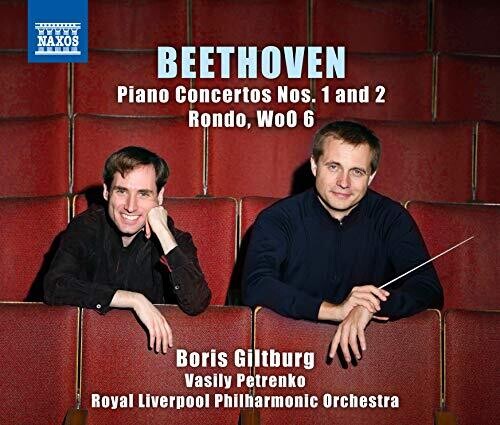
Beethoven: Piano Concertos Nos 1 & 2 & Rondo, WoO 6 / Giltburg, Petrenko, RLPO
Not only do you get performances to rank with the best, but also a bonus of the splendidly played Rondo.
Beethoven’s first two piano concertos share an abundance of lyric and virtuosic qualities. Concerto No. 1 in C major is expansive and richly orchestrated with a sublime slow movement that is tender and ardent, and a finale full of inventive humor. Concerto No. 2 in B flat major marries energy with elegance, reserving poetic breadth for its slow movement and quirky wit for the finale. Also included is the jovial Rondo, WoO 6, which Beethoven originally intended to be the finale of Concerto No. 2.
-----
REVIEWS:
Here’s a very promising start to what I assume will be a new Beethoven piano concerto cycle, featuring performances not otherwise included in Naxos’ “complete” Beethoven box. Boris Giltburg plays both works with the youthful panache that they require–the kind that makes you forget about any formal issues and just revel in the virtuoso passagework and good tunes. The standard for comparison in this coupling is Argerich/Sinopoli on DG–you might think an unmatchable team, at least pianistically, but Giltburg more than holds his own. Indeed, in Concerto No. 2 he matches Argerich’s fleet timing in the finale (and other movements) almost exactly, and in the First Concerto he’s even a bit quicker, all without sacrificing subtleties of touch, dynamics and phrasing for mere velocity.
Of course there are difference–welcome ones too. In the first concerto, Giltburg adds a couple of minutes to the central Largo, producing a genuine specimen of that particular tempo designation. His legato playing is beautifully sustained, making this early example of Beethovenian lyricism a real gem. Petrenko accompanies with real flair, proving himself a true partner in both concerto first movements. It’s so much more satisfying to have a real conductor working with a gifted soloist, rather than the single-person-at-the-keyboard approach so frequently offered these days. There’s just no substitute for full-time orchestral guidance. Giltburg also includes the original “Concerto No. 2 finale version” of the Rondo WoO 6, a considerable bonus, as are his intelligent and detailed booklet notes. Fine playing, fine conducting, fine engineering–in short, a really fine release generally.
– ClassicsToday (David Hurwitz)
Giltburg is a subtle artist who, despite his all-encompassing technique, rarely, if ever, engages in virtuosic grandstanding, preferring instead to interpret the music for maximum artistic yield. Nor does he employ radical or eccentric interpretive approaches. Yet, his performances are never bland but rather quite individual, typically rich in nuance and meaningful detail, and containing insights missing in other versions. His accounts of the two concertos feature well-chosen dynamics, main lines and inner voices perfectly balanced, and judicious tempos. In addition, he realizes these are the works of a youthful Beethoven, not of the mature, profound and serious-minded master of the three concertos that followed. Thus, he points up their lighter, more vivacious characteristics, his dynamics appropriately less weighty and his pacing never too relaxed.
Not only do you get performances to rank with the best, but also a bonus of the splendidly played Rondo.
– MusicWeb International
Beethoven’s first two piano concertos share an abundance of lyric and virtuosic qualities. Concerto No. 1 in C major is expansive and richly orchestrated with a sublime slow movement that is tender and ardent, and a finale full of inventive humor. Concerto No. 2 in B flat major marries energy with elegance, reserving poetic breadth for its slow movement and quirky wit for the finale. Also included is the jovial Rondo, WoO 6, which Beethoven originally intended to be the finale of Concerto No. 2.
-----
REVIEWS:
Here’s a very promising start to what I assume will be a new Beethoven piano concerto cycle, featuring performances not otherwise included in Naxos’ “complete” Beethoven box. Boris Giltburg plays both works with the youthful panache that they require–the kind that makes you forget about any formal issues and just revel in the virtuoso passagework and good tunes. The standard for comparison in this coupling is Argerich/Sinopoli on DG–you might think an unmatchable team, at least pianistically, but Giltburg more than holds his own. Indeed, in Concerto No. 2 he matches Argerich’s fleet timing in the finale (and other movements) almost exactly, and in the First Concerto he’s even a bit quicker, all without sacrificing subtleties of touch, dynamics and phrasing for mere velocity.
Of course there are difference–welcome ones too. In the first concerto, Giltburg adds a couple of minutes to the central Largo, producing a genuine specimen of that particular tempo designation. His legato playing is beautifully sustained, making this early example of Beethovenian lyricism a real gem. Petrenko accompanies with real flair, proving himself a true partner in both concerto first movements. It’s so much more satisfying to have a real conductor working with a gifted soloist, rather than the single-person-at-the-keyboard approach so frequently offered these days. There’s just no substitute for full-time orchestral guidance. Giltburg also includes the original “Concerto No. 2 finale version” of the Rondo WoO 6, a considerable bonus, as are his intelligent and detailed booklet notes. Fine playing, fine conducting, fine engineering–in short, a really fine release generally.
– ClassicsToday (David Hurwitz)
Giltburg is a subtle artist who, despite his all-encompassing technique, rarely, if ever, engages in virtuosic grandstanding, preferring instead to interpret the music for maximum artistic yield. Nor does he employ radical or eccentric interpretive approaches. Yet, his performances are never bland but rather quite individual, typically rich in nuance and meaningful detail, and containing insights missing in other versions. His accounts of the two concertos feature well-chosen dynamics, main lines and inner voices perfectly balanced, and judicious tempos. In addition, he realizes these are the works of a youthful Beethoven, not of the mature, profound and serious-minded master of the three concertos that followed. Thus, he points up their lighter, more vivacious characteristics, his dynamics appropriately less weighty and his pacing never too relaxed.
Not only do you get performances to rank with the best, but also a bonus of the splendidly played Rondo.
– MusicWeb International
Not only do you get performances to rank with the best, but also a bonus of the splendidly played Rondo.
Beethoven’s first two piano concertos share an abundance of lyric and virtuosic qualities. Concerto No. 1 in C major is expansive and richly orchestrated with a sublime slow movement that is tender and ardent, and a finale full of inventive humor. Concerto No. 2 in B flat major marries energy with elegance, reserving poetic breadth for its slow movement and quirky wit for the finale. Also included is the jovial Rondo, WoO 6, which Beethoven originally intended to be the finale of Concerto No. 2.
-----
REVIEWS:
Here’s a very promising start to what I assume will be a new Beethoven piano concerto cycle, featuring performances not otherwise included in Naxos’ “complete” Beethoven box. Boris Giltburg plays both works with the youthful panache that they require–the kind that makes you forget about any formal issues and just revel in the virtuoso passagework and good tunes. The standard for comparison in this coupling is Argerich/Sinopoli on DG–you might think an unmatchable team, at least pianistically, but Giltburg more than holds his own. Indeed, in Concerto No. 2 he matches Argerich’s fleet timing in the finale (and other movements) almost exactly, and in the First Concerto he’s even a bit quicker, all without sacrificing subtleties of touch, dynamics and phrasing for mere velocity.
Of course there are difference–welcome ones too. In the first concerto, Giltburg adds a couple of minutes to the central Largo, producing a genuine specimen of that particular tempo designation. His legato playing is beautifully sustained, making this early example of Beethovenian lyricism a real gem. Petrenko accompanies with real flair, proving himself a true partner in both concerto first movements. It’s so much more satisfying to have a real conductor working with a gifted soloist, rather than the single-person-at-the-keyboard approach so frequently offered these days. There’s just no substitute for full-time orchestral guidance. Giltburg also includes the original “Concerto No. 2 finale version” of the Rondo WoO 6, a considerable bonus, as are his intelligent and detailed booklet notes. Fine playing, fine conducting, fine engineering–in short, a really fine release generally.
– ClassicsToday (David Hurwitz)
Giltburg is a subtle artist who, despite his all-encompassing technique, rarely, if ever, engages in virtuosic grandstanding, preferring instead to interpret the music for maximum artistic yield. Nor does he employ radical or eccentric interpretive approaches. Yet, his performances are never bland but rather quite individual, typically rich in nuance and meaningful detail, and containing insights missing in other versions. His accounts of the two concertos feature well-chosen dynamics, main lines and inner voices perfectly balanced, and judicious tempos. In addition, he realizes these are the works of a youthful Beethoven, not of the mature, profound and serious-minded master of the three concertos that followed. Thus, he points up their lighter, more vivacious characteristics, his dynamics appropriately less weighty and his pacing never too relaxed.
Not only do you get performances to rank with the best, but also a bonus of the splendidly played Rondo.
– MusicWeb International
Beethoven’s first two piano concertos share an abundance of lyric and virtuosic qualities. Concerto No. 1 in C major is expansive and richly orchestrated with a sublime slow movement that is tender and ardent, and a finale full of inventive humor. Concerto No. 2 in B flat major marries energy with elegance, reserving poetic breadth for its slow movement and quirky wit for the finale. Also included is the jovial Rondo, WoO 6, which Beethoven originally intended to be the finale of Concerto No. 2.
-----
REVIEWS:
Here’s a very promising start to what I assume will be a new Beethoven piano concerto cycle, featuring performances not otherwise included in Naxos’ “complete” Beethoven box. Boris Giltburg plays both works with the youthful panache that they require–the kind that makes you forget about any formal issues and just revel in the virtuoso passagework and good tunes. The standard for comparison in this coupling is Argerich/Sinopoli on DG–you might think an unmatchable team, at least pianistically, but Giltburg more than holds his own. Indeed, in Concerto No. 2 he matches Argerich’s fleet timing in the finale (and other movements) almost exactly, and in the First Concerto he’s even a bit quicker, all without sacrificing subtleties of touch, dynamics and phrasing for mere velocity.
Of course there are difference–welcome ones too. In the first concerto, Giltburg adds a couple of minutes to the central Largo, producing a genuine specimen of that particular tempo designation. His legato playing is beautifully sustained, making this early example of Beethovenian lyricism a real gem. Petrenko accompanies with real flair, proving himself a true partner in both concerto first movements. It’s so much more satisfying to have a real conductor working with a gifted soloist, rather than the single-person-at-the-keyboard approach so frequently offered these days. There’s just no substitute for full-time orchestral guidance. Giltburg also includes the original “Concerto No. 2 finale version” of the Rondo WoO 6, a considerable bonus, as are his intelligent and detailed booklet notes. Fine playing, fine conducting, fine engineering–in short, a really fine release generally.
– ClassicsToday (David Hurwitz)
Giltburg is a subtle artist who, despite his all-encompassing technique, rarely, if ever, engages in virtuosic grandstanding, preferring instead to interpret the music for maximum artistic yield. Nor does he employ radical or eccentric interpretive approaches. Yet, his performances are never bland but rather quite individual, typically rich in nuance and meaningful detail, and containing insights missing in other versions. His accounts of the two concertos feature well-chosen dynamics, main lines and inner voices perfectly balanced, and judicious tempos. In addition, he realizes these are the works of a youthful Beethoven, not of the mature, profound and serious-minded master of the three concertos that followed. Thus, he points up their lighter, more vivacious characteristics, his dynamics appropriately less weighty and his pacing never too relaxed.
Not only do you get performances to rank with the best, but also a bonus of the splendidly played Rondo.
– MusicWeb International
$3.50
Original: $9.99
-65%Beethoven: Piano Concertos Nos 1 & 2 & Rondo, WoO 6 / Giltburg, Petrenko, RLPO—
$9.99
$3.50Description
Not only do you get performances to rank with the best, but also a bonus of the splendidly played Rondo.
Beethoven’s first two piano concertos share an abundance of lyric and virtuosic qualities. Concerto No. 1 in C major is expansive and richly orchestrated with a sublime slow movement that is tender and ardent, and a finale full of inventive humor. Concerto No. 2 in B flat major marries energy with elegance, reserving poetic breadth for its slow movement and quirky wit for the finale. Also included is the jovial Rondo, WoO 6, which Beethoven originally intended to be the finale of Concerto No. 2.
-----
REVIEWS:
Here’s a very promising start to what I assume will be a new Beethoven piano concerto cycle, featuring performances not otherwise included in Naxos’ “complete” Beethoven box. Boris Giltburg plays both works with the youthful panache that they require–the kind that makes you forget about any formal issues and just revel in the virtuoso passagework and good tunes. The standard for comparison in this coupling is Argerich/Sinopoli on DG–you might think an unmatchable team, at least pianistically, but Giltburg more than holds his own. Indeed, in Concerto No. 2 he matches Argerich’s fleet timing in the finale (and other movements) almost exactly, and in the First Concerto he’s even a bit quicker, all without sacrificing subtleties of touch, dynamics and phrasing for mere velocity.
Of course there are difference–welcome ones too. In the first concerto, Giltburg adds a couple of minutes to the central Largo, producing a genuine specimen of that particular tempo designation. His legato playing is beautifully sustained, making this early example of Beethovenian lyricism a real gem. Petrenko accompanies with real flair, proving himself a true partner in both concerto first movements. It’s so much more satisfying to have a real conductor working with a gifted soloist, rather than the single-person-at-the-keyboard approach so frequently offered these days. There’s just no substitute for full-time orchestral guidance. Giltburg also includes the original “Concerto No. 2 finale version” of the Rondo WoO 6, a considerable bonus, as are his intelligent and detailed booklet notes. Fine playing, fine conducting, fine engineering–in short, a really fine release generally.
– ClassicsToday (David Hurwitz)
Giltburg is a subtle artist who, despite his all-encompassing technique, rarely, if ever, engages in virtuosic grandstanding, preferring instead to interpret the music for maximum artistic yield. Nor does he employ radical or eccentric interpretive approaches. Yet, his performances are never bland but rather quite individual, typically rich in nuance and meaningful detail, and containing insights missing in other versions. His accounts of the two concertos feature well-chosen dynamics, main lines and inner voices perfectly balanced, and judicious tempos. In addition, he realizes these are the works of a youthful Beethoven, not of the mature, profound and serious-minded master of the three concertos that followed. Thus, he points up their lighter, more vivacious characteristics, his dynamics appropriately less weighty and his pacing never too relaxed.
Not only do you get performances to rank with the best, but also a bonus of the splendidly played Rondo.
– MusicWeb International
Beethoven’s first two piano concertos share an abundance of lyric and virtuosic qualities. Concerto No. 1 in C major is expansive and richly orchestrated with a sublime slow movement that is tender and ardent, and a finale full of inventive humor. Concerto No. 2 in B flat major marries energy with elegance, reserving poetic breadth for its slow movement and quirky wit for the finale. Also included is the jovial Rondo, WoO 6, which Beethoven originally intended to be the finale of Concerto No. 2.
-----
REVIEWS:
Here’s a very promising start to what I assume will be a new Beethoven piano concerto cycle, featuring performances not otherwise included in Naxos’ “complete” Beethoven box. Boris Giltburg plays both works with the youthful panache that they require–the kind that makes you forget about any formal issues and just revel in the virtuoso passagework and good tunes. The standard for comparison in this coupling is Argerich/Sinopoli on DG–you might think an unmatchable team, at least pianistically, but Giltburg more than holds his own. Indeed, in Concerto No. 2 he matches Argerich’s fleet timing in the finale (and other movements) almost exactly, and in the First Concerto he’s even a bit quicker, all without sacrificing subtleties of touch, dynamics and phrasing for mere velocity.
Of course there are difference–welcome ones too. In the first concerto, Giltburg adds a couple of minutes to the central Largo, producing a genuine specimen of that particular tempo designation. His legato playing is beautifully sustained, making this early example of Beethovenian lyricism a real gem. Petrenko accompanies with real flair, proving himself a true partner in both concerto first movements. It’s so much more satisfying to have a real conductor working with a gifted soloist, rather than the single-person-at-the-keyboard approach so frequently offered these days. There’s just no substitute for full-time orchestral guidance. Giltburg also includes the original “Concerto No. 2 finale version” of the Rondo WoO 6, a considerable bonus, as are his intelligent and detailed booklet notes. Fine playing, fine conducting, fine engineering–in short, a really fine release generally.
– ClassicsToday (David Hurwitz)
Giltburg is a subtle artist who, despite his all-encompassing technique, rarely, if ever, engages in virtuosic grandstanding, preferring instead to interpret the music for maximum artistic yield. Nor does he employ radical or eccentric interpretive approaches. Yet, his performances are never bland but rather quite individual, typically rich in nuance and meaningful detail, and containing insights missing in other versions. His accounts of the two concertos feature well-chosen dynamics, main lines and inner voices perfectly balanced, and judicious tempos. In addition, he realizes these are the works of a youthful Beethoven, not of the mature, profound and serious-minded master of the three concertos that followed. Thus, he points up their lighter, more vivacious characteristics, his dynamics appropriately less weighty and his pacing never too relaxed.
Not only do you get performances to rank with the best, but also a bonus of the splendidly played Rondo.
– MusicWeb International