🎉 Up to 70% Off Selected ItemsShop Sale

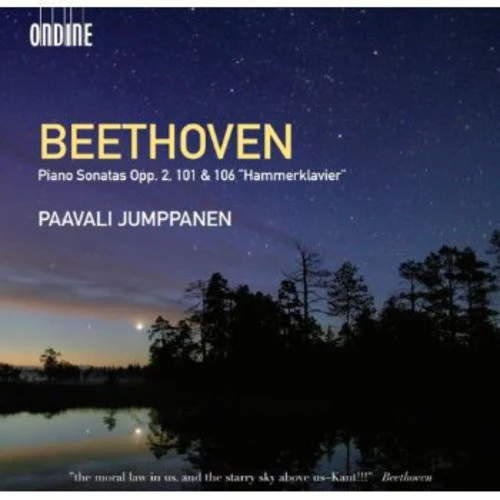
Beethoven: Piano Sonatas, Op 2, 101 & 106 / Paavali Jumppanen
BEETHOVEN Piano Sonata Nos. 1; 2; 3; 28; 29, “Hammerklavier” • Paavali Jumppanen (pn) • ONDINE 1248 (2 CDs: 143:37)
It has become a fairly common practice to program very early and very late Beethoven on the same recital. The purpose is obvious, but always useful; to compare and contrast the evolution of Beethoven’s style. Some pianists will point to the differences more starkly by emphasizing the strong Classical roots of the three opus 2 sonatas, as compared to the mystical Romanticism of the mighty final sonatas, including the massive “Hammerklavier.” The young Finnish pianist Paavali Jumppanen opts for an approach that seeks the commonality in the music, extracting kernels of that mysticism in the first sonatas, and emphasizing the Classical beauty and structure that still resides in the sprawling worlds of late Beethoven.
Jumppanen enhances this sense with generally leisurely tempos, which allow him to render textures with alluring clarity and balance, as well as pearly tone. The gentle pace of his playing is significant, because it flies in the face of the historicists who are keen to observe the metronome markings that Beethoven meticulously applied to his works, even years after they were composed (the metronome was patented in 1815). I am not one of those reviewers who normally lists competing timings, but in the case of Jumppanen’s “Hammerklavier” first movement, for example, the numbers are striking. He clocks in at 12: 08. No pianist in my collection comes close to such a crawl. Richter, 10: 35. Ashkenazy, 10:40. Horszowski, 11:39. Taub, 9:12. And the speed king, Schnabel, who attempts to hit the metronome marking of the composer, a remarkable 8:45.
These are not performances that carefully avoid the infusion of the performer’s personality. Jumppanen puts a certain gloss on the music that historically minded listeners might find off-putting, as I normally would. I also generally prefer this music a bit on the brisk side, although it is silly to expect performers to slavishly follow the metronome markings, which, for any number of reasons (and mere speculation) may not be accurate. But there is no denying the beauty of this playing. Jumppanen is no cookie-cutter pianist, and if my caveats do not bother you, there is much to enjoy here. Ondine’s beautiful recorded sound is no little bonus.
FANFARE: Peter Burwasser
BEETHOVEN Piano Sonata Nos. 1; 2; 3; 28; 29, “Hammerklavier” • Paavali Jumppanen (pn) • ONDINE 1248 (2 CDs: 143:37)
It has become a fairly common practice to program very early and very late Beethoven on the same recital. The purpose is obvious, but always useful; to compare and contrast the evolution of Beethoven’s style. Some pianists will point to the differences more starkly by emphasizing the strong Classical roots of the three opus 2 sonatas, as compared to the mystical Romanticism of the mighty final sonatas, including the massive “Hammerklavier.” The young Finnish pianist Paavali Jumppanen opts for an approach that seeks the commonality in the music, extracting kernels of that mysticism in the first sonatas, and emphasizing the Classical beauty and structure that still resides in the sprawling worlds of late Beethoven.
Jumppanen enhances this sense with generally leisurely tempos, which allow him to render textures with alluring clarity and balance, as well as pearly tone. The gentle pace of his playing is significant, because it flies in the face of the historicists who are keen to observe the metronome markings that Beethoven meticulously applied to his works, even years after they were composed (the metronome was patented in 1815). I am not one of those reviewers who normally lists competing timings, but in the case of Jumppanen’s “Hammerklavier” first movement, for example, the numbers are striking. He clocks in at 12: 08. No pianist in my collection comes close to such a crawl. Richter, 10: 35. Ashkenazy, 10:40. Horszowski, 11:39. Taub, 9:12. And the speed king, Schnabel, who attempts to hit the metronome marking of the composer, a remarkable 8:45.
These are not performances that carefully avoid the infusion of the performer’s personality. Jumppanen puts a certain gloss on the music that historically minded listeners might find off-putting, as I normally would. I also generally prefer this music a bit on the brisk side, although it is silly to expect performers to slavishly follow the metronome markings, which, for any number of reasons (and mere speculation) may not be accurate. But there is no denying the beauty of this playing. Jumppanen is no cookie-cutter pianist, and if my caveats do not bother you, there is much to enjoy here. Ondine’s beautiful recorded sound is no little bonus.
FANFARE: Peter Burwasser
$18.99
Beethoven: Piano Sonatas, Op 2, 101 & 106 / Paavali Jumppanen—
$18.99
Description
BEETHOVEN Piano Sonata Nos. 1; 2; 3; 28; 29, “Hammerklavier” • Paavali Jumppanen (pn) • ONDINE 1248 (2 CDs: 143:37)
It has become a fairly common practice to program very early and very late Beethoven on the same recital. The purpose is obvious, but always useful; to compare and contrast the evolution of Beethoven’s style. Some pianists will point to the differences more starkly by emphasizing the strong Classical roots of the three opus 2 sonatas, as compared to the mystical Romanticism of the mighty final sonatas, including the massive “Hammerklavier.” The young Finnish pianist Paavali Jumppanen opts for an approach that seeks the commonality in the music, extracting kernels of that mysticism in the first sonatas, and emphasizing the Classical beauty and structure that still resides in the sprawling worlds of late Beethoven.
Jumppanen enhances this sense with generally leisurely tempos, which allow him to render textures with alluring clarity and balance, as well as pearly tone. The gentle pace of his playing is significant, because it flies in the face of the historicists who are keen to observe the metronome markings that Beethoven meticulously applied to his works, even years after they were composed (the metronome was patented in 1815). I am not one of those reviewers who normally lists competing timings, but in the case of Jumppanen’s “Hammerklavier” first movement, for example, the numbers are striking. He clocks in at 12: 08. No pianist in my collection comes close to such a crawl. Richter, 10: 35. Ashkenazy, 10:40. Horszowski, 11:39. Taub, 9:12. And the speed king, Schnabel, who attempts to hit the metronome marking of the composer, a remarkable 8:45.
These are not performances that carefully avoid the infusion of the performer’s personality. Jumppanen puts a certain gloss on the music that historically minded listeners might find off-putting, as I normally would. I also generally prefer this music a bit on the brisk side, although it is silly to expect performers to slavishly follow the metronome markings, which, for any number of reasons (and mere speculation) may not be accurate. But there is no denying the beauty of this playing. Jumppanen is no cookie-cutter pianist, and if my caveats do not bother you, there is much to enjoy here. Ondine’s beautiful recorded sound is no little bonus.
FANFARE: Peter Burwasser