🎉 Up to 70% Off Selected ItemsShop Sale

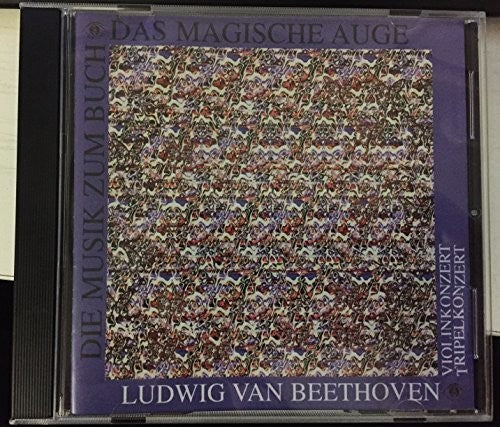
Beethoven: Violin Concerto, Triple Concerto / Zukerman, Bylsma, Maier, Badura-Skoda
It is good to have Pinchas Zukerman returning to the Beethoven Violin Concerto. It was in the late 1970s that he made his earlier DG recording with Daniel Barenboim and the Chicago Symphony Orchestra, a fine spacious reading, which I have unfortunately not had a chance to hear on CD format. The comparison with the LP brings home an extra depth in the new reading. If in the earlier version the characteristic warmth of Zukerman's tone marked the whole performance, this one brings greater emphasis on purity and refinement. The violin sound has less fat on it, and in this work that helps to convey an extra inner intensity. Such passages as the coda of the first movement are the more poignant in their seeming simplicity of expression, hushed to an extreme pianissimo. Zukerman is also stricter with himself over maintaining steady speeds, again purifying his concept. The result may be more disciplined, but it is never too rigid, with even the opening of the finale on the main rondo theme given a sense of gentle communing, not as outward-going as before. The recording helps, with the solo violin less forwardly balanced, and though the playing of the tuttis fails to match the soloist in intensity, the orchestra comes alive the moment he enters.
-- Edward Greenfield, Gramophone [11/1992]
reviewing the Violin Concerto, originally released as RCA 61219
-------
Collegium Aureum records are valuable as practical musicology, and it is irrelevant to say you prefer your Beethoven on modern instruments; this disc is a supplement, not a takeover bid. Badura-Skoda, who presumably directs the small band from the keyboard, plays a Broadwood Grand of 1816 and you soon get used to its tinny quality. Franzjosef Maier has his marvellous unmodernized Guarnerius of 1726, and like the excellent cellist he eschews vibrato. It is sometimes thought that when the balance fails in Beethoven the fault lies with our modern instruments but as this record shows this is not necessarily the case. Semiquavers in the bass of orchestral tuttis are still inaudible (as in the first climax of the first movement) and in the development when the soloists are all playing loud triplet quavers you can't hear the thematic fragments on the woodwind; you never can, and I suppose Beethoven is to blame. Old instruments can create as many problems as hey solve. This Broadwood Grand does not smother as much detail on other instruments as a modern piano, but it does not impinge on our consciousness as it should in its very first entry. One bonus is the sot/a race effect Beethoven asks for in the finale (modern instruments are never so self-effacing) and another is the proper sound of a Beethoven-period sustaining pedal being held through the last three bars. There is some very good playing from all three soloists in this finale. I suspected a slightly closer microphone was being used in the cadenza, but in general they have been under-emphasized by the recording engineers to help produce an early nineteenth-century sound. The whole disc provides a most rewarding experience.
-- Gramophone [8/1978]
reviewing the original LP release of the Triple Concerto
-- Edward Greenfield, Gramophone [11/1992]
reviewing the Violin Concerto, originally released as RCA 61219
-------
Collegium Aureum records are valuable as practical musicology, and it is irrelevant to say you prefer your Beethoven on modern instruments; this disc is a supplement, not a takeover bid. Badura-Skoda, who presumably directs the small band from the keyboard, plays a Broadwood Grand of 1816 and you soon get used to its tinny quality. Franzjosef Maier has his marvellous unmodernized Guarnerius of 1726, and like the excellent cellist he eschews vibrato. It is sometimes thought that when the balance fails in Beethoven the fault lies with our modern instruments but as this record shows this is not necessarily the case. Semiquavers in the bass of orchestral tuttis are still inaudible (as in the first climax of the first movement) and in the development when the soloists are all playing loud triplet quavers you can't hear the thematic fragments on the woodwind; you never can, and I suppose Beethoven is to blame. Old instruments can create as many problems as hey solve. This Broadwood Grand does not smother as much detail on other instruments as a modern piano, but it does not impinge on our consciousness as it should in its very first entry. One bonus is the sot/a race effect Beethoven asks for in the finale (modern instruments are never so self-effacing) and another is the proper sound of a Beethoven-period sustaining pedal being held through the last three bars. There is some very good playing from all three soloists in this finale. I suspected a slightly closer microphone was being used in the cadenza, but in general they have been under-emphasized by the recording engineers to help produce an early nineteenth-century sound. The whole disc provides a most rewarding experience.
-- Gramophone [8/1978]
reviewing the original LP release of the Triple Concerto
It is good to have Pinchas Zukerman returning to the Beethoven Violin Concerto. It was in the late 1970s that he made his earlier DG recording with Daniel Barenboim and the Chicago Symphony Orchestra, a fine spacious reading, which I have unfortunately not had a chance to hear on CD format. The comparison with the LP brings home an extra depth in the new reading. If in the earlier version the characteristic warmth of Zukerman's tone marked the whole performance, this one brings greater emphasis on purity and refinement. The violin sound has less fat on it, and in this work that helps to convey an extra inner intensity. Such passages as the coda of the first movement are the more poignant in their seeming simplicity of expression, hushed to an extreme pianissimo. Zukerman is also stricter with himself over maintaining steady speeds, again purifying his concept. The result may be more disciplined, but it is never too rigid, with even the opening of the finale on the main rondo theme given a sense of gentle communing, not as outward-going as before. The recording helps, with the solo violin less forwardly balanced, and though the playing of the tuttis fails to match the soloist in intensity, the orchestra comes alive the moment he enters.
-- Edward Greenfield, Gramophone [11/1992]
reviewing the Violin Concerto, originally released as RCA 61219
-------
Collegium Aureum records are valuable as practical musicology, and it is irrelevant to say you prefer your Beethoven on modern instruments; this disc is a supplement, not a takeover bid. Badura-Skoda, who presumably directs the small band from the keyboard, plays a Broadwood Grand of 1816 and you soon get used to its tinny quality. Franzjosef Maier has his marvellous unmodernized Guarnerius of 1726, and like the excellent cellist he eschews vibrato. It is sometimes thought that when the balance fails in Beethoven the fault lies with our modern instruments but as this record shows this is not necessarily the case. Semiquavers in the bass of orchestral tuttis are still inaudible (as in the first climax of the first movement) and in the development when the soloists are all playing loud triplet quavers you can't hear the thematic fragments on the woodwind; you never can, and I suppose Beethoven is to blame. Old instruments can create as many problems as hey solve. This Broadwood Grand does not smother as much detail on other instruments as a modern piano, but it does not impinge on our consciousness as it should in its very first entry. One bonus is the sot/a race effect Beethoven asks for in the finale (modern instruments are never so self-effacing) and another is the proper sound of a Beethoven-period sustaining pedal being held through the last three bars. There is some very good playing from all three soloists in this finale. I suspected a slightly closer microphone was being used in the cadenza, but in general they have been under-emphasized by the recording engineers to help produce an early nineteenth-century sound. The whole disc provides a most rewarding experience.
-- Gramophone [8/1978]
reviewing the original LP release of the Triple Concerto
-- Edward Greenfield, Gramophone [11/1992]
reviewing the Violin Concerto, originally released as RCA 61219
-------
Collegium Aureum records are valuable as practical musicology, and it is irrelevant to say you prefer your Beethoven on modern instruments; this disc is a supplement, not a takeover bid. Badura-Skoda, who presumably directs the small band from the keyboard, plays a Broadwood Grand of 1816 and you soon get used to its tinny quality. Franzjosef Maier has his marvellous unmodernized Guarnerius of 1726, and like the excellent cellist he eschews vibrato. It is sometimes thought that when the balance fails in Beethoven the fault lies with our modern instruments but as this record shows this is not necessarily the case. Semiquavers in the bass of orchestral tuttis are still inaudible (as in the first climax of the first movement) and in the development when the soloists are all playing loud triplet quavers you can't hear the thematic fragments on the woodwind; you never can, and I suppose Beethoven is to blame. Old instruments can create as many problems as hey solve. This Broadwood Grand does not smother as much detail on other instruments as a modern piano, but it does not impinge on our consciousness as it should in its very first entry. One bonus is the sot/a race effect Beethoven asks for in the finale (modern instruments are never so self-effacing) and another is the proper sound of a Beethoven-period sustaining pedal being held through the last three bars. There is some very good playing from all three soloists in this finale. I suspected a slightly closer microphone was being used in the cadenza, but in general they have been under-emphasized by the recording engineers to help produce an early nineteenth-century sound. The whole disc provides a most rewarding experience.
-- Gramophone [8/1978]
reviewing the original LP release of the Triple Concerto
$17.99
Beethoven: Violin Concerto, Triple Concerto / Zukerman, Bylsma, Maier, Badura-Skoda—
$17.99
Description
It is good to have Pinchas Zukerman returning to the Beethoven Violin Concerto. It was in the late 1970s that he made his earlier DG recording with Daniel Barenboim and the Chicago Symphony Orchestra, a fine spacious reading, which I have unfortunately not had a chance to hear on CD format. The comparison with the LP brings home an extra depth in the new reading. If in the earlier version the characteristic warmth of Zukerman's tone marked the whole performance, this one brings greater emphasis on purity and refinement. The violin sound has less fat on it, and in this work that helps to convey an extra inner intensity. Such passages as the coda of the first movement are the more poignant in their seeming simplicity of expression, hushed to an extreme pianissimo. Zukerman is also stricter with himself over maintaining steady speeds, again purifying his concept. The result may be more disciplined, but it is never too rigid, with even the opening of the finale on the main rondo theme given a sense of gentle communing, not as outward-going as before. The recording helps, with the solo violin less forwardly balanced, and though the playing of the tuttis fails to match the soloist in intensity, the orchestra comes alive the moment he enters.
-- Edward Greenfield, Gramophone [11/1992]
reviewing the Violin Concerto, originally released as RCA 61219
-------
Collegium Aureum records are valuable as practical musicology, and it is irrelevant to say you prefer your Beethoven on modern instruments; this disc is a supplement, not a takeover bid. Badura-Skoda, who presumably directs the small band from the keyboard, plays a Broadwood Grand of 1816 and you soon get used to its tinny quality. Franzjosef Maier has his marvellous unmodernized Guarnerius of 1726, and like the excellent cellist he eschews vibrato. It is sometimes thought that when the balance fails in Beethoven the fault lies with our modern instruments but as this record shows this is not necessarily the case. Semiquavers in the bass of orchestral tuttis are still inaudible (as in the first climax of the first movement) and in the development when the soloists are all playing loud triplet quavers you can't hear the thematic fragments on the woodwind; you never can, and I suppose Beethoven is to blame. Old instruments can create as many problems as hey solve. This Broadwood Grand does not smother as much detail on other instruments as a modern piano, but it does not impinge on our consciousness as it should in its very first entry. One bonus is the sot/a race effect Beethoven asks for in the finale (modern instruments are never so self-effacing) and another is the proper sound of a Beethoven-period sustaining pedal being held through the last three bars. There is some very good playing from all three soloists in this finale. I suspected a slightly closer microphone was being used in the cadenza, but in general they have been under-emphasized by the recording engineers to help produce an early nineteenth-century sound. The whole disc provides a most rewarding experience.
-- Gramophone [8/1978]
reviewing the original LP release of the Triple Concerto
-- Edward Greenfield, Gramophone [11/1992]
reviewing the Violin Concerto, originally released as RCA 61219
-------
Collegium Aureum records are valuable as practical musicology, and it is irrelevant to say you prefer your Beethoven on modern instruments; this disc is a supplement, not a takeover bid. Badura-Skoda, who presumably directs the small band from the keyboard, plays a Broadwood Grand of 1816 and you soon get used to its tinny quality. Franzjosef Maier has his marvellous unmodernized Guarnerius of 1726, and like the excellent cellist he eschews vibrato. It is sometimes thought that when the balance fails in Beethoven the fault lies with our modern instruments but as this record shows this is not necessarily the case. Semiquavers in the bass of orchestral tuttis are still inaudible (as in the first climax of the first movement) and in the development when the soloists are all playing loud triplet quavers you can't hear the thematic fragments on the woodwind; you never can, and I suppose Beethoven is to blame. Old instruments can create as many problems as hey solve. This Broadwood Grand does not smother as much detail on other instruments as a modern piano, but it does not impinge on our consciousness as it should in its very first entry. One bonus is the sot/a race effect Beethoven asks for in the finale (modern instruments are never so self-effacing) and another is the proper sound of a Beethoven-period sustaining pedal being held through the last three bars. There is some very good playing from all three soloists in this finale. I suspected a slightly closer microphone was being used in the cadenza, but in general they have been under-emphasized by the recording engineers to help produce an early nineteenth-century sound. The whole disc provides a most rewarding experience.
-- Gramophone [8/1978]
reviewing the original LP release of the Triple Concerto