🎉 Up to 70% Off Selected ItemsShop Sale

1 / 2
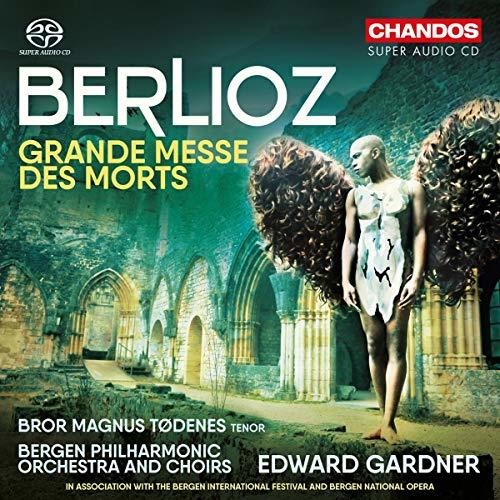
Berlioz: Grande Messe des Morts, Op. 5 / Gardner, Bergen Philharmonic
With this surround-sound recording of Berlioz’s Requiem, Edward Gardner and the Bergen Philharmonic Orchestra tackle the infinite and the immeasurable.
All the grandiose, striking beauty of the Requiem’s large-scale ceremonial is encapsulated by first-class vocal and orchestral forces, fully utilising the spatial possibilities of Grieghallen in Bergen. The matching of space and sonority was one of Berlioz’s lasting obsessions, one experience in St Paul’s Cathedral in London throwing Berlioz into a delirium of emotion from which he took days to recover. His Grande Messe des morts, notorious for its requirement of four brass bands in addition to a large orchestra and chorus, taken here from live concerts, has often been seen as one of the most emotionally powerful works of its kind.
Setting a solemn and austere, even ascetic text, the music is not that of an orthodox believer but of a visionary, inspired by the dramatic implications of death and judgement.
All the grandiose, striking beauty of the Requiem’s large-scale ceremonial is encapsulated by first-class vocal and orchestral forces, fully utilising the spatial possibilities of Grieghallen in Bergen. The matching of space and sonority was one of Berlioz’s lasting obsessions, one experience in St Paul’s Cathedral in London throwing Berlioz into a delirium of emotion from which he took days to recover. His Grande Messe des morts, notorious for its requirement of four brass bands in addition to a large orchestra and chorus, taken here from live concerts, has often been seen as one of the most emotionally powerful works of its kind.
Setting a solemn and austere, even ascetic text, the music is not that of an orthodox believer but of a visionary, inspired by the dramatic implications of death and judgement.
With this surround-sound recording of Berlioz’s Requiem, Edward Gardner and the Bergen Philharmonic Orchestra tackle the infinite and the immeasurable.
All the grandiose, striking beauty of the Requiem’s large-scale ceremonial is encapsulated by first-class vocal and orchestral forces, fully utilising the spatial possibilities of Grieghallen in Bergen. The matching of space and sonority was one of Berlioz’s lasting obsessions, one experience in St Paul’s Cathedral in London throwing Berlioz into a delirium of emotion from which he took days to recover. His Grande Messe des morts, notorious for its requirement of four brass bands in addition to a large orchestra and chorus, taken here from live concerts, has often been seen as one of the most emotionally powerful works of its kind.
Setting a solemn and austere, even ascetic text, the music is not that of an orthodox believer but of a visionary, inspired by the dramatic implications of death and judgement.
All the grandiose, striking beauty of the Requiem’s large-scale ceremonial is encapsulated by first-class vocal and orchestral forces, fully utilising the spatial possibilities of Grieghallen in Bergen. The matching of space and sonority was one of Berlioz’s lasting obsessions, one experience in St Paul’s Cathedral in London throwing Berlioz into a delirium of emotion from which he took days to recover. His Grande Messe des morts, notorious for its requirement of four brass bands in addition to a large orchestra and chorus, taken here from live concerts, has often been seen as one of the most emotionally powerful works of its kind.
Setting a solemn and austere, even ascetic text, the music is not that of an orthodox believer but of a visionary, inspired by the dramatic implications of death and judgement.
$16.99
Berlioz: Grande Messe des Morts, Op. 5 / Gardner, Bergen Philharmonic—
$16.99
Description
With this surround-sound recording of Berlioz’s Requiem, Edward Gardner and the Bergen Philharmonic Orchestra tackle the infinite and the immeasurable.
All the grandiose, striking beauty of the Requiem’s large-scale ceremonial is encapsulated by first-class vocal and orchestral forces, fully utilising the spatial possibilities of Grieghallen in Bergen. The matching of space and sonority was one of Berlioz’s lasting obsessions, one experience in St Paul’s Cathedral in London throwing Berlioz into a delirium of emotion from which he took days to recover. His Grande Messe des morts, notorious for its requirement of four brass bands in addition to a large orchestra and chorus, taken here from live concerts, has often been seen as one of the most emotionally powerful works of its kind.
Setting a solemn and austere, even ascetic text, the music is not that of an orthodox believer but of a visionary, inspired by the dramatic implications of death and judgement.
All the grandiose, striking beauty of the Requiem’s large-scale ceremonial is encapsulated by first-class vocal and orchestral forces, fully utilising the spatial possibilities of Grieghallen in Bergen. The matching of space and sonority was one of Berlioz’s lasting obsessions, one experience in St Paul’s Cathedral in London throwing Berlioz into a delirium of emotion from which he took days to recover. His Grande Messe des morts, notorious for its requirement of four brass bands in addition to a large orchestra and chorus, taken here from live concerts, has often been seen as one of the most emotionally powerful works of its kind.
Setting a solemn and austere, even ascetic text, the music is not that of an orthodox believer but of a visionary, inspired by the dramatic implications of death and judgement.