🎉 Up to 70% Off Selected ItemsShop Sale

1 / 2
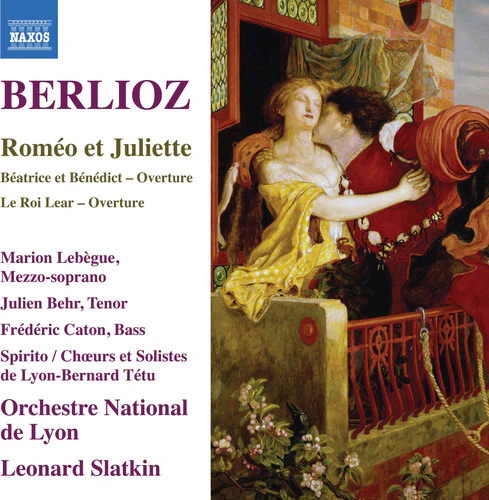
Berlioz: Roméo et Juliette, Op. 17, H 79
Of all Berlioz's Shakespeare-inspired works, Romeo et Juliette is unquestionably his masterpiece. It is also cast in an innovative new form, a kind of 'super-symphony' that incorporates elements of symphony, opera and oratorio. Berlioz composed no singing roles for the central characters, but allowed others to comment or narrate, giving latitude to incarnate the lovers in a musical language of extraordinary delicacy and passion. The vivid 'Ball Scene' and 'Romeo at the Capulet tomb' are intensely dramatic but the heart of the work is the 'Love Scene,' a long symphonic poem which Richard Wagner called 'the melody of the 19th century.'
Of all Berlioz's Shakespeare-inspired works, Romeo et Juliette is unquestionably his masterpiece. It is also cast in an innovative new form, a kind of 'super-symphony' that incorporates elements of symphony, opera and oratorio. Berlioz composed no singing roles for the central characters, but allowed others to comment or narrate, giving latitude to incarnate the lovers in a musical language of extraordinary delicacy and passion. The vivid 'Ball Scene' and 'Romeo at the Capulet tomb' are intensely dramatic but the heart of the work is the 'Love Scene,' a long symphonic poem which Richard Wagner called 'the melody of the 19th century.'
$5.25
Original: $14.99
-65%Berlioz: Roméo et Juliette, Op. 17, H 79—
$14.99
$5.25Description
Of all Berlioz's Shakespeare-inspired works, Romeo et Juliette is unquestionably his masterpiece. It is also cast in an innovative new form, a kind of 'super-symphony' that incorporates elements of symphony, opera and oratorio. Berlioz composed no singing roles for the central characters, but allowed others to comment or narrate, giving latitude to incarnate the lovers in a musical language of extraordinary delicacy and passion. The vivid 'Ball Scene' and 'Romeo at the Capulet tomb' are intensely dramatic but the heart of the work is the 'Love Scene,' a long symphonic poem which Richard Wagner called 'the melody of the 19th century.'