🎉 Up to 70% Off Selected ItemsShop Sale

1 / 2
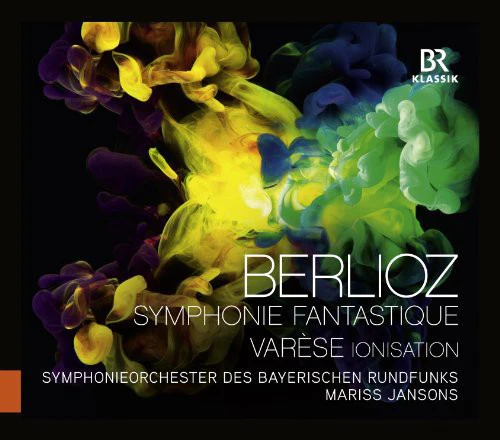
Berlioz: Symphonie Fantastique; Varese: Ionisation / Mariss Jansons
BERLIOZ Symphonie fantastique 1. VARÈSE Ionisation 2 • Mariss Jansons, cond; Bavarian RSO • BR 900121 (58:45) Live: Munich 1 3/7-8/2013 and 2 7/1-2/2010
This new recording of Berlioz’s iconic masterpiece has a good feel to it—certainly, a more “Berlioz-ish” feel than the interesting but emotionally detached version by Robin Ticciati. Jansons achieves this feeling, particularly in the first movement, by means of varied accents on certain notes within the phrases, as well as by means of superbly chiseled dynamics that bring out details within the score without unduly italicizing the music. This gives the listener the feeling of, as the movement is titled, “Reveries and Passions.” Here, from the outset, one is aware of an awakening of the things that will eventually come to pass in the ensuing movements. This performance does not include the optional cornet solo in the second movement, but here, too, Jansons accents the music in a way (and I know this is hard to put into words) that just “sounds French.” You’ll know exactly what I mean when you hear it. I was also fascinated by the way in which Jansons held my interest throughout the “Scenes aux champs,” undoubtedly the most difficult movement of the five to pull off well—it’s so easy for this movement to come across as boring, particularly when it is not inflected.
One of the more interesting aspects of this performance is that Jansons does not slam into the “March to the Scaffold” as if it was the most dramatic event in the symphony (as so many conductors think), but, rather, almost ties it in to the previous movement by understating its opening measures. I would have liked a little more raw power when the brasses opened up, but he maintains his overall sense of balance here by not exaggerating. Jansons, rather, saves the all-out drama for the last few bars, which actually makes more sense—after all, that’s the “drop.” Jansons saves his best and most dramatic gestures for the “Witches’ Sabbath,” which has all the power and strange accents one could wish for. (Serpent Watch for those who actually care: That instrument is not used in this performance.) The particular way in which Jansons accents the timpani in the middle of the movement is absolutely wonderful, producing an effect I’ve heard in no other performance. All in all, this is exactly the kind of performance we critics yearn to hear but so seldom do, one in which a fresh approach is brought to an old warhorse, yet does not damage or mar the music.
Edgar Varèse’s strange work for percussion instruments and siren, Ionisation (1931), may seem a bit too different to follow Berlioz on a disc, but in its own way it is an ear-cleanser, particularly when one has been listening to a lot of Romantically-influenced music. The liner notes credit Varèse with having “discovered the mechanical siren as a musical instrument,” but George Antheil did that first in his 1924 Ballet Mécanique. Here, too, Jansons finds an unusual way of playing the work, giving it a jaunty, syncopated feeling, and it ends up being quite an enjoyable romp.
In its own way, this performance of the Berlioz is as good as the old mono recording I praised two issues back by Carl A. Bünte on Bella Musica, and the sonics are easily 20 times better here. Highly recommended.
FANFARE: Lynn René Bayley
BERLIOZ Symphonie fantastique 1. VARÈSE Ionisation 2 • Mariss Jansons, cond; Bavarian RSO • BR 900121 (58:45) Live: Munich 1 3/7-8/2013 and 2 7/1-2/2010
This new recording of Berlioz’s iconic masterpiece has a good feel to it—certainly, a more “Berlioz-ish” feel than the interesting but emotionally detached version by Robin Ticciati. Jansons achieves this feeling, particularly in the first movement, by means of varied accents on certain notes within the phrases, as well as by means of superbly chiseled dynamics that bring out details within the score without unduly italicizing the music. This gives the listener the feeling of, as the movement is titled, “Reveries and Passions.” Here, from the outset, one is aware of an awakening of the things that will eventually come to pass in the ensuing movements. This performance does not include the optional cornet solo in the second movement, but here, too, Jansons accents the music in a way (and I know this is hard to put into words) that just “sounds French.” You’ll know exactly what I mean when you hear it. I was also fascinated by the way in which Jansons held my interest throughout the “Scenes aux champs,” undoubtedly the most difficult movement of the five to pull off well—it’s so easy for this movement to come across as boring, particularly when it is not inflected.
One of the more interesting aspects of this performance is that Jansons does not slam into the “March to the Scaffold” as if it was the most dramatic event in the symphony (as so many conductors think), but, rather, almost ties it in to the previous movement by understating its opening measures. I would have liked a little more raw power when the brasses opened up, but he maintains his overall sense of balance here by not exaggerating. Jansons, rather, saves the all-out drama for the last few bars, which actually makes more sense—after all, that’s the “drop.” Jansons saves his best and most dramatic gestures for the “Witches’ Sabbath,” which has all the power and strange accents one could wish for. (Serpent Watch for those who actually care: That instrument is not used in this performance.) The particular way in which Jansons accents the timpani in the middle of the movement is absolutely wonderful, producing an effect I’ve heard in no other performance. All in all, this is exactly the kind of performance we critics yearn to hear but so seldom do, one in which a fresh approach is brought to an old warhorse, yet does not damage or mar the music.
Edgar Varèse’s strange work for percussion instruments and siren, Ionisation (1931), may seem a bit too different to follow Berlioz on a disc, but in its own way it is an ear-cleanser, particularly when one has been listening to a lot of Romantically-influenced music. The liner notes credit Varèse with having “discovered the mechanical siren as a musical instrument,” but George Antheil did that first in his 1924 Ballet Mécanique. Here, too, Jansons finds an unusual way of playing the work, giving it a jaunty, syncopated feeling, and it ends up being quite an enjoyable romp.
In its own way, this performance of the Berlioz is as good as the old mono recording I praised two issues back by Carl A. Bünte on Bella Musica, and the sonics are easily 20 times better here. Highly recommended.
FANFARE: Lynn René Bayley
$19.99
Berlioz: Symphonie Fantastique; Varese: Ionisation / Mariss Jansons—
$19.99
Description
BERLIOZ Symphonie fantastique 1. VARÈSE Ionisation 2 • Mariss Jansons, cond; Bavarian RSO • BR 900121 (58:45) Live: Munich 1 3/7-8/2013 and 2 7/1-2/2010
This new recording of Berlioz’s iconic masterpiece has a good feel to it—certainly, a more “Berlioz-ish” feel than the interesting but emotionally detached version by Robin Ticciati. Jansons achieves this feeling, particularly in the first movement, by means of varied accents on certain notes within the phrases, as well as by means of superbly chiseled dynamics that bring out details within the score without unduly italicizing the music. This gives the listener the feeling of, as the movement is titled, “Reveries and Passions.” Here, from the outset, one is aware of an awakening of the things that will eventually come to pass in the ensuing movements. This performance does not include the optional cornet solo in the second movement, but here, too, Jansons accents the music in a way (and I know this is hard to put into words) that just “sounds French.” You’ll know exactly what I mean when you hear it. I was also fascinated by the way in which Jansons held my interest throughout the “Scenes aux champs,” undoubtedly the most difficult movement of the five to pull off well—it’s so easy for this movement to come across as boring, particularly when it is not inflected.
One of the more interesting aspects of this performance is that Jansons does not slam into the “March to the Scaffold” as if it was the most dramatic event in the symphony (as so many conductors think), but, rather, almost ties it in to the previous movement by understating its opening measures. I would have liked a little more raw power when the brasses opened up, but he maintains his overall sense of balance here by not exaggerating. Jansons, rather, saves the all-out drama for the last few bars, which actually makes more sense—after all, that’s the “drop.” Jansons saves his best and most dramatic gestures for the “Witches’ Sabbath,” which has all the power and strange accents one could wish for. (Serpent Watch for those who actually care: That instrument is not used in this performance.) The particular way in which Jansons accents the timpani in the middle of the movement is absolutely wonderful, producing an effect I’ve heard in no other performance. All in all, this is exactly the kind of performance we critics yearn to hear but so seldom do, one in which a fresh approach is brought to an old warhorse, yet does not damage or mar the music.
Edgar Varèse’s strange work for percussion instruments and siren, Ionisation (1931), may seem a bit too different to follow Berlioz on a disc, but in its own way it is an ear-cleanser, particularly when one has been listening to a lot of Romantically-influenced music. The liner notes credit Varèse with having “discovered the mechanical siren as a musical instrument,” but George Antheil did that first in his 1924 Ballet Mécanique. Here, too, Jansons finds an unusual way of playing the work, giving it a jaunty, syncopated feeling, and it ends up being quite an enjoyable romp.
In its own way, this performance of the Berlioz is as good as the old mono recording I praised two issues back by Carl A. Bünte on Bella Musica, and the sonics are easily 20 times better here. Highly recommended.
FANFARE: Lynn René Bayley