🎉 Up to 70% Off Selected ItemsShop Sale

1 / 2
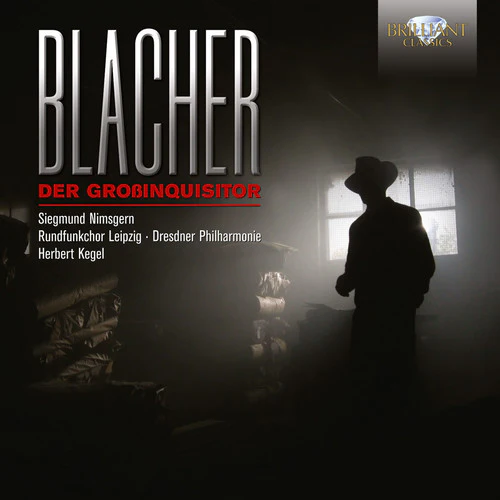
Blacher: Der Grossinquisitor / Nimsgern, Kegel, Dresden Philharmonic
BLACHER Der Großinquisitor • Herbert Kegel, cond; Siegmund Nimsgern (bar); Leipzig R Ch; Dresden PO • BRILLIANT 9437 (59:32 & German only)
This reissue of an Edel recording from 1986 presents Boris Blacher’s wartime (1942) setting of a scene from Dostoyevsky’s The Brothers Karamazov. In this oratorio, Jesus returns to earth in 16th-century Seville. Blacher, banned from Germany because he was Jewish, borrowed the plot from Dostoyevsky, yet wrote his own text in which “some hundred heretics were burnt ad majorem gloriam Dei by the Cardinal Grand Inquisitor.” According to the notes, Leo Borchard, who directed the Berlin Philharmonic at war’s end, assisted Blacher in his work by writing a text for the second part. He suggested the inclusion of “the three temptations by the Devil from Matthew 4:1-11 into the Grand Inquisitor’s monologue, which is directed at Jesus.”
Despite the painfulness of the experience that spawned Der Großinquisitor and its seriousness of plot, the music is often quiet, internalizing the composer’s pain and angst in music that is modern in harmony but conventional in rhythm, and also contains singable melodies. Yes, there are dramatic outbursts, but the score is not consistently loud and angry. Jörn Paulini’s notes claim that the score contains “apparently aimless melody,” but I found the melodic strands fairly easy to follow. Compared to some of Stravinsky’s works, they are models of clarity. I’m glad that the brief notes gave some idea of what was in the text, however, because the libretto included in the booklet is only in German, which was of little help to me or any other listener who does not know the language. One thing I noticed was how, in the second half of the cantata, Blacher used variations and inversions of themes from the first half—a very clever and creative way of tying the music together.
The sound quality of the recording tends to be diffuse and swathed in reverb, which takes the edge off some of the loud outbursts and makes the orchestra sound muffled in the quiet passages. I’m not sure if this was Blacher’s intent, but speaking strictly from a personal bias, I don’t like this kind of sound. Despite this, the performance quality is excellent. Kegel keeps things moving without unduly pressuring the music, although a little more pressure now and then might have been welcome. The Leipzig Radio Chorus is, in a word, superb, both in blend and (thankfully!) diction. Baritone Nimsgern, who appears only in the second half of the work, sings very well with his dark-timbred voice in his role as the Grand Inquisitor.
As with so many works written during this awful, angst-ridden period, one must ask the question if the work of art, good as it is, has meaning for listeners beyond its time and place. The suffering of not only individuals but also large masses of people is not only difficult to put into musical terms, but also difficult to make apply to mankind in general at a different period of time. I think, however, that different listeners in different cultures can imagine particular religious or political situations that a work like Der Großinquisitor could apply to in our present day. I found this to be an excellent work, one whose emotional impact was somewhat diffused for me by the clouded sonics, yet which I can imagine it making a tremendous impact in a live performance.
FANFARE: Lynn René Bayley
BLACHER Der Großinquisitor • Herbert Kegel, cond; Siegmund Nimsgern (bar); Leipzig R Ch; Dresden PO • BRILLIANT 9437 (59:32 & German only)
This reissue of an Edel recording from 1986 presents Boris Blacher’s wartime (1942) setting of a scene from Dostoyevsky’s The Brothers Karamazov. In this oratorio, Jesus returns to earth in 16th-century Seville. Blacher, banned from Germany because he was Jewish, borrowed the plot from Dostoyevsky, yet wrote his own text in which “some hundred heretics were burnt ad majorem gloriam Dei by the Cardinal Grand Inquisitor.” According to the notes, Leo Borchard, who directed the Berlin Philharmonic at war’s end, assisted Blacher in his work by writing a text for the second part. He suggested the inclusion of “the three temptations by the Devil from Matthew 4:1-11 into the Grand Inquisitor’s monologue, which is directed at Jesus.”
Despite the painfulness of the experience that spawned Der Großinquisitor and its seriousness of plot, the music is often quiet, internalizing the composer’s pain and angst in music that is modern in harmony but conventional in rhythm, and also contains singable melodies. Yes, there are dramatic outbursts, but the score is not consistently loud and angry. Jörn Paulini’s notes claim that the score contains “apparently aimless melody,” but I found the melodic strands fairly easy to follow. Compared to some of Stravinsky’s works, they are models of clarity. I’m glad that the brief notes gave some idea of what was in the text, however, because the libretto included in the booklet is only in German, which was of little help to me or any other listener who does not know the language. One thing I noticed was how, in the second half of the cantata, Blacher used variations and inversions of themes from the first half—a very clever and creative way of tying the music together.
The sound quality of the recording tends to be diffuse and swathed in reverb, which takes the edge off some of the loud outbursts and makes the orchestra sound muffled in the quiet passages. I’m not sure if this was Blacher’s intent, but speaking strictly from a personal bias, I don’t like this kind of sound. Despite this, the performance quality is excellent. Kegel keeps things moving without unduly pressuring the music, although a little more pressure now and then might have been welcome. The Leipzig Radio Chorus is, in a word, superb, both in blend and (thankfully!) diction. Baritone Nimsgern, who appears only in the second half of the work, sings very well with his dark-timbred voice in his role as the Grand Inquisitor.
As with so many works written during this awful, angst-ridden period, one must ask the question if the work of art, good as it is, has meaning for listeners beyond its time and place. The suffering of not only individuals but also large masses of people is not only difficult to put into musical terms, but also difficult to make apply to mankind in general at a different period of time. I think, however, that different listeners in different cultures can imagine particular religious or political situations that a work like Der Großinquisitor could apply to in our present day. I found this to be an excellent work, one whose emotional impact was somewhat diffused for me by the clouded sonics, yet which I can imagine it making a tremendous impact in a live performance.
FANFARE: Lynn René Bayley
$13.99
Blacher: Der Grossinquisitor / Nimsgern, Kegel, Dresden Philharmonic—
$13.99
Description
BLACHER Der Großinquisitor • Herbert Kegel, cond; Siegmund Nimsgern (bar); Leipzig R Ch; Dresden PO • BRILLIANT 9437 (59:32 & German only)
This reissue of an Edel recording from 1986 presents Boris Blacher’s wartime (1942) setting of a scene from Dostoyevsky’s The Brothers Karamazov. In this oratorio, Jesus returns to earth in 16th-century Seville. Blacher, banned from Germany because he was Jewish, borrowed the plot from Dostoyevsky, yet wrote his own text in which “some hundred heretics were burnt ad majorem gloriam Dei by the Cardinal Grand Inquisitor.” According to the notes, Leo Borchard, who directed the Berlin Philharmonic at war’s end, assisted Blacher in his work by writing a text for the second part. He suggested the inclusion of “the three temptations by the Devil from Matthew 4:1-11 into the Grand Inquisitor’s monologue, which is directed at Jesus.”
Despite the painfulness of the experience that spawned Der Großinquisitor and its seriousness of plot, the music is often quiet, internalizing the composer’s pain and angst in music that is modern in harmony but conventional in rhythm, and also contains singable melodies. Yes, there are dramatic outbursts, but the score is not consistently loud and angry. Jörn Paulini’s notes claim that the score contains “apparently aimless melody,” but I found the melodic strands fairly easy to follow. Compared to some of Stravinsky’s works, they are models of clarity. I’m glad that the brief notes gave some idea of what was in the text, however, because the libretto included in the booklet is only in German, which was of little help to me or any other listener who does not know the language. One thing I noticed was how, in the second half of the cantata, Blacher used variations and inversions of themes from the first half—a very clever and creative way of tying the music together.
The sound quality of the recording tends to be diffuse and swathed in reverb, which takes the edge off some of the loud outbursts and makes the orchestra sound muffled in the quiet passages. I’m not sure if this was Blacher’s intent, but speaking strictly from a personal bias, I don’t like this kind of sound. Despite this, the performance quality is excellent. Kegel keeps things moving without unduly pressuring the music, although a little more pressure now and then might have been welcome. The Leipzig Radio Chorus is, in a word, superb, both in blend and (thankfully!) diction. Baritone Nimsgern, who appears only in the second half of the work, sings very well with his dark-timbred voice in his role as the Grand Inquisitor.
As with so many works written during this awful, angst-ridden period, one must ask the question if the work of art, good as it is, has meaning for listeners beyond its time and place. The suffering of not only individuals but also large masses of people is not only difficult to put into musical terms, but also difficult to make apply to mankind in general at a different period of time. I think, however, that different listeners in different cultures can imagine particular religious or political situations that a work like Der Großinquisitor could apply to in our present day. I found this to be an excellent work, one whose emotional impact was somewhat diffused for me by the clouded sonics, yet which I can imagine it making a tremendous impact in a live performance.
FANFARE: Lynn René Bayley