🎉 Up to 70% Off Selected ItemsShop Sale

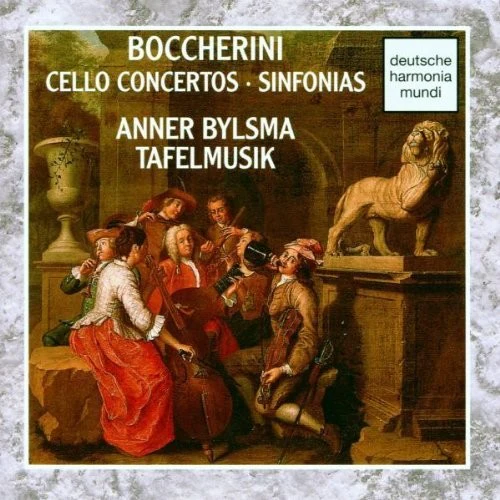
Boccherini: Cello Concerti & Symphonies / Bylsma, Tafelmusik
Tafelmusik are a Canadian period-instrument group who bring plenty of spirit and enthusiasm to their performances. I have chiefly heard them before in baroque repertory, to which their rather direct and even slightly edgy tone may be better suited than it is to the more suave Boccherini. The B flat Symphony they offer here, Op. 21 No. 4 in Boccherini's numbering, is not to my knowledge otherwise available; the chief interest resides in the first movement, a typically exuberant piece, full of repeated notes and dashing off every now and then into brilliant semiquaver passages, though there is some characteristically charming pathetic music in the andantino. The players here make a hairsbreadth pause before each accent in the first movement (and there are rather a lot of them), which seems to me disturbing to the rhythm. They also offer the D minor Symphony, La casa del diavolo, based in part on Gluck's Dance of the Furies from Orphee. They play the first movement at a tremendous speed and with great vigour, the slow movement rather dully and the finale, again, very fast and duly diabolically. Here, however, they run into competition with the disc by Ensemble 415 (Harmonia Mundi), which offers a superior performance; tighter and more controlled, more graceful as well as sweeter-toned in the middle movement and less reliant on breathtaking thrills to make the fast movements effective.
But with Anner Bylsma playing two concertos, this is certainly a disc to be considered seriously. His performance of the G major work is far more appealing than that of the relatively staid Wouter Willer on the EMI disc cited above, its quick movements quicker, its slow movement slower— and played with remarkable control (you cannot hear the changes of bow) and with much poetry. And there is some dazzling playing at the very top of the instrument in the finale. The D major work is perhaps slightly more ordinary, but that vein of pathos is again much in evidence in the andante lentarello (a typical Boccherini marking, whatever it may mean), where the cello duets with a solo oboe. A record, then, that in spite of some flaws the Boccherinian will want to have.
-- Stanley Sadie, Gramophone [2/1990]
But with Anner Bylsma playing two concertos, this is certainly a disc to be considered seriously. His performance of the G major work is far more appealing than that of the relatively staid Wouter Willer on the EMI disc cited above, its quick movements quicker, its slow movement slower— and played with remarkable control (you cannot hear the changes of bow) and with much poetry. And there is some dazzling playing at the very top of the instrument in the finale. The D major work is perhaps slightly more ordinary, but that vein of pathos is again much in evidence in the andante lentarello (a typical Boccherini marking, whatever it may mean), where the cello duets with a solo oboe. A record, then, that in spite of some flaws the Boccherinian will want to have.
-- Stanley Sadie, Gramophone [2/1990]
Tafelmusik are a Canadian period-instrument group who bring plenty of spirit and enthusiasm to their performances. I have chiefly heard them before in baroque repertory, to which their rather direct and even slightly edgy tone may be better suited than it is to the more suave Boccherini. The B flat Symphony they offer here, Op. 21 No. 4 in Boccherini's numbering, is not to my knowledge otherwise available; the chief interest resides in the first movement, a typically exuberant piece, full of repeated notes and dashing off every now and then into brilliant semiquaver passages, though there is some characteristically charming pathetic music in the andantino. The players here make a hairsbreadth pause before each accent in the first movement (and there are rather a lot of them), which seems to me disturbing to the rhythm. They also offer the D minor Symphony, La casa del diavolo, based in part on Gluck's Dance of the Furies from Orphee. They play the first movement at a tremendous speed and with great vigour, the slow movement rather dully and the finale, again, very fast and duly diabolically. Here, however, they run into competition with the disc by Ensemble 415 (Harmonia Mundi), which offers a superior performance; tighter and more controlled, more graceful as well as sweeter-toned in the middle movement and less reliant on breathtaking thrills to make the fast movements effective.
But with Anner Bylsma playing two concertos, this is certainly a disc to be considered seriously. His performance of the G major work is far more appealing than that of the relatively staid Wouter Willer on the EMI disc cited above, its quick movements quicker, its slow movement slower— and played with remarkable control (you cannot hear the changes of bow) and with much poetry. And there is some dazzling playing at the very top of the instrument in the finale. The D major work is perhaps slightly more ordinary, but that vein of pathos is again much in evidence in the andante lentarello (a typical Boccherini marking, whatever it may mean), where the cello duets with a solo oboe. A record, then, that in spite of some flaws the Boccherinian will want to have.
-- Stanley Sadie, Gramophone [2/1990]
But with Anner Bylsma playing two concertos, this is certainly a disc to be considered seriously. His performance of the G major work is far more appealing than that of the relatively staid Wouter Willer on the EMI disc cited above, its quick movements quicker, its slow movement slower— and played with remarkable control (you cannot hear the changes of bow) and with much poetry. And there is some dazzling playing at the very top of the instrument in the finale. The D major work is perhaps slightly more ordinary, but that vein of pathos is again much in evidence in the andante lentarello (a typical Boccherini marking, whatever it may mean), where the cello duets with a solo oboe. A record, then, that in spite of some flaws the Boccherinian will want to have.
-- Stanley Sadie, Gramophone [2/1990]
$17.99
Boccherini: Cello Concerti & Symphonies / Bylsma, Tafelmusik—
$17.99
Description
Tafelmusik are a Canadian period-instrument group who bring plenty of spirit and enthusiasm to their performances. I have chiefly heard them before in baroque repertory, to which their rather direct and even slightly edgy tone may be better suited than it is to the more suave Boccherini. The B flat Symphony they offer here, Op. 21 No. 4 in Boccherini's numbering, is not to my knowledge otherwise available; the chief interest resides in the first movement, a typically exuberant piece, full of repeated notes and dashing off every now and then into brilliant semiquaver passages, though there is some characteristically charming pathetic music in the andantino. The players here make a hairsbreadth pause before each accent in the first movement (and there are rather a lot of them), which seems to me disturbing to the rhythm. They also offer the D minor Symphony, La casa del diavolo, based in part on Gluck's Dance of the Furies from Orphee. They play the first movement at a tremendous speed and with great vigour, the slow movement rather dully and the finale, again, very fast and duly diabolically. Here, however, they run into competition with the disc by Ensemble 415 (Harmonia Mundi), which offers a superior performance; tighter and more controlled, more graceful as well as sweeter-toned in the middle movement and less reliant on breathtaking thrills to make the fast movements effective.
But with Anner Bylsma playing two concertos, this is certainly a disc to be considered seriously. His performance of the G major work is far more appealing than that of the relatively staid Wouter Willer on the EMI disc cited above, its quick movements quicker, its slow movement slower— and played with remarkable control (you cannot hear the changes of bow) and with much poetry. And there is some dazzling playing at the very top of the instrument in the finale. The D major work is perhaps slightly more ordinary, but that vein of pathos is again much in evidence in the andante lentarello (a typical Boccherini marking, whatever it may mean), where the cello duets with a solo oboe. A record, then, that in spite of some flaws the Boccherinian will want to have.
-- Stanley Sadie, Gramophone [2/1990]
But with Anner Bylsma playing two concertos, this is certainly a disc to be considered seriously. His performance of the G major work is far more appealing than that of the relatively staid Wouter Willer on the EMI disc cited above, its quick movements quicker, its slow movement slower— and played with remarkable control (you cannot hear the changes of bow) and with much poetry. And there is some dazzling playing at the very top of the instrument in the finale. The D major work is perhaps slightly more ordinary, but that vein of pathos is again much in evidence in the andante lentarello (a typical Boccherini marking, whatever it may mean), where the cello duets with a solo oboe. A record, then, that in spite of some flaws the Boccherinian will want to have.
-- Stanley Sadie, Gramophone [2/1990]