🎉 Up to 70% Off Selected ItemsShop Sale

1 / 2
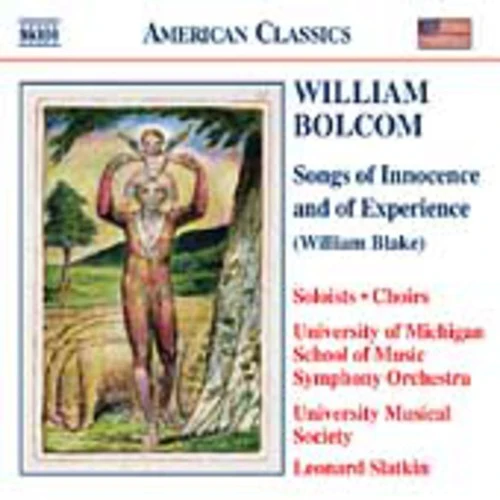
Bolcom: Songs of Innocence & Experience / Slatkin
"There is nothing like Songs of Innocence and of Experience in all of American music...the score is a multicultural stew of idioms, from rigorous modernism to Mahler-like Romanticism, Appalachian folk songs, madrigals, country, ragtime, show music, rock, soul and reggae...Monstrous, indeed...an influential landmark in both the development of Bolcom's eclectic aesthetic and recent American musical history, documenting the liberating shift from high-modernist orthodoxy to an all-embracing post-modern collage of styles...In a coup for UMS and U-M, the feisty classical label Naxos has agreed to issue the first recording of the piece. Naxos engineers will tape Thursday's performance, along with follow-up sessions Friday and Saturday. Despite ecstatic reviews and cult status, the piece has never been commercially recorded...Naxos is covering engineering, production, conductor, soloist, copyright and other fees related to recording. " -- Mark Stryker, Detroit Free Press, April 6th, 2004
"William Bolcom's gigantic, well-more-than-two-hour setting of William Blake's complete "Songs of Innocence and of Experience" poetic cycle is enormously difficult and expensive to perform. Looking down at the forces assembled for the University of Michigan performance in Hill Auditorium here on Thursday night was a mega-Mahlerian experience, with a stage extension needed to accommodate the nearly 500 musicians (bigger than the forces of any Mahler "Symphony of a Thousand" I have encountered). All that was missing were lighting effects and projections of Blake's engravings, suggested in the score. But they were on display in the lobby. So visually it was awesome, and musically it was pretty awesome, too. Mr. Bolcom, who is now 65, has taught at the University of Michigan since 1973. He first became interested in Blake's visionary poems - written in the late 18th century and full of Christian mysticism and a horror of modern life and human cruelty - in 1956, from when his first sketches date. Composed sporadically, the piece received its world and American premieres in 1984 and has been performed intermittently since. At its second appearance in New York, with Leonard Slatkin conducting the St. Louis Symphony at Carnegie Hall in 1992, Edward Rothstein ended the first paragraph of his review in The New York Times with the words, "It should be recorded." Now, at long last, it has been. Thursday's performance was again conducted by Mr. Slatkin and, with patching sessions, will be released on the Naxos label."
-- John Rockwell, New York Times, April 11, 2004
"William Bolcom's gigantic, well-more-than-two-hour setting of William Blake's complete "Songs of Innocence and of Experience" poetic cycle is enormously difficult and expensive to perform. Looking down at the forces assembled for the University of Michigan performance in Hill Auditorium here on Thursday night was a mega-Mahlerian experience, with a stage extension needed to accommodate the nearly 500 musicians (bigger than the forces of any Mahler "Symphony of a Thousand" I have encountered). All that was missing were lighting effects and projections of Blake's engravings, suggested in the score. But they were on display in the lobby. So visually it was awesome, and musically it was pretty awesome, too. Mr. Bolcom, who is now 65, has taught at the University of Michigan since 1973. He first became interested in Blake's visionary poems - written in the late 18th century and full of Christian mysticism and a horror of modern life and human cruelty - in 1956, from when his first sketches date. Composed sporadically, the piece received its world and American premieres in 1984 and has been performed intermittently since. At its second appearance in New York, with Leonard Slatkin conducting the St. Louis Symphony at Carnegie Hall in 1992, Edward Rothstein ended the first paragraph of his review in The New York Times with the words, "It should be recorded." Now, at long last, it has been. Thursday's performance was again conducted by Mr. Slatkin and, with patching sessions, will be released on the Naxos label."
-- John Rockwell, New York Times, April 11, 2004
"There is nothing like Songs of Innocence and of Experience in all of American music...the score is a multicultural stew of idioms, from rigorous modernism to Mahler-like Romanticism, Appalachian folk songs, madrigals, country, ragtime, show music, rock, soul and reggae...Monstrous, indeed...an influential landmark in both the development of Bolcom's eclectic aesthetic and recent American musical history, documenting the liberating shift from high-modernist orthodoxy to an all-embracing post-modern collage of styles...In a coup for UMS and U-M, the feisty classical label Naxos has agreed to issue the first recording of the piece. Naxos engineers will tape Thursday's performance, along with follow-up sessions Friday and Saturday. Despite ecstatic reviews and cult status, the piece has never been commercially recorded...Naxos is covering engineering, production, conductor, soloist, copyright and other fees related to recording. " -- Mark Stryker, Detroit Free Press, April 6th, 2004
"William Bolcom's gigantic, well-more-than-two-hour setting of William Blake's complete "Songs of Innocence and of Experience" poetic cycle is enormously difficult and expensive to perform. Looking down at the forces assembled for the University of Michigan performance in Hill Auditorium here on Thursday night was a mega-Mahlerian experience, with a stage extension needed to accommodate the nearly 500 musicians (bigger than the forces of any Mahler "Symphony of a Thousand" I have encountered). All that was missing were lighting effects and projections of Blake's engravings, suggested in the score. But they were on display in the lobby. So visually it was awesome, and musically it was pretty awesome, too. Mr. Bolcom, who is now 65, has taught at the University of Michigan since 1973. He first became interested in Blake's visionary poems - written in the late 18th century and full of Christian mysticism and a horror of modern life and human cruelty - in 1956, from when his first sketches date. Composed sporadically, the piece received its world and American premieres in 1984 and has been performed intermittently since. At its second appearance in New York, with Leonard Slatkin conducting the St. Louis Symphony at Carnegie Hall in 1992, Edward Rothstein ended the first paragraph of his review in The New York Times with the words, "It should be recorded." Now, at long last, it has been. Thursday's performance was again conducted by Mr. Slatkin and, with patching sessions, will be released on the Naxos label."
-- John Rockwell, New York Times, April 11, 2004
"William Bolcom's gigantic, well-more-than-two-hour setting of William Blake's complete "Songs of Innocence and of Experience" poetic cycle is enormously difficult and expensive to perform. Looking down at the forces assembled for the University of Michigan performance in Hill Auditorium here on Thursday night was a mega-Mahlerian experience, with a stage extension needed to accommodate the nearly 500 musicians (bigger than the forces of any Mahler "Symphony of a Thousand" I have encountered). All that was missing were lighting effects and projections of Blake's engravings, suggested in the score. But they were on display in the lobby. So visually it was awesome, and musically it was pretty awesome, too. Mr. Bolcom, who is now 65, has taught at the University of Michigan since 1973. He first became interested in Blake's visionary poems - written in the late 18th century and full of Christian mysticism and a horror of modern life and human cruelty - in 1956, from when his first sketches date. Composed sporadically, the piece received its world and American premieres in 1984 and has been performed intermittently since. At its second appearance in New York, with Leonard Slatkin conducting the St. Louis Symphony at Carnegie Hall in 1992, Edward Rothstein ended the first paragraph of his review in The New York Times with the words, "It should be recorded." Now, at long last, it has been. Thursday's performance was again conducted by Mr. Slatkin and, with patching sessions, will be released on the Naxos label."
-- John Rockwell, New York Times, April 11, 2004
$25.99
Bolcom: Songs of Innocence & Experience / Slatkin—
$25.99
Description
"There is nothing like Songs of Innocence and of Experience in all of American music...the score is a multicultural stew of idioms, from rigorous modernism to Mahler-like Romanticism, Appalachian folk songs, madrigals, country, ragtime, show music, rock, soul and reggae...Monstrous, indeed...an influential landmark in both the development of Bolcom's eclectic aesthetic and recent American musical history, documenting the liberating shift from high-modernist orthodoxy to an all-embracing post-modern collage of styles...In a coup for UMS and U-M, the feisty classical label Naxos has agreed to issue the first recording of the piece. Naxos engineers will tape Thursday's performance, along with follow-up sessions Friday and Saturday. Despite ecstatic reviews and cult status, the piece has never been commercially recorded...Naxos is covering engineering, production, conductor, soloist, copyright and other fees related to recording. " -- Mark Stryker, Detroit Free Press, April 6th, 2004
"William Bolcom's gigantic, well-more-than-two-hour setting of William Blake's complete "Songs of Innocence and of Experience" poetic cycle is enormously difficult and expensive to perform. Looking down at the forces assembled for the University of Michigan performance in Hill Auditorium here on Thursday night was a mega-Mahlerian experience, with a stage extension needed to accommodate the nearly 500 musicians (bigger than the forces of any Mahler "Symphony of a Thousand" I have encountered). All that was missing were lighting effects and projections of Blake's engravings, suggested in the score. But they were on display in the lobby. So visually it was awesome, and musically it was pretty awesome, too. Mr. Bolcom, who is now 65, has taught at the University of Michigan since 1973. He first became interested in Blake's visionary poems - written in the late 18th century and full of Christian mysticism and a horror of modern life and human cruelty - in 1956, from when his first sketches date. Composed sporadically, the piece received its world and American premieres in 1984 and has been performed intermittently since. At its second appearance in New York, with Leonard Slatkin conducting the St. Louis Symphony at Carnegie Hall in 1992, Edward Rothstein ended the first paragraph of his review in The New York Times with the words, "It should be recorded." Now, at long last, it has been. Thursday's performance was again conducted by Mr. Slatkin and, with patching sessions, will be released on the Naxos label."
-- John Rockwell, New York Times, April 11, 2004
"William Bolcom's gigantic, well-more-than-two-hour setting of William Blake's complete "Songs of Innocence and of Experience" poetic cycle is enormously difficult and expensive to perform. Looking down at the forces assembled for the University of Michigan performance in Hill Auditorium here on Thursday night was a mega-Mahlerian experience, with a stage extension needed to accommodate the nearly 500 musicians (bigger than the forces of any Mahler "Symphony of a Thousand" I have encountered). All that was missing were lighting effects and projections of Blake's engravings, suggested in the score. But they were on display in the lobby. So visually it was awesome, and musically it was pretty awesome, too. Mr. Bolcom, who is now 65, has taught at the University of Michigan since 1973. He first became interested in Blake's visionary poems - written in the late 18th century and full of Christian mysticism and a horror of modern life and human cruelty - in 1956, from when his first sketches date. Composed sporadically, the piece received its world and American premieres in 1984 and has been performed intermittently since. At its second appearance in New York, with Leonard Slatkin conducting the St. Louis Symphony at Carnegie Hall in 1992, Edward Rothstein ended the first paragraph of his review in The New York Times with the words, "It should be recorded." Now, at long last, it has been. Thursday's performance was again conducted by Mr. Slatkin and, with patching sessions, will be released on the Naxos label."
-- John Rockwell, New York Times, April 11, 2004