Brahms: Alto Rhapsody, Choral Music / Wolak, Wit, Warsaw Philharmonic Choir
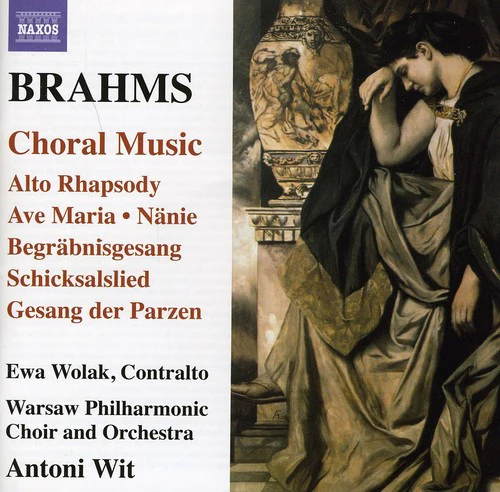
Brahms’s first connection with choral music came in 1857, and his first appointment in Vienna, in 1863, was to conduct the Singakademie. He premièred A German Requiem in the city and wrote widely for choral forces, taking a variety of poetic source material. Begräbnisgesang (Funeral Hymn) evinces a great feeling of solemnity, whilst Schicksalslied (Song of Destiny) is an urgent, volatile work. Nänie was written as a lament for the death of the painter Anselm Feuerbach, and the Alto Rhapsody has remained one of the greatest works for contralto in the repertoire.
Brahms’s first connection with choral music came in 1857, and his first appointment in Vienna, in 1863, was to conduct the Singakademie. He premièred A German Requiem in the city and wrote widely for choral forces, taking a variety of poetic source material. Begräbnisgesang (Funeral Hymn) evinces a great feeling of solemnity, whilst Schicksalslied (Song of Destiny) is an urgent, volatile work. Nänie was written as a lament for the death of the painter Anselm Feuerbach, and the Alto Rhapsody has remained one of the greatest works for contralto in the repertoire.
Description
Brahms’s first connection with choral music came in 1857, and his first appointment in Vienna, in 1863, was to conduct the Singakademie. He premièred A German Requiem in the city and wrote widely for choral forces, taking a variety of poetic source material. Begräbnisgesang (Funeral Hymn) evinces a great feeling of solemnity, whilst Schicksalslied (Song of Destiny) is an urgent, volatile work. Nänie was written as a lament for the death of the painter Anselm Feuerbach, and the Alto Rhapsody has remained one of the greatest works for contralto in the repertoire.