🎉 Up to 70% Off Selected ItemsShop Sale

1 / 2
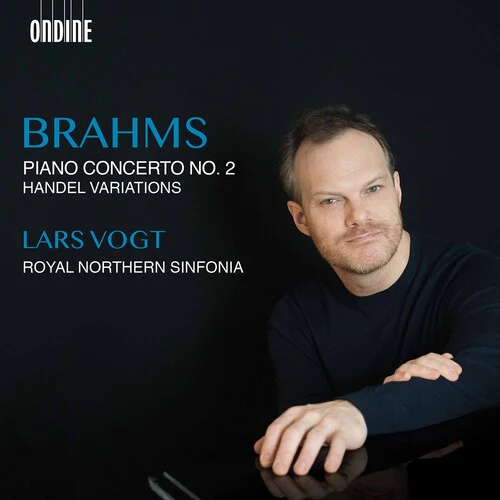
Brahms: Piano Concerto No. 2; Handel Variations / Vogt, Royal Northern Sinfonia
The second album in Lars Vogt’s Johannes Brahms concerto series with the Royal Northern Sinfonia includes Brahms’ 2nd Piano Concerto combined with a solo piano work, Handel Variations Op. 24, which was dedicated to Clara Schumann by the composer. Brahms’ Piano Concerto No. 2 is a romantic 4-movement concerto written two decades after its predecessor and one of the cornerstones in the concerto repertoire. This remarkable opus with a great number of beautiful solo passages and with a duration of over 45 minutes has been interpreted by numerous pianists since its premiere in 1881. In this album, Vogt performs the concerto conducting from the keyboard. Variations and Fugue on a Theme by Handel Op. 24 for solo piano were written by the young composer in his late 20s. This work, which includes some technically demanding passages for the pianists, reveals Brahms’ profound interest in the work of the great masters of the Baroque era which served as a source of inspiration in the composer’s creative work. This set of 25 variations and a fugue shows Brahms as a great successor to the tradition of piano variations exemplified by Mozart and Beethoven.
-----
REVIEWS:
Together with the Royal Northern Sinfonia, Lars Vogt–in his fifth year heading the orchestra across the shore from Newcastle–got to record the Brahms piano concertos for Ondine. Anyone who reads a chamber orchestra’s and Brahms’ name on the same CD cover and might briefly flinch, fearing undernourished, pseudo-historically informed performances with an economically expedient small band–conducted from the piano at that (another couple thousands in savings!)–need not worry.
Yes, this performance of the B-flat major concerto is notably a child of our times: It is svelte Brahms and transparent too, but still with plenty of muscle, which isn’t on display throughout, but comes to the fore where needed. Compared to the kind of Brahms from even just a few decades ago, this is purged of some excess and trimmed of fat, but it comes to a healthy halt before turning anorexic.
In and of itself that’s hardly enough to compete with the innumerable splendid performances out there, historic and more recent. Buchbinder/Harnoncourt sounds more traditional and celebrates Brahms with the (expected?) breadth–and very tastefully at that. The Northern Sinfonia can’t touch the wonderfully dark sound of the Czech Philharmonic with Ivan Moravec under Jirí Belohlávek, which sounds like an old oak chest smells. But then, no other orchestra can. The way Eugen Jochum custom-tailors the Berlin Philharmonic’s playing around that of his soloist, Emil Gilels, also remains unsurpassed.
But it speaks to Vogt–who doesn’t shy away from a robust and stern touch in the outer movements–and his Sinfonia that no amount of comparison makes this recording appear any less attractive. The fresh-sounding orchestra has a natural forward drive but isn’t hectic or jittery. Nor do you hear any exaggerations or the type of self-consciously unsubtle “nuance” that often passes for interpretation these days. This recording–as does that of Marc-André Hamelin with Andrew Litton, to mention a recent and also excellent account–goes to show that good playing without ostentatious fingerprints need not end up sounding anonymous.
In the olden LP and CD days, the Handel Variations on this disc might have been considered the filler. In the streaming-age, playtime has become meaningless–and in any case, this isn’t an afterthought; interpretively, it might well be considered the lead attraction. There is a certain voracity with which Vogt bites into the piece, with a huge bandwidth of attack: from buttery soft to glassy hard. Gentle and gruff touches coexist peacefully; similarly, there are pompous and wildly colorful moments to be had. You can almost hear an orchestra perform behind it. This is more attention-grabbing (in the best sense) than the articulate sheen of the magnificent-yet-slightly-forgettable Murray Perahia (Sony), yet more coherently done than the wild-and-wilful Olga Kern’s take (Harmonia Mundi). In fact, it might just be the new reference alongside Jonathan Plowright (BIS), Leon Fleisher (Sony), and Garrick Ohlsson (Hyperion).
– ClassicsToday (Jens F. Laurson)
Vogt’s approach is robust, shapely and highly rhythmical. He mitigates Brahms’s habitual textural thickness by refusing to pedal through staccato passages. Together with the orchestra, a marvellous plasticity of line is maintained throughout. This pliant rubato is the bedrock of their realisation of the music’s passionate ardour and vast sense of space. What a pleasure to encounter Brahms, so often interpreted as relentlessly earnest, here captured with his eyes brimming with joy.
– Gramophone
-----
REVIEWS:
Together with the Royal Northern Sinfonia, Lars Vogt–in his fifth year heading the orchestra across the shore from Newcastle–got to record the Brahms piano concertos for Ondine. Anyone who reads a chamber orchestra’s and Brahms’ name on the same CD cover and might briefly flinch, fearing undernourished, pseudo-historically informed performances with an economically expedient small band–conducted from the piano at that (another couple thousands in savings!)–need not worry.
Yes, this performance of the B-flat major concerto is notably a child of our times: It is svelte Brahms and transparent too, but still with plenty of muscle, which isn’t on display throughout, but comes to the fore where needed. Compared to the kind of Brahms from even just a few decades ago, this is purged of some excess and trimmed of fat, but it comes to a healthy halt before turning anorexic.
In and of itself that’s hardly enough to compete with the innumerable splendid performances out there, historic and more recent. Buchbinder/Harnoncourt sounds more traditional and celebrates Brahms with the (expected?) breadth–and very tastefully at that. The Northern Sinfonia can’t touch the wonderfully dark sound of the Czech Philharmonic with Ivan Moravec under Jirí Belohlávek, which sounds like an old oak chest smells. But then, no other orchestra can. The way Eugen Jochum custom-tailors the Berlin Philharmonic’s playing around that of his soloist, Emil Gilels, also remains unsurpassed.
But it speaks to Vogt–who doesn’t shy away from a robust and stern touch in the outer movements–and his Sinfonia that no amount of comparison makes this recording appear any less attractive. The fresh-sounding orchestra has a natural forward drive but isn’t hectic or jittery. Nor do you hear any exaggerations or the type of self-consciously unsubtle “nuance” that often passes for interpretation these days. This recording–as does that of Marc-André Hamelin with Andrew Litton, to mention a recent and also excellent account–goes to show that good playing without ostentatious fingerprints need not end up sounding anonymous.
In the olden LP and CD days, the Handel Variations on this disc might have been considered the filler. In the streaming-age, playtime has become meaningless–and in any case, this isn’t an afterthought; interpretively, it might well be considered the lead attraction. There is a certain voracity with which Vogt bites into the piece, with a huge bandwidth of attack: from buttery soft to glassy hard. Gentle and gruff touches coexist peacefully; similarly, there are pompous and wildly colorful moments to be had. You can almost hear an orchestra perform behind it. This is more attention-grabbing (in the best sense) than the articulate sheen of the magnificent-yet-slightly-forgettable Murray Perahia (Sony), yet more coherently done than the wild-and-wilful Olga Kern’s take (Harmonia Mundi). In fact, it might just be the new reference alongside Jonathan Plowright (BIS), Leon Fleisher (Sony), and Garrick Ohlsson (Hyperion).
– ClassicsToday (Jens F. Laurson)
Vogt’s approach is robust, shapely and highly rhythmical. He mitigates Brahms’s habitual textural thickness by refusing to pedal through staccato passages. Together with the orchestra, a marvellous plasticity of line is maintained throughout. This pliant rubato is the bedrock of their realisation of the music’s passionate ardour and vast sense of space. What a pleasure to encounter Brahms, so often interpreted as relentlessly earnest, here captured with his eyes brimming with joy.
– Gramophone
The second album in Lars Vogt’s Johannes Brahms concerto series with the Royal Northern Sinfonia includes Brahms’ 2nd Piano Concerto combined with a solo piano work, Handel Variations Op. 24, which was dedicated to Clara Schumann by the composer. Brahms’ Piano Concerto No. 2 is a romantic 4-movement concerto written two decades after its predecessor and one of the cornerstones in the concerto repertoire. This remarkable opus with a great number of beautiful solo passages and with a duration of over 45 minutes has been interpreted by numerous pianists since its premiere in 1881. In this album, Vogt performs the concerto conducting from the keyboard. Variations and Fugue on a Theme by Handel Op. 24 for solo piano were written by the young composer in his late 20s. This work, which includes some technically demanding passages for the pianists, reveals Brahms’ profound interest in the work of the great masters of the Baroque era which served as a source of inspiration in the composer’s creative work. This set of 25 variations and a fugue shows Brahms as a great successor to the tradition of piano variations exemplified by Mozart and Beethoven.
-----
REVIEWS:
Together with the Royal Northern Sinfonia, Lars Vogt–in his fifth year heading the orchestra across the shore from Newcastle–got to record the Brahms piano concertos for Ondine. Anyone who reads a chamber orchestra’s and Brahms’ name on the same CD cover and might briefly flinch, fearing undernourished, pseudo-historically informed performances with an economically expedient small band–conducted from the piano at that (another couple thousands in savings!)–need not worry.
Yes, this performance of the B-flat major concerto is notably a child of our times: It is svelte Brahms and transparent too, but still with plenty of muscle, which isn’t on display throughout, but comes to the fore where needed. Compared to the kind of Brahms from even just a few decades ago, this is purged of some excess and trimmed of fat, but it comes to a healthy halt before turning anorexic.
In and of itself that’s hardly enough to compete with the innumerable splendid performances out there, historic and more recent. Buchbinder/Harnoncourt sounds more traditional and celebrates Brahms with the (expected?) breadth–and very tastefully at that. The Northern Sinfonia can’t touch the wonderfully dark sound of the Czech Philharmonic with Ivan Moravec under Jirí Belohlávek, which sounds like an old oak chest smells. But then, no other orchestra can. The way Eugen Jochum custom-tailors the Berlin Philharmonic’s playing around that of his soloist, Emil Gilels, also remains unsurpassed.
But it speaks to Vogt–who doesn’t shy away from a robust and stern touch in the outer movements–and his Sinfonia that no amount of comparison makes this recording appear any less attractive. The fresh-sounding orchestra has a natural forward drive but isn’t hectic or jittery. Nor do you hear any exaggerations or the type of self-consciously unsubtle “nuance” that often passes for interpretation these days. This recording–as does that of Marc-André Hamelin with Andrew Litton, to mention a recent and also excellent account–goes to show that good playing without ostentatious fingerprints need not end up sounding anonymous.
In the olden LP and CD days, the Handel Variations on this disc might have been considered the filler. In the streaming-age, playtime has become meaningless–and in any case, this isn’t an afterthought; interpretively, it might well be considered the lead attraction. There is a certain voracity with which Vogt bites into the piece, with a huge bandwidth of attack: from buttery soft to glassy hard. Gentle and gruff touches coexist peacefully; similarly, there are pompous and wildly colorful moments to be had. You can almost hear an orchestra perform behind it. This is more attention-grabbing (in the best sense) than the articulate sheen of the magnificent-yet-slightly-forgettable Murray Perahia (Sony), yet more coherently done than the wild-and-wilful Olga Kern’s take (Harmonia Mundi). In fact, it might just be the new reference alongside Jonathan Plowright (BIS), Leon Fleisher (Sony), and Garrick Ohlsson (Hyperion).
– ClassicsToday (Jens F. Laurson)
Vogt’s approach is robust, shapely and highly rhythmical. He mitigates Brahms’s habitual textural thickness by refusing to pedal through staccato passages. Together with the orchestra, a marvellous plasticity of line is maintained throughout. This pliant rubato is the bedrock of their realisation of the music’s passionate ardour and vast sense of space. What a pleasure to encounter Brahms, so often interpreted as relentlessly earnest, here captured with his eyes brimming with joy.
– Gramophone
-----
REVIEWS:
Together with the Royal Northern Sinfonia, Lars Vogt–in his fifth year heading the orchestra across the shore from Newcastle–got to record the Brahms piano concertos for Ondine. Anyone who reads a chamber orchestra’s and Brahms’ name on the same CD cover and might briefly flinch, fearing undernourished, pseudo-historically informed performances with an economically expedient small band–conducted from the piano at that (another couple thousands in savings!)–need not worry.
Yes, this performance of the B-flat major concerto is notably a child of our times: It is svelte Brahms and transparent too, but still with plenty of muscle, which isn’t on display throughout, but comes to the fore where needed. Compared to the kind of Brahms from even just a few decades ago, this is purged of some excess and trimmed of fat, but it comes to a healthy halt before turning anorexic.
In and of itself that’s hardly enough to compete with the innumerable splendid performances out there, historic and more recent. Buchbinder/Harnoncourt sounds more traditional and celebrates Brahms with the (expected?) breadth–and very tastefully at that. The Northern Sinfonia can’t touch the wonderfully dark sound of the Czech Philharmonic with Ivan Moravec under Jirí Belohlávek, which sounds like an old oak chest smells. But then, no other orchestra can. The way Eugen Jochum custom-tailors the Berlin Philharmonic’s playing around that of his soloist, Emil Gilels, also remains unsurpassed.
But it speaks to Vogt–who doesn’t shy away from a robust and stern touch in the outer movements–and his Sinfonia that no amount of comparison makes this recording appear any less attractive. The fresh-sounding orchestra has a natural forward drive but isn’t hectic or jittery. Nor do you hear any exaggerations or the type of self-consciously unsubtle “nuance” that often passes for interpretation these days. This recording–as does that of Marc-André Hamelin with Andrew Litton, to mention a recent and also excellent account–goes to show that good playing without ostentatious fingerprints need not end up sounding anonymous.
In the olden LP and CD days, the Handel Variations on this disc might have been considered the filler. In the streaming-age, playtime has become meaningless–and in any case, this isn’t an afterthought; interpretively, it might well be considered the lead attraction. There is a certain voracity with which Vogt bites into the piece, with a huge bandwidth of attack: from buttery soft to glassy hard. Gentle and gruff touches coexist peacefully; similarly, there are pompous and wildly colorful moments to be had. You can almost hear an orchestra perform behind it. This is more attention-grabbing (in the best sense) than the articulate sheen of the magnificent-yet-slightly-forgettable Murray Perahia (Sony), yet more coherently done than the wild-and-wilful Olga Kern’s take (Harmonia Mundi). In fact, it might just be the new reference alongside Jonathan Plowright (BIS), Leon Fleisher (Sony), and Garrick Ohlsson (Hyperion).
– ClassicsToday (Jens F. Laurson)
Vogt’s approach is robust, shapely and highly rhythmical. He mitigates Brahms’s habitual textural thickness by refusing to pedal through staccato passages. Together with the orchestra, a marvellous plasticity of line is maintained throughout. This pliant rubato is the bedrock of their realisation of the music’s passionate ardour and vast sense of space. What a pleasure to encounter Brahms, so often interpreted as relentlessly earnest, here captured with his eyes brimming with joy.
– Gramophone
$14.99
Brahms: Piano Concerto No. 2; Handel Variations / Vogt, Royal Northern Sinfonia—
$14.99
Description
The second album in Lars Vogt’s Johannes Brahms concerto series with the Royal Northern Sinfonia includes Brahms’ 2nd Piano Concerto combined with a solo piano work, Handel Variations Op. 24, which was dedicated to Clara Schumann by the composer. Brahms’ Piano Concerto No. 2 is a romantic 4-movement concerto written two decades after its predecessor and one of the cornerstones in the concerto repertoire. This remarkable opus with a great number of beautiful solo passages and with a duration of over 45 minutes has been interpreted by numerous pianists since its premiere in 1881. In this album, Vogt performs the concerto conducting from the keyboard. Variations and Fugue on a Theme by Handel Op. 24 for solo piano were written by the young composer in his late 20s. This work, which includes some technically demanding passages for the pianists, reveals Brahms’ profound interest in the work of the great masters of the Baroque era which served as a source of inspiration in the composer’s creative work. This set of 25 variations and a fugue shows Brahms as a great successor to the tradition of piano variations exemplified by Mozart and Beethoven.
-----
REVIEWS:
Together with the Royal Northern Sinfonia, Lars Vogt–in his fifth year heading the orchestra across the shore from Newcastle–got to record the Brahms piano concertos for Ondine. Anyone who reads a chamber orchestra’s and Brahms’ name on the same CD cover and might briefly flinch, fearing undernourished, pseudo-historically informed performances with an economically expedient small band–conducted from the piano at that (another couple thousands in savings!)–need not worry.
Yes, this performance of the B-flat major concerto is notably a child of our times: It is svelte Brahms and transparent too, but still with plenty of muscle, which isn’t on display throughout, but comes to the fore where needed. Compared to the kind of Brahms from even just a few decades ago, this is purged of some excess and trimmed of fat, but it comes to a healthy halt before turning anorexic.
In and of itself that’s hardly enough to compete with the innumerable splendid performances out there, historic and more recent. Buchbinder/Harnoncourt sounds more traditional and celebrates Brahms with the (expected?) breadth–and very tastefully at that. The Northern Sinfonia can’t touch the wonderfully dark sound of the Czech Philharmonic with Ivan Moravec under Jirí Belohlávek, which sounds like an old oak chest smells. But then, no other orchestra can. The way Eugen Jochum custom-tailors the Berlin Philharmonic’s playing around that of his soloist, Emil Gilels, also remains unsurpassed.
But it speaks to Vogt–who doesn’t shy away from a robust and stern touch in the outer movements–and his Sinfonia that no amount of comparison makes this recording appear any less attractive. The fresh-sounding orchestra has a natural forward drive but isn’t hectic or jittery. Nor do you hear any exaggerations or the type of self-consciously unsubtle “nuance” that often passes for interpretation these days. This recording–as does that of Marc-André Hamelin with Andrew Litton, to mention a recent and also excellent account–goes to show that good playing without ostentatious fingerprints need not end up sounding anonymous.
In the olden LP and CD days, the Handel Variations on this disc might have been considered the filler. In the streaming-age, playtime has become meaningless–and in any case, this isn’t an afterthought; interpretively, it might well be considered the lead attraction. There is a certain voracity with which Vogt bites into the piece, with a huge bandwidth of attack: from buttery soft to glassy hard. Gentle and gruff touches coexist peacefully; similarly, there are pompous and wildly colorful moments to be had. You can almost hear an orchestra perform behind it. This is more attention-grabbing (in the best sense) than the articulate sheen of the magnificent-yet-slightly-forgettable Murray Perahia (Sony), yet more coherently done than the wild-and-wilful Olga Kern’s take (Harmonia Mundi). In fact, it might just be the new reference alongside Jonathan Plowright (BIS), Leon Fleisher (Sony), and Garrick Ohlsson (Hyperion).
– ClassicsToday (Jens F. Laurson)
Vogt’s approach is robust, shapely and highly rhythmical. He mitigates Brahms’s habitual textural thickness by refusing to pedal through staccato passages. Together with the orchestra, a marvellous plasticity of line is maintained throughout. This pliant rubato is the bedrock of their realisation of the music’s passionate ardour and vast sense of space. What a pleasure to encounter Brahms, so often interpreted as relentlessly earnest, here captured with his eyes brimming with joy.
– Gramophone
-----
REVIEWS:
Together with the Royal Northern Sinfonia, Lars Vogt–in his fifth year heading the orchestra across the shore from Newcastle–got to record the Brahms piano concertos for Ondine. Anyone who reads a chamber orchestra’s and Brahms’ name on the same CD cover and might briefly flinch, fearing undernourished, pseudo-historically informed performances with an economically expedient small band–conducted from the piano at that (another couple thousands in savings!)–need not worry.
Yes, this performance of the B-flat major concerto is notably a child of our times: It is svelte Brahms and transparent too, but still with plenty of muscle, which isn’t on display throughout, but comes to the fore where needed. Compared to the kind of Brahms from even just a few decades ago, this is purged of some excess and trimmed of fat, but it comes to a healthy halt before turning anorexic.
In and of itself that’s hardly enough to compete with the innumerable splendid performances out there, historic and more recent. Buchbinder/Harnoncourt sounds more traditional and celebrates Brahms with the (expected?) breadth–and very tastefully at that. The Northern Sinfonia can’t touch the wonderfully dark sound of the Czech Philharmonic with Ivan Moravec under Jirí Belohlávek, which sounds like an old oak chest smells. But then, no other orchestra can. The way Eugen Jochum custom-tailors the Berlin Philharmonic’s playing around that of his soloist, Emil Gilels, also remains unsurpassed.
But it speaks to Vogt–who doesn’t shy away from a robust and stern touch in the outer movements–and his Sinfonia that no amount of comparison makes this recording appear any less attractive. The fresh-sounding orchestra has a natural forward drive but isn’t hectic or jittery. Nor do you hear any exaggerations or the type of self-consciously unsubtle “nuance” that often passes for interpretation these days. This recording–as does that of Marc-André Hamelin with Andrew Litton, to mention a recent and also excellent account–goes to show that good playing without ostentatious fingerprints need not end up sounding anonymous.
In the olden LP and CD days, the Handel Variations on this disc might have been considered the filler. In the streaming-age, playtime has become meaningless–and in any case, this isn’t an afterthought; interpretively, it might well be considered the lead attraction. There is a certain voracity with which Vogt bites into the piece, with a huge bandwidth of attack: from buttery soft to glassy hard. Gentle and gruff touches coexist peacefully; similarly, there are pompous and wildly colorful moments to be had. You can almost hear an orchestra perform behind it. This is more attention-grabbing (in the best sense) than the articulate sheen of the magnificent-yet-slightly-forgettable Murray Perahia (Sony), yet more coherently done than the wild-and-wilful Olga Kern’s take (Harmonia Mundi). In fact, it might just be the new reference alongside Jonathan Plowright (BIS), Leon Fleisher (Sony), and Garrick Ohlsson (Hyperion).
– ClassicsToday (Jens F. Laurson)
Vogt’s approach is robust, shapely and highly rhythmical. He mitigates Brahms’s habitual textural thickness by refusing to pedal through staccato passages. Together with the orchestra, a marvellous plasticity of line is maintained throughout. This pliant rubato is the bedrock of their realisation of the music’s passionate ardour and vast sense of space. What a pleasure to encounter Brahms, so often interpreted as relentlessly earnest, here captured with his eyes brimming with joy.
– Gramophone