🎉 Up to 70% Off Selected ItemsShop Sale

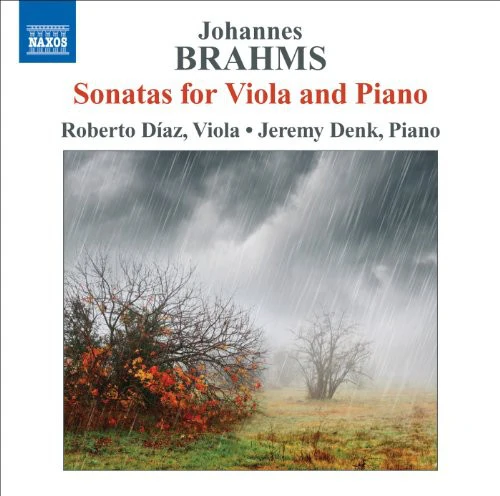
Brahms: Sonatas For Viola And Piano / Roberto Diaz, Jeremy Denk
BRAHMS Viola Sonatas: op. 78 (trans. Csaba Erdélyi); op. 120/1; op. 120/2 • Roberto Diaz (va); Jeremy Denk (pn) • NAXOS 8.570827 (70:55)
To twist an old saw two ways: Familiarity breeds contempt of the unfamiliar; familiarity breeds comfort. The familiar G-Major piano and violin sonata was transcribed by contemporary violist Csaba Erdélyi for piano and viola, and was transposed to D in keeping with Brahms’s transposition to D for his piano and cello version of this sonata. Erdélyi reasoned that if it works for violin and for cello, then why not in between—for viola. To my ears, this music thus altered by Erdélyi flattens its appeal, ironically by adding a sharp. The problem is the lowered-by-a-fourth pitch, which relegates too much of the piano sound to the “bass-ment,” especially in the Adagio. The viola sonorities are also dulled. The conclusion of the Adagio suffers most where the beauty of the rising and falling piano figure is sharply diminished by the key shift down to B? from the original E?. Here, Erdélyi sharpens the pain, fittingly by deleting a flat. I have not heard Brahms’s cello version, and I might not like that either. ArkivMusic does not list Brahms’s cello transcription separately, but I did find a few cellists listed who have recorded it.
The clarinet is the focal instrument in Brahms’s last four chamber works: the A-Minor Trio (op. 114), the B-Minor Quintet (op. 115), and the two op. 120 sonatas. Clarinetist Richard Mühlfeld was the dedicatee of these four pieces. Brahms recognized that the viola could substitute for the clarinet in the two sonatas, therefore he published the sonatas for clarinet or viola. The clarinet version seems to have been rooted in tradition, but the viola version has recently taken a firm hold, especially with the growth of recorded music. Currently, ArkivMusic lists about 60 clarinet versions and close to 40 viola versions.
Now I confess my secret conversion. After growing up with the clarinet versions and, without ever listening, disdaining the viola versions, when I first heard the viola versions a few years ago, I became a convert (my “con-version”). The viola sound in these sonatas is much more satisfying to me than that of the clarinet, although I love both versions. With that prejudice on the table (or on the page, or on the screen), the opus 120 performances by these two artists are excellent in every respect. As to phrasing, dynamics, tone coloring, tempos—whatever qualities I can muster—these are performances that belong in everyone’s collection.
Jeremy Denk is a pianist of growing reputation, having appeared as soloist with several major orchestras throughout the world. Roberto Diaz is a noted violist. Formerly principal violist of the Philadelphia Orchestra, he is now president and CEO of the Curtis Institute of Music. Their contribution to the Brahms opus 120 sonatas is most welcome.
FANFARE: Burton Rothleder
BRAHMS Viola Sonatas: op. 78 (trans. Csaba Erdélyi); op. 120/1; op. 120/2 • Roberto Diaz (va); Jeremy Denk (pn) • NAXOS 8.570827 (70:55)
To twist an old saw two ways: Familiarity breeds contempt of the unfamiliar; familiarity breeds comfort. The familiar G-Major piano and violin sonata was transcribed by contemporary violist Csaba Erdélyi for piano and viola, and was transposed to D in keeping with Brahms’s transposition to D for his piano and cello version of this sonata. Erdélyi reasoned that if it works for violin and for cello, then why not in between—for viola. To my ears, this music thus altered by Erdélyi flattens its appeal, ironically by adding a sharp. The problem is the lowered-by-a-fourth pitch, which relegates too much of the piano sound to the “bass-ment,” especially in the Adagio. The viola sonorities are also dulled. The conclusion of the Adagio suffers most where the beauty of the rising and falling piano figure is sharply diminished by the key shift down to B? from the original E?. Here, Erdélyi sharpens the pain, fittingly by deleting a flat. I have not heard Brahms’s cello version, and I might not like that either. ArkivMusic does not list Brahms’s cello transcription separately, but I did find a few cellists listed who have recorded it.
The clarinet is the focal instrument in Brahms’s last four chamber works: the A-Minor Trio (op. 114), the B-Minor Quintet (op. 115), and the two op. 120 sonatas. Clarinetist Richard Mühlfeld was the dedicatee of these four pieces. Brahms recognized that the viola could substitute for the clarinet in the two sonatas, therefore he published the sonatas for clarinet or viola. The clarinet version seems to have been rooted in tradition, but the viola version has recently taken a firm hold, especially with the growth of recorded music. Currently, ArkivMusic lists about 60 clarinet versions and close to 40 viola versions.
Now I confess my secret conversion. After growing up with the clarinet versions and, without ever listening, disdaining the viola versions, when I first heard the viola versions a few years ago, I became a convert (my “con-version”). The viola sound in these sonatas is much more satisfying to me than that of the clarinet, although I love both versions. With that prejudice on the table (or on the page, or on the screen), the opus 120 performances by these two artists are excellent in every respect. As to phrasing, dynamics, tone coloring, tempos—whatever qualities I can muster—these are performances that belong in everyone’s collection.
Jeremy Denk is a pianist of growing reputation, having appeared as soloist with several major orchestras throughout the world. Roberto Diaz is a noted violist. Formerly principal violist of the Philadelphia Orchestra, he is now president and CEO of the Curtis Institute of Music. Their contribution to the Brahms opus 120 sonatas is most welcome.
FANFARE: Burton Rothleder
$4.90
Original: $13.99
-65%Brahms: Sonatas For Viola And Piano / Roberto Diaz, Jeremy Denk—
$13.99
$4.90Description
BRAHMS Viola Sonatas: op. 78 (trans. Csaba Erdélyi); op. 120/1; op. 120/2 • Roberto Diaz (va); Jeremy Denk (pn) • NAXOS 8.570827 (70:55)
To twist an old saw two ways: Familiarity breeds contempt of the unfamiliar; familiarity breeds comfort. The familiar G-Major piano and violin sonata was transcribed by contemporary violist Csaba Erdélyi for piano and viola, and was transposed to D in keeping with Brahms’s transposition to D for his piano and cello version of this sonata. Erdélyi reasoned that if it works for violin and for cello, then why not in between—for viola. To my ears, this music thus altered by Erdélyi flattens its appeal, ironically by adding a sharp. The problem is the lowered-by-a-fourth pitch, which relegates too much of the piano sound to the “bass-ment,” especially in the Adagio. The viola sonorities are also dulled. The conclusion of the Adagio suffers most where the beauty of the rising and falling piano figure is sharply diminished by the key shift down to B? from the original E?. Here, Erdélyi sharpens the pain, fittingly by deleting a flat. I have not heard Brahms’s cello version, and I might not like that either. ArkivMusic does not list Brahms’s cello transcription separately, but I did find a few cellists listed who have recorded it.
The clarinet is the focal instrument in Brahms’s last four chamber works: the A-Minor Trio (op. 114), the B-Minor Quintet (op. 115), and the two op. 120 sonatas. Clarinetist Richard Mühlfeld was the dedicatee of these four pieces. Brahms recognized that the viola could substitute for the clarinet in the two sonatas, therefore he published the sonatas for clarinet or viola. The clarinet version seems to have been rooted in tradition, but the viola version has recently taken a firm hold, especially with the growth of recorded music. Currently, ArkivMusic lists about 60 clarinet versions and close to 40 viola versions.
Now I confess my secret conversion. After growing up with the clarinet versions and, without ever listening, disdaining the viola versions, when I first heard the viola versions a few years ago, I became a convert (my “con-version”). The viola sound in these sonatas is much more satisfying to me than that of the clarinet, although I love both versions. With that prejudice on the table (or on the page, or on the screen), the opus 120 performances by these two artists are excellent in every respect. As to phrasing, dynamics, tone coloring, tempos—whatever qualities I can muster—these are performances that belong in everyone’s collection.
Jeremy Denk is a pianist of growing reputation, having appeared as soloist with several major orchestras throughout the world. Roberto Diaz is a noted violist. Formerly principal violist of the Philadelphia Orchestra, he is now president and CEO of the Curtis Institute of Music. Their contribution to the Brahms opus 120 sonatas is most welcome.
FANFARE: Burton Rothleder