🎉 Up to 70% Off Selected ItemsShop Sale

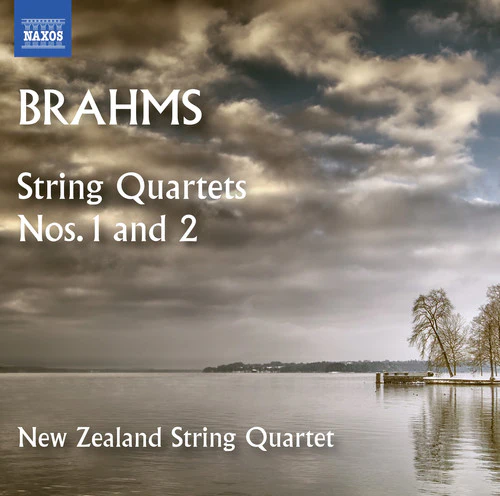
Brahms: String Quartets Nos. 1 & 2 / New Zealand String Quartet
Successful string quartet performance is all about communication, in the purest sense of the word: constant giving and exchanging, a communion among the players based on an intimate relationship bound by deep understanding, of the music and of each other. It’s the essence of what is meant by ensemble. When you have that, you can play anything together and make it vital, and most of all, true to the composer’s intent.
As my colleague David Hurwitz said in an earlier review, Brahms’ quartets are “respected more than they are loved”, and can sound “overworked” and “texturally monotonous”. It’s true that you can play unlawfully fast and loose with these quartets and pretty much get away with it, given enough rhythmic finesse and blurring of textures, and these are among the many reasons that listeners, including me, usually aren’t that much in love with these dense, phenomenally busy, complicated pieces. But when you hear them played with the unusual clarity, scintillating detail, and dynamic, exacting, turn-on-a-dime expressive statements uttered by an ensemble of literally one interpretive mind and unassailable technique, you have to rethink the reasons for your avoidance reflex when faced with a Brahms quartet close encounter.
When the New Zealand Quartet made this recording its members had been working and playing together for 20 years, a rarity in the music world, and a situation that pays huge dividends in performance. There are few relationships anywhere in which the members spend more time together, pouring heart and soul into an intensely charged, creative collaboration, its success built both on individual artistic drive and vision, and contingent on compromising, blending, and capitalizing on the strengths of those impulses and passions. Any group that can manage this, whether a married couple or a string quartet, is something of a miracle, and, especially if you’ve seen this group in concert, you know how special it is.
And there is no holding back in these performances: the NZSQ literally attacks and wrestles Brahms’ scores to the ground–a positive, friendly intervention, for the good of all concerned. These performances should not disappoint any listener, whether you hate Brahms or love his music, because they take you out of the realm of preconception and just deliver aggressive, uninhibited, and yes, passionate expressions of these scores, respectful of the composer while always working to realize the fullness of the music that Brahms struggled so long and hard to create.
My only regret here is that with a recording you don’t truly experience what this group is doing. Unless you actually see them in concert, you don’t appreciate the incredible group dynamic that’s happening during a performance, you don’t totally get the ensemble interaction that produces this result. They stand when they perform–cellist Rolf Gjelsten sits on a special raised platform–and there’s a physicality to the communication among the players that’s only comparable to a dance, a ballet. And if you can make a ballet out of Brahms’ string quartets, well, you’ve got something that’s worth listening to.
– ClassicsToday (David Vernier)
As my colleague David Hurwitz said in an earlier review, Brahms’ quartets are “respected more than they are loved”, and can sound “overworked” and “texturally monotonous”. It’s true that you can play unlawfully fast and loose with these quartets and pretty much get away with it, given enough rhythmic finesse and blurring of textures, and these are among the many reasons that listeners, including me, usually aren’t that much in love with these dense, phenomenally busy, complicated pieces. But when you hear them played with the unusual clarity, scintillating detail, and dynamic, exacting, turn-on-a-dime expressive statements uttered by an ensemble of literally one interpretive mind and unassailable technique, you have to rethink the reasons for your avoidance reflex when faced with a Brahms quartet close encounter.
When the New Zealand Quartet made this recording its members had been working and playing together for 20 years, a rarity in the music world, and a situation that pays huge dividends in performance. There are few relationships anywhere in which the members spend more time together, pouring heart and soul into an intensely charged, creative collaboration, its success built both on individual artistic drive and vision, and contingent on compromising, blending, and capitalizing on the strengths of those impulses and passions. Any group that can manage this, whether a married couple or a string quartet, is something of a miracle, and, especially if you’ve seen this group in concert, you know how special it is.
And there is no holding back in these performances: the NZSQ literally attacks and wrestles Brahms’ scores to the ground–a positive, friendly intervention, for the good of all concerned. These performances should not disappoint any listener, whether you hate Brahms or love his music, because they take you out of the realm of preconception and just deliver aggressive, uninhibited, and yes, passionate expressions of these scores, respectful of the composer while always working to realize the fullness of the music that Brahms struggled so long and hard to create.
My only regret here is that with a recording you don’t truly experience what this group is doing. Unless you actually see them in concert, you don’t appreciate the incredible group dynamic that’s happening during a performance, you don’t totally get the ensemble interaction that produces this result. They stand when they perform–cellist Rolf Gjelsten sits on a special raised platform–and there’s a physicality to the communication among the players that’s only comparable to a dance, a ballet. And if you can make a ballet out of Brahms’ string quartets, well, you’ve got something that’s worth listening to.
– ClassicsToday (David Vernier)
Successful string quartet performance is all about communication, in the purest sense of the word: constant giving and exchanging, a communion among the players based on an intimate relationship bound by deep understanding, of the music and of each other. It’s the essence of what is meant by ensemble. When you have that, you can play anything together and make it vital, and most of all, true to the composer’s intent.
As my colleague David Hurwitz said in an earlier review, Brahms’ quartets are “respected more than they are loved”, and can sound “overworked” and “texturally monotonous”. It’s true that you can play unlawfully fast and loose with these quartets and pretty much get away with it, given enough rhythmic finesse and blurring of textures, and these are among the many reasons that listeners, including me, usually aren’t that much in love with these dense, phenomenally busy, complicated pieces. But when you hear them played with the unusual clarity, scintillating detail, and dynamic, exacting, turn-on-a-dime expressive statements uttered by an ensemble of literally one interpretive mind and unassailable technique, you have to rethink the reasons for your avoidance reflex when faced with a Brahms quartet close encounter.
When the New Zealand Quartet made this recording its members had been working and playing together for 20 years, a rarity in the music world, and a situation that pays huge dividends in performance. There are few relationships anywhere in which the members spend more time together, pouring heart and soul into an intensely charged, creative collaboration, its success built both on individual artistic drive and vision, and contingent on compromising, blending, and capitalizing on the strengths of those impulses and passions. Any group that can manage this, whether a married couple or a string quartet, is something of a miracle, and, especially if you’ve seen this group in concert, you know how special it is.
And there is no holding back in these performances: the NZSQ literally attacks and wrestles Brahms’ scores to the ground–a positive, friendly intervention, for the good of all concerned. These performances should not disappoint any listener, whether you hate Brahms or love his music, because they take you out of the realm of preconception and just deliver aggressive, uninhibited, and yes, passionate expressions of these scores, respectful of the composer while always working to realize the fullness of the music that Brahms struggled so long and hard to create.
My only regret here is that with a recording you don’t truly experience what this group is doing. Unless you actually see them in concert, you don’t appreciate the incredible group dynamic that’s happening during a performance, you don’t totally get the ensemble interaction that produces this result. They stand when they perform–cellist Rolf Gjelsten sits on a special raised platform–and there’s a physicality to the communication among the players that’s only comparable to a dance, a ballet. And if you can make a ballet out of Brahms’ string quartets, well, you’ve got something that’s worth listening to.
– ClassicsToday (David Vernier)
As my colleague David Hurwitz said in an earlier review, Brahms’ quartets are “respected more than they are loved”, and can sound “overworked” and “texturally monotonous”. It’s true that you can play unlawfully fast and loose with these quartets and pretty much get away with it, given enough rhythmic finesse and blurring of textures, and these are among the many reasons that listeners, including me, usually aren’t that much in love with these dense, phenomenally busy, complicated pieces. But when you hear them played with the unusual clarity, scintillating detail, and dynamic, exacting, turn-on-a-dime expressive statements uttered by an ensemble of literally one interpretive mind and unassailable technique, you have to rethink the reasons for your avoidance reflex when faced with a Brahms quartet close encounter.
When the New Zealand Quartet made this recording its members had been working and playing together for 20 years, a rarity in the music world, and a situation that pays huge dividends in performance. There are few relationships anywhere in which the members spend more time together, pouring heart and soul into an intensely charged, creative collaboration, its success built both on individual artistic drive and vision, and contingent on compromising, blending, and capitalizing on the strengths of those impulses and passions. Any group that can manage this, whether a married couple or a string quartet, is something of a miracle, and, especially if you’ve seen this group in concert, you know how special it is.
And there is no holding back in these performances: the NZSQ literally attacks and wrestles Brahms’ scores to the ground–a positive, friendly intervention, for the good of all concerned. These performances should not disappoint any listener, whether you hate Brahms or love his music, because they take you out of the realm of preconception and just deliver aggressive, uninhibited, and yes, passionate expressions of these scores, respectful of the composer while always working to realize the fullness of the music that Brahms struggled so long and hard to create.
My only regret here is that with a recording you don’t truly experience what this group is doing. Unless you actually see them in concert, you don’t appreciate the incredible group dynamic that’s happening during a performance, you don’t totally get the ensemble interaction that produces this result. They stand when they perform–cellist Rolf Gjelsten sits on a special raised platform–and there’s a physicality to the communication among the players that’s only comparable to a dance, a ballet. And if you can make a ballet out of Brahms’ string quartets, well, you’ve got something that’s worth listening to.
– ClassicsToday (David Vernier)
$4.90
Original: $13.99
-65%Brahms: String Quartets Nos. 1 & 2 / New Zealand String Quartet—
$13.99
$4.90Description
Successful string quartet performance is all about communication, in the purest sense of the word: constant giving and exchanging, a communion among the players based on an intimate relationship bound by deep understanding, of the music and of each other. It’s the essence of what is meant by ensemble. When you have that, you can play anything together and make it vital, and most of all, true to the composer’s intent.
As my colleague David Hurwitz said in an earlier review, Brahms’ quartets are “respected more than they are loved”, and can sound “overworked” and “texturally monotonous”. It’s true that you can play unlawfully fast and loose with these quartets and pretty much get away with it, given enough rhythmic finesse and blurring of textures, and these are among the many reasons that listeners, including me, usually aren’t that much in love with these dense, phenomenally busy, complicated pieces. But when you hear them played with the unusual clarity, scintillating detail, and dynamic, exacting, turn-on-a-dime expressive statements uttered by an ensemble of literally one interpretive mind and unassailable technique, you have to rethink the reasons for your avoidance reflex when faced with a Brahms quartet close encounter.
When the New Zealand Quartet made this recording its members had been working and playing together for 20 years, a rarity in the music world, and a situation that pays huge dividends in performance. There are few relationships anywhere in which the members spend more time together, pouring heart and soul into an intensely charged, creative collaboration, its success built both on individual artistic drive and vision, and contingent on compromising, blending, and capitalizing on the strengths of those impulses and passions. Any group that can manage this, whether a married couple or a string quartet, is something of a miracle, and, especially if you’ve seen this group in concert, you know how special it is.
And there is no holding back in these performances: the NZSQ literally attacks and wrestles Brahms’ scores to the ground–a positive, friendly intervention, for the good of all concerned. These performances should not disappoint any listener, whether you hate Brahms or love his music, because they take you out of the realm of preconception and just deliver aggressive, uninhibited, and yes, passionate expressions of these scores, respectful of the composer while always working to realize the fullness of the music that Brahms struggled so long and hard to create.
My only regret here is that with a recording you don’t truly experience what this group is doing. Unless you actually see them in concert, you don’t appreciate the incredible group dynamic that’s happening during a performance, you don’t totally get the ensemble interaction that produces this result. They stand when they perform–cellist Rolf Gjelsten sits on a special raised platform–and there’s a physicality to the communication among the players that’s only comparable to a dance, a ballet. And if you can make a ballet out of Brahms’ string quartets, well, you’ve got something that’s worth listening to.
– ClassicsToday (David Vernier)
As my colleague David Hurwitz said in an earlier review, Brahms’ quartets are “respected more than they are loved”, and can sound “overworked” and “texturally monotonous”. It’s true that you can play unlawfully fast and loose with these quartets and pretty much get away with it, given enough rhythmic finesse and blurring of textures, and these are among the many reasons that listeners, including me, usually aren’t that much in love with these dense, phenomenally busy, complicated pieces. But when you hear them played with the unusual clarity, scintillating detail, and dynamic, exacting, turn-on-a-dime expressive statements uttered by an ensemble of literally one interpretive mind and unassailable technique, you have to rethink the reasons for your avoidance reflex when faced with a Brahms quartet close encounter.
When the New Zealand Quartet made this recording its members had been working and playing together for 20 years, a rarity in the music world, and a situation that pays huge dividends in performance. There are few relationships anywhere in which the members spend more time together, pouring heart and soul into an intensely charged, creative collaboration, its success built both on individual artistic drive and vision, and contingent on compromising, blending, and capitalizing on the strengths of those impulses and passions. Any group that can manage this, whether a married couple or a string quartet, is something of a miracle, and, especially if you’ve seen this group in concert, you know how special it is.
And there is no holding back in these performances: the NZSQ literally attacks and wrestles Brahms’ scores to the ground–a positive, friendly intervention, for the good of all concerned. These performances should not disappoint any listener, whether you hate Brahms or love his music, because they take you out of the realm of preconception and just deliver aggressive, uninhibited, and yes, passionate expressions of these scores, respectful of the composer while always working to realize the fullness of the music that Brahms struggled so long and hard to create.
My only regret here is that with a recording you don’t truly experience what this group is doing. Unless you actually see them in concert, you don’t appreciate the incredible group dynamic that’s happening during a performance, you don’t totally get the ensemble interaction that produces this result. They stand when they perform–cellist Rolf Gjelsten sits on a special raised platform–and there’s a physicality to the communication among the players that’s only comparable to a dance, a ballet. And if you can make a ballet out of Brahms’ string quartets, well, you’ve got something that’s worth listening to.
– ClassicsToday (David Vernier)