🎉 Up to 70% Off Selected ItemsShop Sale

1 / 2
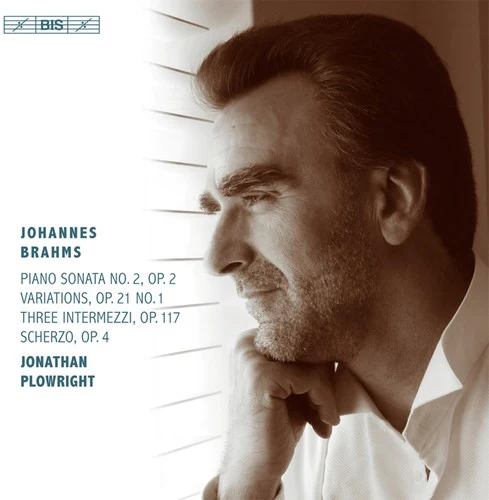
Brahms: Works for Piano Solo, Vol. 2 / Plowright

The second volume in what one hopes will be a complete Brahms piano music cycle from Jonathan Plowright charges from the starting gate with engines ablaze and fingers primed for action. In other words, behold the most incisive, dramatic, and multi-dimensional account of the composer’s Piano Sonata No. 2 on disc since Katchen and Arrau!
Part of the excitement lies in the pianist’s absolute rather than approximate observation of Brahms’ difficult-to-execute articulation marking in the first-movement exposition, the vivacity and point of his arpeggiated chords, and his ability to project the keyboard writing’s textural mass with minimum pedal and equal attention between registers. Using very little rubato, Plowright conveys the Andante’s “con espressione” largely through minute dynamic gradations and quality of touch. He makes effortless light of the Scherzo’s rapid broken chords while insightfully contouring the finale’s imitative right-hand writing against leaner than usual left-hand pedal-points. In the Op. 21 No. 1 Thema, Plowright’s straightforward tempo anchors all sorts of delicious inflections and altered voicings, although the variations themselves cohere by virtue of the pianist’s tightly-knit tempo relationships and relative simplicity from an expressive standpoint.
The three Op. 117 Intermezzi are no less masterful. Plowright plays No. 1 with a kind of classical understatment that avoids underlining the central section’s across-the-barline phrasings and lush harmonies. By contrast, No. 2 is measured, rounded, and more wistful in relation to the faster, business-like interpretations many younger pianists favor. Rather than veil No. 3’s unison opening in mystery, Plowright parks it in neutral, so to speak, with little hint at the more impassioned than usual major-key climax just around the bend.
If the Op. 4 Scherzo’s opening motive is not so characterfully spelled out as in the old Backhaus, Friedberg, and Kempff recordings, Plowright’s awesome legato control and supple rhythmic sense convey a lithe, elfin shimmer rarely heard in this score. Malcolm McDonald’s terrific booklet notes and BIS’s bracing surround-sound engineering are worthy of their own review. Even in a catalog packed to the rafters with great Brahms piano recordings, this stunning release should not be missed.
-- Jed Distler, ClassicsToday.com
The second volume in what one hopes will be a complete Brahms piano music cycle from Jonathan Plowright charges from the starting gate with engines ablaze and fingers primed for action. In other words, behold the most incisive, dramatic, and multi-dimensional account of the composer’s Piano Sonata No. 2 on disc since Katchen and Arrau!
Part of the excitement lies in the pianist’s absolute rather than approximate observation of Brahms’ difficult-to-execute articulation marking in the first-movement exposition, the vivacity and point of his arpeggiated chords, and his ability to project the keyboard writing’s textural mass with minimum pedal and equal attention between registers. Using very little rubato, Plowright conveys the Andante’s “con espressione” largely through minute dynamic gradations and quality of touch. He makes effortless light of the Scherzo’s rapid broken chords while insightfully contouring the finale’s imitative right-hand writing against leaner than usual left-hand pedal-points. In the Op. 21 No. 1 Thema, Plowright’s straightforward tempo anchors all sorts of delicious inflections and altered voicings, although the variations themselves cohere by virtue of the pianist’s tightly-knit tempo relationships and relative simplicity from an expressive standpoint.
The three Op. 117 Intermezzi are no less masterful. Plowright plays No. 1 with a kind of classical understatment that avoids underlining the central section’s across-the-barline phrasings and lush harmonies. By contrast, No. 2 is measured, rounded, and more wistful in relation to the faster, business-like interpretations many younger pianists favor. Rather than veil No. 3’s unison opening in mystery, Plowright parks it in neutral, so to speak, with little hint at the more impassioned than usual major-key climax just around the bend.
If the Op. 4 Scherzo’s opening motive is not so characterfully spelled out as in the old Backhaus, Friedberg, and Kempff recordings, Plowright’s awesome legato control and supple rhythmic sense convey a lithe, elfin shimmer rarely heard in this score. Malcolm McDonald’s terrific booklet notes and BIS’s bracing surround-sound engineering are worthy of their own review. Even in a catalog packed to the rafters with great Brahms piano recordings, this stunning release should not be missed.
-- Jed Distler, ClassicsToday.com
$21.99
Brahms: Works for Piano Solo, Vol. 2 / Plowright—
$21.99
Description
The second volume in what one hopes will be a complete Brahms piano music cycle from Jonathan Plowright charges from the starting gate with engines ablaze and fingers primed for action. In other words, behold the most incisive, dramatic, and multi-dimensional account of the composer’s Piano Sonata No. 2 on disc since Katchen and Arrau!
Part of the excitement lies in the pianist’s absolute rather than approximate observation of Brahms’ difficult-to-execute articulation marking in the first-movement exposition, the vivacity and point of his arpeggiated chords, and his ability to project the keyboard writing’s textural mass with minimum pedal and equal attention between registers. Using very little rubato, Plowright conveys the Andante’s “con espressione” largely through minute dynamic gradations and quality of touch. He makes effortless light of the Scherzo’s rapid broken chords while insightfully contouring the finale’s imitative right-hand writing against leaner than usual left-hand pedal-points. In the Op. 21 No. 1 Thema, Plowright’s straightforward tempo anchors all sorts of delicious inflections and altered voicings, although the variations themselves cohere by virtue of the pianist’s tightly-knit tempo relationships and relative simplicity from an expressive standpoint.
The three Op. 117 Intermezzi are no less masterful. Plowright plays No. 1 with a kind of classical understatment that avoids underlining the central section’s across-the-barline phrasings and lush harmonies. By contrast, No. 2 is measured, rounded, and more wistful in relation to the faster, business-like interpretations many younger pianists favor. Rather than veil No. 3’s unison opening in mystery, Plowright parks it in neutral, so to speak, with little hint at the more impassioned than usual major-key climax just around the bend.
If the Op. 4 Scherzo’s opening motive is not so characterfully spelled out as in the old Backhaus, Friedberg, and Kempff recordings, Plowright’s awesome legato control and supple rhythmic sense convey a lithe, elfin shimmer rarely heard in this score. Malcolm McDonald’s terrific booklet notes and BIS’s bracing surround-sound engineering are worthy of their own review. Even in a catalog packed to the rafters with great Brahms piano recordings, this stunning release should not be missed.
-- Jed Distler, ClassicsToday.com