🎉 Up to 70% Off Selected ItemsShop Sale

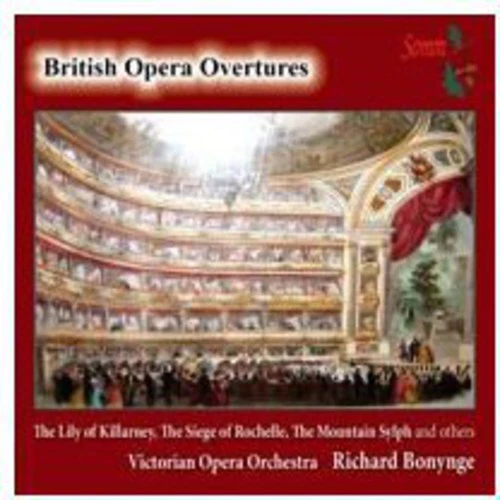
British Opera Overtures / Bonynge, Victorian Opera Orchestra
BRITISH OPERA OVERTURES: English Opera in the Nineteenth Century • Richard Bonynge, cond; Victorian Opera O • SOMM 0123 (74:36)
BENEDICT The Lily of Killarny. BARNETT The Mountain Sylph. BALFE The Siege of Rochelle. Le Puits d’amour. LODER The Night Dancers. WALLACE Lurline. The Amber Witch. Love’s Triumph Prelude. MACFARREN She Stoops to Conquer. THOMAS The Golden Web
For the most part, these are pleasant, skillfully wrought pieces, though some may deride them as a mere parade of pleasant tunes. I imagine the annotator makes a valid point in blaming the librettos of the operas they precede for the music’s demise in popularity. If you’re really curious, a few of them have made their way to recordings. John Barnett’s opera The Mountain Sylph is based on the same story that resulted in the venerable ballet La Sylphide (1836), composed by Herman Løvenskiold with choreography by August Bournonville. Like Rossini, Duparc, and Sibelius, Barnett severely curtailed or stopped his composing, in his case, from 1841 until his death in 1890. During his long life, he met Beethoven and studied with Weber. On the other hand, Edward Loder’s The Night Dancers uses some of the same plot as another venerable ballet, Giselle (1841), and Puccini’s opera Le villi, but no unfaithful bridegrooms have to dance to their deaths—it all turns out to have been a bad dream. Unlike Barnett, Loder attempts a few spooky effects in his Overture. Probably the most successful of these Victorian composers was Michael William Balfe, who is represented by two overtures, those to The Siege of Rochelle and Le Puits d’amour (“The Well of Love”—it’s also a French pastry with a hollow center). The latter work, with a libretto by Scribe, was first presented in Paris. His first London success was The Siege of Rochelle , his fourth opera. He went on to compose 24 more, of which the most successful was The Bohemian Girl . Unlike most of these operas, William Wallace’s Lurline , based on the Lorelei legend, has actually been recorded. Both the Overture and that to his The Amber Witch seem more engaged by the story than some of the overtures I have mentioned. George Macfarren’s She Stoops to Conquer is, as expected, based on Oliver Goldsmith’s 1773 play. Some composers have continued to create even after they became deaf, or nearly so; Macfarren wrote She Stoops to Conquer after he had gone blind. It has not been recorded but there is a recording of another of his operas, Robin Hood . I am grateful to Richard Bonynge for his interest in obscure vocal and dance music which has resulted in some delightful recordings—in fact, I’m interested in almost anything he chooses to record. One can enrich the catalog without adding another Beethoven symphony cycle to it.
FANFARE: James Miller
BRITISH OPERA OVERTURES: English Opera in the Nineteenth Century • Richard Bonynge, cond; Victorian Opera O • SOMM 0123 (74:36)
BENEDICT The Lily of Killarny. BARNETT The Mountain Sylph. BALFE The Siege of Rochelle. Le Puits d’amour. LODER The Night Dancers. WALLACE Lurline. The Amber Witch. Love’s Triumph Prelude. MACFARREN She Stoops to Conquer. THOMAS The Golden Web
For the most part, these are pleasant, skillfully wrought pieces, though some may deride them as a mere parade of pleasant tunes. I imagine the annotator makes a valid point in blaming the librettos of the operas they precede for the music’s demise in popularity. If you’re really curious, a few of them have made their way to recordings. John Barnett’s opera The Mountain Sylph is based on the same story that resulted in the venerable ballet La Sylphide (1836), composed by Herman Løvenskiold with choreography by August Bournonville. Like Rossini, Duparc, and Sibelius, Barnett severely curtailed or stopped his composing, in his case, from 1841 until his death in 1890. During his long life, he met Beethoven and studied with Weber. On the other hand, Edward Loder’s The Night Dancers uses some of the same plot as another venerable ballet, Giselle (1841), and Puccini’s opera Le villi, but no unfaithful bridegrooms have to dance to their deaths—it all turns out to have been a bad dream. Unlike Barnett, Loder attempts a few spooky effects in his Overture. Probably the most successful of these Victorian composers was Michael William Balfe, who is represented by two overtures, those to The Siege of Rochelle and Le Puits d’amour (“The Well of Love”—it’s also a French pastry with a hollow center). The latter work, with a libretto by Scribe, was first presented in Paris. His first London success was The Siege of Rochelle , his fourth opera. He went on to compose 24 more, of which the most successful was The Bohemian Girl . Unlike most of these operas, William Wallace’s Lurline , based on the Lorelei legend, has actually been recorded. Both the Overture and that to his The Amber Witch seem more engaged by the story than some of the overtures I have mentioned. George Macfarren’s She Stoops to Conquer is, as expected, based on Oliver Goldsmith’s 1773 play. Some composers have continued to create even after they became deaf, or nearly so; Macfarren wrote She Stoops to Conquer after he had gone blind. It has not been recorded but there is a recording of another of his operas, Robin Hood . I am grateful to Richard Bonynge for his interest in obscure vocal and dance music which has resulted in some delightful recordings—in fact, I’m interested in almost anything he chooses to record. One can enrich the catalog without adding another Beethoven symphony cycle to it.
FANFARE: James Miller
$7.35
Original: $20.99
-65%British Opera Overtures / Bonynge, Victorian Opera Orchestra—
$20.99
$7.35Description
BRITISH OPERA OVERTURES: English Opera in the Nineteenth Century • Richard Bonynge, cond; Victorian Opera O • SOMM 0123 (74:36)
BENEDICT The Lily of Killarny. BARNETT The Mountain Sylph. BALFE The Siege of Rochelle. Le Puits d’amour. LODER The Night Dancers. WALLACE Lurline. The Amber Witch. Love’s Triumph Prelude. MACFARREN She Stoops to Conquer. THOMAS The Golden Web
For the most part, these are pleasant, skillfully wrought pieces, though some may deride them as a mere parade of pleasant tunes. I imagine the annotator makes a valid point in blaming the librettos of the operas they precede for the music’s demise in popularity. If you’re really curious, a few of them have made their way to recordings. John Barnett’s opera The Mountain Sylph is based on the same story that resulted in the venerable ballet La Sylphide (1836), composed by Herman Løvenskiold with choreography by August Bournonville. Like Rossini, Duparc, and Sibelius, Barnett severely curtailed or stopped his composing, in his case, from 1841 until his death in 1890. During his long life, he met Beethoven and studied with Weber. On the other hand, Edward Loder’s The Night Dancers uses some of the same plot as another venerable ballet, Giselle (1841), and Puccini’s opera Le villi, but no unfaithful bridegrooms have to dance to their deaths—it all turns out to have been a bad dream. Unlike Barnett, Loder attempts a few spooky effects in his Overture. Probably the most successful of these Victorian composers was Michael William Balfe, who is represented by two overtures, those to The Siege of Rochelle and Le Puits d’amour (“The Well of Love”—it’s also a French pastry with a hollow center). The latter work, with a libretto by Scribe, was first presented in Paris. His first London success was The Siege of Rochelle , his fourth opera. He went on to compose 24 more, of which the most successful was The Bohemian Girl . Unlike most of these operas, William Wallace’s Lurline , based on the Lorelei legend, has actually been recorded. Both the Overture and that to his The Amber Witch seem more engaged by the story than some of the overtures I have mentioned. George Macfarren’s She Stoops to Conquer is, as expected, based on Oliver Goldsmith’s 1773 play. Some composers have continued to create even after they became deaf, or nearly so; Macfarren wrote She Stoops to Conquer after he had gone blind. It has not been recorded but there is a recording of another of his operas, Robin Hood . I am grateful to Richard Bonynge for his interest in obscure vocal and dance music which has resulted in some delightful recordings—in fact, I’m interested in almost anything he chooses to record. One can enrich the catalog without adding another Beethoven symphony cycle to it.
FANFARE: James Miller