🎉 Up to 70% Off Selected ItemsShop Sale

1 / 2
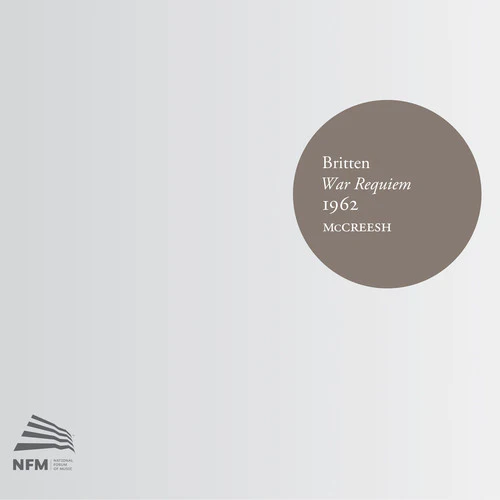
Britten: War Requiem / McCreesh, Gritton, Ainsley, Gabrieli Consort
BRITTEN War Requiem • Paul McCreesh, cond; Susan Gritton (sop); John Mark Ainsley (ten); Christopher Maltman (bar); Gabrieli Young Singers’ Scheme; Trebles of the Ch of New College Oxford; Wroclaw P Ch; Gabrieli Consort & Players • SIGNUM 340 (2 CDs: 84: 05)
Time was when Paul McCreesh was considered a specialist—and a brilliant one—in the Baroque and Classical periods, primarily in operas and liturgical choral works. In the last two years, however, he has released four extraordinary recordings, three of which might seem, at least to the record collector, to be outside his domain: the Berlioz Grande Messe des Morts , Mendelssohn’s Elijah , and a collection of British choral works on loss and consolation, A Song of Farewell , featuring the Herbert Howells Requiem. (The only exception is a newly refined conjectural reconstruction of the 1595 coronation service for Doge Marino Grimani in Venice.) Now, for the Benjamin Britten centennial, he has produced a new studio recording of the incomparable War Requiem . Each of these large scale undertaking is an outgrowth of McCreesh’s association with the International Festival of Oratorio and Cantata Music in Wroclaw, Poland (Wratislavia Cantans) and each employs not only a much augmented Gabrieli Consort and Players, but also the very fine Wroclaw Philharmonic Choir. Those familiar with McCreesh’s earlier masterful shaping of the large musical canvasses of Berlioz and Mendelssohn with his hundreds of performers will know exactly what to expect here.
And in fact, from the hushed suspense of the opening of the Requiem aeternam , to the more gentle than usual beginning to an extraordinarily powerful Dies irae , on to a more accurate than typical Sed signifier sanctus Michael , and an explosive Hosanna in excelsis , McCreesh and his 175-voice adult choir combine huge dynamic range with precision and flawless balance, perfect intonation, and great depth and variety of tone. The equally fine youth choir is made up of trebles from the Choir of New College Oxford, as well as choirs from McCreesh’s educational project, the Gabrieli Young Singers’ Scheme: Chethams Chamber Choir, North East Youth Chorale, Taplow Youth Choir, and Ulster Youth Chamber Choir. From its first appearance in a perfectly judged halo of resonance, the distanced body of treble voices is touchingly angelic.
The full orchestral forces make an awesome commotion in all the right places, the brass especially impressive in the various apocalypses and dramatic explosions; the one with organ near the end of the Libera me gave me chills. However, the chamber music, with an ensemble of superb soloists, lingers just as long in memory, aided as they are by McCreesh’s willingness to suspend forward momentum, to focus more than customary attention on details in the settings of Owen’s poems. I do not know a recording that gives greater support to the soloists than this.
These soloists know how to use the opportunities afforded them. McCreesh opts for an all-British trio, rather than continuing the symbolic use of English, German, and Russian soloists. More than many tenor soloists, John Mark Ainsley manages to break the hold of the Peter Pears tradition in the solos, while still being true to the substance of the work. He sings “One ever hangs” with breathtaking beauty of tone, and finds great poignancy and palpable fury in “Move him into the sun.” Baritone Christopher Maltman does the same in “Bugles sang,” sounding little like Dietrich Fischer-Dieskau but matching him in text pointing and intelligence of phrasing, here and in a chillingly scornful “Be slowly lifted up.” Together, they are arresting in “So Abram rose,” aided by McCreesh’s perceptive pacing, as they had been in the earlier sardonic “Out there, we’ve walked.” Susan Gritton is not as piercingly imperious as Galina Vishnevskaya in the Sanctus or Libera me , but the beauty of her voice in the Benedictus and the concluding In paradisum is more than ample compensation. The two male soloists outdo themselves in the concluding scena, “It seemed that out of battle I escaped,” and if “Let us sleep now” does not reduce you to tears, nothing in music can.
My two small complaints seem almost churlish in the face of such perfection: first, the books in which this and all of McCreesh’s Signum/Winged Lion releases are issued are quite beautifully done—texts, intelligent notes, and striking illustrations—but the endsheet sleeves invite scratches and, as in my case, surface scuffs. There must certainly be a better way. The second is the decision to provide only six tracks for the entire work, one at each of the major divisions of the Mass. Maybe only critics making comparisons care, but it would have been simple to add more.
But enough, the essential question is, does this new recording supplant Britten’s own with the soloists for whom he wrote the work? Britten was a master conductor of his own music, so almost inevitably the answer is, well … no. And yet, so powerful is McCreesh’s performance, so insightful the interpretive choices, so fine the soloists, and so clear and dynamic the recording, it would be hard indeed to have to choose between this and the original. Adding to the dilemma, Decca has just remastered the 1963 Britten recording from the master tapes—described as increasingly fragile—for its comprehensive anniversary issue and has made yet another incremental improvement in the transfer of the always fine Culshaw production. I recommend having both in the collection—this is, after all, no different than having multiple Beethoven symphony sets—and for the truly devoted, add Noseda’s hyper-dramatic performance on LSO Live and Rilling’s on Hänssler. There are other fine performances of this masterpiece, but these four—and definitely this new one—now define summa cum laude.
FANFARE: Ronald E. Grames
Time was when Paul McCreesh was considered a specialist—and a brilliant one—in the Baroque and Classical periods, primarily in operas and liturgical choral works. In the last two years, however, he has released four extraordinary recordings, three of which might seem, at least to the record collector, to be outside his domain: the Berlioz Grande Messe des Morts , Mendelssohn’s Elijah , and a collection of British choral works on loss and consolation, A Song of Farewell , featuring the Herbert Howells Requiem. (The only exception is a newly refined conjectural reconstruction of the 1595 coronation service for Doge Marino Grimani in Venice.) Now, for the Benjamin Britten centennial, he has produced a new studio recording of the incomparable War Requiem . Each of these large scale undertaking is an outgrowth of McCreesh’s association with the International Festival of Oratorio and Cantata Music in Wroclaw, Poland (Wratislavia Cantans) and each employs not only a much augmented Gabrieli Consort and Players, but also the very fine Wroclaw Philharmonic Choir. Those familiar with McCreesh’s earlier masterful shaping of the large musical canvasses of Berlioz and Mendelssohn with his hundreds of performers will know exactly what to expect here.
And in fact, from the hushed suspense of the opening of the Requiem aeternam , to the more gentle than usual beginning to an extraordinarily powerful Dies irae , on to a more accurate than typical Sed signifier sanctus Michael , and an explosive Hosanna in excelsis , McCreesh and his 175-voice adult choir combine huge dynamic range with precision and flawless balance, perfect intonation, and great depth and variety of tone. The equally fine youth choir is made up of trebles from the Choir of New College Oxford, as well as choirs from McCreesh’s educational project, the Gabrieli Young Singers’ Scheme: Chethams Chamber Choir, North East Youth Chorale, Taplow Youth Choir, and Ulster Youth Chamber Choir. From its first appearance in a perfectly judged halo of resonance, the distanced body of treble voices is touchingly angelic.
The full orchestral forces make an awesome commotion in all the right places, the brass especially impressive in the various apocalypses and dramatic explosions; the one with organ near the end of the Libera me gave me chills. However, the chamber music, with an ensemble of superb soloists, lingers just as long in memory, aided as they are by McCreesh’s willingness to suspend forward momentum, to focus more than customary attention on details in the settings of Owen’s poems. I do not know a recording that gives greater support to the soloists than this.
These soloists know how to use the opportunities afforded them. McCreesh opts for an all-British trio, rather than continuing the symbolic use of English, German, and Russian soloists. More than many tenor soloists, John Mark Ainsley manages to break the hold of the Peter Pears tradition in the solos, while still being true to the substance of the work. He sings “One ever hangs” with breathtaking beauty of tone, and finds great poignancy and palpable fury in “Move him into the sun.” Baritone Christopher Maltman does the same in “Bugles sang,” sounding little like Dietrich Fischer-Dieskau but matching him in text pointing and intelligence of phrasing, here and in a chillingly scornful “Be slowly lifted up.” Together, they are arresting in “So Abram rose,” aided by McCreesh’s perceptive pacing, as they had been in the earlier sardonic “Out there, we’ve walked.” Susan Gritton is not as piercingly imperious as Galina Vishnevskaya in the Sanctus or Libera me , but the beauty of her voice in the Benedictus and the concluding In paradisum is more than ample compensation. The two male soloists outdo themselves in the concluding scena, “It seemed that out of battle I escaped,” and if “Let us sleep now” does not reduce you to tears, nothing in music can.
My two small complaints seem almost churlish in the face of such perfection: first, the books in which this and all of McCreesh’s Signum/Winged Lion releases are issued are quite beautifully done—texts, intelligent notes, and striking illustrations—but the endsheet sleeves invite scratches and, as in my case, surface scuffs. There must certainly be a better way. The second is the decision to provide only six tracks for the entire work, one at each of the major divisions of the Mass. Maybe only critics making comparisons care, but it would have been simple to add more.
But enough, the essential question is, does this new recording supplant Britten’s own with the soloists for whom he wrote the work? Britten was a master conductor of his own music, so almost inevitably the answer is, well … no. And yet, so powerful is McCreesh’s performance, so insightful the interpretive choices, so fine the soloists, and so clear and dynamic the recording, it would be hard indeed to have to choose between this and the original. Adding to the dilemma, Decca has just remastered the 1963 Britten recording from the master tapes—described as increasingly fragile—for its comprehensive anniversary issue and has made yet another incremental improvement in the transfer of the always fine Culshaw production. I recommend having both in the collection—this is, after all, no different than having multiple Beethoven symphony sets—and for the truly devoted, add Noseda’s hyper-dramatic performance on LSO Live and Rilling’s on Hänssler. There are other fine performances of this masterpiece, but these four—and definitely this new one—now define summa cum laude.
FANFARE: Ronald E. Grames
BRITTEN War Requiem • Paul McCreesh, cond; Susan Gritton (sop); John Mark Ainsley (ten); Christopher Maltman (bar); Gabrieli Young Singers’ Scheme; Trebles of the Ch of New College Oxford; Wroclaw P Ch; Gabrieli Consort & Players • SIGNUM 340 (2 CDs: 84: 05)
Time was when Paul McCreesh was considered a specialist—and a brilliant one—in the Baroque and Classical periods, primarily in operas and liturgical choral works. In the last two years, however, he has released four extraordinary recordings, three of which might seem, at least to the record collector, to be outside his domain: the Berlioz Grande Messe des Morts , Mendelssohn’s Elijah , and a collection of British choral works on loss and consolation, A Song of Farewell , featuring the Herbert Howells Requiem. (The only exception is a newly refined conjectural reconstruction of the 1595 coronation service for Doge Marino Grimani in Venice.) Now, for the Benjamin Britten centennial, he has produced a new studio recording of the incomparable War Requiem . Each of these large scale undertaking is an outgrowth of McCreesh’s association with the International Festival of Oratorio and Cantata Music in Wroclaw, Poland (Wratislavia Cantans) and each employs not only a much augmented Gabrieli Consort and Players, but also the very fine Wroclaw Philharmonic Choir. Those familiar with McCreesh’s earlier masterful shaping of the large musical canvasses of Berlioz and Mendelssohn with his hundreds of performers will know exactly what to expect here.
And in fact, from the hushed suspense of the opening of the Requiem aeternam , to the more gentle than usual beginning to an extraordinarily powerful Dies irae , on to a more accurate than typical Sed signifier sanctus Michael , and an explosive Hosanna in excelsis , McCreesh and his 175-voice adult choir combine huge dynamic range with precision and flawless balance, perfect intonation, and great depth and variety of tone. The equally fine youth choir is made up of trebles from the Choir of New College Oxford, as well as choirs from McCreesh’s educational project, the Gabrieli Young Singers’ Scheme: Chethams Chamber Choir, North East Youth Chorale, Taplow Youth Choir, and Ulster Youth Chamber Choir. From its first appearance in a perfectly judged halo of resonance, the distanced body of treble voices is touchingly angelic.
The full orchestral forces make an awesome commotion in all the right places, the brass especially impressive in the various apocalypses and dramatic explosions; the one with organ near the end of the Libera me gave me chills. However, the chamber music, with an ensemble of superb soloists, lingers just as long in memory, aided as they are by McCreesh’s willingness to suspend forward momentum, to focus more than customary attention on details in the settings of Owen’s poems. I do not know a recording that gives greater support to the soloists than this.
These soloists know how to use the opportunities afforded them. McCreesh opts for an all-British trio, rather than continuing the symbolic use of English, German, and Russian soloists. More than many tenor soloists, John Mark Ainsley manages to break the hold of the Peter Pears tradition in the solos, while still being true to the substance of the work. He sings “One ever hangs” with breathtaking beauty of tone, and finds great poignancy and palpable fury in “Move him into the sun.” Baritone Christopher Maltman does the same in “Bugles sang,” sounding little like Dietrich Fischer-Dieskau but matching him in text pointing and intelligence of phrasing, here and in a chillingly scornful “Be slowly lifted up.” Together, they are arresting in “So Abram rose,” aided by McCreesh’s perceptive pacing, as they had been in the earlier sardonic “Out there, we’ve walked.” Susan Gritton is not as piercingly imperious as Galina Vishnevskaya in the Sanctus or Libera me , but the beauty of her voice in the Benedictus and the concluding In paradisum is more than ample compensation. The two male soloists outdo themselves in the concluding scena, “It seemed that out of battle I escaped,” and if “Let us sleep now” does not reduce you to tears, nothing in music can.
My two small complaints seem almost churlish in the face of such perfection: first, the books in which this and all of McCreesh’s Signum/Winged Lion releases are issued are quite beautifully done—texts, intelligent notes, and striking illustrations—but the endsheet sleeves invite scratches and, as in my case, surface scuffs. There must certainly be a better way. The second is the decision to provide only six tracks for the entire work, one at each of the major divisions of the Mass. Maybe only critics making comparisons care, but it would have been simple to add more.
But enough, the essential question is, does this new recording supplant Britten’s own with the soloists for whom he wrote the work? Britten was a master conductor of his own music, so almost inevitably the answer is, well … no. And yet, so powerful is McCreesh’s performance, so insightful the interpretive choices, so fine the soloists, and so clear and dynamic the recording, it would be hard indeed to have to choose between this and the original. Adding to the dilemma, Decca has just remastered the 1963 Britten recording from the master tapes—described as increasingly fragile—for its comprehensive anniversary issue and has made yet another incremental improvement in the transfer of the always fine Culshaw production. I recommend having both in the collection—this is, after all, no different than having multiple Beethoven symphony sets—and for the truly devoted, add Noseda’s hyper-dramatic performance on LSO Live and Rilling’s on Hänssler. There are other fine performances of this masterpiece, but these four—and definitely this new one—now define summa cum laude.
FANFARE: Ronald E. Grames
Time was when Paul McCreesh was considered a specialist—and a brilliant one—in the Baroque and Classical periods, primarily in operas and liturgical choral works. In the last two years, however, he has released four extraordinary recordings, three of which might seem, at least to the record collector, to be outside his domain: the Berlioz Grande Messe des Morts , Mendelssohn’s Elijah , and a collection of British choral works on loss and consolation, A Song of Farewell , featuring the Herbert Howells Requiem. (The only exception is a newly refined conjectural reconstruction of the 1595 coronation service for Doge Marino Grimani in Venice.) Now, for the Benjamin Britten centennial, he has produced a new studio recording of the incomparable War Requiem . Each of these large scale undertaking is an outgrowth of McCreesh’s association with the International Festival of Oratorio and Cantata Music in Wroclaw, Poland (Wratislavia Cantans) and each employs not only a much augmented Gabrieli Consort and Players, but also the very fine Wroclaw Philharmonic Choir. Those familiar with McCreesh’s earlier masterful shaping of the large musical canvasses of Berlioz and Mendelssohn with his hundreds of performers will know exactly what to expect here.
And in fact, from the hushed suspense of the opening of the Requiem aeternam , to the more gentle than usual beginning to an extraordinarily powerful Dies irae , on to a more accurate than typical Sed signifier sanctus Michael , and an explosive Hosanna in excelsis , McCreesh and his 175-voice adult choir combine huge dynamic range with precision and flawless balance, perfect intonation, and great depth and variety of tone. The equally fine youth choir is made up of trebles from the Choir of New College Oxford, as well as choirs from McCreesh’s educational project, the Gabrieli Young Singers’ Scheme: Chethams Chamber Choir, North East Youth Chorale, Taplow Youth Choir, and Ulster Youth Chamber Choir. From its first appearance in a perfectly judged halo of resonance, the distanced body of treble voices is touchingly angelic.
The full orchestral forces make an awesome commotion in all the right places, the brass especially impressive in the various apocalypses and dramatic explosions; the one with organ near the end of the Libera me gave me chills. However, the chamber music, with an ensemble of superb soloists, lingers just as long in memory, aided as they are by McCreesh’s willingness to suspend forward momentum, to focus more than customary attention on details in the settings of Owen’s poems. I do not know a recording that gives greater support to the soloists than this.
These soloists know how to use the opportunities afforded them. McCreesh opts for an all-British trio, rather than continuing the symbolic use of English, German, and Russian soloists. More than many tenor soloists, John Mark Ainsley manages to break the hold of the Peter Pears tradition in the solos, while still being true to the substance of the work. He sings “One ever hangs” with breathtaking beauty of tone, and finds great poignancy and palpable fury in “Move him into the sun.” Baritone Christopher Maltman does the same in “Bugles sang,” sounding little like Dietrich Fischer-Dieskau but matching him in text pointing and intelligence of phrasing, here and in a chillingly scornful “Be slowly lifted up.” Together, they are arresting in “So Abram rose,” aided by McCreesh’s perceptive pacing, as they had been in the earlier sardonic “Out there, we’ve walked.” Susan Gritton is not as piercingly imperious as Galina Vishnevskaya in the Sanctus or Libera me , but the beauty of her voice in the Benedictus and the concluding In paradisum is more than ample compensation. The two male soloists outdo themselves in the concluding scena, “It seemed that out of battle I escaped,” and if “Let us sleep now” does not reduce you to tears, nothing in music can.
My two small complaints seem almost churlish in the face of such perfection: first, the books in which this and all of McCreesh’s Signum/Winged Lion releases are issued are quite beautifully done—texts, intelligent notes, and striking illustrations—but the endsheet sleeves invite scratches and, as in my case, surface scuffs. There must certainly be a better way. The second is the decision to provide only six tracks for the entire work, one at each of the major divisions of the Mass. Maybe only critics making comparisons care, but it would have been simple to add more.
But enough, the essential question is, does this new recording supplant Britten’s own with the soloists for whom he wrote the work? Britten was a master conductor of his own music, so almost inevitably the answer is, well … no. And yet, so powerful is McCreesh’s performance, so insightful the interpretive choices, so fine the soloists, and so clear and dynamic the recording, it would be hard indeed to have to choose between this and the original. Adding to the dilemma, Decca has just remastered the 1963 Britten recording from the master tapes—described as increasingly fragile—for its comprehensive anniversary issue and has made yet another incremental improvement in the transfer of the always fine Culshaw production. I recommend having both in the collection—this is, after all, no different than having multiple Beethoven symphony sets—and for the truly devoted, add Noseda’s hyper-dramatic performance on LSO Live and Rilling’s on Hänssler. There are other fine performances of this masterpiece, but these four—and definitely this new one—now define summa cum laude.
FANFARE: Ronald E. Grames
$27.99
Britten: War Requiem / McCreesh, Gritton, Ainsley, Gabrieli Consort—
$27.99
Description
BRITTEN War Requiem • Paul McCreesh, cond; Susan Gritton (sop); John Mark Ainsley (ten); Christopher Maltman (bar); Gabrieli Young Singers’ Scheme; Trebles of the Ch of New College Oxford; Wroclaw P Ch; Gabrieli Consort & Players • SIGNUM 340 (2 CDs: 84: 05)
Time was when Paul McCreesh was considered a specialist—and a brilliant one—in the Baroque and Classical periods, primarily in operas and liturgical choral works. In the last two years, however, he has released four extraordinary recordings, three of which might seem, at least to the record collector, to be outside his domain: the Berlioz Grande Messe des Morts , Mendelssohn’s Elijah , and a collection of British choral works on loss and consolation, A Song of Farewell , featuring the Herbert Howells Requiem. (The only exception is a newly refined conjectural reconstruction of the 1595 coronation service for Doge Marino Grimani in Venice.) Now, for the Benjamin Britten centennial, he has produced a new studio recording of the incomparable War Requiem . Each of these large scale undertaking is an outgrowth of McCreesh’s association with the International Festival of Oratorio and Cantata Music in Wroclaw, Poland (Wratislavia Cantans) and each employs not only a much augmented Gabrieli Consort and Players, but also the very fine Wroclaw Philharmonic Choir. Those familiar with McCreesh’s earlier masterful shaping of the large musical canvasses of Berlioz and Mendelssohn with his hundreds of performers will know exactly what to expect here.
And in fact, from the hushed suspense of the opening of the Requiem aeternam , to the more gentle than usual beginning to an extraordinarily powerful Dies irae , on to a more accurate than typical Sed signifier sanctus Michael , and an explosive Hosanna in excelsis , McCreesh and his 175-voice adult choir combine huge dynamic range with precision and flawless balance, perfect intonation, and great depth and variety of tone. The equally fine youth choir is made up of trebles from the Choir of New College Oxford, as well as choirs from McCreesh’s educational project, the Gabrieli Young Singers’ Scheme: Chethams Chamber Choir, North East Youth Chorale, Taplow Youth Choir, and Ulster Youth Chamber Choir. From its first appearance in a perfectly judged halo of resonance, the distanced body of treble voices is touchingly angelic.
The full orchestral forces make an awesome commotion in all the right places, the brass especially impressive in the various apocalypses and dramatic explosions; the one with organ near the end of the Libera me gave me chills. However, the chamber music, with an ensemble of superb soloists, lingers just as long in memory, aided as they are by McCreesh’s willingness to suspend forward momentum, to focus more than customary attention on details in the settings of Owen’s poems. I do not know a recording that gives greater support to the soloists than this.
These soloists know how to use the opportunities afforded them. McCreesh opts for an all-British trio, rather than continuing the symbolic use of English, German, and Russian soloists. More than many tenor soloists, John Mark Ainsley manages to break the hold of the Peter Pears tradition in the solos, while still being true to the substance of the work. He sings “One ever hangs” with breathtaking beauty of tone, and finds great poignancy and palpable fury in “Move him into the sun.” Baritone Christopher Maltman does the same in “Bugles sang,” sounding little like Dietrich Fischer-Dieskau but matching him in text pointing and intelligence of phrasing, here and in a chillingly scornful “Be slowly lifted up.” Together, they are arresting in “So Abram rose,” aided by McCreesh’s perceptive pacing, as they had been in the earlier sardonic “Out there, we’ve walked.” Susan Gritton is not as piercingly imperious as Galina Vishnevskaya in the Sanctus or Libera me , but the beauty of her voice in the Benedictus and the concluding In paradisum is more than ample compensation. The two male soloists outdo themselves in the concluding scena, “It seemed that out of battle I escaped,” and if “Let us sleep now” does not reduce you to tears, nothing in music can.
My two small complaints seem almost churlish in the face of such perfection: first, the books in which this and all of McCreesh’s Signum/Winged Lion releases are issued are quite beautifully done—texts, intelligent notes, and striking illustrations—but the endsheet sleeves invite scratches and, as in my case, surface scuffs. There must certainly be a better way. The second is the decision to provide only six tracks for the entire work, one at each of the major divisions of the Mass. Maybe only critics making comparisons care, but it would have been simple to add more.
But enough, the essential question is, does this new recording supplant Britten’s own with the soloists for whom he wrote the work? Britten was a master conductor of his own music, so almost inevitably the answer is, well … no. And yet, so powerful is McCreesh’s performance, so insightful the interpretive choices, so fine the soloists, and so clear and dynamic the recording, it would be hard indeed to have to choose between this and the original. Adding to the dilemma, Decca has just remastered the 1963 Britten recording from the master tapes—described as increasingly fragile—for its comprehensive anniversary issue and has made yet another incremental improvement in the transfer of the always fine Culshaw production. I recommend having both in the collection—this is, after all, no different than having multiple Beethoven symphony sets—and for the truly devoted, add Noseda’s hyper-dramatic performance on LSO Live and Rilling’s on Hänssler. There are other fine performances of this masterpiece, but these four—and definitely this new one—now define summa cum laude.
FANFARE: Ronald E. Grames
Time was when Paul McCreesh was considered a specialist—and a brilliant one—in the Baroque and Classical periods, primarily in operas and liturgical choral works. In the last two years, however, he has released four extraordinary recordings, three of which might seem, at least to the record collector, to be outside his domain: the Berlioz Grande Messe des Morts , Mendelssohn’s Elijah , and a collection of British choral works on loss and consolation, A Song of Farewell , featuring the Herbert Howells Requiem. (The only exception is a newly refined conjectural reconstruction of the 1595 coronation service for Doge Marino Grimani in Venice.) Now, for the Benjamin Britten centennial, he has produced a new studio recording of the incomparable War Requiem . Each of these large scale undertaking is an outgrowth of McCreesh’s association with the International Festival of Oratorio and Cantata Music in Wroclaw, Poland (Wratislavia Cantans) and each employs not only a much augmented Gabrieli Consort and Players, but also the very fine Wroclaw Philharmonic Choir. Those familiar with McCreesh’s earlier masterful shaping of the large musical canvasses of Berlioz and Mendelssohn with his hundreds of performers will know exactly what to expect here.
And in fact, from the hushed suspense of the opening of the Requiem aeternam , to the more gentle than usual beginning to an extraordinarily powerful Dies irae , on to a more accurate than typical Sed signifier sanctus Michael , and an explosive Hosanna in excelsis , McCreesh and his 175-voice adult choir combine huge dynamic range with precision and flawless balance, perfect intonation, and great depth and variety of tone. The equally fine youth choir is made up of trebles from the Choir of New College Oxford, as well as choirs from McCreesh’s educational project, the Gabrieli Young Singers’ Scheme: Chethams Chamber Choir, North East Youth Chorale, Taplow Youth Choir, and Ulster Youth Chamber Choir. From its first appearance in a perfectly judged halo of resonance, the distanced body of treble voices is touchingly angelic.
The full orchestral forces make an awesome commotion in all the right places, the brass especially impressive in the various apocalypses and dramatic explosions; the one with organ near the end of the Libera me gave me chills. However, the chamber music, with an ensemble of superb soloists, lingers just as long in memory, aided as they are by McCreesh’s willingness to suspend forward momentum, to focus more than customary attention on details in the settings of Owen’s poems. I do not know a recording that gives greater support to the soloists than this.
These soloists know how to use the opportunities afforded them. McCreesh opts for an all-British trio, rather than continuing the symbolic use of English, German, and Russian soloists. More than many tenor soloists, John Mark Ainsley manages to break the hold of the Peter Pears tradition in the solos, while still being true to the substance of the work. He sings “One ever hangs” with breathtaking beauty of tone, and finds great poignancy and palpable fury in “Move him into the sun.” Baritone Christopher Maltman does the same in “Bugles sang,” sounding little like Dietrich Fischer-Dieskau but matching him in text pointing and intelligence of phrasing, here and in a chillingly scornful “Be slowly lifted up.” Together, they are arresting in “So Abram rose,” aided by McCreesh’s perceptive pacing, as they had been in the earlier sardonic “Out there, we’ve walked.” Susan Gritton is not as piercingly imperious as Galina Vishnevskaya in the Sanctus or Libera me , but the beauty of her voice in the Benedictus and the concluding In paradisum is more than ample compensation. The two male soloists outdo themselves in the concluding scena, “It seemed that out of battle I escaped,” and if “Let us sleep now” does not reduce you to tears, nothing in music can.
My two small complaints seem almost churlish in the face of such perfection: first, the books in which this and all of McCreesh’s Signum/Winged Lion releases are issued are quite beautifully done—texts, intelligent notes, and striking illustrations—but the endsheet sleeves invite scratches and, as in my case, surface scuffs. There must certainly be a better way. The second is the decision to provide only six tracks for the entire work, one at each of the major divisions of the Mass. Maybe only critics making comparisons care, but it would have been simple to add more.
But enough, the essential question is, does this new recording supplant Britten’s own with the soloists for whom he wrote the work? Britten was a master conductor of his own music, so almost inevitably the answer is, well … no. And yet, so powerful is McCreesh’s performance, so insightful the interpretive choices, so fine the soloists, and so clear and dynamic the recording, it would be hard indeed to have to choose between this and the original. Adding to the dilemma, Decca has just remastered the 1963 Britten recording from the master tapes—described as increasingly fragile—for its comprehensive anniversary issue and has made yet another incremental improvement in the transfer of the always fine Culshaw production. I recommend having both in the collection—this is, after all, no different than having multiple Beethoven symphony sets—and for the truly devoted, add Noseda’s hyper-dramatic performance on LSO Live and Rilling’s on Hänssler. There are other fine performances of this masterpiece, but these four—and definitely this new one—now define summa cum laude.
FANFARE: Ronald E. Grames