🎉 Up to 70% Off Selected ItemsShop Sale

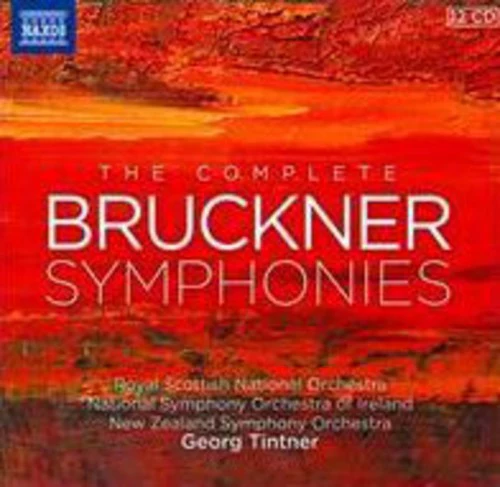
Bruckner: Complete Symphonies / Tintner

There’s no question that the late Georg Tintner was a great Brucknerian, even if some of his textual decisions, such as his preference for the patently inferior first version of the Eighth Symphony, with its minimalistically repetitive scherzo (sound clip), necessarily make this set one to own alongside other, more traditional approaches. On the other hand, put this together with Skrowaczewski’s Oehms set, also at budget price, and you can have two superb, hugely different Bruckner cycles for a very reasonable outlay.
And whether or not you agree with all of Tintner’s decisions with respect to editions, there’s no question that he justifies his choices by delivering what are arguably the best performances available of the alternative in question. This is true of that Eighth, and even more so of his astonishing Third, one of the very greatest Bruckner performances ever committed to disc. Also noteworthy: superb versions of the Seventh, Fourth, and First. The two early works, “0? and “00?, need to be played as well as they are here. They are not great Bruckner, but Tintner’s commitment carries the day.
The orchestras involved aren’t traditional “Bruckner orchestras” either, and so lack that characteristic rich string sound and dark-toned brass–but even this contributes to rather than detracts from Tintner’s distinctive vision, and the playing is never less than up to Bruckner’s demands. You also get the 1878 “Volksfest” finale to the Fourth Symphony, plus a bonus CD containing a very personal discussion by Tintner of Bruckner’s music. Sonically, these are also some of Naxos’ finest efforts, making this box an essential purchase for anyone who loves Bruckner and who missed these performances the first time around.
– David Hurwitz, ClassicsToday.com
There’s no question that the late Georg Tintner was a great Brucknerian, even if some of his textual decisions, such as his preference for the patently inferior first version of the Eighth Symphony, with its minimalistically repetitive scherzo (sound clip), necessarily make this set one to own alongside other, more traditional approaches. On the other hand, put this together with Skrowaczewski’s Oehms set, also at budget price, and you can have two superb, hugely different Bruckner cycles for a very reasonable outlay.
And whether or not you agree with all of Tintner’s decisions with respect to editions, there’s no question that he justifies his choices by delivering what are arguably the best performances available of the alternative in question. This is true of that Eighth, and even more so of his astonishing Third, one of the very greatest Bruckner performances ever committed to disc. Also noteworthy: superb versions of the Seventh, Fourth, and First. The two early works, “0? and “00?, need to be played as well as they are here. They are not great Bruckner, but Tintner’s commitment carries the day.
The orchestras involved aren’t traditional “Bruckner orchestras” either, and so lack that characteristic rich string sound and dark-toned brass–but even this contributes to rather than detracts from Tintner’s distinctive vision, and the playing is never less than up to Bruckner’s demands. You also get the 1878 “Volksfest” finale to the Fourth Symphony, plus a bonus CD containing a very personal discussion by Tintner of Bruckner’s music. Sonically, these are also some of Naxos’ finest efforts, making this box an essential purchase for anyone who loves Bruckner and who missed these performances the first time around.
– David Hurwitz, ClassicsToday.com
$18.90
Original: $53.99
-65%Bruckner: Complete Symphonies / Tintner—
$53.99
$18.90Description
There’s no question that the late Georg Tintner was a great Brucknerian, even if some of his textual decisions, such as his preference for the patently inferior first version of the Eighth Symphony, with its minimalistically repetitive scherzo (sound clip), necessarily make this set one to own alongside other, more traditional approaches. On the other hand, put this together with Skrowaczewski’s Oehms set, also at budget price, and you can have two superb, hugely different Bruckner cycles for a very reasonable outlay.
And whether or not you agree with all of Tintner’s decisions with respect to editions, there’s no question that he justifies his choices by delivering what are arguably the best performances available of the alternative in question. This is true of that Eighth, and even more so of his astonishing Third, one of the very greatest Bruckner performances ever committed to disc. Also noteworthy: superb versions of the Seventh, Fourth, and First. The two early works, “0? and “00?, need to be played as well as they are here. They are not great Bruckner, but Tintner’s commitment carries the day.
The orchestras involved aren’t traditional “Bruckner orchestras” either, and so lack that characteristic rich string sound and dark-toned brass–but even this contributes to rather than detracts from Tintner’s distinctive vision, and the playing is never less than up to Bruckner’s demands. You also get the 1878 “Volksfest” finale to the Fourth Symphony, plus a bonus CD containing a very personal discussion by Tintner of Bruckner’s music. Sonically, these are also some of Naxos’ finest efforts, making this box an essential purchase for anyone who loves Bruckner and who missed these performances the first time around.
– David Hurwitz, ClassicsToday.com