Bruckner: Symphony No 5; Et Al / Knappertsbusch, Munich Po
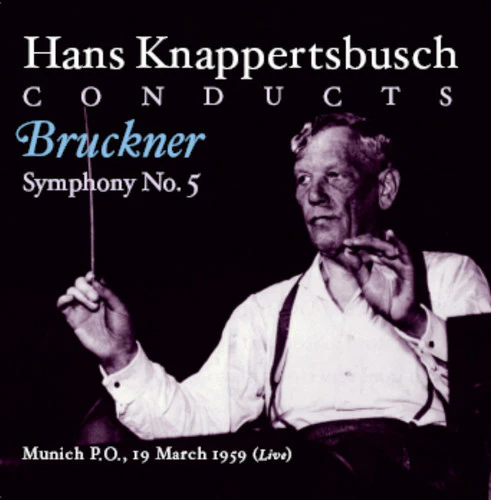
Tempo flexibility, dynamic contouring, and rhetorical gesture are part and parcel of Bruckner's music as promulgated in the first published editions used by Knappertsbusch until the end of his life. John Rockwell wrote that "Knappertsbusch's way with Brucknerian rubato - varying the pulse of the music without undermining Bruckner's solid grandeur - seems to capture the essence of the music time after time, mixing serenity with thrilling urgency." Granted, Kna did not always follow the letter of the first printings in his realizations. His predilections for dramatic underlining reflects the same tradition that infuses the old scores with various refinements of tempi, phrasing, and dynamics. Critics judged the performance on this CD superior to the conductor's VPO recording (on Decca) when it first appeared (in 1998); now it has been completely refurbished.
Tempo flexibility, dynamic contouring, and rhetorical gesture are part and parcel of Bruckner's music as promulgated in the first published editions used by Knappertsbusch until the end of his life. John Rockwell wrote that "Knappertsbusch's way with Brucknerian rubato - varying the pulse of the music without undermining Bruckner's solid grandeur - seems to capture the essence of the music time after time, mixing serenity with thrilling urgency." Granted, Kna did not always follow the letter of the first printings in his realizations. His predilections for dramatic underlining reflects the same tradition that infuses the old scores with various refinements of tempi, phrasing, and dynamics. Critics judged the performance on this CD superior to the conductor's VPO recording (on Decca) when it first appeared (in 1998); now it has been completely refurbished.
Description
Tempo flexibility, dynamic contouring, and rhetorical gesture are part and parcel of Bruckner's music as promulgated in the first published editions used by Knappertsbusch until the end of his life. John Rockwell wrote that "Knappertsbusch's way with Brucknerian rubato - varying the pulse of the music without undermining Bruckner's solid grandeur - seems to capture the essence of the music time after time, mixing serenity with thrilling urgency." Granted, Kna did not always follow the letter of the first printings in his realizations. His predilections for dramatic underlining reflects the same tradition that infuses the old scores with various refinements of tempi, phrasing, and dynamics. Critics judged the performance on this CD superior to the conductor's VPO recording (on Decca) when it first appeared (in 1998); now it has been completely refurbished.