🎉 Up to 70% Off Selected ItemsShop Sale

1 / 2
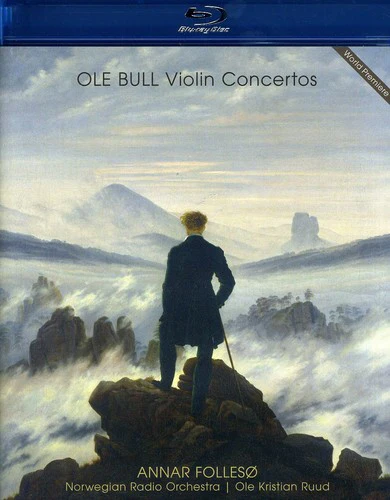
Bull: Violin Concertos / Folleso, Ruud, Norwegian Radio Orchestra [Hybrd SACD + Blu-ray Audio]
BULL Sæterjentens Søndag . Violin Concerto in A. Concerto Fantastico in e. I Ensomme Stunde. La Verbena de San Juan. Et Sæterbesøg • Annar Follesø (vn); Ole Kristian Ruud, cond; Norwegian RO • 2L 67 (Blu-ray audio: 69:21)
& SACD
Tall, preternaturally handsome Ole Bull captured the fancy of concertgoers in Europe, and in the United States as well. In fact, at a time when classical artists like Henri Vieuxtemps had trouble making inroads in the American hinterland (supposedly after an initially disappointing reception, he composed his first set of variations on Yankee Doodle ), Bull made immediate connections with his program of atmospheric, sentimental, and technically dazzling pieces that he had composed himself—and always with his audiences in mind. Nevertheless, as had Paganini, whom he idolized, before him, he proved himself able to win the admiration of first-rank composers. The opening work on this program, Sæterjentens Søndag (The Herd Girl’s Sunday Morning), represents just such a simple song, one that must (and seems calculated to) have drawn an admiring tear from his listeners. Annar Follesø gives an appropriately sensitive and atmospheric account of it (with the accompaniment arranged for orchestra by Johan Svendsen), along with Ole Kristian Ruud and the Norwegian Radio Orchestra. The two concertos, recently discovered, represent the more virtuosic side of Bull’s personality. The first, in A Major, opens with a long and symphonically conceived tutti, with some of the quieter passages sensitively orchestrated. The soloist enters with a showy cadenza that must have been in part just what Bull’s audiences wanted—and even expected. The writing for violin sounds like a (derivative?) mix of Paganini’s pyrotechnical wizardry and De Bériot’s suave tunefulness. Still, many listeners may doubt that Bull has integrated his thematic materials as successfully (or at least consistently) into the passagework as did his contemporaries the Henris (Vieuxtemps and Wieniawski). But Follesø displays the natural virtuosic flair to play some of these seemingly aimless passages without retaining his tongue in his cheek, as well as an affinity for the concerto’s genial ethnic harmonic and melodic atmosphere. The brief slow movement also opens with an extended orchestral passage; but the soloist claims the limelight upon his entry in an affecting passage on the G string. The Rondo pastorale that brings the concerto to a close features thematic fireworks in double-stops, and while some of the later material grows almost maudlin, Bull always manages to hold his listeners’ interest.
The nominally programmatic Concerto fantastico (with movements representing night, dawn, and day) also begins with a long tutti and features even more flamboyant passagework, which Follesø plays with aplomb. As in Bull’s Concerto in A Major, the streamers seem to be stretched pretty thinly over their underlying framework. Once again, though, Follesø (and Ruud and the orchestra) play their roles without sounding smugly superior to the program. The slow movement, built on a simple, heartfelt tune, sounds affecting in the same way as did the other concerto’s corresponding movement. The finale, a short but intoxicating romp with lyrical pauses for breath, seems even more shrewdly calculated for effect than does the other concerto’s finale. Once again, Follesø provides a rollicking, technically dazzling account. I Ensomme Stunde (La Melancolie), here arranged by Johan Halvorsen and Wolfgang Plagge, offers Grieg-like fare like that in Sæterjentens Søndag . The more extended fantasy, La Verbena de San Juan , however, with its percussion-rich orchestration, sounds like a sort of Norwegian counterpart to Sarasate’s ethnic concoctions, although it seems to go a step further in local color. According to the notes, Bull wrote it for Queen Isabella of Spain upon the occasion of a tour in 1846. The queen, again according to the notes, enjoyed Bull’s music—and perhaps other attentions. According to the notes, Bull incorporated Sebastian Yradier’s Jota Aragonesa out of gratitude to that composer; audiences should recognize it. They should also recognize Sarasate’s whistling harmonics (also familiar from Paganini). And Bull, as did Sarasate, incorporated left-hand pizzicatos liberally in his works. Follesø is equal to the challenges both these techniques pose.
Et Sæterbesøg includes references to folk fiddling with drones that I’ve always associated with the Hardanger fiddle or at least its style. The notes relate that, coupled with the words to Sæterjentens Søndag, it’s become a part of Norway’s cultural heritage. For those inclined, as many have been, to dismiss Bull as a sort of musical charlatan, the lyrical outpouring in the song’s middle should invite at least a second look. Arve Tellefsen played a program of Bull’s music for violin and orchestra with Andrew Karsten and the Bergen Symphony Orchestra in 1988 (Norsk Kulturraå ds Klassikerserie 50008), including two works on Follesø’s, Et Sæterbesøg, I Ensomme Stunde , and the Adagio sostenuto from the Concerto fantastico . Tellefsen’s version of Et Sæterbesøg takes advantage of bells to enhance the mountain atmosphere, and his “Hardanger” sounds twangier, even if he doesn’t draw as deeply affecting a cantabile from its lyrical passages (or those of I Ensomme Stunde— though Tellefsen’s version of the concerto’s slow movement throbs with a warmer expressivity despite his edgier tone production).
The Blu-ray version (audio only), to which I listened (although I used the CD version of Follesø’s program in making the comparison with Tellefsen’s program), provides extraordinarily sharp definition, hardly losing clarity in the midst of a somewhat reverberant setting. Whether or not this medium will offer relief to listeners fatigued by the roughness of even the best CDs, in particular in recordings of violin tone, it represents an improvement over CDs, as did DVD-Audio, among formats dependent on high-storage media (the sound: 24 bit and at least 192 kHz, with a choice of 5.1 DTS HD, 7.1 DTS HD, or 2.0 LPCM). Notes in the highest registers hiss and spit, yet with a relaxing smoothness and stimulating three-dimensional (a metaphor only) projection. The entire program, in this rich smorgasbord of formats, should appeal to lovers of the violin and perhaps to general listeners as well. As did Paganini and figures like Sinatra and Presley, Ole Bull represented a cultural phenomenon that should interest at least historians. His success in his own time demonstrates that, at least to the extent that his effect didn’t depend on his personality, genuine musicality underlay his work. It’s apparent in this collection. Recommended on that account, as well.
FANFARE: Robert Maxham
BULL Sæterjentens Søndag . Violin Concerto in A. Concerto Fantastico in e. I Ensomme Stunde. La Verbena de San Juan. Et Sæterbesøg • Annar Follesø (vn); Ole Kristian Ruud, cond; Norwegian RO • 2L 67 (Blu-ray audio: 69:21)
& SACD
Tall, preternaturally handsome Ole Bull captured the fancy of concertgoers in Europe, and in the United States as well. In fact, at a time when classical artists like Henri Vieuxtemps had trouble making inroads in the American hinterland (supposedly after an initially disappointing reception, he composed his first set of variations on Yankee Doodle ), Bull made immediate connections with his program of atmospheric, sentimental, and technically dazzling pieces that he had composed himself—and always with his audiences in mind. Nevertheless, as had Paganini, whom he idolized, before him, he proved himself able to win the admiration of first-rank composers. The opening work on this program, Sæterjentens Søndag (The Herd Girl’s Sunday Morning), represents just such a simple song, one that must (and seems calculated to) have drawn an admiring tear from his listeners. Annar Follesø gives an appropriately sensitive and atmospheric account of it (with the accompaniment arranged for orchestra by Johan Svendsen), along with Ole Kristian Ruud and the Norwegian Radio Orchestra. The two concertos, recently discovered, represent the more virtuosic side of Bull’s personality. The first, in A Major, opens with a long and symphonically conceived tutti, with some of the quieter passages sensitively orchestrated. The soloist enters with a showy cadenza that must have been in part just what Bull’s audiences wanted—and even expected. The writing for violin sounds like a (derivative?) mix of Paganini’s pyrotechnical wizardry and De Bériot’s suave tunefulness. Still, many listeners may doubt that Bull has integrated his thematic materials as successfully (or at least consistently) into the passagework as did his contemporaries the Henris (Vieuxtemps and Wieniawski). But Follesø displays the natural virtuosic flair to play some of these seemingly aimless passages without retaining his tongue in his cheek, as well as an affinity for the concerto’s genial ethnic harmonic and melodic atmosphere. The brief slow movement also opens with an extended orchestral passage; but the soloist claims the limelight upon his entry in an affecting passage on the G string. The Rondo pastorale that brings the concerto to a close features thematic fireworks in double-stops, and while some of the later material grows almost maudlin, Bull always manages to hold his listeners’ interest.
The nominally programmatic Concerto fantastico (with movements representing night, dawn, and day) also begins with a long tutti and features even more flamboyant passagework, which Follesø plays with aplomb. As in Bull’s Concerto in A Major, the streamers seem to be stretched pretty thinly over their underlying framework. Once again, though, Follesø (and Ruud and the orchestra) play their roles without sounding smugly superior to the program. The slow movement, built on a simple, heartfelt tune, sounds affecting in the same way as did the other concerto’s corresponding movement. The finale, a short but intoxicating romp with lyrical pauses for breath, seems even more shrewdly calculated for effect than does the other concerto’s finale. Once again, Follesø provides a rollicking, technically dazzling account. I Ensomme Stunde (La Melancolie), here arranged by Johan Halvorsen and Wolfgang Plagge, offers Grieg-like fare like that in Sæterjentens Søndag . The more extended fantasy, La Verbena de San Juan , however, with its percussion-rich orchestration, sounds like a sort of Norwegian counterpart to Sarasate’s ethnic concoctions, although it seems to go a step further in local color. According to the notes, Bull wrote it for Queen Isabella of Spain upon the occasion of a tour in 1846. The queen, again according to the notes, enjoyed Bull’s music—and perhaps other attentions. According to the notes, Bull incorporated Sebastian Yradier’s Jota Aragonesa out of gratitude to that composer; audiences should recognize it. They should also recognize Sarasate’s whistling harmonics (also familiar from Paganini). And Bull, as did Sarasate, incorporated left-hand pizzicatos liberally in his works. Follesø is equal to the challenges both these techniques pose.
Et Sæterbesøg includes references to folk fiddling with drones that I’ve always associated with the Hardanger fiddle or at least its style. The notes relate that, coupled with the words to Sæterjentens Søndag, it’s become a part of Norway’s cultural heritage. For those inclined, as many have been, to dismiss Bull as a sort of musical charlatan, the lyrical outpouring in the song’s middle should invite at least a second look. Arve Tellefsen played a program of Bull’s music for violin and orchestra with Andrew Karsten and the Bergen Symphony Orchestra in 1988 (Norsk Kulturraå ds Klassikerserie 50008), including two works on Follesø’s, Et Sæterbesøg, I Ensomme Stunde , and the Adagio sostenuto from the Concerto fantastico . Tellefsen’s version of Et Sæterbesøg takes advantage of bells to enhance the mountain atmosphere, and his “Hardanger” sounds twangier, even if he doesn’t draw as deeply affecting a cantabile from its lyrical passages (or those of I Ensomme Stunde— though Tellefsen’s version of the concerto’s slow movement throbs with a warmer expressivity despite his edgier tone production).
The Blu-ray version (audio only), to which I listened (although I used the CD version of Follesø’s program in making the comparison with Tellefsen’s program), provides extraordinarily sharp definition, hardly losing clarity in the midst of a somewhat reverberant setting. Whether or not this medium will offer relief to listeners fatigued by the roughness of even the best CDs, in particular in recordings of violin tone, it represents an improvement over CDs, as did DVD-Audio, among formats dependent on high-storage media (the sound: 24 bit and at least 192 kHz, with a choice of 5.1 DTS HD, 7.1 DTS HD, or 2.0 LPCM). Notes in the highest registers hiss and spit, yet with a relaxing smoothness and stimulating three-dimensional (a metaphor only) projection. The entire program, in this rich smorgasbord of formats, should appeal to lovers of the violin and perhaps to general listeners as well. As did Paganini and figures like Sinatra and Presley, Ole Bull represented a cultural phenomenon that should interest at least historians. His success in his own time demonstrates that, at least to the extent that his effect didn’t depend on his personality, genuine musicality underlay his work. It’s apparent in this collection. Recommended on that account, as well.
FANFARE: Robert Maxham
$44.99
Bull: Violin Concertos / Folleso, Ruud, Norwegian Radio Orchestra [Hybrd SACD + Blu-ray Audio]—
$44.99
Description
BULL Sæterjentens Søndag . Violin Concerto in A. Concerto Fantastico in e. I Ensomme Stunde. La Verbena de San Juan. Et Sæterbesøg • Annar Follesø (vn); Ole Kristian Ruud, cond; Norwegian RO • 2L 67 (Blu-ray audio: 69:21)
& SACD
Tall, preternaturally handsome Ole Bull captured the fancy of concertgoers in Europe, and in the United States as well. In fact, at a time when classical artists like Henri Vieuxtemps had trouble making inroads in the American hinterland (supposedly after an initially disappointing reception, he composed his first set of variations on Yankee Doodle ), Bull made immediate connections with his program of atmospheric, sentimental, and technically dazzling pieces that he had composed himself—and always with his audiences in mind. Nevertheless, as had Paganini, whom he idolized, before him, he proved himself able to win the admiration of first-rank composers. The opening work on this program, Sæterjentens Søndag (The Herd Girl’s Sunday Morning), represents just such a simple song, one that must (and seems calculated to) have drawn an admiring tear from his listeners. Annar Follesø gives an appropriately sensitive and atmospheric account of it (with the accompaniment arranged for orchestra by Johan Svendsen), along with Ole Kristian Ruud and the Norwegian Radio Orchestra. The two concertos, recently discovered, represent the more virtuosic side of Bull’s personality. The first, in A Major, opens with a long and symphonically conceived tutti, with some of the quieter passages sensitively orchestrated. The soloist enters with a showy cadenza that must have been in part just what Bull’s audiences wanted—and even expected. The writing for violin sounds like a (derivative?) mix of Paganini’s pyrotechnical wizardry and De Bériot’s suave tunefulness. Still, many listeners may doubt that Bull has integrated his thematic materials as successfully (or at least consistently) into the passagework as did his contemporaries the Henris (Vieuxtemps and Wieniawski). But Follesø displays the natural virtuosic flair to play some of these seemingly aimless passages without retaining his tongue in his cheek, as well as an affinity for the concerto’s genial ethnic harmonic and melodic atmosphere. The brief slow movement also opens with an extended orchestral passage; but the soloist claims the limelight upon his entry in an affecting passage on the G string. The Rondo pastorale that brings the concerto to a close features thematic fireworks in double-stops, and while some of the later material grows almost maudlin, Bull always manages to hold his listeners’ interest.
The nominally programmatic Concerto fantastico (with movements representing night, dawn, and day) also begins with a long tutti and features even more flamboyant passagework, which Follesø plays with aplomb. As in Bull’s Concerto in A Major, the streamers seem to be stretched pretty thinly over their underlying framework. Once again, though, Follesø (and Ruud and the orchestra) play their roles without sounding smugly superior to the program. The slow movement, built on a simple, heartfelt tune, sounds affecting in the same way as did the other concerto’s corresponding movement. The finale, a short but intoxicating romp with lyrical pauses for breath, seems even more shrewdly calculated for effect than does the other concerto’s finale. Once again, Follesø provides a rollicking, technically dazzling account. I Ensomme Stunde (La Melancolie), here arranged by Johan Halvorsen and Wolfgang Plagge, offers Grieg-like fare like that in Sæterjentens Søndag . The more extended fantasy, La Verbena de San Juan , however, with its percussion-rich orchestration, sounds like a sort of Norwegian counterpart to Sarasate’s ethnic concoctions, although it seems to go a step further in local color. According to the notes, Bull wrote it for Queen Isabella of Spain upon the occasion of a tour in 1846. The queen, again according to the notes, enjoyed Bull’s music—and perhaps other attentions. According to the notes, Bull incorporated Sebastian Yradier’s Jota Aragonesa out of gratitude to that composer; audiences should recognize it. They should also recognize Sarasate’s whistling harmonics (also familiar from Paganini). And Bull, as did Sarasate, incorporated left-hand pizzicatos liberally in his works. Follesø is equal to the challenges both these techniques pose.
Et Sæterbesøg includes references to folk fiddling with drones that I’ve always associated with the Hardanger fiddle or at least its style. The notes relate that, coupled with the words to Sæterjentens Søndag, it’s become a part of Norway’s cultural heritage. For those inclined, as many have been, to dismiss Bull as a sort of musical charlatan, the lyrical outpouring in the song’s middle should invite at least a second look. Arve Tellefsen played a program of Bull’s music for violin and orchestra with Andrew Karsten and the Bergen Symphony Orchestra in 1988 (Norsk Kulturraå ds Klassikerserie 50008), including two works on Follesø’s, Et Sæterbesøg, I Ensomme Stunde , and the Adagio sostenuto from the Concerto fantastico . Tellefsen’s version of Et Sæterbesøg takes advantage of bells to enhance the mountain atmosphere, and his “Hardanger” sounds twangier, even if he doesn’t draw as deeply affecting a cantabile from its lyrical passages (or those of I Ensomme Stunde— though Tellefsen’s version of the concerto’s slow movement throbs with a warmer expressivity despite his edgier tone production).
The Blu-ray version (audio only), to which I listened (although I used the CD version of Follesø’s program in making the comparison with Tellefsen’s program), provides extraordinarily sharp definition, hardly losing clarity in the midst of a somewhat reverberant setting. Whether or not this medium will offer relief to listeners fatigued by the roughness of even the best CDs, in particular in recordings of violin tone, it represents an improvement over CDs, as did DVD-Audio, among formats dependent on high-storage media (the sound: 24 bit and at least 192 kHz, with a choice of 5.1 DTS HD, 7.1 DTS HD, or 2.0 LPCM). Notes in the highest registers hiss and spit, yet with a relaxing smoothness and stimulating three-dimensional (a metaphor only) projection. The entire program, in this rich smorgasbord of formats, should appeal to lovers of the violin and perhaps to general listeners as well. As did Paganini and figures like Sinatra and Presley, Ole Bull represented a cultural phenomenon that should interest at least historians. His success in his own time demonstrates that, at least to the extent that his effect didn’t depend on his personality, genuine musicality underlay his work. It’s apparent in this collection. Recommended on that account, as well.
FANFARE: Robert Maxham