🎉 Up to 70% Off Selected ItemsShop Sale

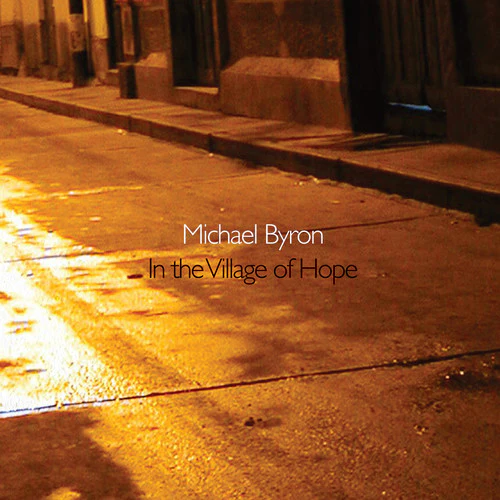
Byron: In the Village of Hope
Michael Byron’s music, which has appeared on four previous Cold Blue CDs, tends to be harmonically rich, rhythmically detailed, and virtuosic. It is often praised for its ability to create uniquely dense constructions out of relatively limited means: “Byron creates maximalist effect out of minimalist means.” (ClassicalNet) “One is reminded…of the mobiles of Alexander Calder, which are both fixed and moving. And, like Calder’s work, Byron’s music is immediately comprehensible and beautiful, while it remains experimental.” (San Francisco Bay Guardian) “Byron’s music, like Ligeti’s, is instantly recognizable, perceptually challenging, beautifully proportioned and deeply satisfying.” (Paris Transatlantic) In the Village of Hope is a restless (and in some ways relentless) virtuosic harp solo performed stunningly by Tasha Smith Godínez. This ever-changing, ever-churning, ever-developing music is unlike anything else in the solo harp repertoire. A 23-minute CD EP/single. Musicologist/critic/author Eric Smigel wrote of this CD, “In the Village of Hope simultaneously lulls and rouses the listener with elegantly cascading counterpoint and lush harmonies animated by complex rhythms. Its kaleidoscopic variations evoke ethereal wind chimes, rendering both the calm and the storm in a single gesture.” Sequenza 21 called it “gorgeous music…a single 23-minute track that unfolds with such delicacy and grace that an hour of it would not seem too much.” Fanfare magazine wrote, “Originally categorized as a minimalist, [Byron] has composed music over most of his career that more accurately might be described as maximalist, because it is in a state of constant and often rapid flux…. In the Village of Hope sounds like the kind of music a harp might play on itself, for itself, and by itself…. One associates the harp with angelic matters, and while In the Village of Hope doesn't confound that association, this is a heaven that is far from being regular and predictable, and where one is ruled not by immutable Bible truths but by the constant fluctuations of the natural world. This is very pretty listening, and, as such, recommendable.” And Julien Cowley wrote in The Wire, “Harp notes trickling and tumbling like eddies in a stream…. Byron has compared In The Village of Hope to the play of wind chimes, an image that not only suggests the range of timbres elicited by harpist Tasha Smith Godinez, but also fits the character of a piece that seems to occupy its own space while some animating spirit runs through it.”
Michael Byron’s music, which has appeared on four previous Cold Blue CDs, tends to be harmonically rich, rhythmically detailed, and virtuosic. It is often praised for its ability to create uniquely dense constructions out of relatively limited means: “Byron creates maximalist effect out of minimalist means.” (ClassicalNet) “One is reminded…of the mobiles of Alexander Calder, which are both fixed and moving. And, like Calder’s work, Byron’s music is immediately comprehensible and beautiful, while it remains experimental.” (San Francisco Bay Guardian) “Byron’s music, like Ligeti’s, is instantly recognizable, perceptually challenging, beautifully proportioned and deeply satisfying.” (Paris Transatlantic) In the Village of Hope is a restless (and in some ways relentless) virtuosic harp solo performed stunningly by Tasha Smith Godínez. This ever-changing, ever-churning, ever-developing music is unlike anything else in the solo harp repertoire. A 23-minute CD EP/single. Musicologist/critic/author Eric Smigel wrote of this CD, “In the Village of Hope simultaneously lulls and rouses the listener with elegantly cascading counterpoint and lush harmonies animated by complex rhythms. Its kaleidoscopic variations evoke ethereal wind chimes, rendering both the calm and the storm in a single gesture.” Sequenza 21 called it “gorgeous music…a single 23-minute track that unfolds with such delicacy and grace that an hour of it would not seem too much.” Fanfare magazine wrote, “Originally categorized as a minimalist, [Byron] has composed music over most of his career that more accurately might be described as maximalist, because it is in a state of constant and often rapid flux…. In the Village of Hope sounds like the kind of music a harp might play on itself, for itself, and by itself…. One associates the harp with angelic matters, and while In the Village of Hope doesn't confound that association, this is a heaven that is far from being regular and predictable, and where one is ruled not by immutable Bible truths but by the constant fluctuations of the natural world. This is very pretty listening, and, as such, recommendable.” And Julien Cowley wrote in The Wire, “Harp notes trickling and tumbling like eddies in a stream…. Byron has compared In The Village of Hope to the play of wind chimes, an image that not only suggests the range of timbres elicited by harpist Tasha Smith Godinez, but also fits the character of a piece that seems to occupy its own space while some animating spirit runs through it.”
$1.92
Original: $5.49
-65%Byron: In the Village of Hope—
$5.49
$1.92Description
Michael Byron’s music, which has appeared on four previous Cold Blue CDs, tends to be harmonically rich, rhythmically detailed, and virtuosic. It is often praised for its ability to create uniquely dense constructions out of relatively limited means: “Byron creates maximalist effect out of minimalist means.” (ClassicalNet) “One is reminded…of the mobiles of Alexander Calder, which are both fixed and moving. And, like Calder’s work, Byron’s music is immediately comprehensible and beautiful, while it remains experimental.” (San Francisco Bay Guardian) “Byron’s music, like Ligeti’s, is instantly recognizable, perceptually challenging, beautifully proportioned and deeply satisfying.” (Paris Transatlantic) In the Village of Hope is a restless (and in some ways relentless) virtuosic harp solo performed stunningly by Tasha Smith Godínez. This ever-changing, ever-churning, ever-developing music is unlike anything else in the solo harp repertoire. A 23-minute CD EP/single. Musicologist/critic/author Eric Smigel wrote of this CD, “In the Village of Hope simultaneously lulls and rouses the listener with elegantly cascading counterpoint and lush harmonies animated by complex rhythms. Its kaleidoscopic variations evoke ethereal wind chimes, rendering both the calm and the storm in a single gesture.” Sequenza 21 called it “gorgeous music…a single 23-minute track that unfolds with such delicacy and grace that an hour of it would not seem too much.” Fanfare magazine wrote, “Originally categorized as a minimalist, [Byron] has composed music over most of his career that more accurately might be described as maximalist, because it is in a state of constant and often rapid flux…. In the Village of Hope sounds like the kind of music a harp might play on itself, for itself, and by itself…. One associates the harp with angelic matters, and while In the Village of Hope doesn't confound that association, this is a heaven that is far from being regular and predictable, and where one is ruled not by immutable Bible truths but by the constant fluctuations of the natural world. This is very pretty listening, and, as such, recommendable.” And Julien Cowley wrote in The Wire, “Harp notes trickling and tumbling like eddies in a stream…. Byron has compared In The Village of Hope to the play of wind chimes, an image that not only suggests the range of timbres elicited by harpist Tasha Smith Godinez, but also fits the character of a piece that seems to occupy its own space while some animating spirit runs through it.”