🎉 Up to 70% Off Selected ItemsShop Sale

Cage: Solo for Piano
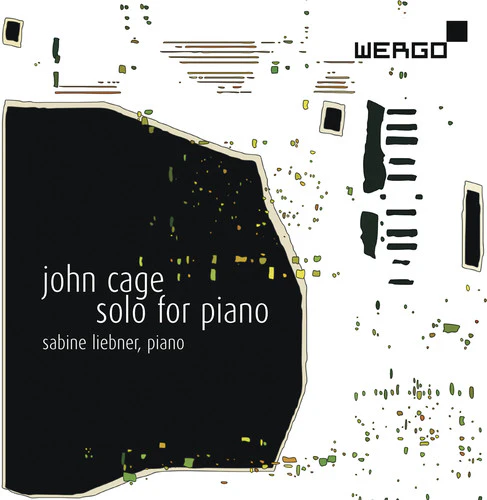
In the 1950's, John Cage tried to make the genesis of his compositions dependent on random processes. Several years later this randomness of the compositional process was reflected in the indeterminacy of the performance, with the aim of separating the compositional design from the interpretive result. Solo for Piano comprises 63 pages with 84 different types of graphical structures, which, due to their shape, are reminiscent of musical notation, but on the other hand, represent no clearly reproducible notes. Here, the notation is modified into a kind of "proposal" for the performer; thus, all kinds of implementation of the score are infinitely possible. On this disc from Wergo, pianist Sabine Liebner presents her own unique interpretation of Cage's musical proposal.
In the 1950's, John Cage tried to make the genesis of his compositions dependent on random processes. Several years later this randomness of the compositional process was reflected in the indeterminacy of the performance, with the aim of separating the compositional design from the interpretive result. Solo for Piano comprises 63 pages with 84 different types of graphical structures, which, due to their shape, are reminiscent of musical notation, but on the other hand, represent no clearly reproducible notes. Here, the notation is modified into a kind of "proposal" for the performer; thus, all kinds of implementation of the score are infinitely possible. On this disc from Wergo, pianist Sabine Liebner presents her own unique interpretation of Cage's musical proposal.
$20.99
Cage: Solo for Piano—
$20.99
Description
In the 1950's, John Cage tried to make the genesis of his compositions dependent on random processes. Several years later this randomness of the compositional process was reflected in the indeterminacy of the performance, with the aim of separating the compositional design from the interpretive result. Solo for Piano comprises 63 pages with 84 different types of graphical structures, which, due to their shape, are reminiscent of musical notation, but on the other hand, represent no clearly reproducible notes. Here, the notation is modified into a kind of "proposal" for the performer; thus, all kinds of implementation of the score are infinitely possible. On this disc from Wergo, pianist Sabine Liebner presents her own unique interpretation of Cage's musical proposal.