🎉 Up to 70% Off Selected ItemsShop Sale

1 / 2
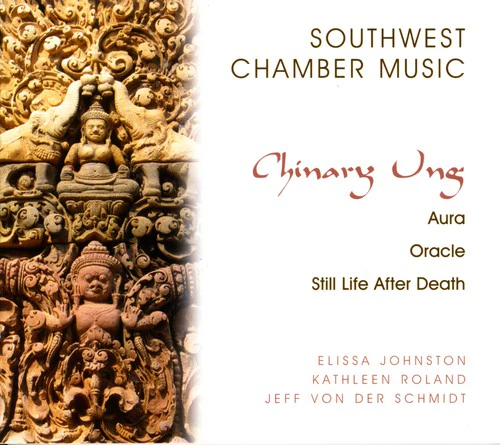
Chinary Ung: Aura, Oracle; Still Life After Death / Southwest Chamber Music
Cambodian composer Chinary Ung was an extreme disadvantage in terms of his musical background; the only Western instrument he was able to study in his native Cambodia was the E flat clarinet, which he learned well enough to enter the Manhattan School of Music in 1964. Since earning his doctorate in music composition at Columbia in 1974, Ung has largely made his career in the United States as a teacher and, partly owing to that, missed the genocide conducted in his home country, although most of his family was not so fortunate. After taking most of the 1980s off to retrieve what he could of Cambodia's seriously endangered traditional music, Ung returned to the United States, his music and perspective forever changed. Prior to October 2007, Ung's highest profile CD release had been the inclusion of his Inner Voices on an Argo disc conducted by Dennis Russell Davies. Jeff von der Schmidt's expert group Southwest Chamber Music, which has already done so much on behalf of Mexican composer Carlos Chávez, now turn its attention to Ung on the Cambria disc Chinary Ung: Aura, Oracle, Still Life After Death.
In the three works mentioned in the front title, composed between 1995 and 2006, Ung creates a seamless merger between the capabilities of Western instruments, contemporary techniques, and the influence of the traditional music of his homeland. The pieces are highly theatrical, with Still Life After Death described as "a small theater work [...] inspired by an ancient Cambodian ritual." Such rituals are closely tied with Buddhism; Aura utilizes two sopranos, singing high-flying passages in Pali and Khmer, floating over a chamber orchestra in which nearly everyone is required to play additional percussion instruments, including bowed crotales, little cymbals common to the ancient world. Current events figure into Ung's texts and music as well; a portion of Aura is a commemoration of the devastation left by Hurricane Katrina, whereas the oracles consulted by the Dalai Lama before his final departure from Tibet is a significant element in the second work, Oracle.
In preparation for his work with Ung, Jeff von der Schmidt himself traveled to Cambodia and Vietnam and toured Angkor Wat; Southwest Chamber Music was the first professional ensemble to perform Ung's music in Cambodia for Cambodians. Its polished, dedicated performances here well-represent Ung's music, and as with the Chávez issues, Cambria's recording here is top quality. There is every reason to support Cambodian culture; at least 3,000 years old, Pol Pot and the Khmer Rouge nearly wiped it off the face of the earth. Nevertheless, that is not the only reason to listen to the music of Chinary Ung; he is an excellent, visionary composer, and his work speaks eloquently about his people and the need to rebuild.
-- Dave Lewis, All Music Guide
In the three works mentioned in the front title, composed between 1995 and 2006, Ung creates a seamless merger between the capabilities of Western instruments, contemporary techniques, and the influence of the traditional music of his homeland. The pieces are highly theatrical, with Still Life After Death described as "a small theater work [...] inspired by an ancient Cambodian ritual." Such rituals are closely tied with Buddhism; Aura utilizes two sopranos, singing high-flying passages in Pali and Khmer, floating over a chamber orchestra in which nearly everyone is required to play additional percussion instruments, including bowed crotales, little cymbals common to the ancient world. Current events figure into Ung's texts and music as well; a portion of Aura is a commemoration of the devastation left by Hurricane Katrina, whereas the oracles consulted by the Dalai Lama before his final departure from Tibet is a significant element in the second work, Oracle.
In preparation for his work with Ung, Jeff von der Schmidt himself traveled to Cambodia and Vietnam and toured Angkor Wat; Southwest Chamber Music was the first professional ensemble to perform Ung's music in Cambodia for Cambodians. Its polished, dedicated performances here well-represent Ung's music, and as with the Chávez issues, Cambria's recording here is top quality. There is every reason to support Cambodian culture; at least 3,000 years old, Pol Pot and the Khmer Rouge nearly wiped it off the face of the earth. Nevertheless, that is not the only reason to listen to the music of Chinary Ung; he is an excellent, visionary composer, and his work speaks eloquently about his people and the need to rebuild.
-- Dave Lewis, All Music Guide
Cambodian composer Chinary Ung was an extreme disadvantage in terms of his musical background; the only Western instrument he was able to study in his native Cambodia was the E flat clarinet, which he learned well enough to enter the Manhattan School of Music in 1964. Since earning his doctorate in music composition at Columbia in 1974, Ung has largely made his career in the United States as a teacher and, partly owing to that, missed the genocide conducted in his home country, although most of his family was not so fortunate. After taking most of the 1980s off to retrieve what he could of Cambodia's seriously endangered traditional music, Ung returned to the United States, his music and perspective forever changed. Prior to October 2007, Ung's highest profile CD release had been the inclusion of his Inner Voices on an Argo disc conducted by Dennis Russell Davies. Jeff von der Schmidt's expert group Southwest Chamber Music, which has already done so much on behalf of Mexican composer Carlos Chávez, now turn its attention to Ung on the Cambria disc Chinary Ung: Aura, Oracle, Still Life After Death.
In the three works mentioned in the front title, composed between 1995 and 2006, Ung creates a seamless merger between the capabilities of Western instruments, contemporary techniques, and the influence of the traditional music of his homeland. The pieces are highly theatrical, with Still Life After Death described as "a small theater work [...] inspired by an ancient Cambodian ritual." Such rituals are closely tied with Buddhism; Aura utilizes two sopranos, singing high-flying passages in Pali and Khmer, floating over a chamber orchestra in which nearly everyone is required to play additional percussion instruments, including bowed crotales, little cymbals common to the ancient world. Current events figure into Ung's texts and music as well; a portion of Aura is a commemoration of the devastation left by Hurricane Katrina, whereas the oracles consulted by the Dalai Lama before his final departure from Tibet is a significant element in the second work, Oracle.
In preparation for his work with Ung, Jeff von der Schmidt himself traveled to Cambodia and Vietnam and toured Angkor Wat; Southwest Chamber Music was the first professional ensemble to perform Ung's music in Cambodia for Cambodians. Its polished, dedicated performances here well-represent Ung's music, and as with the Chávez issues, Cambria's recording here is top quality. There is every reason to support Cambodian culture; at least 3,000 years old, Pol Pot and the Khmer Rouge nearly wiped it off the face of the earth. Nevertheless, that is not the only reason to listen to the music of Chinary Ung; he is an excellent, visionary composer, and his work speaks eloquently about his people and the need to rebuild.
-- Dave Lewis, All Music Guide
In the three works mentioned in the front title, composed between 1995 and 2006, Ung creates a seamless merger between the capabilities of Western instruments, contemporary techniques, and the influence of the traditional music of his homeland. The pieces are highly theatrical, with Still Life After Death described as "a small theater work [...] inspired by an ancient Cambodian ritual." Such rituals are closely tied with Buddhism; Aura utilizes two sopranos, singing high-flying passages in Pali and Khmer, floating over a chamber orchestra in which nearly everyone is required to play additional percussion instruments, including bowed crotales, little cymbals common to the ancient world. Current events figure into Ung's texts and music as well; a portion of Aura is a commemoration of the devastation left by Hurricane Katrina, whereas the oracles consulted by the Dalai Lama before his final departure from Tibet is a significant element in the second work, Oracle.
In preparation for his work with Ung, Jeff von der Schmidt himself traveled to Cambodia and Vietnam and toured Angkor Wat; Southwest Chamber Music was the first professional ensemble to perform Ung's music in Cambodia for Cambodians. Its polished, dedicated performances here well-represent Ung's music, and as with the Chávez issues, Cambria's recording here is top quality. There is every reason to support Cambodian culture; at least 3,000 years old, Pol Pot and the Khmer Rouge nearly wiped it off the face of the earth. Nevertheless, that is not the only reason to listen to the music of Chinary Ung; he is an excellent, visionary composer, and his work speaks eloquently about his people and the need to rebuild.
-- Dave Lewis, All Music Guide
$6.65
Original: $18.99
-65%Chinary Ung: Aura, Oracle; Still Life After Death / Southwest Chamber Music—
$18.99
$6.65Description
Cambodian composer Chinary Ung was an extreme disadvantage in terms of his musical background; the only Western instrument he was able to study in his native Cambodia was the E flat clarinet, which he learned well enough to enter the Manhattan School of Music in 1964. Since earning his doctorate in music composition at Columbia in 1974, Ung has largely made his career in the United States as a teacher and, partly owing to that, missed the genocide conducted in his home country, although most of his family was not so fortunate. After taking most of the 1980s off to retrieve what he could of Cambodia's seriously endangered traditional music, Ung returned to the United States, his music and perspective forever changed. Prior to October 2007, Ung's highest profile CD release had been the inclusion of his Inner Voices on an Argo disc conducted by Dennis Russell Davies. Jeff von der Schmidt's expert group Southwest Chamber Music, which has already done so much on behalf of Mexican composer Carlos Chávez, now turn its attention to Ung on the Cambria disc Chinary Ung: Aura, Oracle, Still Life After Death.
In the three works mentioned in the front title, composed between 1995 and 2006, Ung creates a seamless merger between the capabilities of Western instruments, contemporary techniques, and the influence of the traditional music of his homeland. The pieces are highly theatrical, with Still Life After Death described as "a small theater work [...] inspired by an ancient Cambodian ritual." Such rituals are closely tied with Buddhism; Aura utilizes two sopranos, singing high-flying passages in Pali and Khmer, floating over a chamber orchestra in which nearly everyone is required to play additional percussion instruments, including bowed crotales, little cymbals common to the ancient world. Current events figure into Ung's texts and music as well; a portion of Aura is a commemoration of the devastation left by Hurricane Katrina, whereas the oracles consulted by the Dalai Lama before his final departure from Tibet is a significant element in the second work, Oracle.
In preparation for his work with Ung, Jeff von der Schmidt himself traveled to Cambodia and Vietnam and toured Angkor Wat; Southwest Chamber Music was the first professional ensemble to perform Ung's music in Cambodia for Cambodians. Its polished, dedicated performances here well-represent Ung's music, and as with the Chávez issues, Cambria's recording here is top quality. There is every reason to support Cambodian culture; at least 3,000 years old, Pol Pot and the Khmer Rouge nearly wiped it off the face of the earth. Nevertheless, that is not the only reason to listen to the music of Chinary Ung; he is an excellent, visionary composer, and his work speaks eloquently about his people and the need to rebuild.
-- Dave Lewis, All Music Guide
In the three works mentioned in the front title, composed between 1995 and 2006, Ung creates a seamless merger between the capabilities of Western instruments, contemporary techniques, and the influence of the traditional music of his homeland. The pieces are highly theatrical, with Still Life After Death described as "a small theater work [...] inspired by an ancient Cambodian ritual." Such rituals are closely tied with Buddhism; Aura utilizes two sopranos, singing high-flying passages in Pali and Khmer, floating over a chamber orchestra in which nearly everyone is required to play additional percussion instruments, including bowed crotales, little cymbals common to the ancient world. Current events figure into Ung's texts and music as well; a portion of Aura is a commemoration of the devastation left by Hurricane Katrina, whereas the oracles consulted by the Dalai Lama before his final departure from Tibet is a significant element in the second work, Oracle.
In preparation for his work with Ung, Jeff von der Schmidt himself traveled to Cambodia and Vietnam and toured Angkor Wat; Southwest Chamber Music was the first professional ensemble to perform Ung's music in Cambodia for Cambodians. Its polished, dedicated performances here well-represent Ung's music, and as with the Chávez issues, Cambria's recording here is top quality. There is every reason to support Cambodian culture; at least 3,000 years old, Pol Pot and the Khmer Rouge nearly wiped it off the face of the earth. Nevertheless, that is not the only reason to listen to the music of Chinary Ung; he is an excellent, visionary composer, and his work speaks eloquently about his people and the need to rebuild.
-- Dave Lewis, All Music Guide