🎉 Up to 70% Off Selected ItemsShop Sale

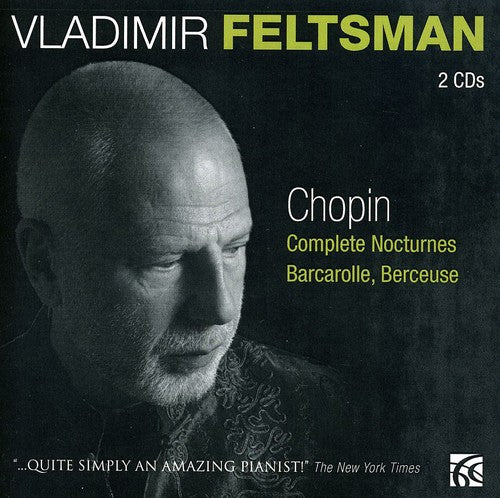
Chopin: Complete Nocturnes, Barcarolle / Feltsman
"Feltsman’s nocturnes seem to have been available twice before, first on Urtext Records and then on Camerata. This apparently is their first review in Fanfare. They were recorded as far back as 2000 in the Moscow Conservatory’s Great Hall, with superb sound engineering. Feltsman gives us one of the great sets of the nocturnes. This is music of suggestions and inferences, and Feltsman absolutely nails them. The First Nocturne sounds like a cradle song. For No. 2, Feltsman writes that Chopin provided embellishments to it for his students, so Feltsman has added ornaments following Chopin’s lead. The results are charming. No. 3 seems pensive. A childhood reminiscence with a dark side appears in 4, with a resemblance to Schumann’s Kinderszenen. No. 5 offers a story told among friends. A walk at nighttime occurs in 6. One watches a sunset in 7. No. 8 presents a reverie along with a sip of wine. For 9, we may think of someone writing a diary entry. No. 10 seems about thinking of the beloved. No. 11, on the other hand, is about love lost, with a sense of resignation.
No. 12 could take place by a stream. In 13, we contemplate death—there is a resemblance here to the funeral march of the Second Sonata. No. 14 perhaps takes place on a summer evening. An important question is posed during 15. No. 16 apparently contains the recollection of a dance. An intimate conversation is related during 17. No. 18 may portray a dinner between two lovers. No. 19 is about a lover’s despair. The sentiment in 20 is of the poignancy of young love. No. 21 sounds mazurka-like. I can think of two digital recordings of the nocturnes in Feltsman’s league, by Daniel Barenboim and François Chaplin, but Feltsman’s may prove the most satisfying on a regular basis.
Feltsman’s Barcarolle is fluid and majestic. His Berceuse is a pianistic kaleidoscope, with shifting textures and colors.
It’s perhaps worth remembering that the first recording by Feltsman issued on a U.S. label was Chopin’s preludes. He really is a Chopin player to the manner born. His sense of line is infallible, and no detail is so small as to escape his attention. Plus, he has the rare ability to convey an atmosphere, which is essential to a great Chopin style. That Feltsman has made a considerable career playing Bach may not be coincidental, given Chopin’s love for Bach and the subtlety of the Pole’s harmony. What’s more, Feltsman’s love for Chopin absolutely comes across in these recordings. You really can’t fake the excitement and affection that suffuse these readings. Feltsman here matches the greatest Chopin performances preserved in recorded sound. These [recordings] are likely to remain touchstones for decades to come."
FANFARE: Dave Saemann
No. 12 could take place by a stream. In 13, we contemplate death—there is a resemblance here to the funeral march of the Second Sonata. No. 14 perhaps takes place on a summer evening. An important question is posed during 15. No. 16 apparently contains the recollection of a dance. An intimate conversation is related during 17. No. 18 may portray a dinner between two lovers. No. 19 is about a lover’s despair. The sentiment in 20 is of the poignancy of young love. No. 21 sounds mazurka-like. I can think of two digital recordings of the nocturnes in Feltsman’s league, by Daniel Barenboim and François Chaplin, but Feltsman’s may prove the most satisfying on a regular basis.
Feltsman’s Barcarolle is fluid and majestic. His Berceuse is a pianistic kaleidoscope, with shifting textures and colors.
It’s perhaps worth remembering that the first recording by Feltsman issued on a U.S. label was Chopin’s preludes. He really is a Chopin player to the manner born. His sense of line is infallible, and no detail is so small as to escape his attention. Plus, he has the rare ability to convey an atmosphere, which is essential to a great Chopin style. That Feltsman has made a considerable career playing Bach may not be coincidental, given Chopin’s love for Bach and the subtlety of the Pole’s harmony. What’s more, Feltsman’s love for Chopin absolutely comes across in these recordings. You really can’t fake the excitement and affection that suffuse these readings. Feltsman here matches the greatest Chopin performances preserved in recorded sound. These [recordings] are likely to remain touchstones for decades to come."
FANFARE: Dave Saemann
"Feltsman’s nocturnes seem to have been available twice before, first on Urtext Records and then on Camerata. This apparently is their first review in Fanfare. They were recorded as far back as 2000 in the Moscow Conservatory’s Great Hall, with superb sound engineering. Feltsman gives us one of the great sets of the nocturnes. This is music of suggestions and inferences, and Feltsman absolutely nails them. The First Nocturne sounds like a cradle song. For No. 2, Feltsman writes that Chopin provided embellishments to it for his students, so Feltsman has added ornaments following Chopin’s lead. The results are charming. No. 3 seems pensive. A childhood reminiscence with a dark side appears in 4, with a resemblance to Schumann’s Kinderszenen. No. 5 offers a story told among friends. A walk at nighttime occurs in 6. One watches a sunset in 7. No. 8 presents a reverie along with a sip of wine. For 9, we may think of someone writing a diary entry. No. 10 seems about thinking of the beloved. No. 11, on the other hand, is about love lost, with a sense of resignation.
No. 12 could take place by a stream. In 13, we contemplate death—there is a resemblance here to the funeral march of the Second Sonata. No. 14 perhaps takes place on a summer evening. An important question is posed during 15. No. 16 apparently contains the recollection of a dance. An intimate conversation is related during 17. No. 18 may portray a dinner between two lovers. No. 19 is about a lover’s despair. The sentiment in 20 is of the poignancy of young love. No. 21 sounds mazurka-like. I can think of two digital recordings of the nocturnes in Feltsman’s league, by Daniel Barenboim and François Chaplin, but Feltsman’s may prove the most satisfying on a regular basis.
Feltsman’s Barcarolle is fluid and majestic. His Berceuse is a pianistic kaleidoscope, with shifting textures and colors.
It’s perhaps worth remembering that the first recording by Feltsman issued on a U.S. label was Chopin’s preludes. He really is a Chopin player to the manner born. His sense of line is infallible, and no detail is so small as to escape his attention. Plus, he has the rare ability to convey an atmosphere, which is essential to a great Chopin style. That Feltsman has made a considerable career playing Bach may not be coincidental, given Chopin’s love for Bach and the subtlety of the Pole’s harmony. What’s more, Feltsman’s love for Chopin absolutely comes across in these recordings. You really can’t fake the excitement and affection that suffuse these readings. Feltsman here matches the greatest Chopin performances preserved in recorded sound. These [recordings] are likely to remain touchstones for decades to come."
FANFARE: Dave Saemann
No. 12 could take place by a stream. In 13, we contemplate death—there is a resemblance here to the funeral march of the Second Sonata. No. 14 perhaps takes place on a summer evening. An important question is posed during 15. No. 16 apparently contains the recollection of a dance. An intimate conversation is related during 17. No. 18 may portray a dinner between two lovers. No. 19 is about a lover’s despair. The sentiment in 20 is of the poignancy of young love. No. 21 sounds mazurka-like. I can think of two digital recordings of the nocturnes in Feltsman’s league, by Daniel Barenboim and François Chaplin, but Feltsman’s may prove the most satisfying on a regular basis.
Feltsman’s Barcarolle is fluid and majestic. His Berceuse is a pianistic kaleidoscope, with shifting textures and colors.
It’s perhaps worth remembering that the first recording by Feltsman issued on a U.S. label was Chopin’s preludes. He really is a Chopin player to the manner born. His sense of line is infallible, and no detail is so small as to escape his attention. Plus, he has the rare ability to convey an atmosphere, which is essential to a great Chopin style. That Feltsman has made a considerable career playing Bach may not be coincidental, given Chopin’s love for Bach and the subtlety of the Pole’s harmony. What’s more, Feltsman’s love for Chopin absolutely comes across in these recordings. You really can’t fake the excitement and affection that suffuse these readings. Feltsman here matches the greatest Chopin performances preserved in recorded sound. These [recordings] are likely to remain touchstones for decades to come."
FANFARE: Dave Saemann
$20.99
Chopin: Complete Nocturnes, Barcarolle / Feltsman—
$20.99
Description
"Feltsman’s nocturnes seem to have been available twice before, first on Urtext Records and then on Camerata. This apparently is their first review in Fanfare. They were recorded as far back as 2000 in the Moscow Conservatory’s Great Hall, with superb sound engineering. Feltsman gives us one of the great sets of the nocturnes. This is music of suggestions and inferences, and Feltsman absolutely nails them. The First Nocturne sounds like a cradle song. For No. 2, Feltsman writes that Chopin provided embellishments to it for his students, so Feltsman has added ornaments following Chopin’s lead. The results are charming. No. 3 seems pensive. A childhood reminiscence with a dark side appears in 4, with a resemblance to Schumann’s Kinderszenen. No. 5 offers a story told among friends. A walk at nighttime occurs in 6. One watches a sunset in 7. No. 8 presents a reverie along with a sip of wine. For 9, we may think of someone writing a diary entry. No. 10 seems about thinking of the beloved. No. 11, on the other hand, is about love lost, with a sense of resignation.
No. 12 could take place by a stream. In 13, we contemplate death—there is a resemblance here to the funeral march of the Second Sonata. No. 14 perhaps takes place on a summer evening. An important question is posed during 15. No. 16 apparently contains the recollection of a dance. An intimate conversation is related during 17. No. 18 may portray a dinner between two lovers. No. 19 is about a lover’s despair. The sentiment in 20 is of the poignancy of young love. No. 21 sounds mazurka-like. I can think of two digital recordings of the nocturnes in Feltsman’s league, by Daniel Barenboim and François Chaplin, but Feltsman’s may prove the most satisfying on a regular basis.
Feltsman’s Barcarolle is fluid and majestic. His Berceuse is a pianistic kaleidoscope, with shifting textures and colors.
It’s perhaps worth remembering that the first recording by Feltsman issued on a U.S. label was Chopin’s preludes. He really is a Chopin player to the manner born. His sense of line is infallible, and no detail is so small as to escape his attention. Plus, he has the rare ability to convey an atmosphere, which is essential to a great Chopin style. That Feltsman has made a considerable career playing Bach may not be coincidental, given Chopin’s love for Bach and the subtlety of the Pole’s harmony. What’s more, Feltsman’s love for Chopin absolutely comes across in these recordings. You really can’t fake the excitement and affection that suffuse these readings. Feltsman here matches the greatest Chopin performances preserved in recorded sound. These [recordings] are likely to remain touchstones for decades to come."
FANFARE: Dave Saemann
No. 12 could take place by a stream. In 13, we contemplate death—there is a resemblance here to the funeral march of the Second Sonata. No. 14 perhaps takes place on a summer evening. An important question is posed during 15. No. 16 apparently contains the recollection of a dance. An intimate conversation is related during 17. No. 18 may portray a dinner between two lovers. No. 19 is about a lover’s despair. The sentiment in 20 is of the poignancy of young love. No. 21 sounds mazurka-like. I can think of two digital recordings of the nocturnes in Feltsman’s league, by Daniel Barenboim and François Chaplin, but Feltsman’s may prove the most satisfying on a regular basis.
Feltsman’s Barcarolle is fluid and majestic. His Berceuse is a pianistic kaleidoscope, with shifting textures and colors.
It’s perhaps worth remembering that the first recording by Feltsman issued on a U.S. label was Chopin’s preludes. He really is a Chopin player to the manner born. His sense of line is infallible, and no detail is so small as to escape his attention. Plus, he has the rare ability to convey an atmosphere, which is essential to a great Chopin style. That Feltsman has made a considerable career playing Bach may not be coincidental, given Chopin’s love for Bach and the subtlety of the Pole’s harmony. What’s more, Feltsman’s love for Chopin absolutely comes across in these recordings. You really can’t fake the excitement and affection that suffuse these readings. Feltsman here matches the greatest Chopin performances preserved in recorded sound. These [recordings] are likely to remain touchstones for decades to come."
FANFARE: Dave Saemann