🎉 Up to 70% Off Selected ItemsShop Sale

1 / 2
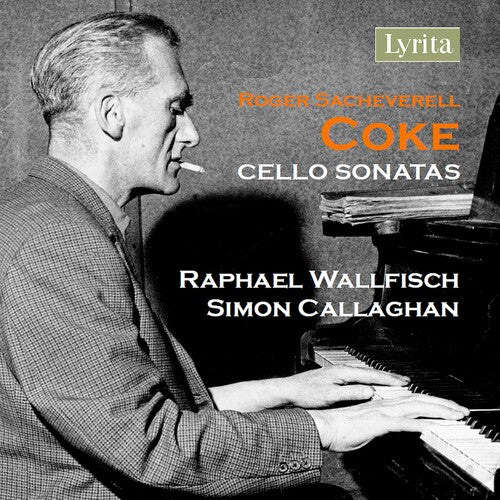
Coke: Cello Sonatas Nos. 1-3 / Callaghan, Wallfisch
Thanks to the tireless advocacy of the pianist Simon Callaghan, the music of the Derbyshire-born Roger Sacheverell Coke has started to emerge from the obscurity in which it has languished since the composer’s death in 1972. Despite showing considerable early promise, Coke remained an outsider in British musical life. Following studies at Eton (until 1931), he took private lessons with Mabel Lander (piano) and Alan Bush (composition) rather than attending university or music college. Coke credited Bush for helping him to find his musical voice, and cited Arnold Bax as a major influence, but his musical sympathies also extended to Bruckner, Mahler and Rachmaninoff at a time when all three were deeply unfashionable among musical cognoscenti. The three cello sonatas featuring on this disc frame the years 1936 to 1941, a very productive period in Coke’s life. It is a measure of Coke’s confidence in the cello sonatas that he programmed them all in a single concert at the Wigmore in London on 6 October 1951, with the cellist Sela Trau, and invited critics from several of the major broadsheets.
-----
REVIEW:
Composer and pianist Roger Sacheverell Coke (1912-1972) was born into an affluent family and produced a large body of works before a number of mental and physical health problems took their toll. Coke bankrolled concerts to promote his music, yet critical acclaim largely eluded him. Then again, his unabashedly Romantic idiom, heavily influenced by Rachmaninov, had fallen out of fashion. However, pianist Simon Callaghan’s passionate advocacy on Coke’s behalf may be spearheading a revival. If you like early 20th-century British Romantics like Arnold Bax, Cyril Scott, and York Bowen, you’ll definitely respond to Coke’s aesthetic.
His three sonatas for cello and piano date from between 1936 and 1941, and are characterized by lush yet never cloying harmonic invention, skillfully deployed balances between the instruments, slow movements that build toward intense climaxes, and occasional moments of wry humor–the First sonata’s jauntily acerbic Scherzo, for example (sound clip). Perhaps the Second sonata is the strongest and most substantial of the three, with its bold, declamatory motives and inventive textural interplay.
Callaghan and cellist Raphael Wallfisch throw themselves into each work wholeheartedly, embracing the idiom’s full-blooded heights and stark moments of respite with both abandon and sensitivity. Excellent, informative notes and fine engineering enhance this worthy addition to the chamber music catalog.
– ClassicsToday (Jed Distler)
-----
REVIEW:
Composer and pianist Roger Sacheverell Coke (1912-1972) was born into an affluent family and produced a large body of works before a number of mental and physical health problems took their toll. Coke bankrolled concerts to promote his music, yet critical acclaim largely eluded him. Then again, his unabashedly Romantic idiom, heavily influenced by Rachmaninov, had fallen out of fashion. However, pianist Simon Callaghan’s passionate advocacy on Coke’s behalf may be spearheading a revival. If you like early 20th-century British Romantics like Arnold Bax, Cyril Scott, and York Bowen, you’ll definitely respond to Coke’s aesthetic.
His three sonatas for cello and piano date from between 1936 and 1941, and are characterized by lush yet never cloying harmonic invention, skillfully deployed balances between the instruments, slow movements that build toward intense climaxes, and occasional moments of wry humor–the First sonata’s jauntily acerbic Scherzo, for example (sound clip). Perhaps the Second sonata is the strongest and most substantial of the three, with its bold, declamatory motives and inventive textural interplay.
Callaghan and cellist Raphael Wallfisch throw themselves into each work wholeheartedly, embracing the idiom’s full-blooded heights and stark moments of respite with both abandon and sensitivity. Excellent, informative notes and fine engineering enhance this worthy addition to the chamber music catalog.
– ClassicsToday (Jed Distler)
Thanks to the tireless advocacy of the pianist Simon Callaghan, the music of the Derbyshire-born Roger Sacheverell Coke has started to emerge from the obscurity in which it has languished since the composer’s death in 1972. Despite showing considerable early promise, Coke remained an outsider in British musical life. Following studies at Eton (until 1931), he took private lessons with Mabel Lander (piano) and Alan Bush (composition) rather than attending university or music college. Coke credited Bush for helping him to find his musical voice, and cited Arnold Bax as a major influence, but his musical sympathies also extended to Bruckner, Mahler and Rachmaninoff at a time when all three were deeply unfashionable among musical cognoscenti. The three cello sonatas featuring on this disc frame the years 1936 to 1941, a very productive period in Coke’s life. It is a measure of Coke’s confidence in the cello sonatas that he programmed them all in a single concert at the Wigmore in London on 6 October 1951, with the cellist Sela Trau, and invited critics from several of the major broadsheets.
-----
REVIEW:
Composer and pianist Roger Sacheverell Coke (1912-1972) was born into an affluent family and produced a large body of works before a number of mental and physical health problems took their toll. Coke bankrolled concerts to promote his music, yet critical acclaim largely eluded him. Then again, his unabashedly Romantic idiom, heavily influenced by Rachmaninov, had fallen out of fashion. However, pianist Simon Callaghan’s passionate advocacy on Coke’s behalf may be spearheading a revival. If you like early 20th-century British Romantics like Arnold Bax, Cyril Scott, and York Bowen, you’ll definitely respond to Coke’s aesthetic.
His three sonatas for cello and piano date from between 1936 and 1941, and are characterized by lush yet never cloying harmonic invention, skillfully deployed balances between the instruments, slow movements that build toward intense climaxes, and occasional moments of wry humor–the First sonata’s jauntily acerbic Scherzo, for example (sound clip). Perhaps the Second sonata is the strongest and most substantial of the three, with its bold, declamatory motives and inventive textural interplay.
Callaghan and cellist Raphael Wallfisch throw themselves into each work wholeheartedly, embracing the idiom’s full-blooded heights and stark moments of respite with both abandon and sensitivity. Excellent, informative notes and fine engineering enhance this worthy addition to the chamber music catalog.
– ClassicsToday (Jed Distler)
-----
REVIEW:
Composer and pianist Roger Sacheverell Coke (1912-1972) was born into an affluent family and produced a large body of works before a number of mental and physical health problems took their toll. Coke bankrolled concerts to promote his music, yet critical acclaim largely eluded him. Then again, his unabashedly Romantic idiom, heavily influenced by Rachmaninov, had fallen out of fashion. However, pianist Simon Callaghan’s passionate advocacy on Coke’s behalf may be spearheading a revival. If you like early 20th-century British Romantics like Arnold Bax, Cyril Scott, and York Bowen, you’ll definitely respond to Coke’s aesthetic.
His three sonatas for cello and piano date from between 1936 and 1941, and are characterized by lush yet never cloying harmonic invention, skillfully deployed balances between the instruments, slow movements that build toward intense climaxes, and occasional moments of wry humor–the First sonata’s jauntily acerbic Scherzo, for example (sound clip). Perhaps the Second sonata is the strongest and most substantial of the three, with its bold, declamatory motives and inventive textural interplay.
Callaghan and cellist Raphael Wallfisch throw themselves into each work wholeheartedly, embracing the idiom’s full-blooded heights and stark moments of respite with both abandon and sensitivity. Excellent, informative notes and fine engineering enhance this worthy addition to the chamber music catalog.
– ClassicsToday (Jed Distler)
$7.35
Original: $20.99
-65%Coke: Cello Sonatas Nos. 1-3 / Callaghan, Wallfisch—
$20.99
$7.35Description
Thanks to the tireless advocacy of the pianist Simon Callaghan, the music of the Derbyshire-born Roger Sacheverell Coke has started to emerge from the obscurity in which it has languished since the composer’s death in 1972. Despite showing considerable early promise, Coke remained an outsider in British musical life. Following studies at Eton (until 1931), he took private lessons with Mabel Lander (piano) and Alan Bush (composition) rather than attending university or music college. Coke credited Bush for helping him to find his musical voice, and cited Arnold Bax as a major influence, but his musical sympathies also extended to Bruckner, Mahler and Rachmaninoff at a time when all three were deeply unfashionable among musical cognoscenti. The three cello sonatas featuring on this disc frame the years 1936 to 1941, a very productive period in Coke’s life. It is a measure of Coke’s confidence in the cello sonatas that he programmed them all in a single concert at the Wigmore in London on 6 October 1951, with the cellist Sela Trau, and invited critics from several of the major broadsheets.
-----
REVIEW:
Composer and pianist Roger Sacheverell Coke (1912-1972) was born into an affluent family and produced a large body of works before a number of mental and physical health problems took their toll. Coke bankrolled concerts to promote his music, yet critical acclaim largely eluded him. Then again, his unabashedly Romantic idiom, heavily influenced by Rachmaninov, had fallen out of fashion. However, pianist Simon Callaghan’s passionate advocacy on Coke’s behalf may be spearheading a revival. If you like early 20th-century British Romantics like Arnold Bax, Cyril Scott, and York Bowen, you’ll definitely respond to Coke’s aesthetic.
His three sonatas for cello and piano date from between 1936 and 1941, and are characterized by lush yet never cloying harmonic invention, skillfully deployed balances between the instruments, slow movements that build toward intense climaxes, and occasional moments of wry humor–the First sonata’s jauntily acerbic Scherzo, for example (sound clip). Perhaps the Second sonata is the strongest and most substantial of the three, with its bold, declamatory motives and inventive textural interplay.
Callaghan and cellist Raphael Wallfisch throw themselves into each work wholeheartedly, embracing the idiom’s full-blooded heights and stark moments of respite with both abandon and sensitivity. Excellent, informative notes and fine engineering enhance this worthy addition to the chamber music catalog.
– ClassicsToday (Jed Distler)
-----
REVIEW:
Composer and pianist Roger Sacheverell Coke (1912-1972) was born into an affluent family and produced a large body of works before a number of mental and physical health problems took their toll. Coke bankrolled concerts to promote his music, yet critical acclaim largely eluded him. Then again, his unabashedly Romantic idiom, heavily influenced by Rachmaninov, had fallen out of fashion. However, pianist Simon Callaghan’s passionate advocacy on Coke’s behalf may be spearheading a revival. If you like early 20th-century British Romantics like Arnold Bax, Cyril Scott, and York Bowen, you’ll definitely respond to Coke’s aesthetic.
His three sonatas for cello and piano date from between 1936 and 1941, and are characterized by lush yet never cloying harmonic invention, skillfully deployed balances between the instruments, slow movements that build toward intense climaxes, and occasional moments of wry humor–the First sonata’s jauntily acerbic Scherzo, for example (sound clip). Perhaps the Second sonata is the strongest and most substantial of the three, with its bold, declamatory motives and inventive textural interplay.
Callaghan and cellist Raphael Wallfisch throw themselves into each work wholeheartedly, embracing the idiom’s full-blooded heights and stark moments of respite with both abandon and sensitivity. Excellent, informative notes and fine engineering enhance this worthy addition to the chamber music catalog.
– ClassicsToday (Jed Distler)