🎉 Up to 70% Off Selected ItemsShop Sale

1 / 2
Corelli: Violin Sonatas Op 5 No 7-12 / Fernandez, Wilson
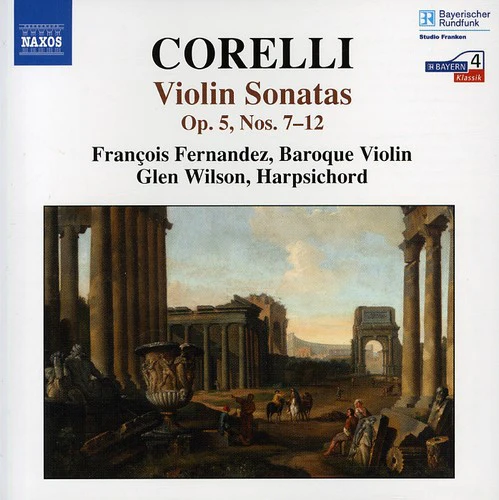
CORELLI Violin Sonatas, op. 5: No. 7 in d; No. 8 in e; No. 9 in A; No. 10 in F; No. 11 in E; No. 12 in d, “La follia” • François Fernandez (vn); Glen Wilson (hpd) (period instruments) • NAXOS 8.557799 (62:53)
François Fernandez and Glen Wilson’s readings of the last six sonatas of Corelli’s op. 5 make up the second of a two-disc set (the first issued by Naxos as 8.557165). Harpsichordist Glen Wilson has provided the notes, in which he discusses the style of ornamentation, the use of harpsichord alone in realizing the figured bass, and the choice of A=400 (at which pitch Fernandez’s 1690 Andrea Guarneri violin, hardly so viola-like as might be expected, retains a surprising edge—of course, Corelli, like many of his contemporaries, avoided more than occasional use of the G string, supposedly because the bulkier string responded more sluggishly, so the higher tessitura doesn’t focus so intently on the instrument’s lower registers). Corelli’s sonatas influenced not only his contemporaries and immediate followers, but generations to come, and Fernandez and Wilson’s performances should make them equally impressive to modern listeners as well—not because of modern instruments or reliance on astringent timbres, but simply because they make these works breathe with a similar vital force as they must have exhibited in their own time. Even in these sonatas da camera the bass counterpoint should hold the most hidebound polyphonist’s attention, yet the melodies flow liquidly in the slow movements and they leap with sprightly, though controlled, energy in the fast ones. In the Ninth Sonata, Fernandez plays, on repeats, the ornaments provided by Corelli’s student, Geminiani, available in Hawkins’s History of Music (elsewhere, they try to remain true to the spirit of models that Roger claimed Corelli himself provided. Geminiani’s “ornaments,” as Wilson notes, amount almost to recomposition—heavy handed ones, in fact, some might think, in the spirit of Geminiani’s reworkings of Corelli’s solo sonatas as concerti grossi). Throughout, Wilson and Fernandez tease the textures of these works—which could alternatively be played with a noble (deadly?) restraint as inviolable masterpieces—with textural highlights, strong underscoring of the signature sequential passages, and zesty tempos. In Fernandez and Wilson’s performance, the famous “Follia” blends a somewhat melancholy dignity with the noted technical brilliance that made it a model for virtuosic showpieces through the generations. In this joie de vivre the duo seems to be having a thumpingly good time, as did Andrew Manze in so many pieces. Yet, with Corelli’s sonatas, Manze (Harmonia Mundi 907298, 26:5), with period instruments, wove sensitive, seductive fantasies. In 20:3, I reviewed John Holloway’s more abruptly rhetorical set, on period instruments (Novalis 150-128). And I also like Elizabeth Wallfisch’s set with the Locatelli Trio on Hyperion 66391, which Nils Anderson reviewed in 14:4.
Although Fernandez draws a somewhat reedy, acerbic sound from his violin, sound never seems an end in itself, nor does he rely upon it as a means to any other kind of end than a purely musical one. The engineers have balanced the harpsichord and violin almost perfectly; the ambiance remains clear and light. These performances constitute both an irrefutable argument for Corelli’s predominance and an irresistible introduction to his œuvre . In the last analysis, the choice between Manze, Holloway, and Fernandez depends more on the listener’s aesthetic predilections rather than on any superior merit. They are all authoritative in their very different ways. Fernandez belongs in this august company. Urgently recommended.
FANFARE: Robert Maxham
CORELLI Violin Sonatas, op. 5: No. 7 in d; No. 8 in e; No. 9 in A; No. 10 in F; No. 11 in E; No. 12 in d, “La follia” • François Fernandez (vn); Glen Wilson (hpd) (period instruments) • NAXOS 8.557799 (62:53)
François Fernandez and Glen Wilson’s readings of the last six sonatas of Corelli’s op. 5 make up the second of a two-disc set (the first issued by Naxos as 8.557165). Harpsichordist Glen Wilson has provided the notes, in which he discusses the style of ornamentation, the use of harpsichord alone in realizing the figured bass, and the choice of A=400 (at which pitch Fernandez’s 1690 Andrea Guarneri violin, hardly so viola-like as might be expected, retains a surprising edge—of course, Corelli, like many of his contemporaries, avoided more than occasional use of the G string, supposedly because the bulkier string responded more sluggishly, so the higher tessitura doesn’t focus so intently on the instrument’s lower registers). Corelli’s sonatas influenced not only his contemporaries and immediate followers, but generations to come, and Fernandez and Wilson’s performances should make them equally impressive to modern listeners as well—not because of modern instruments or reliance on astringent timbres, but simply because they make these works breathe with a similar vital force as they must have exhibited in their own time. Even in these sonatas da camera the bass counterpoint should hold the most hidebound polyphonist’s attention, yet the melodies flow liquidly in the slow movements and they leap with sprightly, though controlled, energy in the fast ones. In the Ninth Sonata, Fernandez plays, on repeats, the ornaments provided by Corelli’s student, Geminiani, available in Hawkins’s History of Music (elsewhere, they try to remain true to the spirit of models that Roger claimed Corelli himself provided. Geminiani’s “ornaments,” as Wilson notes, amount almost to recomposition—heavy handed ones, in fact, some might think, in the spirit of Geminiani’s reworkings of Corelli’s solo sonatas as concerti grossi). Throughout, Wilson and Fernandez tease the textures of these works—which could alternatively be played with a noble (deadly?) restraint as inviolable masterpieces—with textural highlights, strong underscoring of the signature sequential passages, and zesty tempos. In Fernandez and Wilson’s performance, the famous “Follia” blends a somewhat melancholy dignity with the noted technical brilliance that made it a model for virtuosic showpieces through the generations. In this joie de vivre the duo seems to be having a thumpingly good time, as did Andrew Manze in so many pieces. Yet, with Corelli’s sonatas, Manze (Harmonia Mundi 907298, 26:5), with period instruments, wove sensitive, seductive fantasies. In 20:3, I reviewed John Holloway’s more abruptly rhetorical set, on period instruments (Novalis 150-128). And I also like Elizabeth Wallfisch’s set with the Locatelli Trio on Hyperion 66391, which Nils Anderson reviewed in 14:4.
Although Fernandez draws a somewhat reedy, acerbic sound from his violin, sound never seems an end in itself, nor does he rely upon it as a means to any other kind of end than a purely musical one. The engineers have balanced the harpsichord and violin almost perfectly; the ambiance remains clear and light. These performances constitute both an irrefutable argument for Corelli’s predominance and an irresistible introduction to his œuvre . In the last analysis, the choice between Manze, Holloway, and Fernandez depends more on the listener’s aesthetic predilections rather than on any superior merit. They are all authoritative in their very different ways. Fernandez belongs in this august company. Urgently recommended.
FANFARE: Robert Maxham
$7.00
Original: $19.99
-65%Corelli: Violin Sonatas Op 5 No 7-12 / Fernandez, Wilson—
$19.99
$7.00Description
CORELLI Violin Sonatas, op. 5: No. 7 in d; No. 8 in e; No. 9 in A; No. 10 in F; No. 11 in E; No. 12 in d, “La follia” • François Fernandez (vn); Glen Wilson (hpd) (period instruments) • NAXOS 8.557799 (62:53)
François Fernandez and Glen Wilson’s readings of the last six sonatas of Corelli’s op. 5 make up the second of a two-disc set (the first issued by Naxos as 8.557165). Harpsichordist Glen Wilson has provided the notes, in which he discusses the style of ornamentation, the use of harpsichord alone in realizing the figured bass, and the choice of A=400 (at which pitch Fernandez’s 1690 Andrea Guarneri violin, hardly so viola-like as might be expected, retains a surprising edge—of course, Corelli, like many of his contemporaries, avoided more than occasional use of the G string, supposedly because the bulkier string responded more sluggishly, so the higher tessitura doesn’t focus so intently on the instrument’s lower registers). Corelli’s sonatas influenced not only his contemporaries and immediate followers, but generations to come, and Fernandez and Wilson’s performances should make them equally impressive to modern listeners as well—not because of modern instruments or reliance on astringent timbres, but simply because they make these works breathe with a similar vital force as they must have exhibited in their own time. Even in these sonatas da camera the bass counterpoint should hold the most hidebound polyphonist’s attention, yet the melodies flow liquidly in the slow movements and they leap with sprightly, though controlled, energy in the fast ones. In the Ninth Sonata, Fernandez plays, on repeats, the ornaments provided by Corelli’s student, Geminiani, available in Hawkins’s History of Music (elsewhere, they try to remain true to the spirit of models that Roger claimed Corelli himself provided. Geminiani’s “ornaments,” as Wilson notes, amount almost to recomposition—heavy handed ones, in fact, some might think, in the spirit of Geminiani’s reworkings of Corelli’s solo sonatas as concerti grossi). Throughout, Wilson and Fernandez tease the textures of these works—which could alternatively be played with a noble (deadly?) restraint as inviolable masterpieces—with textural highlights, strong underscoring of the signature sequential passages, and zesty tempos. In Fernandez and Wilson’s performance, the famous “Follia” blends a somewhat melancholy dignity with the noted technical brilliance that made it a model for virtuosic showpieces through the generations. In this joie de vivre the duo seems to be having a thumpingly good time, as did Andrew Manze in so many pieces. Yet, with Corelli’s sonatas, Manze (Harmonia Mundi 907298, 26:5), with period instruments, wove sensitive, seductive fantasies. In 20:3, I reviewed John Holloway’s more abruptly rhetorical set, on period instruments (Novalis 150-128). And I also like Elizabeth Wallfisch’s set with the Locatelli Trio on Hyperion 66391, which Nils Anderson reviewed in 14:4.
Although Fernandez draws a somewhat reedy, acerbic sound from his violin, sound never seems an end in itself, nor does he rely upon it as a means to any other kind of end than a purely musical one. The engineers have balanced the harpsichord and violin almost perfectly; the ambiance remains clear and light. These performances constitute both an irrefutable argument for Corelli’s predominance and an irresistible introduction to his œuvre . In the last analysis, the choice between Manze, Holloway, and Fernandez depends more on the listener’s aesthetic predilections rather than on any superior merit. They are all authoritative in their very different ways. Fernandez belongs in this august company. Urgently recommended.
FANFARE: Robert Maxham