🎉 Up to 70% Off Selected ItemsShop Sale

1 / 2
Crumb: Metamorphoses, Book 1 & 5 Pieces for Piano / Tan
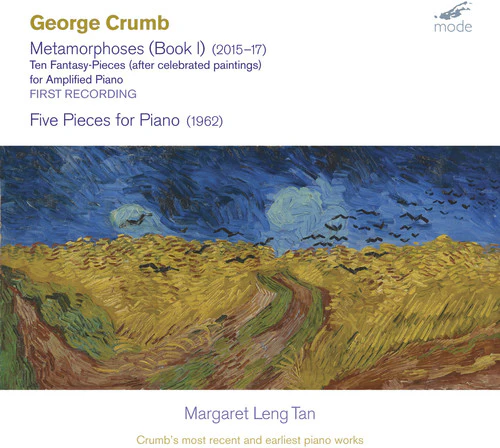
This historic release couples George Crumb’s earliest work for piano, the Five Pieces for Piano (1962) with his most recent piano cycle, Metamorphoses (2017). Margaret Leng Tan has long been a champion of Crumb’s music, and he composed Metamorphoses (Book 1) for her. This recording is of the German premiere at the legendary Donaueschingen Festival in 2017. Crumb’s Metamorphoses is a natural descendent of his monumental Makrokosmos I & II piano cycle of the early 1970s. With a nod to Mussorgsky’s Pictures at an Exhibition, each movement of the Metamorphoses is inspired by a famous painting. And, like the Makrokosmos, it requires the pianist to be a virtuoso not only at the keyboard but playing inside the piano and vocalizing as well. Ms. Tan is regarded at the “Diva of the Toy Piano,” and Crumb has also incorporated the toy piano and toy percussion instruments into some movements. Crumb says: “I have always been most fortunate to have had outstanding pianists who were willing to tackle the formidable technical and musical innovations in my scores. And among the very finest of these is Margaret Leng Tan for whom I wrote Metamorphoses (Book l). Margaret’s technical prowess and superb artistic sensitivity is a combination that must warm the heart of any composer!” The album also includes the early Five Pieces for Piano. All the components of Crumb’s mature compositional language are already evident: a broad palette of coloristic effects along with an extraordinarily sensitive command of nuance, his unmistakable musical gestures, an inherent sense of drama coupled with a magical suspenseful atmosphere and a battery of interior piano effects demanding that the pianist be somewhat of a harpist and percussionist as well.
-----
REVIEW:
This CD start out with George Crumb’s most recent piano cycle, the Metamorphoses, but closes with his earliest, the 5 Pieces for Piano from 1962.
Though Nocturne may be the most impressionistic piece in the set, the music depicting Dali’s Persistence of Memory is the most abstract, the most like the George Crumb most listeners know from such works as Ancient Voices of Children.
The 5 Pieces for Piano already show Crumb as an individualist, even at this early stage making the pianist play the insides of the instrument. It is, however, much more abstract than the Metapmorphoses, which you would expect in a work less tied to visuals. Although a difficult piece, both in terms of the technique it demands of the player and the listening aspect, it is worth your effort to absorb and understand it.
This is clearly an outstanding album, particularly for the Metamorphoses.
– Art Music Lounge
-----
REVIEW:
This CD start out with George Crumb’s most recent piano cycle, the Metamorphoses, but closes with his earliest, the 5 Pieces for Piano from 1962.
Though Nocturne may be the most impressionistic piece in the set, the music depicting Dali’s Persistence of Memory is the most abstract, the most like the George Crumb most listeners know from such works as Ancient Voices of Children.
The 5 Pieces for Piano already show Crumb as an individualist, even at this early stage making the pianist play the insides of the instrument. It is, however, much more abstract than the Metapmorphoses, which you would expect in a work less tied to visuals. Although a difficult piece, both in terms of the technique it demands of the player and the listening aspect, it is worth your effort to absorb and understand it.
This is clearly an outstanding album, particularly for the Metamorphoses.
– Art Music Lounge
This historic release couples George Crumb’s earliest work for piano, the Five Pieces for Piano (1962) with his most recent piano cycle, Metamorphoses (2017). Margaret Leng Tan has long been a champion of Crumb’s music, and he composed Metamorphoses (Book 1) for her. This recording is of the German premiere at the legendary Donaueschingen Festival in 2017. Crumb’s Metamorphoses is a natural descendent of his monumental Makrokosmos I & II piano cycle of the early 1970s. With a nod to Mussorgsky’s Pictures at an Exhibition, each movement of the Metamorphoses is inspired by a famous painting. And, like the Makrokosmos, it requires the pianist to be a virtuoso not only at the keyboard but playing inside the piano and vocalizing as well. Ms. Tan is regarded at the “Diva of the Toy Piano,” and Crumb has also incorporated the toy piano and toy percussion instruments into some movements. Crumb says: “I have always been most fortunate to have had outstanding pianists who were willing to tackle the formidable technical and musical innovations in my scores. And among the very finest of these is Margaret Leng Tan for whom I wrote Metamorphoses (Book l). Margaret’s technical prowess and superb artistic sensitivity is a combination that must warm the heart of any composer!” The album also includes the early Five Pieces for Piano. All the components of Crumb’s mature compositional language are already evident: a broad palette of coloristic effects along with an extraordinarily sensitive command of nuance, his unmistakable musical gestures, an inherent sense of drama coupled with a magical suspenseful atmosphere and a battery of interior piano effects demanding that the pianist be somewhat of a harpist and percussionist as well.
-----
REVIEW:
This CD start out with George Crumb’s most recent piano cycle, the Metamorphoses, but closes with his earliest, the 5 Pieces for Piano from 1962.
Though Nocturne may be the most impressionistic piece in the set, the music depicting Dali’s Persistence of Memory is the most abstract, the most like the George Crumb most listeners know from such works as Ancient Voices of Children.
The 5 Pieces for Piano already show Crumb as an individualist, even at this early stage making the pianist play the insides of the instrument. It is, however, much more abstract than the Metapmorphoses, which you would expect in a work less tied to visuals. Although a difficult piece, both in terms of the technique it demands of the player and the listening aspect, it is worth your effort to absorb and understand it.
This is clearly an outstanding album, particularly for the Metamorphoses.
– Art Music Lounge
-----
REVIEW:
This CD start out with George Crumb’s most recent piano cycle, the Metamorphoses, but closes with his earliest, the 5 Pieces for Piano from 1962.
Though Nocturne may be the most impressionistic piece in the set, the music depicting Dali’s Persistence of Memory is the most abstract, the most like the George Crumb most listeners know from such works as Ancient Voices of Children.
The 5 Pieces for Piano already show Crumb as an individualist, even at this early stage making the pianist play the insides of the instrument. It is, however, much more abstract than the Metapmorphoses, which you would expect in a work less tied to visuals. Although a difficult piece, both in terms of the technique it demands of the player and the listening aspect, it is worth your effort to absorb and understand it.
This is clearly an outstanding album, particularly for the Metamorphoses.
– Art Music Lounge
$7.35
Original: $20.99
-65%Crumb: Metamorphoses, Book 1 & 5 Pieces for Piano / Tan—
$20.99
$7.35Description
This historic release couples George Crumb’s earliest work for piano, the Five Pieces for Piano (1962) with his most recent piano cycle, Metamorphoses (2017). Margaret Leng Tan has long been a champion of Crumb’s music, and he composed Metamorphoses (Book 1) for her. This recording is of the German premiere at the legendary Donaueschingen Festival in 2017. Crumb’s Metamorphoses is a natural descendent of his monumental Makrokosmos I & II piano cycle of the early 1970s. With a nod to Mussorgsky’s Pictures at an Exhibition, each movement of the Metamorphoses is inspired by a famous painting. And, like the Makrokosmos, it requires the pianist to be a virtuoso not only at the keyboard but playing inside the piano and vocalizing as well. Ms. Tan is regarded at the “Diva of the Toy Piano,” and Crumb has also incorporated the toy piano and toy percussion instruments into some movements. Crumb says: “I have always been most fortunate to have had outstanding pianists who were willing to tackle the formidable technical and musical innovations in my scores. And among the very finest of these is Margaret Leng Tan for whom I wrote Metamorphoses (Book l). Margaret’s technical prowess and superb artistic sensitivity is a combination that must warm the heart of any composer!” The album also includes the early Five Pieces for Piano. All the components of Crumb’s mature compositional language are already evident: a broad palette of coloristic effects along with an extraordinarily sensitive command of nuance, his unmistakable musical gestures, an inherent sense of drama coupled with a magical suspenseful atmosphere and a battery of interior piano effects demanding that the pianist be somewhat of a harpist and percussionist as well.
-----
REVIEW:
This CD start out with George Crumb’s most recent piano cycle, the Metamorphoses, but closes with his earliest, the 5 Pieces for Piano from 1962.
Though Nocturne may be the most impressionistic piece in the set, the music depicting Dali’s Persistence of Memory is the most abstract, the most like the George Crumb most listeners know from such works as Ancient Voices of Children.
The 5 Pieces for Piano already show Crumb as an individualist, even at this early stage making the pianist play the insides of the instrument. It is, however, much more abstract than the Metapmorphoses, which you would expect in a work less tied to visuals. Although a difficult piece, both in terms of the technique it demands of the player and the listening aspect, it is worth your effort to absorb and understand it.
This is clearly an outstanding album, particularly for the Metamorphoses.
– Art Music Lounge
-----
REVIEW:
This CD start out with George Crumb’s most recent piano cycle, the Metamorphoses, but closes with his earliest, the 5 Pieces for Piano from 1962.
Though Nocturne may be the most impressionistic piece in the set, the music depicting Dali’s Persistence of Memory is the most abstract, the most like the George Crumb most listeners know from such works as Ancient Voices of Children.
The 5 Pieces for Piano already show Crumb as an individualist, even at this early stage making the pianist play the insides of the instrument. It is, however, much more abstract than the Metapmorphoses, which you would expect in a work less tied to visuals. Although a difficult piece, both in terms of the technique it demands of the player and the listening aspect, it is worth your effort to absorb and understand it.
This is clearly an outstanding album, particularly for the Metamorphoses.
– Art Music Lounge