🎉 Up to 70% Off Selected ItemsShop Sale

1 / 2
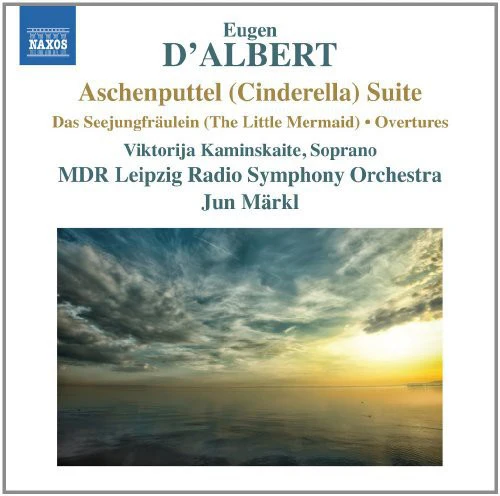
d'Albert: Cinderella Suite, Little Mermaid, Overtures / Markl, Leipzig Radio
D’ALBERT Aschenputtel Suite. Overtures: Esther; Der Rubin; Die Abreise. Preludes: Die toten Augen; Gernot. Das Seejungfräulein 1 • Jun Märkl, cond; 1 Viktorija Kaminskaite (sop); MDR Leipzig RSO • NAXOS 8.573110 (75:11)
The extravagantly gifted pianist and composer Eugen d’Albert had one of those improbably full, cosmopolitan lives spanning the 19th and 20th centuries. Born to a family of French and Italian origin in 1864, the same year as Richard Strauss, he grew up in Scotland. Taking on German nationality as a young adult, d’Albert studied with Liszt, who called him “Albertus Magnus,” and had a significant association with Brahms. A leading pianist of his time, he later turned to composition and was a prominent figure in Berlin’s extraordinary musical flowering in the 1920s.
D’Albert’s style isn’t easily pinned down, since he adopted differing stylistic approaches in different works. All of his music that I have heard is very well crafted, and some of it is inspired. It tends to be lively, affirmative, and light, at times, more like Humperdinck (traditional) than Busoni (progressive), to mention two of his contemporaries. Harmonically, it’s usually less adventurous than that of Liszt or Strauss. One of d’Albert’s teaches was Arthur Sullivan, for whom he composed the Overture to Patience . The writing for female chorus in Tiefland reveals this unusual influence.
D’Albert composed 19 operas in all manner of genres, changing his style from work to work, as Mascagni also did, in the quest for popular success. He found it with Tiefland , which is sometimes called a German verismo work, and is still occasionally performed. (Recordings of the Jewish-themed Der Golem , and the brief domestic comedy Die Abreise , have been issued in recent years.) Musically, Tiefland is compelling, and in it, one hears that d’Albert’s text setting and writing for the voice are as confident as his orchestration. It’s a very satisfying work to listen to, and I can recommend the Janowski recording with Marton, Kollo, Weikl, and Moll.
There’s a lot of music in this collection, all of it unfamiliar, and some of it very impressive. D’Albert’s colorful, sumptuously orchestrated preludes and overtures aren’t brief, and not all of them make a strong individual impression, but two stand out. The overture to Grillparzer’s play Esther from 1888 resembles a fully developed symphonic movement, majestic, with contrastingly playful sections, and perhaps modeled on Brahms. The prelude and introduction to Die toten Augen (1916), a biblical tale, sounds completely different, an atmospheric combination of a Korngold movie score mixed together with La mer.
Das Seejungfräulein (The Mermaid), an extended scene for soprano and orchestra, after Hans Christian Andersen, was composed in 1897 for one of d’Albert’s six wives, the soprano Hermine Finck. (Another was the pianist Teresa Carreño.) This intensely chromatic, surging music certainly shows the influence of Wagner, but manages not to sound derivative. Though it maintains more traditional harmony, it reminds me a little of the soprano “songs” in Schoenberg’s Gurrelieder, and it’s the most impressive composition on the CD. In the strenuous vocal part that requires the power and range of an Isolde or Brünnhilde, the Lithuanian soprano Viktorija Kaminskaite has a warm, attractive voice, and a committed delivery, but she strains and loses tonal support on some sustained high notes.
Finally, the disc’s featured work, the 1924 Aschenputtel (Cinderella) Suite , after the Brothers Grimm, is a deftly scored set of five brief, programmatic dances. Keith Anderson’s notes don’t identify the suite as a ballet, but it would certainly lend itself to choreography. This tuneful, entrancing score is a masterpiece of its kind, and like Ravel in Ma mère l’oye —there’s a French feel to Aschenputtel —d’Albert had the gift of creating captivating, childlike music.
Jun Märkl leads lively, flexible performances, and the Leipzig Radio Symphony plays well, particularly in the Aschenputtel Suite , with its many solos. I highly recommend this disc for the chance to make the acquaintance of Die Seejungfräulein , although I hope that there will be future recordings of it with more technically assured singing, and especially Aschenputtel , a delightful find.
FANFARE: Paul Orgel
-----
Eugen D’Albert was a tremendously gifted musician, and even had he not been we would owe him respect for being married six times and inspiring his second wife, the also multiply married Venezuelan pianist Teresa Careño, to utter that immortal line, “Darling, your children and my children are quarreling with our children again!” Aside from multiple marriages, D’Albert composed multiple operas, nineteen at least, and the overtures and preludes contained on this disc are very enjoyable. They range from the moody prelude to Die toten Augen, to the the luscious The Ruby (his first opera), to the jolly comedy The Departure.
The Overture to Grillparzer’s Esther is actually a robust, early concert work, while the delightful Cinderella Suite has plenty of the requisite fairytale atmosphere. The Little Mermaid is a brilliant, post-Wagnerian scena for soprano and orchestra, and it’s quite beautifully sung by soprano Viktorija Kaminskaite. Her voice rides the orchestra effortlessly, while her tone remains consistently smooth and lovely throughout its range. Jun Märkl leads the MDR Leipzig Radio Symphony with plenty of verve and a conviction often missing from his prior recordings of Debussy.
D’Albert’s style lacks the ultimate in individuality, but it’s unflaggingly attractive, and he clearly evolved from his Wagner/Liszt origins to something more contemporary, if not more personal. Anyway, the only way to find out is to listen, so let’s get to it.
– David Hurwitz, ClassicsToday.com
The extravagantly gifted pianist and composer Eugen d’Albert had one of those improbably full, cosmopolitan lives spanning the 19th and 20th centuries. Born to a family of French and Italian origin in 1864, the same year as Richard Strauss, he grew up in Scotland. Taking on German nationality as a young adult, d’Albert studied with Liszt, who called him “Albertus Magnus,” and had a significant association with Brahms. A leading pianist of his time, he later turned to composition and was a prominent figure in Berlin’s extraordinary musical flowering in the 1920s.
D’Albert’s style isn’t easily pinned down, since he adopted differing stylistic approaches in different works. All of his music that I have heard is very well crafted, and some of it is inspired. It tends to be lively, affirmative, and light, at times, more like Humperdinck (traditional) than Busoni (progressive), to mention two of his contemporaries. Harmonically, it’s usually less adventurous than that of Liszt or Strauss. One of d’Albert’s teaches was Arthur Sullivan, for whom he composed the Overture to Patience . The writing for female chorus in Tiefland reveals this unusual influence.
D’Albert composed 19 operas in all manner of genres, changing his style from work to work, as Mascagni also did, in the quest for popular success. He found it with Tiefland , which is sometimes called a German verismo work, and is still occasionally performed. (Recordings of the Jewish-themed Der Golem , and the brief domestic comedy Die Abreise , have been issued in recent years.) Musically, Tiefland is compelling, and in it, one hears that d’Albert’s text setting and writing for the voice are as confident as his orchestration. It’s a very satisfying work to listen to, and I can recommend the Janowski recording with Marton, Kollo, Weikl, and Moll.
There’s a lot of music in this collection, all of it unfamiliar, and some of it very impressive. D’Albert’s colorful, sumptuously orchestrated preludes and overtures aren’t brief, and not all of them make a strong individual impression, but two stand out. The overture to Grillparzer’s play Esther from 1888 resembles a fully developed symphonic movement, majestic, with contrastingly playful sections, and perhaps modeled on Brahms. The prelude and introduction to Die toten Augen (1916), a biblical tale, sounds completely different, an atmospheric combination of a Korngold movie score mixed together with La mer.
Das Seejungfräulein (The Mermaid), an extended scene for soprano and orchestra, after Hans Christian Andersen, was composed in 1897 for one of d’Albert’s six wives, the soprano Hermine Finck. (Another was the pianist Teresa Carreño.) This intensely chromatic, surging music certainly shows the influence of Wagner, but manages not to sound derivative. Though it maintains more traditional harmony, it reminds me a little of the soprano “songs” in Schoenberg’s Gurrelieder, and it’s the most impressive composition on the CD. In the strenuous vocal part that requires the power and range of an Isolde or Brünnhilde, the Lithuanian soprano Viktorija Kaminskaite has a warm, attractive voice, and a committed delivery, but she strains and loses tonal support on some sustained high notes.
Finally, the disc’s featured work, the 1924 Aschenputtel (Cinderella) Suite , after the Brothers Grimm, is a deftly scored set of five brief, programmatic dances. Keith Anderson’s notes don’t identify the suite as a ballet, but it would certainly lend itself to choreography. This tuneful, entrancing score is a masterpiece of its kind, and like Ravel in Ma mère l’oye —there’s a French feel to Aschenputtel —d’Albert had the gift of creating captivating, childlike music.
Jun Märkl leads lively, flexible performances, and the Leipzig Radio Symphony plays well, particularly in the Aschenputtel Suite , with its many solos. I highly recommend this disc for the chance to make the acquaintance of Die Seejungfräulein , although I hope that there will be future recordings of it with more technically assured singing, and especially Aschenputtel , a delightful find.
FANFARE: Paul Orgel
-----
Eugen D’Albert was a tremendously gifted musician, and even had he not been we would owe him respect for being married six times and inspiring his second wife, the also multiply married Venezuelan pianist Teresa Careño, to utter that immortal line, “Darling, your children and my children are quarreling with our children again!” Aside from multiple marriages, D’Albert composed multiple operas, nineteen at least, and the overtures and preludes contained on this disc are very enjoyable. They range from the moody prelude to Die toten Augen, to the the luscious The Ruby (his first opera), to the jolly comedy The Departure.
The Overture to Grillparzer’s Esther is actually a robust, early concert work, while the delightful Cinderella Suite has plenty of the requisite fairytale atmosphere. The Little Mermaid is a brilliant, post-Wagnerian scena for soprano and orchestra, and it’s quite beautifully sung by soprano Viktorija Kaminskaite. Her voice rides the orchestra effortlessly, while her tone remains consistently smooth and lovely throughout its range. Jun Märkl leads the MDR Leipzig Radio Symphony with plenty of verve and a conviction often missing from his prior recordings of Debussy.
D’Albert’s style lacks the ultimate in individuality, but it’s unflaggingly attractive, and he clearly evolved from his Wagner/Liszt origins to something more contemporary, if not more personal. Anyway, the only way to find out is to listen, so let’s get to it.
– David Hurwitz, ClassicsToday.com
D’ALBERT Aschenputtel Suite. Overtures: Esther; Der Rubin; Die Abreise. Preludes: Die toten Augen; Gernot. Das Seejungfräulein 1 • Jun Märkl, cond; 1 Viktorija Kaminskaite (sop); MDR Leipzig RSO • NAXOS 8.573110 (75:11)
The extravagantly gifted pianist and composer Eugen d’Albert had one of those improbably full, cosmopolitan lives spanning the 19th and 20th centuries. Born to a family of French and Italian origin in 1864, the same year as Richard Strauss, he grew up in Scotland. Taking on German nationality as a young adult, d’Albert studied with Liszt, who called him “Albertus Magnus,” and had a significant association with Brahms. A leading pianist of his time, he later turned to composition and was a prominent figure in Berlin’s extraordinary musical flowering in the 1920s.
D’Albert’s style isn’t easily pinned down, since he adopted differing stylistic approaches in different works. All of his music that I have heard is very well crafted, and some of it is inspired. It tends to be lively, affirmative, and light, at times, more like Humperdinck (traditional) than Busoni (progressive), to mention two of his contemporaries. Harmonically, it’s usually less adventurous than that of Liszt or Strauss. One of d’Albert’s teaches was Arthur Sullivan, for whom he composed the Overture to Patience . The writing for female chorus in Tiefland reveals this unusual influence.
D’Albert composed 19 operas in all manner of genres, changing his style from work to work, as Mascagni also did, in the quest for popular success. He found it with Tiefland , which is sometimes called a German verismo work, and is still occasionally performed. (Recordings of the Jewish-themed Der Golem , and the brief domestic comedy Die Abreise , have been issued in recent years.) Musically, Tiefland is compelling, and in it, one hears that d’Albert’s text setting and writing for the voice are as confident as his orchestration. It’s a very satisfying work to listen to, and I can recommend the Janowski recording with Marton, Kollo, Weikl, and Moll.
There’s a lot of music in this collection, all of it unfamiliar, and some of it very impressive. D’Albert’s colorful, sumptuously orchestrated preludes and overtures aren’t brief, and not all of them make a strong individual impression, but two stand out. The overture to Grillparzer’s play Esther from 1888 resembles a fully developed symphonic movement, majestic, with contrastingly playful sections, and perhaps modeled on Brahms. The prelude and introduction to Die toten Augen (1916), a biblical tale, sounds completely different, an atmospheric combination of a Korngold movie score mixed together with La mer.
Das Seejungfräulein (The Mermaid), an extended scene for soprano and orchestra, after Hans Christian Andersen, was composed in 1897 for one of d’Albert’s six wives, the soprano Hermine Finck. (Another was the pianist Teresa Carreño.) This intensely chromatic, surging music certainly shows the influence of Wagner, but manages not to sound derivative. Though it maintains more traditional harmony, it reminds me a little of the soprano “songs” in Schoenberg’s Gurrelieder, and it’s the most impressive composition on the CD. In the strenuous vocal part that requires the power and range of an Isolde or Brünnhilde, the Lithuanian soprano Viktorija Kaminskaite has a warm, attractive voice, and a committed delivery, but she strains and loses tonal support on some sustained high notes.
Finally, the disc’s featured work, the 1924 Aschenputtel (Cinderella) Suite , after the Brothers Grimm, is a deftly scored set of five brief, programmatic dances. Keith Anderson’s notes don’t identify the suite as a ballet, but it would certainly lend itself to choreography. This tuneful, entrancing score is a masterpiece of its kind, and like Ravel in Ma mère l’oye —there’s a French feel to Aschenputtel —d’Albert had the gift of creating captivating, childlike music.
Jun Märkl leads lively, flexible performances, and the Leipzig Radio Symphony plays well, particularly in the Aschenputtel Suite , with its many solos. I highly recommend this disc for the chance to make the acquaintance of Die Seejungfräulein , although I hope that there will be future recordings of it with more technically assured singing, and especially Aschenputtel , a delightful find.
FANFARE: Paul Orgel
-----
Eugen D’Albert was a tremendously gifted musician, and even had he not been we would owe him respect for being married six times and inspiring his second wife, the also multiply married Venezuelan pianist Teresa Careño, to utter that immortal line, “Darling, your children and my children are quarreling with our children again!” Aside from multiple marriages, D’Albert composed multiple operas, nineteen at least, and the overtures and preludes contained on this disc are very enjoyable. They range from the moody prelude to Die toten Augen, to the the luscious The Ruby (his first opera), to the jolly comedy The Departure.
The Overture to Grillparzer’s Esther is actually a robust, early concert work, while the delightful Cinderella Suite has plenty of the requisite fairytale atmosphere. The Little Mermaid is a brilliant, post-Wagnerian scena for soprano and orchestra, and it’s quite beautifully sung by soprano Viktorija Kaminskaite. Her voice rides the orchestra effortlessly, while her tone remains consistently smooth and lovely throughout its range. Jun Märkl leads the MDR Leipzig Radio Symphony with plenty of verve and a conviction often missing from his prior recordings of Debussy.
D’Albert’s style lacks the ultimate in individuality, but it’s unflaggingly attractive, and he clearly evolved from his Wagner/Liszt origins to something more contemporary, if not more personal. Anyway, the only way to find out is to listen, so let’s get to it.
– David Hurwitz, ClassicsToday.com
The extravagantly gifted pianist and composer Eugen d’Albert had one of those improbably full, cosmopolitan lives spanning the 19th and 20th centuries. Born to a family of French and Italian origin in 1864, the same year as Richard Strauss, he grew up in Scotland. Taking on German nationality as a young adult, d’Albert studied with Liszt, who called him “Albertus Magnus,” and had a significant association with Brahms. A leading pianist of his time, he later turned to composition and was a prominent figure in Berlin’s extraordinary musical flowering in the 1920s.
D’Albert’s style isn’t easily pinned down, since he adopted differing stylistic approaches in different works. All of his music that I have heard is very well crafted, and some of it is inspired. It tends to be lively, affirmative, and light, at times, more like Humperdinck (traditional) than Busoni (progressive), to mention two of his contemporaries. Harmonically, it’s usually less adventurous than that of Liszt or Strauss. One of d’Albert’s teaches was Arthur Sullivan, for whom he composed the Overture to Patience . The writing for female chorus in Tiefland reveals this unusual influence.
D’Albert composed 19 operas in all manner of genres, changing his style from work to work, as Mascagni also did, in the quest for popular success. He found it with Tiefland , which is sometimes called a German verismo work, and is still occasionally performed. (Recordings of the Jewish-themed Der Golem , and the brief domestic comedy Die Abreise , have been issued in recent years.) Musically, Tiefland is compelling, and in it, one hears that d’Albert’s text setting and writing for the voice are as confident as his orchestration. It’s a very satisfying work to listen to, and I can recommend the Janowski recording with Marton, Kollo, Weikl, and Moll.
There’s a lot of music in this collection, all of it unfamiliar, and some of it very impressive. D’Albert’s colorful, sumptuously orchestrated preludes and overtures aren’t brief, and not all of them make a strong individual impression, but two stand out. The overture to Grillparzer’s play Esther from 1888 resembles a fully developed symphonic movement, majestic, with contrastingly playful sections, and perhaps modeled on Brahms. The prelude and introduction to Die toten Augen (1916), a biblical tale, sounds completely different, an atmospheric combination of a Korngold movie score mixed together with La mer.
Das Seejungfräulein (The Mermaid), an extended scene for soprano and orchestra, after Hans Christian Andersen, was composed in 1897 for one of d’Albert’s six wives, the soprano Hermine Finck. (Another was the pianist Teresa Carreño.) This intensely chromatic, surging music certainly shows the influence of Wagner, but manages not to sound derivative. Though it maintains more traditional harmony, it reminds me a little of the soprano “songs” in Schoenberg’s Gurrelieder, and it’s the most impressive composition on the CD. In the strenuous vocal part that requires the power and range of an Isolde or Brünnhilde, the Lithuanian soprano Viktorija Kaminskaite has a warm, attractive voice, and a committed delivery, but she strains and loses tonal support on some sustained high notes.
Finally, the disc’s featured work, the 1924 Aschenputtel (Cinderella) Suite , after the Brothers Grimm, is a deftly scored set of five brief, programmatic dances. Keith Anderson’s notes don’t identify the suite as a ballet, but it would certainly lend itself to choreography. This tuneful, entrancing score is a masterpiece of its kind, and like Ravel in Ma mère l’oye —there’s a French feel to Aschenputtel —d’Albert had the gift of creating captivating, childlike music.
Jun Märkl leads lively, flexible performances, and the Leipzig Radio Symphony plays well, particularly in the Aschenputtel Suite , with its many solos. I highly recommend this disc for the chance to make the acquaintance of Die Seejungfräulein , although I hope that there will be future recordings of it with more technically assured singing, and especially Aschenputtel , a delightful find.
FANFARE: Paul Orgel
-----
Eugen D’Albert was a tremendously gifted musician, and even had he not been we would owe him respect for being married six times and inspiring his second wife, the also multiply married Venezuelan pianist Teresa Careño, to utter that immortal line, “Darling, your children and my children are quarreling with our children again!” Aside from multiple marriages, D’Albert composed multiple operas, nineteen at least, and the overtures and preludes contained on this disc are very enjoyable. They range from the moody prelude to Die toten Augen, to the the luscious The Ruby (his first opera), to the jolly comedy The Departure.
The Overture to Grillparzer’s Esther is actually a robust, early concert work, while the delightful Cinderella Suite has plenty of the requisite fairytale atmosphere. The Little Mermaid is a brilliant, post-Wagnerian scena for soprano and orchestra, and it’s quite beautifully sung by soprano Viktorija Kaminskaite. Her voice rides the orchestra effortlessly, while her tone remains consistently smooth and lovely throughout its range. Jun Märkl leads the MDR Leipzig Radio Symphony with plenty of verve and a conviction often missing from his prior recordings of Debussy.
D’Albert’s style lacks the ultimate in individuality, but it’s unflaggingly attractive, and he clearly evolved from his Wagner/Liszt origins to something more contemporary, if not more personal. Anyway, the only way to find out is to listen, so let’s get to it.
– David Hurwitz, ClassicsToday.com
$9.99
d'Albert: Cinderella Suite, Little Mermaid, Overtures / Markl, Leipzig Radio—
$9.99
Description
D’ALBERT Aschenputtel Suite. Overtures: Esther; Der Rubin; Die Abreise. Preludes: Die toten Augen; Gernot. Das Seejungfräulein 1 • Jun Märkl, cond; 1 Viktorija Kaminskaite (sop); MDR Leipzig RSO • NAXOS 8.573110 (75:11)
The extravagantly gifted pianist and composer Eugen d’Albert had one of those improbably full, cosmopolitan lives spanning the 19th and 20th centuries. Born to a family of French and Italian origin in 1864, the same year as Richard Strauss, he grew up in Scotland. Taking on German nationality as a young adult, d’Albert studied with Liszt, who called him “Albertus Magnus,” and had a significant association with Brahms. A leading pianist of his time, he later turned to composition and was a prominent figure in Berlin’s extraordinary musical flowering in the 1920s.
D’Albert’s style isn’t easily pinned down, since he adopted differing stylistic approaches in different works. All of his music that I have heard is very well crafted, and some of it is inspired. It tends to be lively, affirmative, and light, at times, more like Humperdinck (traditional) than Busoni (progressive), to mention two of his contemporaries. Harmonically, it’s usually less adventurous than that of Liszt or Strauss. One of d’Albert’s teaches was Arthur Sullivan, for whom he composed the Overture to Patience . The writing for female chorus in Tiefland reveals this unusual influence.
D’Albert composed 19 operas in all manner of genres, changing his style from work to work, as Mascagni also did, in the quest for popular success. He found it with Tiefland , which is sometimes called a German verismo work, and is still occasionally performed. (Recordings of the Jewish-themed Der Golem , and the brief domestic comedy Die Abreise , have been issued in recent years.) Musically, Tiefland is compelling, and in it, one hears that d’Albert’s text setting and writing for the voice are as confident as his orchestration. It’s a very satisfying work to listen to, and I can recommend the Janowski recording with Marton, Kollo, Weikl, and Moll.
There’s a lot of music in this collection, all of it unfamiliar, and some of it very impressive. D’Albert’s colorful, sumptuously orchestrated preludes and overtures aren’t brief, and not all of them make a strong individual impression, but two stand out. The overture to Grillparzer’s play Esther from 1888 resembles a fully developed symphonic movement, majestic, with contrastingly playful sections, and perhaps modeled on Brahms. The prelude and introduction to Die toten Augen (1916), a biblical tale, sounds completely different, an atmospheric combination of a Korngold movie score mixed together with La mer.
Das Seejungfräulein (The Mermaid), an extended scene for soprano and orchestra, after Hans Christian Andersen, was composed in 1897 for one of d’Albert’s six wives, the soprano Hermine Finck. (Another was the pianist Teresa Carreño.) This intensely chromatic, surging music certainly shows the influence of Wagner, but manages not to sound derivative. Though it maintains more traditional harmony, it reminds me a little of the soprano “songs” in Schoenberg’s Gurrelieder, and it’s the most impressive composition on the CD. In the strenuous vocal part that requires the power and range of an Isolde or Brünnhilde, the Lithuanian soprano Viktorija Kaminskaite has a warm, attractive voice, and a committed delivery, but she strains and loses tonal support on some sustained high notes.
Finally, the disc’s featured work, the 1924 Aschenputtel (Cinderella) Suite , after the Brothers Grimm, is a deftly scored set of five brief, programmatic dances. Keith Anderson’s notes don’t identify the suite as a ballet, but it would certainly lend itself to choreography. This tuneful, entrancing score is a masterpiece of its kind, and like Ravel in Ma mère l’oye —there’s a French feel to Aschenputtel —d’Albert had the gift of creating captivating, childlike music.
Jun Märkl leads lively, flexible performances, and the Leipzig Radio Symphony plays well, particularly in the Aschenputtel Suite , with its many solos. I highly recommend this disc for the chance to make the acquaintance of Die Seejungfräulein , although I hope that there will be future recordings of it with more technically assured singing, and especially Aschenputtel , a delightful find.
FANFARE: Paul Orgel
-----
Eugen D’Albert was a tremendously gifted musician, and even had he not been we would owe him respect for being married six times and inspiring his second wife, the also multiply married Venezuelan pianist Teresa Careño, to utter that immortal line, “Darling, your children and my children are quarreling with our children again!” Aside from multiple marriages, D’Albert composed multiple operas, nineteen at least, and the overtures and preludes contained on this disc are very enjoyable. They range from the moody prelude to Die toten Augen, to the the luscious The Ruby (his first opera), to the jolly comedy The Departure.
The Overture to Grillparzer’s Esther is actually a robust, early concert work, while the delightful Cinderella Suite has plenty of the requisite fairytale atmosphere. The Little Mermaid is a brilliant, post-Wagnerian scena for soprano and orchestra, and it’s quite beautifully sung by soprano Viktorija Kaminskaite. Her voice rides the orchestra effortlessly, while her tone remains consistently smooth and lovely throughout its range. Jun Märkl leads the MDR Leipzig Radio Symphony with plenty of verve and a conviction often missing from his prior recordings of Debussy.
D’Albert’s style lacks the ultimate in individuality, but it’s unflaggingly attractive, and he clearly evolved from his Wagner/Liszt origins to something more contemporary, if not more personal. Anyway, the only way to find out is to listen, so let’s get to it.
– David Hurwitz, ClassicsToday.com
The extravagantly gifted pianist and composer Eugen d’Albert had one of those improbably full, cosmopolitan lives spanning the 19th and 20th centuries. Born to a family of French and Italian origin in 1864, the same year as Richard Strauss, he grew up in Scotland. Taking on German nationality as a young adult, d’Albert studied with Liszt, who called him “Albertus Magnus,” and had a significant association with Brahms. A leading pianist of his time, he later turned to composition and was a prominent figure in Berlin’s extraordinary musical flowering in the 1920s.
D’Albert’s style isn’t easily pinned down, since he adopted differing stylistic approaches in different works. All of his music that I have heard is very well crafted, and some of it is inspired. It tends to be lively, affirmative, and light, at times, more like Humperdinck (traditional) than Busoni (progressive), to mention two of his contemporaries. Harmonically, it’s usually less adventurous than that of Liszt or Strauss. One of d’Albert’s teaches was Arthur Sullivan, for whom he composed the Overture to Patience . The writing for female chorus in Tiefland reveals this unusual influence.
D’Albert composed 19 operas in all manner of genres, changing his style from work to work, as Mascagni also did, in the quest for popular success. He found it with Tiefland , which is sometimes called a German verismo work, and is still occasionally performed. (Recordings of the Jewish-themed Der Golem , and the brief domestic comedy Die Abreise , have been issued in recent years.) Musically, Tiefland is compelling, and in it, one hears that d’Albert’s text setting and writing for the voice are as confident as his orchestration. It’s a very satisfying work to listen to, and I can recommend the Janowski recording with Marton, Kollo, Weikl, and Moll.
There’s a lot of music in this collection, all of it unfamiliar, and some of it very impressive. D’Albert’s colorful, sumptuously orchestrated preludes and overtures aren’t brief, and not all of them make a strong individual impression, but two stand out. The overture to Grillparzer’s play Esther from 1888 resembles a fully developed symphonic movement, majestic, with contrastingly playful sections, and perhaps modeled on Brahms. The prelude and introduction to Die toten Augen (1916), a biblical tale, sounds completely different, an atmospheric combination of a Korngold movie score mixed together with La mer.
Das Seejungfräulein (The Mermaid), an extended scene for soprano and orchestra, after Hans Christian Andersen, was composed in 1897 for one of d’Albert’s six wives, the soprano Hermine Finck. (Another was the pianist Teresa Carreño.) This intensely chromatic, surging music certainly shows the influence of Wagner, but manages not to sound derivative. Though it maintains more traditional harmony, it reminds me a little of the soprano “songs” in Schoenberg’s Gurrelieder, and it’s the most impressive composition on the CD. In the strenuous vocal part that requires the power and range of an Isolde or Brünnhilde, the Lithuanian soprano Viktorija Kaminskaite has a warm, attractive voice, and a committed delivery, but she strains and loses tonal support on some sustained high notes.
Finally, the disc’s featured work, the 1924 Aschenputtel (Cinderella) Suite , after the Brothers Grimm, is a deftly scored set of five brief, programmatic dances. Keith Anderson’s notes don’t identify the suite as a ballet, but it would certainly lend itself to choreography. This tuneful, entrancing score is a masterpiece of its kind, and like Ravel in Ma mère l’oye —there’s a French feel to Aschenputtel —d’Albert had the gift of creating captivating, childlike music.
Jun Märkl leads lively, flexible performances, and the Leipzig Radio Symphony plays well, particularly in the Aschenputtel Suite , with its many solos. I highly recommend this disc for the chance to make the acquaintance of Die Seejungfräulein , although I hope that there will be future recordings of it with more technically assured singing, and especially Aschenputtel , a delightful find.
FANFARE: Paul Orgel
-----
Eugen D’Albert was a tremendously gifted musician, and even had he not been we would owe him respect for being married six times and inspiring his second wife, the also multiply married Venezuelan pianist Teresa Careño, to utter that immortal line, “Darling, your children and my children are quarreling with our children again!” Aside from multiple marriages, D’Albert composed multiple operas, nineteen at least, and the overtures and preludes contained on this disc are very enjoyable. They range from the moody prelude to Die toten Augen, to the the luscious The Ruby (his first opera), to the jolly comedy The Departure.
The Overture to Grillparzer’s Esther is actually a robust, early concert work, while the delightful Cinderella Suite has plenty of the requisite fairytale atmosphere. The Little Mermaid is a brilliant, post-Wagnerian scena for soprano and orchestra, and it’s quite beautifully sung by soprano Viktorija Kaminskaite. Her voice rides the orchestra effortlessly, while her tone remains consistently smooth and lovely throughout its range. Jun Märkl leads the MDR Leipzig Radio Symphony with plenty of verve and a conviction often missing from his prior recordings of Debussy.
D’Albert’s style lacks the ultimate in individuality, but it’s unflaggingly attractive, and he clearly evolved from his Wagner/Liszt origins to something more contemporary, if not more personal. Anyway, the only way to find out is to listen, so let’s get to it.
– David Hurwitz, ClassicsToday.com