🎉 Up to 70% Off Selected ItemsShop Sale

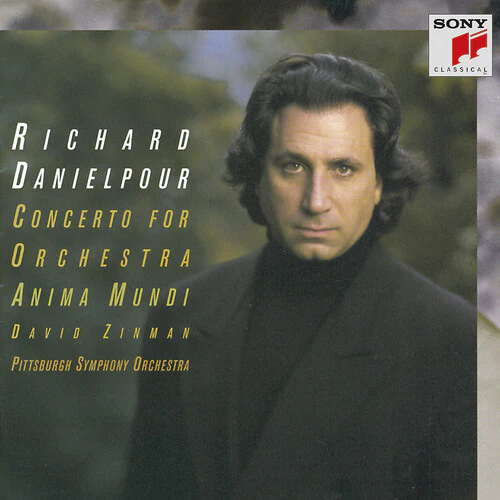
Danielpour: Concerto For Orchestra, Etc / Zinman, Pittsburgh
Danielpour's "Concerto for Orchestra" was nominated for the 1998 Grammy Award for "Best Classical Contemporary Composition."
Richard Danielpour is one of several American composers to emerge in the 1990s with an eclectic tonal style that makes no bones about its aim to please. He is also not shy about the derivative nature of his music, calling himself "an assimilator" who "will take an idea that may resemble another composer's and mull over it until it becomes something else." He cites Copland, Shostakovich, Britten, Bartók and Stravinsky as favorites but his own work, with its big romantic gestures and easily digested rhythms is less confrontational than theirs. It is meant to entertain, impress, soothe, not to provoke, and it succeeds on all of these fronts.
The 'Concerto for Orchestra' demonstrates Danielpour's chops as a colorist as well as his flair for steady pounding beats, rather as if the 'Miraculous Mandarin' wandered into 'West Side Story.' 'Anima Mundi' is a ballet score depicting the four seasons. It opens with a seven note motif which, amusingly, is the same as that for Borodin's 'In the Steppes of Central Asia,' then moves into upbeat John Adams territory for a while before settling into a mood of somber reflection. The very good, natural sounding recordings were made under the composer's supervision.
Richard Danielpour is one of several American composers to emerge in the 1990s with an eclectic tonal style that makes no bones about its aim to please. He is also not shy about the derivative nature of his music, calling himself "an assimilator" who "will take an idea that may resemble another composer's and mull over it until it becomes something else." He cites Copland, Shostakovich, Britten, Bartók and Stravinsky as favorites but his own work, with its big romantic gestures and easily digested rhythms is less confrontational than theirs. It is meant to entertain, impress, soothe, not to provoke, and it succeeds on all of these fronts.
The 'Concerto for Orchestra' demonstrates Danielpour's chops as a colorist as well as his flair for steady pounding beats, rather as if the 'Miraculous Mandarin' wandered into 'West Side Story.' 'Anima Mundi' is a ballet score depicting the four seasons. It opens with a seven note motif which, amusingly, is the same as that for Borodin's 'In the Steppes of Central Asia,' then moves into upbeat John Adams territory for a while before settling into a mood of somber reflection. The very good, natural sounding recordings were made under the composer's supervision.
Danielpour's "Concerto for Orchestra" was nominated for the 1998 Grammy Award for "Best Classical Contemporary Composition."
Richard Danielpour is one of several American composers to emerge in the 1990s with an eclectic tonal style that makes no bones about its aim to please. He is also not shy about the derivative nature of his music, calling himself "an assimilator" who "will take an idea that may resemble another composer's and mull over it until it becomes something else." He cites Copland, Shostakovich, Britten, Bartók and Stravinsky as favorites but his own work, with its big romantic gestures and easily digested rhythms is less confrontational than theirs. It is meant to entertain, impress, soothe, not to provoke, and it succeeds on all of these fronts.
The 'Concerto for Orchestra' demonstrates Danielpour's chops as a colorist as well as his flair for steady pounding beats, rather as if the 'Miraculous Mandarin' wandered into 'West Side Story.' 'Anima Mundi' is a ballet score depicting the four seasons. It opens with a seven note motif which, amusingly, is the same as that for Borodin's 'In the Steppes of Central Asia,' then moves into upbeat John Adams territory for a while before settling into a mood of somber reflection. The very good, natural sounding recordings were made under the composer's supervision.
Richard Danielpour is one of several American composers to emerge in the 1990s with an eclectic tonal style that makes no bones about its aim to please. He is also not shy about the derivative nature of his music, calling himself "an assimilator" who "will take an idea that may resemble another composer's and mull over it until it becomes something else." He cites Copland, Shostakovich, Britten, Bartók and Stravinsky as favorites but his own work, with its big romantic gestures and easily digested rhythms is less confrontational than theirs. It is meant to entertain, impress, soothe, not to provoke, and it succeeds on all of these fronts.
The 'Concerto for Orchestra' demonstrates Danielpour's chops as a colorist as well as his flair for steady pounding beats, rather as if the 'Miraculous Mandarin' wandered into 'West Side Story.' 'Anima Mundi' is a ballet score depicting the four seasons. It opens with a seven note motif which, amusingly, is the same as that for Borodin's 'In the Steppes of Central Asia,' then moves into upbeat John Adams territory for a while before settling into a mood of somber reflection. The very good, natural sounding recordings were made under the composer's supervision.
$4.20
Original: $11.99
-65%Danielpour: Concerto For Orchestra, Etc / Zinman, Pittsburgh—
$11.99
$4.20Description
Danielpour's "Concerto for Orchestra" was nominated for the 1998 Grammy Award for "Best Classical Contemporary Composition."
Richard Danielpour is one of several American composers to emerge in the 1990s with an eclectic tonal style that makes no bones about its aim to please. He is also not shy about the derivative nature of his music, calling himself "an assimilator" who "will take an idea that may resemble another composer's and mull over it until it becomes something else." He cites Copland, Shostakovich, Britten, Bartók and Stravinsky as favorites but his own work, with its big romantic gestures and easily digested rhythms is less confrontational than theirs. It is meant to entertain, impress, soothe, not to provoke, and it succeeds on all of these fronts.
The 'Concerto for Orchestra' demonstrates Danielpour's chops as a colorist as well as his flair for steady pounding beats, rather as if the 'Miraculous Mandarin' wandered into 'West Side Story.' 'Anima Mundi' is a ballet score depicting the four seasons. It opens with a seven note motif which, amusingly, is the same as that for Borodin's 'In the Steppes of Central Asia,' then moves into upbeat John Adams territory for a while before settling into a mood of somber reflection. The very good, natural sounding recordings were made under the composer's supervision.
Richard Danielpour is one of several American composers to emerge in the 1990s with an eclectic tonal style that makes no bones about its aim to please. He is also not shy about the derivative nature of his music, calling himself "an assimilator" who "will take an idea that may resemble another composer's and mull over it until it becomes something else." He cites Copland, Shostakovich, Britten, Bartók and Stravinsky as favorites but his own work, with its big romantic gestures and easily digested rhythms is less confrontational than theirs. It is meant to entertain, impress, soothe, not to provoke, and it succeeds on all of these fronts.
The 'Concerto for Orchestra' demonstrates Danielpour's chops as a colorist as well as his flair for steady pounding beats, rather as if the 'Miraculous Mandarin' wandered into 'West Side Story.' 'Anima Mundi' is a ballet score depicting the four seasons. It opens with a seven note motif which, amusingly, is the same as that for Borodin's 'In the Steppes of Central Asia,' then moves into upbeat John Adams territory for a while before settling into a mood of somber reflection. The very good, natural sounding recordings were made under the composer's supervision.