🎉 Up to 70% Off Selected ItemsShop Sale

1 / 2
Debussy: Images / Markl, Lyon NO
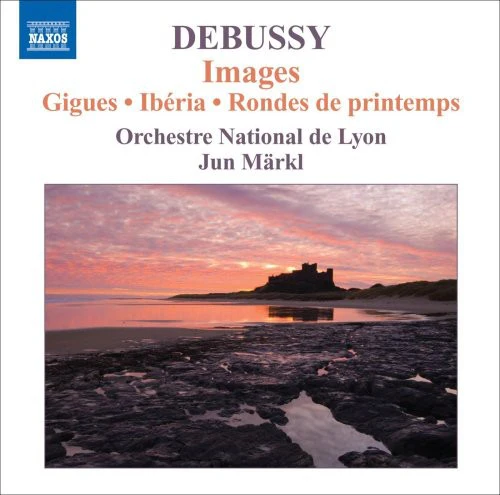
DEBUSSY Images. Pour le piano: Sarabande (orch. Ravel). Danse (orch. Ravel). Marche écossaise. La plus que lente • Jun Märkl, cond; Lyon Natl O • NAXOS 8.572296 (59:45)
This is the third volume in a series of Debussy’s orchestral music from the Lyon orchestra under its young German conductor; I haven’t heard the other two, but on this evidence I want to.
Images gets off to a good start with a Gigues of smooth, rounded, refined sonorities—little or no hint here of those tangy, fruity, acidic French orchestral timbres of a bygone era (still well in evidence in, e.g., Martinon’s EMI Debussy recordings of the 1970s). Rhythmic and dynamic detail is sharply observed. Phrases are beautifully shaped, with plenty of breathing space, building impressively to the tragic climax.
Ibéria is absolutely first-rate, displaying a masterly integration of the work’s many subtle tempo changes, in the service of Debussy’s incomparably atmospheric evocations: e.g., in “Par les rues et par les chemins,” the transition from sun-drenched glitter to the mysterious, unsettlingly shadowy world of the central part. “Les parfums de la nuit” is taken slowly (9:18; compare Boulez’s briskly efficient 7:30), with beautifully swung habanera rhythms. “Le matin d’un jour de fête” relishes to the full both the majestic, dazzling luminosity of the movement’s outer sections and the quirky eccentricity of its central adventures. I don’t know if Jun Märkl is a string player by training, but throughout he achieves an amazing variety of string sounds and articulations reminiscent of the great string-playing maestros of the past—above all, Monteux, and his classic 1963 version with the LSO (Philips). Listen to the extraordinary care Märkl lavishes over such details such as the violas’ taking over the ostinato in the central nocturnal procession of “Par les rues” ( léger et rythmé , and suddenly rather sinister-sounding in its new surroundings); the darkly delicate swaying of the divided violas’ and cellos’ introduction of the sinuous habanera in “Les parfums”; or the electrifying crescendos of the “giant guitar” effect in “Le matin.”
The performance of Rondes de printemps is spacious and finely detailed, holding tempo and power in reserve for an exciting quickening of the pulse in the coda.
All in all, these Images easily stand comparison to the best of the digital era. They come across as less self-conscious than Rattle/City of Birmingham Symphony Orchestra (EMI, with the British maestro’s characteristically imaginative drawing of detail—in Gigues , for instance, chillier northern mists, and a stronger sense of mounting desperation). On the other hand, they sound more emotionally engaged than Boulez/Cleveland (DG, in a gorgeously nuanced sonic tapestry dispatched with cool, patrician elegance).
Märkl lavishes just as much care on the short pieces, from the gorgeous kaleidoscope of marble tints in Ravel’s orchestration of the Sarabande to the swirling mists of the Marche écossaise, whose engaging Celtic camp conceals many touches of real Debussyan harmonic alchemy. The sinuous rubato of La Plus que lente ’s slow waltz (complete with exotically twanging cimbalom) is teased out to the manner born.
The recording is resonant and spacious, a natural concert hall balance with outstanding perspective and depth, and no artificial highlighting of detail. This conductor/orchestra partnership is clearly something out of the ordinary, and I’ll be watching for more from them. At the price, the disc is a terrific bargain, whether you’re a newcomer to these pieces or a seasoned collector of multiple versions.
FANFARE: Boyd Pomeroy
DEBUSSY Images. Pour le piano: Sarabande (orch. Ravel). Danse (orch. Ravel). Marche écossaise. La plus que lente • Jun Märkl, cond; Lyon Natl O • NAXOS 8.572296 (59:45)
This is the third volume in a series of Debussy’s orchestral music from the Lyon orchestra under its young German conductor; I haven’t heard the other two, but on this evidence I want to.
Images gets off to a good start with a Gigues of smooth, rounded, refined sonorities—little or no hint here of those tangy, fruity, acidic French orchestral timbres of a bygone era (still well in evidence in, e.g., Martinon’s EMI Debussy recordings of the 1970s). Rhythmic and dynamic detail is sharply observed. Phrases are beautifully shaped, with plenty of breathing space, building impressively to the tragic climax.
Ibéria is absolutely first-rate, displaying a masterly integration of the work’s many subtle tempo changes, in the service of Debussy’s incomparably atmospheric evocations: e.g., in “Par les rues et par les chemins,” the transition from sun-drenched glitter to the mysterious, unsettlingly shadowy world of the central part. “Les parfums de la nuit” is taken slowly (9:18; compare Boulez’s briskly efficient 7:30), with beautifully swung habanera rhythms. “Le matin d’un jour de fête” relishes to the full both the majestic, dazzling luminosity of the movement’s outer sections and the quirky eccentricity of its central adventures. I don’t know if Jun Märkl is a string player by training, but throughout he achieves an amazing variety of string sounds and articulations reminiscent of the great string-playing maestros of the past—above all, Monteux, and his classic 1963 version with the LSO (Philips). Listen to the extraordinary care Märkl lavishes over such details such as the violas’ taking over the ostinato in the central nocturnal procession of “Par les rues” ( léger et rythmé , and suddenly rather sinister-sounding in its new surroundings); the darkly delicate swaying of the divided violas’ and cellos’ introduction of the sinuous habanera in “Les parfums”; or the electrifying crescendos of the “giant guitar” effect in “Le matin.”
The performance of Rondes de printemps is spacious and finely detailed, holding tempo and power in reserve for an exciting quickening of the pulse in the coda.
All in all, these Images easily stand comparison to the best of the digital era. They come across as less self-conscious than Rattle/City of Birmingham Symphony Orchestra (EMI, with the British maestro’s characteristically imaginative drawing of detail—in Gigues , for instance, chillier northern mists, and a stronger sense of mounting desperation). On the other hand, they sound more emotionally engaged than Boulez/Cleveland (DG, in a gorgeously nuanced sonic tapestry dispatched with cool, patrician elegance).
Märkl lavishes just as much care on the short pieces, from the gorgeous kaleidoscope of marble tints in Ravel’s orchestration of the Sarabande to the swirling mists of the Marche écossaise, whose engaging Celtic camp conceals many touches of real Debussyan harmonic alchemy. The sinuous rubato of La Plus que lente ’s slow waltz (complete with exotically twanging cimbalom) is teased out to the manner born.
The recording is resonant and spacious, a natural concert hall balance with outstanding perspective and depth, and no artificial highlighting of detail. This conductor/orchestra partnership is clearly something out of the ordinary, and I’ll be watching for more from them. At the price, the disc is a terrific bargain, whether you’re a newcomer to these pieces or a seasoned collector of multiple versions.
FANFARE: Boyd Pomeroy
$19.99
Debussy: Images / Markl, Lyon NO—
$19.99
Description
DEBUSSY Images. Pour le piano: Sarabande (orch. Ravel). Danse (orch. Ravel). Marche écossaise. La plus que lente • Jun Märkl, cond; Lyon Natl O • NAXOS 8.572296 (59:45)
This is the third volume in a series of Debussy’s orchestral music from the Lyon orchestra under its young German conductor; I haven’t heard the other two, but on this evidence I want to.
Images gets off to a good start with a Gigues of smooth, rounded, refined sonorities—little or no hint here of those tangy, fruity, acidic French orchestral timbres of a bygone era (still well in evidence in, e.g., Martinon’s EMI Debussy recordings of the 1970s). Rhythmic and dynamic detail is sharply observed. Phrases are beautifully shaped, with plenty of breathing space, building impressively to the tragic climax.
Ibéria is absolutely first-rate, displaying a masterly integration of the work’s many subtle tempo changes, in the service of Debussy’s incomparably atmospheric evocations: e.g., in “Par les rues et par les chemins,” the transition from sun-drenched glitter to the mysterious, unsettlingly shadowy world of the central part. “Les parfums de la nuit” is taken slowly (9:18; compare Boulez’s briskly efficient 7:30), with beautifully swung habanera rhythms. “Le matin d’un jour de fête” relishes to the full both the majestic, dazzling luminosity of the movement’s outer sections and the quirky eccentricity of its central adventures. I don’t know if Jun Märkl is a string player by training, but throughout he achieves an amazing variety of string sounds and articulations reminiscent of the great string-playing maestros of the past—above all, Monteux, and his classic 1963 version with the LSO (Philips). Listen to the extraordinary care Märkl lavishes over such details such as the violas’ taking over the ostinato in the central nocturnal procession of “Par les rues” ( léger et rythmé , and suddenly rather sinister-sounding in its new surroundings); the darkly delicate swaying of the divided violas’ and cellos’ introduction of the sinuous habanera in “Les parfums”; or the electrifying crescendos of the “giant guitar” effect in “Le matin.”
The performance of Rondes de printemps is spacious and finely detailed, holding tempo and power in reserve for an exciting quickening of the pulse in the coda.
All in all, these Images easily stand comparison to the best of the digital era. They come across as less self-conscious than Rattle/City of Birmingham Symphony Orchestra (EMI, with the British maestro’s characteristically imaginative drawing of detail—in Gigues , for instance, chillier northern mists, and a stronger sense of mounting desperation). On the other hand, they sound more emotionally engaged than Boulez/Cleveland (DG, in a gorgeously nuanced sonic tapestry dispatched with cool, patrician elegance).
Märkl lavishes just as much care on the short pieces, from the gorgeous kaleidoscope of marble tints in Ravel’s orchestration of the Sarabande to the swirling mists of the Marche écossaise, whose engaging Celtic camp conceals many touches of real Debussyan harmonic alchemy. The sinuous rubato of La Plus que lente ’s slow waltz (complete with exotically twanging cimbalom) is teased out to the manner born.
The recording is resonant and spacious, a natural concert hall balance with outstanding perspective and depth, and no artificial highlighting of detail. This conductor/orchestra partnership is clearly something out of the ordinary, and I’ll be watching for more from them. At the price, the disc is a terrific bargain, whether you’re a newcomer to these pieces or a seasoned collector of multiple versions.
FANFARE: Boyd Pomeroy