🎉 Up to 70% Off Selected ItemsShop Sale

1 / 2
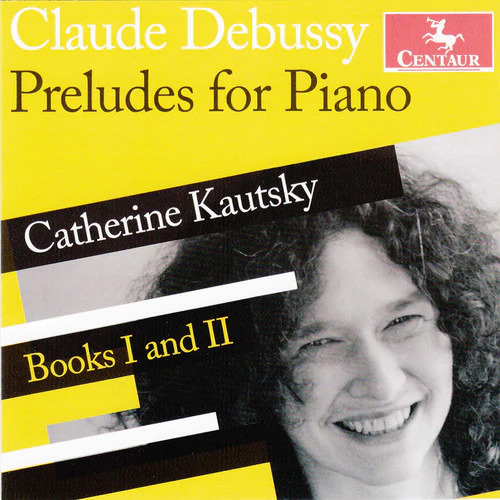
Debussy: Preludes For Piano, Books 1 & 2 / Catherine Kautsky
Catherine Kautsky is professor of music and chair of keyboard studies at Lawrence University in Appleton, Wisconsin, and boasts an enviable multi-faceted resume of performing and writing credits. Nearly everything about her recording of Debussy’s 24 Preludes is just right, from the relaxed animation and subtle gradations of tone throughout Danseuses de Delphes to Feux d’artifice’s combination of neo-Lisztian bravura and dry wit. The flickering quality of Voiles’ double notes somehow lightens the static whole-note-scale harmony.
Kautsky ‘s intimately scaled reading of Les sons et les parfums tournent dans l’air du soir brings out the music’s implicit minuet feeling that we don’t hear in heavier interpretations. In Des pas sur la neige, Kautsky not only makes the soft left-hand triplets and expressive right-hand melody timbrally distinct, but her faster than usual tempo also conveys a lighter, more floating ambience than today’s solemn, bleaker norm. Kautsky also communicates the ragged dance qualities of La serenade interrompue, La danse de Puck, Minstrels, and General Lavine–eccentric to perfection, although La puerta del vino moves too fast and impatiently for its habañera rhythms to seduce.
While many pianists make mush out of Brouillards’ middle-register chords, Kautsky clarifies their inner rhythms, although her very capable handling of Book 2 No. 10’s alternating thirds yields to Steven Osborne’s brisker, more shimmering rendition. Her lovely account of La cathedral engloutie observes the unmarked yet implied tempo changes Debussy made in his 1913 Welte-Mignon piano roll recording (as do Osborne and Paul Jacobs, but not, interestingly enough, Arturo Benedetti Michelangeli). If the tumultuous Ce qu’a vu le vent d’ouest lacks Osborne’s super-precise dynamic calibration and surface sheen, the sensitively nuanced Ondine and La terrasse des audiences du clair de lune compensate. The engineering’s warm piano sonority and discreet resonance befits Kautsky’s intelligent and insightful Debussy artistry.
-- Jed Distler, ClassicsToday.com
Kautsky ‘s intimately scaled reading of Les sons et les parfums tournent dans l’air du soir brings out the music’s implicit minuet feeling that we don’t hear in heavier interpretations. In Des pas sur la neige, Kautsky not only makes the soft left-hand triplets and expressive right-hand melody timbrally distinct, but her faster than usual tempo also conveys a lighter, more floating ambience than today’s solemn, bleaker norm. Kautsky also communicates the ragged dance qualities of La serenade interrompue, La danse de Puck, Minstrels, and General Lavine–eccentric to perfection, although La puerta del vino moves too fast and impatiently for its habañera rhythms to seduce.
While many pianists make mush out of Brouillards’ middle-register chords, Kautsky clarifies their inner rhythms, although her very capable handling of Book 2 No. 10’s alternating thirds yields to Steven Osborne’s brisker, more shimmering rendition. Her lovely account of La cathedral engloutie observes the unmarked yet implied tempo changes Debussy made in his 1913 Welte-Mignon piano roll recording (as do Osborne and Paul Jacobs, but not, interestingly enough, Arturo Benedetti Michelangeli). If the tumultuous Ce qu’a vu le vent d’ouest lacks Osborne’s super-precise dynamic calibration and surface sheen, the sensitively nuanced Ondine and La terrasse des audiences du clair de lune compensate. The engineering’s warm piano sonority and discreet resonance befits Kautsky’s intelligent and insightful Debussy artistry.
-- Jed Distler, ClassicsToday.com
Catherine Kautsky is professor of music and chair of keyboard studies at Lawrence University in Appleton, Wisconsin, and boasts an enviable multi-faceted resume of performing and writing credits. Nearly everything about her recording of Debussy’s 24 Preludes is just right, from the relaxed animation and subtle gradations of tone throughout Danseuses de Delphes to Feux d’artifice’s combination of neo-Lisztian bravura and dry wit. The flickering quality of Voiles’ double notes somehow lightens the static whole-note-scale harmony.
Kautsky ‘s intimately scaled reading of Les sons et les parfums tournent dans l’air du soir brings out the music’s implicit minuet feeling that we don’t hear in heavier interpretations. In Des pas sur la neige, Kautsky not only makes the soft left-hand triplets and expressive right-hand melody timbrally distinct, but her faster than usual tempo also conveys a lighter, more floating ambience than today’s solemn, bleaker norm. Kautsky also communicates the ragged dance qualities of La serenade interrompue, La danse de Puck, Minstrels, and General Lavine–eccentric to perfection, although La puerta del vino moves too fast and impatiently for its habañera rhythms to seduce.
While many pianists make mush out of Brouillards’ middle-register chords, Kautsky clarifies their inner rhythms, although her very capable handling of Book 2 No. 10’s alternating thirds yields to Steven Osborne’s brisker, more shimmering rendition. Her lovely account of La cathedral engloutie observes the unmarked yet implied tempo changes Debussy made in his 1913 Welte-Mignon piano roll recording (as do Osborne and Paul Jacobs, but not, interestingly enough, Arturo Benedetti Michelangeli). If the tumultuous Ce qu’a vu le vent d’ouest lacks Osborne’s super-precise dynamic calibration and surface sheen, the sensitively nuanced Ondine and La terrasse des audiences du clair de lune compensate. The engineering’s warm piano sonority and discreet resonance befits Kautsky’s intelligent and insightful Debussy artistry.
-- Jed Distler, ClassicsToday.com
Kautsky ‘s intimately scaled reading of Les sons et les parfums tournent dans l’air du soir brings out the music’s implicit minuet feeling that we don’t hear in heavier interpretations. In Des pas sur la neige, Kautsky not only makes the soft left-hand triplets and expressive right-hand melody timbrally distinct, but her faster than usual tempo also conveys a lighter, more floating ambience than today’s solemn, bleaker norm. Kautsky also communicates the ragged dance qualities of La serenade interrompue, La danse de Puck, Minstrels, and General Lavine–eccentric to perfection, although La puerta del vino moves too fast and impatiently for its habañera rhythms to seduce.
While many pianists make mush out of Brouillards’ middle-register chords, Kautsky clarifies their inner rhythms, although her very capable handling of Book 2 No. 10’s alternating thirds yields to Steven Osborne’s brisker, more shimmering rendition. Her lovely account of La cathedral engloutie observes the unmarked yet implied tempo changes Debussy made in his 1913 Welte-Mignon piano roll recording (as do Osborne and Paul Jacobs, but not, interestingly enough, Arturo Benedetti Michelangeli). If the tumultuous Ce qu’a vu le vent d’ouest lacks Osborne’s super-precise dynamic calibration and surface sheen, the sensitively nuanced Ondine and La terrasse des audiences du clair de lune compensate. The engineering’s warm piano sonority and discreet resonance befits Kautsky’s intelligent and insightful Debussy artistry.
-- Jed Distler, ClassicsToday.com
$18.99
Debussy: Preludes For Piano, Books 1 & 2 / Catherine Kautsky—
$18.99
Description
Catherine Kautsky is professor of music and chair of keyboard studies at Lawrence University in Appleton, Wisconsin, and boasts an enviable multi-faceted resume of performing and writing credits. Nearly everything about her recording of Debussy’s 24 Preludes is just right, from the relaxed animation and subtle gradations of tone throughout Danseuses de Delphes to Feux d’artifice’s combination of neo-Lisztian bravura and dry wit. The flickering quality of Voiles’ double notes somehow lightens the static whole-note-scale harmony.
Kautsky ‘s intimately scaled reading of Les sons et les parfums tournent dans l’air du soir brings out the music’s implicit minuet feeling that we don’t hear in heavier interpretations. In Des pas sur la neige, Kautsky not only makes the soft left-hand triplets and expressive right-hand melody timbrally distinct, but her faster than usual tempo also conveys a lighter, more floating ambience than today’s solemn, bleaker norm. Kautsky also communicates the ragged dance qualities of La serenade interrompue, La danse de Puck, Minstrels, and General Lavine–eccentric to perfection, although La puerta del vino moves too fast and impatiently for its habañera rhythms to seduce.
While many pianists make mush out of Brouillards’ middle-register chords, Kautsky clarifies their inner rhythms, although her very capable handling of Book 2 No. 10’s alternating thirds yields to Steven Osborne’s brisker, more shimmering rendition. Her lovely account of La cathedral engloutie observes the unmarked yet implied tempo changes Debussy made in his 1913 Welte-Mignon piano roll recording (as do Osborne and Paul Jacobs, but not, interestingly enough, Arturo Benedetti Michelangeli). If the tumultuous Ce qu’a vu le vent d’ouest lacks Osborne’s super-precise dynamic calibration and surface sheen, the sensitively nuanced Ondine and La terrasse des audiences du clair de lune compensate. The engineering’s warm piano sonority and discreet resonance befits Kautsky’s intelligent and insightful Debussy artistry.
-- Jed Distler, ClassicsToday.com
Kautsky ‘s intimately scaled reading of Les sons et les parfums tournent dans l’air du soir brings out the music’s implicit minuet feeling that we don’t hear in heavier interpretations. In Des pas sur la neige, Kautsky not only makes the soft left-hand triplets and expressive right-hand melody timbrally distinct, but her faster than usual tempo also conveys a lighter, more floating ambience than today’s solemn, bleaker norm. Kautsky also communicates the ragged dance qualities of La serenade interrompue, La danse de Puck, Minstrels, and General Lavine–eccentric to perfection, although La puerta del vino moves too fast and impatiently for its habañera rhythms to seduce.
While many pianists make mush out of Brouillards’ middle-register chords, Kautsky clarifies their inner rhythms, although her very capable handling of Book 2 No. 10’s alternating thirds yields to Steven Osborne’s brisker, more shimmering rendition. Her lovely account of La cathedral engloutie observes the unmarked yet implied tempo changes Debussy made in his 1913 Welte-Mignon piano roll recording (as do Osborne and Paul Jacobs, but not, interestingly enough, Arturo Benedetti Michelangeli). If the tumultuous Ce qu’a vu le vent d’ouest lacks Osborne’s super-precise dynamic calibration and surface sheen, the sensitively nuanced Ondine and La terrasse des audiences du clair de lune compensate. The engineering’s warm piano sonority and discreet resonance befits Kautsky’s intelligent and insightful Debussy artistry.
-- Jed Distler, ClassicsToday.com