🎉 Up to 70% Off Selected ItemsShop Sale

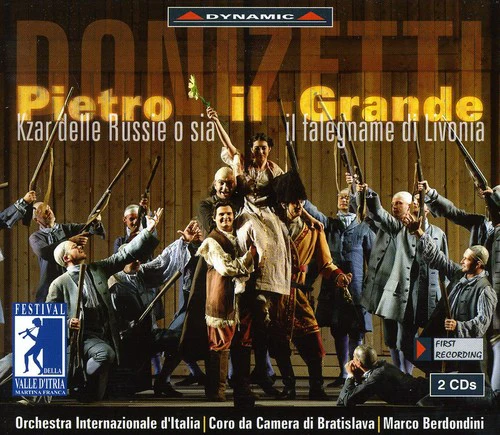
Donizetti: Pietro Il Grande / Berdondini, Priante, Et Al
After Il Fortunato inganno and La Zingara, the Martina Franca Festival has revived another neglected masterpiece by Donizetti, Pietro il Grande o sia il Falegname di Livonia. First staged in Venice in 1819, this work met with good success and was performed until 1827. The silence that followed is justifiable only on account of the enormous success reaped by works such as Elisir d’amore, Don Pasquale and Lucia di Lammermoor, for in Pietro il Grande there is no lack of inspiration and Donizetti’s creativity is, quite the opposite, generous and surprising.
Italian/English libretto included.
R E V I E W S:
" Pietro il Grande ossia Il falegname di Livonia was premiered to open the 1819-20 Carnival season at the Teatro San Samuele in Venice, a city that saw the birth of many of the light operas of the decade, including quite a few by Rossini. The premiere took place on Dec. 26, 1819. It was the fourth of Donizetti’s operas to be performed during his life, and the first of Donizetti’s to achieve any kind of performance history...
When I was first asked to review this recording, I expected a very Rossinian opera buffo. It is, to a large extent, but I was still able to see tiny glimpses of Donizetti’s own personality come shining through. An example is the lyric pathos of Annetta’s “veder l’amato bene” in the finale to Act I. There are other lovely numbers, including the duet for Pietro and the Magistrate: “Ser Decuppia siete voi”, definitely a forerunner of the delightful “Cheti, cheti” in Don Pasquale and Carlo’s aria “Il dolce nome e tenero”....
Martina Franca often uses unfamiliar, but talented young singers, as is the case here. I particularly enjoyed the Madame Fritz of Rosa Anna Peraino, the Pietro of Vito Priante and the intentionally obnoxious Magistrate of Giulio Mastrototaro. But the entire cast contributes to the success of the performance...
This is a recording I can recommend not only to Donizetti completists, but to all who appreciate Italian opera."
- Tom Kaufman, Opera Today
Italian/English libretto included.
R E V I E W S:
" Pietro il Grande ossia Il falegname di Livonia was premiered to open the 1819-20 Carnival season at the Teatro San Samuele in Venice, a city that saw the birth of many of the light operas of the decade, including quite a few by Rossini. The premiere took place on Dec. 26, 1819. It was the fourth of Donizetti’s operas to be performed during his life, and the first of Donizetti’s to achieve any kind of performance history...
When I was first asked to review this recording, I expected a very Rossinian opera buffo. It is, to a large extent, but I was still able to see tiny glimpses of Donizetti’s own personality come shining through. An example is the lyric pathos of Annetta’s “veder l’amato bene” in the finale to Act I. There are other lovely numbers, including the duet for Pietro and the Magistrate: “Ser Decuppia siete voi”, definitely a forerunner of the delightful “Cheti, cheti” in Don Pasquale and Carlo’s aria “Il dolce nome e tenero”....
Martina Franca often uses unfamiliar, but talented young singers, as is the case here. I particularly enjoyed the Madame Fritz of Rosa Anna Peraino, the Pietro of Vito Priante and the intentionally obnoxious Magistrate of Giulio Mastrototaro. But the entire cast contributes to the success of the performance...
This is a recording I can recommend not only to Donizetti completists, but to all who appreciate Italian opera."
- Tom Kaufman, Opera Today
After Il Fortunato inganno and La Zingara, the Martina Franca Festival has revived another neglected masterpiece by Donizetti, Pietro il Grande o sia il Falegname di Livonia. First staged in Venice in 1819, this work met with good success and was performed until 1827. The silence that followed is justifiable only on account of the enormous success reaped by works such as Elisir d’amore, Don Pasquale and Lucia di Lammermoor, for in Pietro il Grande there is no lack of inspiration and Donizetti’s creativity is, quite the opposite, generous and surprising.
Italian/English libretto included.
R E V I E W S:
" Pietro il Grande ossia Il falegname di Livonia was premiered to open the 1819-20 Carnival season at the Teatro San Samuele in Venice, a city that saw the birth of many of the light operas of the decade, including quite a few by Rossini. The premiere took place on Dec. 26, 1819. It was the fourth of Donizetti’s operas to be performed during his life, and the first of Donizetti’s to achieve any kind of performance history...
When I was first asked to review this recording, I expected a very Rossinian opera buffo. It is, to a large extent, but I was still able to see tiny glimpses of Donizetti’s own personality come shining through. An example is the lyric pathos of Annetta’s “veder l’amato bene” in the finale to Act I. There are other lovely numbers, including the duet for Pietro and the Magistrate: “Ser Decuppia siete voi”, definitely a forerunner of the delightful “Cheti, cheti” in Don Pasquale and Carlo’s aria “Il dolce nome e tenero”....
Martina Franca often uses unfamiliar, but talented young singers, as is the case here. I particularly enjoyed the Madame Fritz of Rosa Anna Peraino, the Pietro of Vito Priante and the intentionally obnoxious Magistrate of Giulio Mastrototaro. But the entire cast contributes to the success of the performance...
This is a recording I can recommend not only to Donizetti completists, but to all who appreciate Italian opera."
- Tom Kaufman, Opera Today
Italian/English libretto included.
R E V I E W S:
" Pietro il Grande ossia Il falegname di Livonia was premiered to open the 1819-20 Carnival season at the Teatro San Samuele in Venice, a city that saw the birth of many of the light operas of the decade, including quite a few by Rossini. The premiere took place on Dec. 26, 1819. It was the fourth of Donizetti’s operas to be performed during his life, and the first of Donizetti’s to achieve any kind of performance history...
When I was first asked to review this recording, I expected a very Rossinian opera buffo. It is, to a large extent, but I was still able to see tiny glimpses of Donizetti’s own personality come shining through. An example is the lyric pathos of Annetta’s “veder l’amato bene” in the finale to Act I. There are other lovely numbers, including the duet for Pietro and the Magistrate: “Ser Decuppia siete voi”, definitely a forerunner of the delightful “Cheti, cheti” in Don Pasquale and Carlo’s aria “Il dolce nome e tenero”....
Martina Franca often uses unfamiliar, but talented young singers, as is the case here. I particularly enjoyed the Madame Fritz of Rosa Anna Peraino, the Pietro of Vito Priante and the intentionally obnoxious Magistrate of Giulio Mastrototaro. But the entire cast contributes to the success of the performance...
This is a recording I can recommend not only to Donizetti completists, but to all who appreciate Italian opera."
- Tom Kaufman, Opera Today
$24.99
Donizetti: Pietro Il Grande / Berdondini, Priante, Et Al—
$24.99
Description
After Il Fortunato inganno and La Zingara, the Martina Franca Festival has revived another neglected masterpiece by Donizetti, Pietro il Grande o sia il Falegname di Livonia. First staged in Venice in 1819, this work met with good success and was performed until 1827. The silence that followed is justifiable only on account of the enormous success reaped by works such as Elisir d’amore, Don Pasquale and Lucia di Lammermoor, for in Pietro il Grande there is no lack of inspiration and Donizetti’s creativity is, quite the opposite, generous and surprising.
Italian/English libretto included.
R E V I E W S:
" Pietro il Grande ossia Il falegname di Livonia was premiered to open the 1819-20 Carnival season at the Teatro San Samuele in Venice, a city that saw the birth of many of the light operas of the decade, including quite a few by Rossini. The premiere took place on Dec. 26, 1819. It was the fourth of Donizetti’s operas to be performed during his life, and the first of Donizetti’s to achieve any kind of performance history...
When I was first asked to review this recording, I expected a very Rossinian opera buffo. It is, to a large extent, but I was still able to see tiny glimpses of Donizetti’s own personality come shining through. An example is the lyric pathos of Annetta’s “veder l’amato bene” in the finale to Act I. There are other lovely numbers, including the duet for Pietro and the Magistrate: “Ser Decuppia siete voi”, definitely a forerunner of the delightful “Cheti, cheti” in Don Pasquale and Carlo’s aria “Il dolce nome e tenero”....
Martina Franca often uses unfamiliar, but talented young singers, as is the case here. I particularly enjoyed the Madame Fritz of Rosa Anna Peraino, the Pietro of Vito Priante and the intentionally obnoxious Magistrate of Giulio Mastrototaro. But the entire cast contributes to the success of the performance...
This is a recording I can recommend not only to Donizetti completists, but to all who appreciate Italian opera."
- Tom Kaufman, Opera Today
Italian/English libretto included.
R E V I E W S:
" Pietro il Grande ossia Il falegname di Livonia was premiered to open the 1819-20 Carnival season at the Teatro San Samuele in Venice, a city that saw the birth of many of the light operas of the decade, including quite a few by Rossini. The premiere took place on Dec. 26, 1819. It was the fourth of Donizetti’s operas to be performed during his life, and the first of Donizetti’s to achieve any kind of performance history...
When I was first asked to review this recording, I expected a very Rossinian opera buffo. It is, to a large extent, but I was still able to see tiny glimpses of Donizetti’s own personality come shining through. An example is the lyric pathos of Annetta’s “veder l’amato bene” in the finale to Act I. There are other lovely numbers, including the duet for Pietro and the Magistrate: “Ser Decuppia siete voi”, definitely a forerunner of the delightful “Cheti, cheti” in Don Pasquale and Carlo’s aria “Il dolce nome e tenero”....
Martina Franca often uses unfamiliar, but talented young singers, as is the case here. I particularly enjoyed the Madame Fritz of Rosa Anna Peraino, the Pietro of Vito Priante and the intentionally obnoxious Magistrate of Giulio Mastrototaro. But the entire cast contributes to the success of the performance...
This is a recording I can recommend not only to Donizetti completists, but to all who appreciate Italian opera."
- Tom Kaufman, Opera Today






















