🎉 Up to 70% Off Selected ItemsShop Sale

Dukas: Symphony in C, Sorcerer's Apprentice... / Tingaud
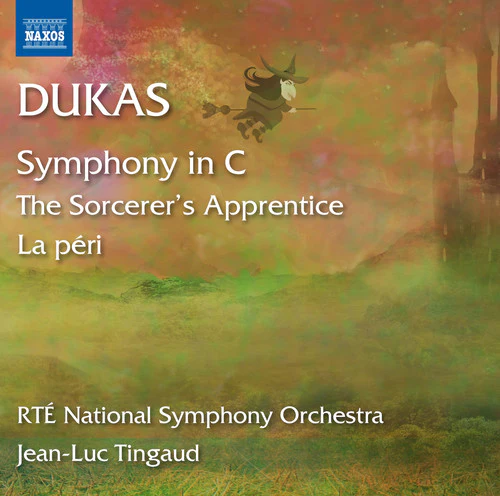
Dukas’ three major orchestral works make a logical and satisfying single program, and they are very well performed and recorded on this fine new disc from Naxos. There’s no guarantee, of course, that a French conductor will do especially well in French music, and no doubt Jean-Luc Tingaud does not wish to be pigeon-holed or limited only to the music of his countrymen, but he does play all three pieces with a certain idiomatic flair that’s both quite memorable and often excitingly fresh.
The Sorcerer’s Apprentice, which opens the program, receives a swift and brilliant reading, but also one notable for its naturalness and unforced musicality. Right from the start, in the slow introduction, you will register the way that Tingaud and the RTÉ wind players skillfully build long phrases from Dukas’ melodic fragments, and ensure that the tension never sags. The climaxes also are perfectly judged. La péri, with its opening fanfare brilliantly played, never lapses into the sort of droopy languor that tempts other artists into overindulgence: the music has both rhythm and impetus as well as lusciousness.
This reading of the Symphony in C major may be the most impressive performance of all. The opening movement is really gripping, and the long coda, which can sound like an artificial appendage, builds in energy right through to the final bars. Kudos to the orchestra for keeping up with some pretty hard-driving conducting here. The central Andante also is beautifully shaped and truly “espressivo”, but with no dead spots, while the lively finale offers a very satisfying conclusion. Although there is no shortage of available recordings of these works, or even discs that present them together, this one is as good as any, and better than most. Give it a shot.
-- David Hurwitz, ClassicsToday.com
The Sorcerer’s Apprentice, which opens the program, receives a swift and brilliant reading, but also one notable for its naturalness and unforced musicality. Right from the start, in the slow introduction, you will register the way that Tingaud and the RTÉ wind players skillfully build long phrases from Dukas’ melodic fragments, and ensure that the tension never sags. The climaxes also are perfectly judged. La péri, with its opening fanfare brilliantly played, never lapses into the sort of droopy languor that tempts other artists into overindulgence: the music has both rhythm and impetus as well as lusciousness.
This reading of the Symphony in C major may be the most impressive performance of all. The opening movement is really gripping, and the long coda, which can sound like an artificial appendage, builds in energy right through to the final bars. Kudos to the orchestra for keeping up with some pretty hard-driving conducting here. The central Andante also is beautifully shaped and truly “espressivo”, but with no dead spots, while the lively finale offers a very satisfying conclusion. Although there is no shortage of available recordings of these works, or even discs that present them together, this one is as good as any, and better than most. Give it a shot.
-- David Hurwitz, ClassicsToday.com
Dukas’ three major orchestral works make a logical and satisfying single program, and they are very well performed and recorded on this fine new disc from Naxos. There’s no guarantee, of course, that a French conductor will do especially well in French music, and no doubt Jean-Luc Tingaud does not wish to be pigeon-holed or limited only to the music of his countrymen, but he does play all three pieces with a certain idiomatic flair that’s both quite memorable and often excitingly fresh.
The Sorcerer’s Apprentice, which opens the program, receives a swift and brilliant reading, but also one notable for its naturalness and unforced musicality. Right from the start, in the slow introduction, you will register the way that Tingaud and the RTÉ wind players skillfully build long phrases from Dukas’ melodic fragments, and ensure that the tension never sags. The climaxes also are perfectly judged. La péri, with its opening fanfare brilliantly played, never lapses into the sort of droopy languor that tempts other artists into overindulgence: the music has both rhythm and impetus as well as lusciousness.
This reading of the Symphony in C major may be the most impressive performance of all. The opening movement is really gripping, and the long coda, which can sound like an artificial appendage, builds in energy right through to the final bars. Kudos to the orchestra for keeping up with some pretty hard-driving conducting here. The central Andante also is beautifully shaped and truly “espressivo”, but with no dead spots, while the lively finale offers a very satisfying conclusion. Although there is no shortage of available recordings of these works, or even discs that present them together, this one is as good as any, and better than most. Give it a shot.
-- David Hurwitz, ClassicsToday.com
The Sorcerer’s Apprentice, which opens the program, receives a swift and brilliant reading, but also one notable for its naturalness and unforced musicality. Right from the start, in the slow introduction, you will register the way that Tingaud and the RTÉ wind players skillfully build long phrases from Dukas’ melodic fragments, and ensure that the tension never sags. The climaxes also are perfectly judged. La péri, with its opening fanfare brilliantly played, never lapses into the sort of droopy languor that tempts other artists into overindulgence: the music has both rhythm and impetus as well as lusciousness.
This reading of the Symphony in C major may be the most impressive performance of all. The opening movement is really gripping, and the long coda, which can sound like an artificial appendage, builds in energy right through to the final bars. Kudos to the orchestra for keeping up with some pretty hard-driving conducting here. The central Andante also is beautifully shaped and truly “espressivo”, but with no dead spots, while the lively finale offers a very satisfying conclusion. Although there is no shortage of available recordings of these works, or even discs that present them together, this one is as good as any, and better than most. Give it a shot.
-- David Hurwitz, ClassicsToday.com
$4.90
Original: $13.99
-65%Dukas: Symphony in C, Sorcerer's Apprentice... / Tingaud—
$13.99
$4.90Description
Dukas’ three major orchestral works make a logical and satisfying single program, and they are very well performed and recorded on this fine new disc from Naxos. There’s no guarantee, of course, that a French conductor will do especially well in French music, and no doubt Jean-Luc Tingaud does not wish to be pigeon-holed or limited only to the music of his countrymen, but he does play all three pieces with a certain idiomatic flair that’s both quite memorable and often excitingly fresh.
The Sorcerer’s Apprentice, which opens the program, receives a swift and brilliant reading, but also one notable for its naturalness and unforced musicality. Right from the start, in the slow introduction, you will register the way that Tingaud and the RTÉ wind players skillfully build long phrases from Dukas’ melodic fragments, and ensure that the tension never sags. The climaxes also are perfectly judged. La péri, with its opening fanfare brilliantly played, never lapses into the sort of droopy languor that tempts other artists into overindulgence: the music has both rhythm and impetus as well as lusciousness.
This reading of the Symphony in C major may be the most impressive performance of all. The opening movement is really gripping, and the long coda, which can sound like an artificial appendage, builds in energy right through to the final bars. Kudos to the orchestra for keeping up with some pretty hard-driving conducting here. The central Andante also is beautifully shaped and truly “espressivo”, but with no dead spots, while the lively finale offers a very satisfying conclusion. Although there is no shortage of available recordings of these works, or even discs that present them together, this one is as good as any, and better than most. Give it a shot.
-- David Hurwitz, ClassicsToday.com
The Sorcerer’s Apprentice, which opens the program, receives a swift and brilliant reading, but also one notable for its naturalness and unforced musicality. Right from the start, in the slow introduction, you will register the way that Tingaud and the RTÉ wind players skillfully build long phrases from Dukas’ melodic fragments, and ensure that the tension never sags. The climaxes also are perfectly judged. La péri, with its opening fanfare brilliantly played, never lapses into the sort of droopy languor that tempts other artists into overindulgence: the music has both rhythm and impetus as well as lusciousness.
This reading of the Symphony in C major may be the most impressive performance of all. The opening movement is really gripping, and the long coda, which can sound like an artificial appendage, builds in energy right through to the final bars. Kudos to the orchestra for keeping up with some pretty hard-driving conducting here. The central Andante also is beautifully shaped and truly “espressivo”, but with no dead spots, while the lively finale offers a very satisfying conclusion. Although there is no shortage of available recordings of these works, or even discs that present them together, this one is as good as any, and better than most. Give it a shot.
-- David Hurwitz, ClassicsToday.com