🎉 Up to 70% Off Selected ItemsShop Sale

1 / 2
Dvorák: Stabat Mater (original 1876 version)
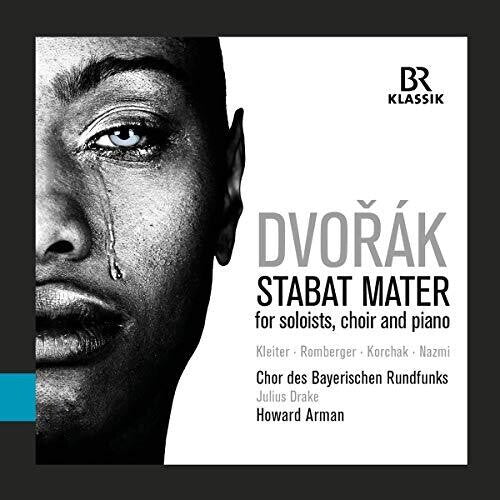
The "Stabat mater" by the Bohemian composer Antonin Dvor�k, well-known in it's later orchestral version, was initially composed with piano accompaniment. This rarely-heard original version has now been recorded for BR-KLASSIK, featuring the excellent Bavarian Radio Chorus under the direction of Howard Arman, and accompanied by Julius Drake on the piano. The young Dvor�k was a well-studied and experienced church musician. Having graduated from the organ school in Prague, he spent three pious years as an organist in the city's St. Adalbert's Church. The search for a "truly sacred music" preoccupied him from the very start. The contemporary Caecilian Movement for church music reform led him, like many of his colleagues, to re-examine the Palestrina style, which represented a return to the more modest, less ostentatious and yet at the same time contrapuntally ingenious church music of a previous epoch. He duly composed a "Stabat mater" without orchestral splendour and with a simple piano accompaniment. Shortly before Dvor�k wrote down this first version of his "Stabat mater" between February 19 and May 7, 1876, a heavy blow had struck the young family. On December 19, 1875, his daughter Josefa died two days after she was born. Dvor�k did not set all the verses of the hymn to music, and chose an ensemble of four soloists, a choir and a piano. This original version from the spring of 1876, with it's seven-movement structure, is not a fragment, draft or piano reduction but an independent and self-contained work in it's own right. In the autumn of 1877, when he composed the missing four verses and scored his "Stabat mater" for a large orchestra, he effectively created a new and different work.
The "Stabat mater" by the Bohemian composer Antonin Dvor�k, well-known in it's later orchestral version, was initially composed with piano accompaniment. This rarely-heard original version has now been recorded for BR-KLASSIK, featuring the excellent Bavarian Radio Chorus under the direction of Howard Arman, and accompanied by Julius Drake on the piano. The young Dvor�k was a well-studied and experienced church musician. Having graduated from the organ school in Prague, he spent three pious years as an organist in the city's St. Adalbert's Church. The search for a "truly sacred music" preoccupied him from the very start. The contemporary Caecilian Movement for church music reform led him, like many of his colleagues, to re-examine the Palestrina style, which represented a return to the more modest, less ostentatious and yet at the same time contrapuntally ingenious church music of a previous epoch. He duly composed a "Stabat mater" without orchestral splendour and with a simple piano accompaniment. Shortly before Dvor�k wrote down this first version of his "Stabat mater" between February 19 and May 7, 1876, a heavy blow had struck the young family. On December 19, 1875, his daughter Josefa died two days after she was born. Dvor�k did not set all the verses of the hymn to music, and chose an ensemble of four soloists, a choir and a piano. This original version from the spring of 1876, with it's seven-movement structure, is not a fragment, draft or piano reduction but an independent and self-contained work in it's own right. In the autumn of 1877, when he composed the missing four verses and scored his "Stabat mater" for a large orchestra, he effectively created a new and different work.
$19.99
Dvorák: Stabat Mater (original 1876 version)—
$19.99
Description
The "Stabat mater" by the Bohemian composer Antonin Dvor�k, well-known in it's later orchestral version, was initially composed with piano accompaniment. This rarely-heard original version has now been recorded for BR-KLASSIK, featuring the excellent Bavarian Radio Chorus under the direction of Howard Arman, and accompanied by Julius Drake on the piano. The young Dvor�k was a well-studied and experienced church musician. Having graduated from the organ school in Prague, he spent three pious years as an organist in the city's St. Adalbert's Church. The search for a "truly sacred music" preoccupied him from the very start. The contemporary Caecilian Movement for church music reform led him, like many of his colleagues, to re-examine the Palestrina style, which represented a return to the more modest, less ostentatious and yet at the same time contrapuntally ingenious church music of a previous epoch. He duly composed a "Stabat mater" without orchestral splendour and with a simple piano accompaniment. Shortly before Dvor�k wrote down this first version of his "Stabat mater" between February 19 and May 7, 1876, a heavy blow had struck the young family. On December 19, 1875, his daughter Josefa died two days after she was born. Dvor�k did not set all the verses of the hymn to music, and chose an ensemble of four soloists, a choir and a piano. This original version from the spring of 1876, with it's seven-movement structure, is not a fragment, draft or piano reduction but an independent and self-contained work in it's own right. In the autumn of 1877, when he composed the missing four verses and scored his "Stabat mater" for a large orchestra, he effectively created a new and different work.