🎉 Up to 70% Off Selected ItemsShop Sale

1 / 2
Dvorak: Symphony No 9, Heldenlied / Nelsons
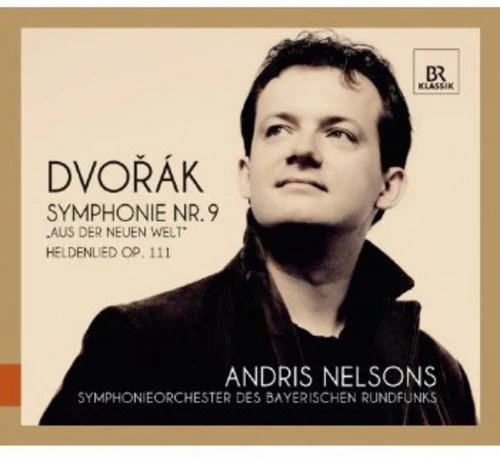
DVORÁK Symphony No. 9, “From the New World” 1. Heldenlied, Op. 111 2 • Andris Nelsons, cond; Bavarian RSO • BR 900116 (64:17) Live: Munich 1 12/2010; 2 4/2012
No jaded reaction here to just another decent but unneeded Dvorák Ninth. This may be the most spectacular “From the New World” recording to hit the listings in, well, forever. The first thing to love about it is the recording itself. It’s not an SACD, but it’s speaker-blowing and eardrum-popping dynamic, with timpani rolls that will shiver your timbers, and massed brass and string Fortissimo s that will rattle your windows. Elsewhere, there are velvet string murmurings and delicate flute fluttering so sweet as to arrest the singing of birds outside in the trees.
The second thing to love about this performance—if, like me, you believe the symphony is called “ From the New World” (as in a letter being sent home), and not “ The New World,” for a reason—is that Andris Nelsons doesn’t try to make it sound either American or Czech. Rather, he sees the score for what it is, a mainstream late-Romantic symphony in the Austro-German tradition, exactly contemporaneous with Tchaikovsky’s “Pathétique”—both were written in 1893—and among the last to be completed in the 19th century.
Nelsons’s way with the work is very refreshing; it avoids common performance clichés that have arisen around the piece, like sentimentalizing the Largo and italicizing the alleged Native American melodies. The net effect is a cleansing one, similar to the sometimes astonishing results we witness when the paintings of old Renaissance masters are cleaned and restored. Suddenly the colors are brighter and details are revealed that were long hidden. Similarly, Nelsons’s reading of Dvorák’s Ninth Symphony makes it sound fresh and “new” all over again.
If this magnificent performance and recording of the Ninth were not enough, Nelsons gives us Dvorák’s last and least often recorded tone poem, Heldenlied (Hero’s Song), composed in 1897. Though classified as a tone poem, it’s a tone poem with no specific literary program or narrative. Formally, it’s a symphony contained within a single movement, but having four distinct sections that correspond to the four standard movements of a classical symphony. The work was premiered by Gustav Mahler and the Vienna Philharmonic in 1898.
As stunning as the recording of the Ninth Symphony is, the recording of Heldenlied , taken from another live performance 16 months later, has even more palpable presence. It made my far from inexpensive B&W speakers sound like Transmission Audio’s $2-million Ultimate speaker system, not that I’ve actually ever heard one.
This is one helluva CD. I’m not on the jury, but if I were, I’d give it the orchestral disc-of-all-time award. For a great Dvorák Ninth and a spectacular sonic experience, this is a must-have purchase.
FANFARE: Jerry Dubins
No jaded reaction here to just another decent but unneeded Dvorák Ninth. This may be the most spectacular “From the New World” recording to hit the listings in, well, forever. The first thing to love about it is the recording itself. It’s not an SACD, but it’s speaker-blowing and eardrum-popping dynamic, with timpani rolls that will shiver your timbers, and massed brass and string Fortissimo s that will rattle your windows. Elsewhere, there are velvet string murmurings and delicate flute fluttering so sweet as to arrest the singing of birds outside in the trees.
The second thing to love about this performance—if, like me, you believe the symphony is called “ From the New World” (as in a letter being sent home), and not “ The New World,” for a reason—is that Andris Nelsons doesn’t try to make it sound either American or Czech. Rather, he sees the score for what it is, a mainstream late-Romantic symphony in the Austro-German tradition, exactly contemporaneous with Tchaikovsky’s “Pathétique”—both were written in 1893—and among the last to be completed in the 19th century.
Nelsons’s way with the work is very refreshing; it avoids common performance clichés that have arisen around the piece, like sentimentalizing the Largo and italicizing the alleged Native American melodies. The net effect is a cleansing one, similar to the sometimes astonishing results we witness when the paintings of old Renaissance masters are cleaned and restored. Suddenly the colors are brighter and details are revealed that were long hidden. Similarly, Nelsons’s reading of Dvorák’s Ninth Symphony makes it sound fresh and “new” all over again.
If this magnificent performance and recording of the Ninth were not enough, Nelsons gives us Dvorák’s last and least often recorded tone poem, Heldenlied (Hero’s Song), composed in 1897. Though classified as a tone poem, it’s a tone poem with no specific literary program or narrative. Formally, it’s a symphony contained within a single movement, but having four distinct sections that correspond to the four standard movements of a classical symphony. The work was premiered by Gustav Mahler and the Vienna Philharmonic in 1898.
As stunning as the recording of the Ninth Symphony is, the recording of Heldenlied , taken from another live performance 16 months later, has even more palpable presence. It made my far from inexpensive B&W speakers sound like Transmission Audio’s $2-million Ultimate speaker system, not that I’ve actually ever heard one.
This is one helluva CD. I’m not on the jury, but if I were, I’d give it the orchestral disc-of-all-time award. For a great Dvorák Ninth and a spectacular sonic experience, this is a must-have purchase.
FANFARE: Jerry Dubins
DVORÁK Symphony No. 9, “From the New World” 1. Heldenlied, Op. 111 2 • Andris Nelsons, cond; Bavarian RSO • BR 900116 (64:17) Live: Munich 1 12/2010; 2 4/2012
No jaded reaction here to just another decent but unneeded Dvorák Ninth. This may be the most spectacular “From the New World” recording to hit the listings in, well, forever. The first thing to love about it is the recording itself. It’s not an SACD, but it’s speaker-blowing and eardrum-popping dynamic, with timpani rolls that will shiver your timbers, and massed brass and string Fortissimo s that will rattle your windows. Elsewhere, there are velvet string murmurings and delicate flute fluttering so sweet as to arrest the singing of birds outside in the trees.
The second thing to love about this performance—if, like me, you believe the symphony is called “ From the New World” (as in a letter being sent home), and not “ The New World,” for a reason—is that Andris Nelsons doesn’t try to make it sound either American or Czech. Rather, he sees the score for what it is, a mainstream late-Romantic symphony in the Austro-German tradition, exactly contemporaneous with Tchaikovsky’s “Pathétique”—both were written in 1893—and among the last to be completed in the 19th century.
Nelsons’s way with the work is very refreshing; it avoids common performance clichés that have arisen around the piece, like sentimentalizing the Largo and italicizing the alleged Native American melodies. The net effect is a cleansing one, similar to the sometimes astonishing results we witness when the paintings of old Renaissance masters are cleaned and restored. Suddenly the colors are brighter and details are revealed that were long hidden. Similarly, Nelsons’s reading of Dvorák’s Ninth Symphony makes it sound fresh and “new” all over again.
If this magnificent performance and recording of the Ninth were not enough, Nelsons gives us Dvorák’s last and least often recorded tone poem, Heldenlied (Hero’s Song), composed in 1897. Though classified as a tone poem, it’s a tone poem with no specific literary program or narrative. Formally, it’s a symphony contained within a single movement, but having four distinct sections that correspond to the four standard movements of a classical symphony. The work was premiered by Gustav Mahler and the Vienna Philharmonic in 1898.
As stunning as the recording of the Ninth Symphony is, the recording of Heldenlied , taken from another live performance 16 months later, has even more palpable presence. It made my far from inexpensive B&W speakers sound like Transmission Audio’s $2-million Ultimate speaker system, not that I’ve actually ever heard one.
This is one helluva CD. I’m not on the jury, but if I were, I’d give it the orchestral disc-of-all-time award. For a great Dvorák Ninth and a spectacular sonic experience, this is a must-have purchase.
FANFARE: Jerry Dubins
No jaded reaction here to just another decent but unneeded Dvorák Ninth. This may be the most spectacular “From the New World” recording to hit the listings in, well, forever. The first thing to love about it is the recording itself. It’s not an SACD, but it’s speaker-blowing and eardrum-popping dynamic, with timpani rolls that will shiver your timbers, and massed brass and string Fortissimo s that will rattle your windows. Elsewhere, there are velvet string murmurings and delicate flute fluttering so sweet as to arrest the singing of birds outside in the trees.
The second thing to love about this performance—if, like me, you believe the symphony is called “ From the New World” (as in a letter being sent home), and not “ The New World,” for a reason—is that Andris Nelsons doesn’t try to make it sound either American or Czech. Rather, he sees the score for what it is, a mainstream late-Romantic symphony in the Austro-German tradition, exactly contemporaneous with Tchaikovsky’s “Pathétique”—both were written in 1893—and among the last to be completed in the 19th century.
Nelsons’s way with the work is very refreshing; it avoids common performance clichés that have arisen around the piece, like sentimentalizing the Largo and italicizing the alleged Native American melodies. The net effect is a cleansing one, similar to the sometimes astonishing results we witness when the paintings of old Renaissance masters are cleaned and restored. Suddenly the colors are brighter and details are revealed that were long hidden. Similarly, Nelsons’s reading of Dvorák’s Ninth Symphony makes it sound fresh and “new” all over again.
If this magnificent performance and recording of the Ninth were not enough, Nelsons gives us Dvorák’s last and least often recorded tone poem, Heldenlied (Hero’s Song), composed in 1897. Though classified as a tone poem, it’s a tone poem with no specific literary program or narrative. Formally, it’s a symphony contained within a single movement, but having four distinct sections that correspond to the four standard movements of a classical symphony. The work was premiered by Gustav Mahler and the Vienna Philharmonic in 1898.
As stunning as the recording of the Ninth Symphony is, the recording of Heldenlied , taken from another live performance 16 months later, has even more palpable presence. It made my far from inexpensive B&W speakers sound like Transmission Audio’s $2-million Ultimate speaker system, not that I’ve actually ever heard one.
This is one helluva CD. I’m not on the jury, but if I were, I’d give it the orchestral disc-of-all-time award. For a great Dvorák Ninth and a spectacular sonic experience, this is a must-have purchase.
FANFARE: Jerry Dubins
$7.00
Original: $19.99
-65%Dvorak: Symphony No 9, Heldenlied / Nelsons—
$19.99
$7.00Description
DVORÁK Symphony No. 9, “From the New World” 1. Heldenlied, Op. 111 2 • Andris Nelsons, cond; Bavarian RSO • BR 900116 (64:17) Live: Munich 1 12/2010; 2 4/2012
No jaded reaction here to just another decent but unneeded Dvorák Ninth. This may be the most spectacular “From the New World” recording to hit the listings in, well, forever. The first thing to love about it is the recording itself. It’s not an SACD, but it’s speaker-blowing and eardrum-popping dynamic, with timpani rolls that will shiver your timbers, and massed brass and string Fortissimo s that will rattle your windows. Elsewhere, there are velvet string murmurings and delicate flute fluttering so sweet as to arrest the singing of birds outside in the trees.
The second thing to love about this performance—if, like me, you believe the symphony is called “ From the New World” (as in a letter being sent home), and not “ The New World,” for a reason—is that Andris Nelsons doesn’t try to make it sound either American or Czech. Rather, he sees the score for what it is, a mainstream late-Romantic symphony in the Austro-German tradition, exactly contemporaneous with Tchaikovsky’s “Pathétique”—both were written in 1893—and among the last to be completed in the 19th century.
Nelsons’s way with the work is very refreshing; it avoids common performance clichés that have arisen around the piece, like sentimentalizing the Largo and italicizing the alleged Native American melodies. The net effect is a cleansing one, similar to the sometimes astonishing results we witness when the paintings of old Renaissance masters are cleaned and restored. Suddenly the colors are brighter and details are revealed that were long hidden. Similarly, Nelsons’s reading of Dvorák’s Ninth Symphony makes it sound fresh and “new” all over again.
If this magnificent performance and recording of the Ninth were not enough, Nelsons gives us Dvorák’s last and least often recorded tone poem, Heldenlied (Hero’s Song), composed in 1897. Though classified as a tone poem, it’s a tone poem with no specific literary program or narrative. Formally, it’s a symphony contained within a single movement, but having four distinct sections that correspond to the four standard movements of a classical symphony. The work was premiered by Gustav Mahler and the Vienna Philharmonic in 1898.
As stunning as the recording of the Ninth Symphony is, the recording of Heldenlied , taken from another live performance 16 months later, has even more palpable presence. It made my far from inexpensive B&W speakers sound like Transmission Audio’s $2-million Ultimate speaker system, not that I’ve actually ever heard one.
This is one helluva CD. I’m not on the jury, but if I were, I’d give it the orchestral disc-of-all-time award. For a great Dvorák Ninth and a spectacular sonic experience, this is a must-have purchase.
FANFARE: Jerry Dubins
No jaded reaction here to just another decent but unneeded Dvorák Ninth. This may be the most spectacular “From the New World” recording to hit the listings in, well, forever. The first thing to love about it is the recording itself. It’s not an SACD, but it’s speaker-blowing and eardrum-popping dynamic, with timpani rolls that will shiver your timbers, and massed brass and string Fortissimo s that will rattle your windows. Elsewhere, there are velvet string murmurings and delicate flute fluttering so sweet as to arrest the singing of birds outside in the trees.
The second thing to love about this performance—if, like me, you believe the symphony is called “ From the New World” (as in a letter being sent home), and not “ The New World,” for a reason—is that Andris Nelsons doesn’t try to make it sound either American or Czech. Rather, he sees the score for what it is, a mainstream late-Romantic symphony in the Austro-German tradition, exactly contemporaneous with Tchaikovsky’s “Pathétique”—both were written in 1893—and among the last to be completed in the 19th century.
Nelsons’s way with the work is very refreshing; it avoids common performance clichés that have arisen around the piece, like sentimentalizing the Largo and italicizing the alleged Native American melodies. The net effect is a cleansing one, similar to the sometimes astonishing results we witness when the paintings of old Renaissance masters are cleaned and restored. Suddenly the colors are brighter and details are revealed that were long hidden. Similarly, Nelsons’s reading of Dvorák’s Ninth Symphony makes it sound fresh and “new” all over again.
If this magnificent performance and recording of the Ninth were not enough, Nelsons gives us Dvorák’s last and least often recorded tone poem, Heldenlied (Hero’s Song), composed in 1897. Though classified as a tone poem, it’s a tone poem with no specific literary program or narrative. Formally, it’s a symphony contained within a single movement, but having four distinct sections that correspond to the four standard movements of a classical symphony. The work was premiered by Gustav Mahler and the Vienna Philharmonic in 1898.
As stunning as the recording of the Ninth Symphony is, the recording of Heldenlied , taken from another live performance 16 months later, has even more palpable presence. It made my far from inexpensive B&W speakers sound like Transmission Audio’s $2-million Ultimate speaker system, not that I’ve actually ever heard one.
This is one helluva CD. I’m not on the jury, but if I were, I’d give it the orchestral disc-of-all-time award. For a great Dvorák Ninth and a spectacular sonic experience, this is a must-have purchase.
FANFARE: Jerry Dubins