🎉 Up to 70% Off Selected ItemsShop Sale

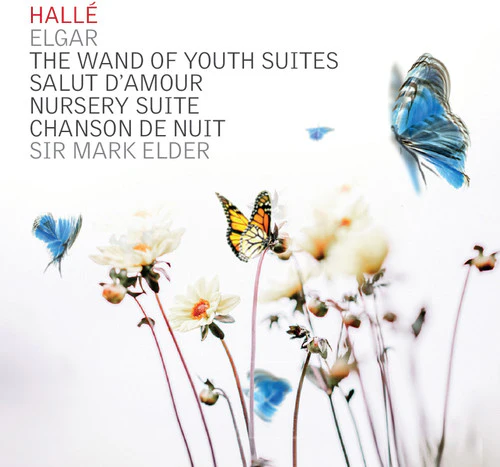
Elgar: Wand of Youth Suites Nos. 1 & 2, Nursery Suite, Etc / Elder, Halle
The sound is exemplary in clarity, warmth, and balance. None of this is “great” music but committed Elgarians will relish the delicacy and sensibility of Elder’s performance.
Miniatures though they be, the two Wand of Youth suites are not just “light” music, in that there is much here which is – charming, yes, but also emotionally deeply evocative and musically profound. Their quality has attracted recordings from celebrated conductors such as Boult, Handley, Mackerras, Bryden Thomas and van Beinum, to name but a few; now Mark Elder includes them in his series of Elgar works with the Hallé, which has hitherto garnered much critical acclaim – my own favourite recordings of the symphonies are Elder’s.
These works were based on material written by Elgar many years before as a teenager as accompaniment to a play, reworked by the composer as a man of fifty while simultaneously composing his First Symphony - so they presumably provided some relief from that arduous task. They are characteristically innocent and nostalgic, evoking an idealised fairyland free from adult taint; both were dedicated to friends, as was Elgar’s custom, most famously in the Enigma Variations.
The variety of orchestral colour and melodic invention mark these suites out as typical of the composer; the Overture of the first suite starts with a bustling motif played with great brio followed by a falling Seventh –a motif very recognisably Elgarian. A gentle “Serenade”, an elegant parody of a Handelian minuet, a shimmering, Mendelssohnian “Sun Dance” ending in a blaze of brass encompass so many of the tropes we know from the more famous works while also paying homage to Elgar’s predecessors; while the string passage is all Elgar, if the sinuous clarinet motif at the heart of the “Fairy Pipers” isn’t at least unconsciously inspired by Tchaikovsky’s “Arabian Dance” from the Nutcracker, I have no ears.
The pattern of great thematic and colourific variety continues into the second suite, although I do not find it quite as uniformly captivating as the first. Elgar introduces a glockenspiel into the “The Little Bells”, employs graceful arabesques to suggest the flow of water in “Fountain Dance” and creates two contrasting bear portraits, the first melancholy, `the second rumbustious; Elder and the Hallé successfully capture all these moods.
The Nursery Suite was Elgar’s final foray into mining his juvenilia: it is more, lovely, pastoral music, including an extended solo for flute in The Serious Doll, played with assured, liquid musicality by Katherine Baker. Likewise, Lyn Fletcher plays a fine violin solo in the final movement, Envoy (Coda). The Wagon (Passes) was encored at its premiere at the request of the Duke and Duchess of York (the future King George VI and Queen Elizabeth). Dreaming has one of those long, languorous melodies we know from the symphonies.
Bonus “lollipops” are provided in the form of the lush, orchestrated versions of Salut d’amour and Chanson de nuit, both so delightfully sentimental and redolent of the Edwardian drawing room, beautifully played.
The sound is exemplary in clarity, warmth, and balance. None of this is “great” music but committed Elgarians will relish the delicacy and sensibility of Elder’s performance.
– MusicWeb International (Ralph Moore)
Miniatures though they be, the two Wand of Youth suites are not just “light” music, in that there is much here which is – charming, yes, but also emotionally deeply evocative and musically profound. Their quality has attracted recordings from celebrated conductors such as Boult, Handley, Mackerras, Bryden Thomas and van Beinum, to name but a few; now Mark Elder includes them in his series of Elgar works with the Hallé, which has hitherto garnered much critical acclaim – my own favourite recordings of the symphonies are Elder’s.
These works were based on material written by Elgar many years before as a teenager as accompaniment to a play, reworked by the composer as a man of fifty while simultaneously composing his First Symphony - so they presumably provided some relief from that arduous task. They are characteristically innocent and nostalgic, evoking an idealised fairyland free from adult taint; both were dedicated to friends, as was Elgar’s custom, most famously in the Enigma Variations.
The variety of orchestral colour and melodic invention mark these suites out as typical of the composer; the Overture of the first suite starts with a bustling motif played with great brio followed by a falling Seventh –a motif very recognisably Elgarian. A gentle “Serenade”, an elegant parody of a Handelian minuet, a shimmering, Mendelssohnian “Sun Dance” ending in a blaze of brass encompass so many of the tropes we know from the more famous works while also paying homage to Elgar’s predecessors; while the string passage is all Elgar, if the sinuous clarinet motif at the heart of the “Fairy Pipers” isn’t at least unconsciously inspired by Tchaikovsky’s “Arabian Dance” from the Nutcracker, I have no ears.
The pattern of great thematic and colourific variety continues into the second suite, although I do not find it quite as uniformly captivating as the first. Elgar introduces a glockenspiel into the “The Little Bells”, employs graceful arabesques to suggest the flow of water in “Fountain Dance” and creates two contrasting bear portraits, the first melancholy, `the second rumbustious; Elder and the Hallé successfully capture all these moods.
The Nursery Suite was Elgar’s final foray into mining his juvenilia: it is more, lovely, pastoral music, including an extended solo for flute in The Serious Doll, played with assured, liquid musicality by Katherine Baker. Likewise, Lyn Fletcher plays a fine violin solo in the final movement, Envoy (Coda). The Wagon (Passes) was encored at its premiere at the request of the Duke and Duchess of York (the future King George VI and Queen Elizabeth). Dreaming has one of those long, languorous melodies we know from the symphonies.
Bonus “lollipops” are provided in the form of the lush, orchestrated versions of Salut d’amour and Chanson de nuit, both so delightfully sentimental and redolent of the Edwardian drawing room, beautifully played.
The sound is exemplary in clarity, warmth, and balance. None of this is “great” music but committed Elgarians will relish the delicacy and sensibility of Elder’s performance.
– MusicWeb International (Ralph Moore)
The sound is exemplary in clarity, warmth, and balance. None of this is “great” music but committed Elgarians will relish the delicacy and sensibility of Elder’s performance.
Miniatures though they be, the two Wand of Youth suites are not just “light” music, in that there is much here which is – charming, yes, but also emotionally deeply evocative and musically profound. Their quality has attracted recordings from celebrated conductors such as Boult, Handley, Mackerras, Bryden Thomas and van Beinum, to name but a few; now Mark Elder includes them in his series of Elgar works with the Hallé, which has hitherto garnered much critical acclaim – my own favourite recordings of the symphonies are Elder’s.
These works were based on material written by Elgar many years before as a teenager as accompaniment to a play, reworked by the composer as a man of fifty while simultaneously composing his First Symphony - so they presumably provided some relief from that arduous task. They are characteristically innocent and nostalgic, evoking an idealised fairyland free from adult taint; both were dedicated to friends, as was Elgar’s custom, most famously in the Enigma Variations.
The variety of orchestral colour and melodic invention mark these suites out as typical of the composer; the Overture of the first suite starts with a bustling motif played with great brio followed by a falling Seventh –a motif very recognisably Elgarian. A gentle “Serenade”, an elegant parody of a Handelian minuet, a shimmering, Mendelssohnian “Sun Dance” ending in a blaze of brass encompass so many of the tropes we know from the more famous works while also paying homage to Elgar’s predecessors; while the string passage is all Elgar, if the sinuous clarinet motif at the heart of the “Fairy Pipers” isn’t at least unconsciously inspired by Tchaikovsky’s “Arabian Dance” from the Nutcracker, I have no ears.
The pattern of great thematic and colourific variety continues into the second suite, although I do not find it quite as uniformly captivating as the first. Elgar introduces a glockenspiel into the “The Little Bells”, employs graceful arabesques to suggest the flow of water in “Fountain Dance” and creates two contrasting bear portraits, the first melancholy, `the second rumbustious; Elder and the Hallé successfully capture all these moods.
The Nursery Suite was Elgar’s final foray into mining his juvenilia: it is more, lovely, pastoral music, including an extended solo for flute in The Serious Doll, played with assured, liquid musicality by Katherine Baker. Likewise, Lyn Fletcher plays a fine violin solo in the final movement, Envoy (Coda). The Wagon (Passes) was encored at its premiere at the request of the Duke and Duchess of York (the future King George VI and Queen Elizabeth). Dreaming has one of those long, languorous melodies we know from the symphonies.
Bonus “lollipops” are provided in the form of the lush, orchestrated versions of Salut d’amour and Chanson de nuit, both so delightfully sentimental and redolent of the Edwardian drawing room, beautifully played.
The sound is exemplary in clarity, warmth, and balance. None of this is “great” music but committed Elgarians will relish the delicacy and sensibility of Elder’s performance.
– MusicWeb International (Ralph Moore)
Miniatures though they be, the two Wand of Youth suites are not just “light” music, in that there is much here which is – charming, yes, but also emotionally deeply evocative and musically profound. Their quality has attracted recordings from celebrated conductors such as Boult, Handley, Mackerras, Bryden Thomas and van Beinum, to name but a few; now Mark Elder includes them in his series of Elgar works with the Hallé, which has hitherto garnered much critical acclaim – my own favourite recordings of the symphonies are Elder’s.
These works were based on material written by Elgar many years before as a teenager as accompaniment to a play, reworked by the composer as a man of fifty while simultaneously composing his First Symphony - so they presumably provided some relief from that arduous task. They are characteristically innocent and nostalgic, evoking an idealised fairyland free from adult taint; both were dedicated to friends, as was Elgar’s custom, most famously in the Enigma Variations.
The variety of orchestral colour and melodic invention mark these suites out as typical of the composer; the Overture of the first suite starts with a bustling motif played with great brio followed by a falling Seventh –a motif very recognisably Elgarian. A gentle “Serenade”, an elegant parody of a Handelian minuet, a shimmering, Mendelssohnian “Sun Dance” ending in a blaze of brass encompass so many of the tropes we know from the more famous works while also paying homage to Elgar’s predecessors; while the string passage is all Elgar, if the sinuous clarinet motif at the heart of the “Fairy Pipers” isn’t at least unconsciously inspired by Tchaikovsky’s “Arabian Dance” from the Nutcracker, I have no ears.
The pattern of great thematic and colourific variety continues into the second suite, although I do not find it quite as uniformly captivating as the first. Elgar introduces a glockenspiel into the “The Little Bells”, employs graceful arabesques to suggest the flow of water in “Fountain Dance” and creates two contrasting bear portraits, the first melancholy, `the second rumbustious; Elder and the Hallé successfully capture all these moods.
The Nursery Suite was Elgar’s final foray into mining his juvenilia: it is more, lovely, pastoral music, including an extended solo for flute in The Serious Doll, played with assured, liquid musicality by Katherine Baker. Likewise, Lyn Fletcher plays a fine violin solo in the final movement, Envoy (Coda). The Wagon (Passes) was encored at its premiere at the request of the Duke and Duchess of York (the future King George VI and Queen Elizabeth). Dreaming has one of those long, languorous melodies we know from the symphonies.
Bonus “lollipops” are provided in the form of the lush, orchestrated versions of Salut d’amour and Chanson de nuit, both so delightfully sentimental and redolent of the Edwardian drawing room, beautifully played.
The sound is exemplary in clarity, warmth, and balance. None of this is “great” music but committed Elgarians will relish the delicacy and sensibility of Elder’s performance.
– MusicWeb International (Ralph Moore)
$20.99
Elgar: Wand of Youth Suites Nos. 1 & 2, Nursery Suite, Etc / Elder, Halle—
$20.99
Description
The sound is exemplary in clarity, warmth, and balance. None of this is “great” music but committed Elgarians will relish the delicacy and sensibility of Elder’s performance.
Miniatures though they be, the two Wand of Youth suites are not just “light” music, in that there is much here which is – charming, yes, but also emotionally deeply evocative and musically profound. Their quality has attracted recordings from celebrated conductors such as Boult, Handley, Mackerras, Bryden Thomas and van Beinum, to name but a few; now Mark Elder includes them in his series of Elgar works with the Hallé, which has hitherto garnered much critical acclaim – my own favourite recordings of the symphonies are Elder’s.
These works were based on material written by Elgar many years before as a teenager as accompaniment to a play, reworked by the composer as a man of fifty while simultaneously composing his First Symphony - so they presumably provided some relief from that arduous task. They are characteristically innocent and nostalgic, evoking an idealised fairyland free from adult taint; both were dedicated to friends, as was Elgar’s custom, most famously in the Enigma Variations.
The variety of orchestral colour and melodic invention mark these suites out as typical of the composer; the Overture of the first suite starts with a bustling motif played with great brio followed by a falling Seventh –a motif very recognisably Elgarian. A gentle “Serenade”, an elegant parody of a Handelian minuet, a shimmering, Mendelssohnian “Sun Dance” ending in a blaze of brass encompass so many of the tropes we know from the more famous works while also paying homage to Elgar’s predecessors; while the string passage is all Elgar, if the sinuous clarinet motif at the heart of the “Fairy Pipers” isn’t at least unconsciously inspired by Tchaikovsky’s “Arabian Dance” from the Nutcracker, I have no ears.
The pattern of great thematic and colourific variety continues into the second suite, although I do not find it quite as uniformly captivating as the first. Elgar introduces a glockenspiel into the “The Little Bells”, employs graceful arabesques to suggest the flow of water in “Fountain Dance” and creates two contrasting bear portraits, the first melancholy, `the second rumbustious; Elder and the Hallé successfully capture all these moods.
The Nursery Suite was Elgar’s final foray into mining his juvenilia: it is more, lovely, pastoral music, including an extended solo for flute in The Serious Doll, played with assured, liquid musicality by Katherine Baker. Likewise, Lyn Fletcher plays a fine violin solo in the final movement, Envoy (Coda). The Wagon (Passes) was encored at its premiere at the request of the Duke and Duchess of York (the future King George VI and Queen Elizabeth). Dreaming has one of those long, languorous melodies we know from the symphonies.
Bonus “lollipops” are provided in the form of the lush, orchestrated versions of Salut d’amour and Chanson de nuit, both so delightfully sentimental and redolent of the Edwardian drawing room, beautifully played.
The sound is exemplary in clarity, warmth, and balance. None of this is “great” music but committed Elgarians will relish the delicacy and sensibility of Elder’s performance.
– MusicWeb International (Ralph Moore)
Miniatures though they be, the two Wand of Youth suites are not just “light” music, in that there is much here which is – charming, yes, but also emotionally deeply evocative and musically profound. Their quality has attracted recordings from celebrated conductors such as Boult, Handley, Mackerras, Bryden Thomas and van Beinum, to name but a few; now Mark Elder includes them in his series of Elgar works with the Hallé, which has hitherto garnered much critical acclaim – my own favourite recordings of the symphonies are Elder’s.
These works were based on material written by Elgar many years before as a teenager as accompaniment to a play, reworked by the composer as a man of fifty while simultaneously composing his First Symphony - so they presumably provided some relief from that arduous task. They are characteristically innocent and nostalgic, evoking an idealised fairyland free from adult taint; both were dedicated to friends, as was Elgar’s custom, most famously in the Enigma Variations.
The variety of orchestral colour and melodic invention mark these suites out as typical of the composer; the Overture of the first suite starts with a bustling motif played with great brio followed by a falling Seventh –a motif very recognisably Elgarian. A gentle “Serenade”, an elegant parody of a Handelian minuet, a shimmering, Mendelssohnian “Sun Dance” ending in a blaze of brass encompass so many of the tropes we know from the more famous works while also paying homage to Elgar’s predecessors; while the string passage is all Elgar, if the sinuous clarinet motif at the heart of the “Fairy Pipers” isn’t at least unconsciously inspired by Tchaikovsky’s “Arabian Dance” from the Nutcracker, I have no ears.
The pattern of great thematic and colourific variety continues into the second suite, although I do not find it quite as uniformly captivating as the first. Elgar introduces a glockenspiel into the “The Little Bells”, employs graceful arabesques to suggest the flow of water in “Fountain Dance” and creates two contrasting bear portraits, the first melancholy, `the second rumbustious; Elder and the Hallé successfully capture all these moods.
The Nursery Suite was Elgar’s final foray into mining his juvenilia: it is more, lovely, pastoral music, including an extended solo for flute in The Serious Doll, played with assured, liquid musicality by Katherine Baker. Likewise, Lyn Fletcher plays a fine violin solo in the final movement, Envoy (Coda). The Wagon (Passes) was encored at its premiere at the request of the Duke and Duchess of York (the future King George VI and Queen Elizabeth). Dreaming has one of those long, languorous melodies we know from the symphonies.
Bonus “lollipops” are provided in the form of the lush, orchestrated versions of Salut d’amour and Chanson de nuit, both so delightfully sentimental and redolent of the Edwardian drawing room, beautifully played.
The sound is exemplary in clarity, warmth, and balance. None of this is “great” music but committed Elgarians will relish the delicacy and sensibility of Elder’s performance.
– MusicWeb International (Ralph Moore)