🎉 Up to 70% Off Selected ItemsShop Sale

1 / 2
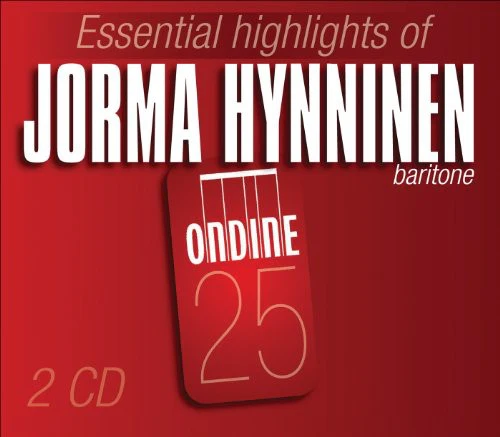
Essential Highlights of Jorma Hynninen
Hynninen’s artistry at least on a par with, if not superior to Fischer-Dieskau and Bostridge.
To celebrate its 25 th anniversary, Ondine, now distributed by Select but still operating independently, have released five bargain twofers in “a limited edition available in 2010 only.” Each comprises titles from their best-selling backlist to showcase five of their star artists: sopranos Soile Isokoski and Karita Mattila , violinist Pella Kuusisto, clarinettist Kari Kriikku and the singer featured here, baritone Jorman Hynninen.
“Essential Highlights” is somewhat misleading, in that rather than offering snippets, the programme provided here consists of telling accounts of Schubert’s two most celebrated song-cycles, both recorded by Hynninen in his prime in 1988. “Die schöne Müllerin” is slightly unusual in that it is more often sung by a tenor, although there have been many recordings made by baritones. “Winterreise” is sung in its most familiar tessitura – but again, we have had highly successful versions recorded by singers of other vocal categories, especially mezzo Brigitte Fassbänder and contralto Nathalie Stutzmann. Not being much of a fan of Fischer-Dieskau, I am unused to hearing a baritone in “Die schöne Müllerin” and take as my yardstick recordings by tenors Aksel Schiøtz, Fritz Wunderlich and, more recently, Jonas Kaufmann – although the latter evidently has more of a baritonal colouring to his voice than his silvery predecessors. In general, I feel that this music really demands a tenor voice to make its full impact, so I began listening inclined to make disparaging comparisons between Hynninen and his tenor competitors.
I have to say that his singing wholly disarmed my prejudice, even if I still persist in favouring a tenor version. A lot of his success has to do with the brilliance and sensitivity of Rolf Gothóni his accompanist – perhaps the wrong word, given the prominence and beauty of the piano part, but more of that anon. Born in 1941, Hynninen has been one of the pre-eminent Finnish singers of the last thirty years. He possesses a flexible, slightly grainy, husky baritone with a light vibrato, an easy top and rich low notes. He has performed very successfully in opera but is particularly renowned for his interpretations of Schubert, making this bargain set indispensable to any lover of Lieder or any of his fans who do not already own these discs.
His freedom and naturalness with the German text suggests that he is quite at home in the language, without sharing Fischer-Dieskau’s propensity for preciosity and for pouncing on words. I also happen to think that he has a more beautiful voice than DF-D, but that is a question of personal taste. I was surprised to find that the transpositions Hynninen requires are often by no more than a tone downwards and sometimes not at all. There are fleeting moments of strain or ungainliness in fast-moving songs with higher-flying passages such “Der Jäger” – but tenor Kaufmann has the same passing difficulties, inherent in a heftier voice having to take on such music. Hynninen counteracts the possibility of a baritone being unable to convey a sense of lost, bewildered youth by frequently lightening his voice into a tender, touching mezza voce and employing falsetto for particular effects, such as in the closing cradle-song “Des Baches Wiegenlied”.
Hynninen and Gothóni attack “Das Wandern”, the opening song of “Die schöne Müllerin”, at such a pace that I was temporarily taken aback, but I suspect that this was a deliberate choice to counteract immediately any effect of lugubriousness which a lower-pitched voice might engender. Tempi in general are brisk; both artists rely more on precise, calculated articulation of both notes and texts to delineate emotion rather than an all-purpose melancholy. They seem well attuned to poet Wilhelm Müller’s exploitation of that very Romantic technique of pathetic fallacy; as the narrators contemplate the rippling brook or trudge through the bleak landscape, their emotions are palpably embodied in the interplay between voice and piano and the listener is drawn into this world of metaphysical projection. Hynninen’s personae in both cycles emerge as very real and very human, operating in a vividly realised, naturalistic context.
Gothóni is simply the best pianist I have heard in this music since Gerald Moore; his playing complements perfectly the singer’s emotional range, especially in “Winterreise”. It is noticeable that its vocal topography suits Hynninen slighly better than “Die Schöne Müllerin”; as he moves from a haunting half-voice to a more extrovert and operatic register, Gothoni shadows him, unhurried and sonorous in “Das Wirtshaus”, nervy and agitated in “Im Dorfe, defiant and emphatic in “Mut”. Singer and pianist are equal partners, each varying the dynamics, employing rubato and momentary hesitations to heighten or lower the emotional temperature, particularly in “Der Lindenbaum”, a key, core song, whose opening affords a moment of repose before the stark intrusion of “Die kalten Winden bliesen”. The culmination of the cycle is “Der Leiermann”, that most haunting and disturbing of songs; Hynninen and Gothóni combine to evoke the strange beauty of the benumbed, trance-like state of a narrator “half in love with easeful Death.”.
There are literally scores – hundreds? - of recordings of these two song-cycles available at any one time to the collector and a top recommendation is impossible. Just as many adore Fischer-Dieskau, there are some who swear by Ian Bostridge’s version. I do not share their enthusiasm and as such am happy to endorse Hynninen’s artistry as being at least on a par with theirs, if not superior, although I would still turn first to a favourite tenor to hear “Die Schöne Müllerin”, fine though Hynninen is.
--Ralph Moore, MusicWeb International
“Essential Highlights” is somewhat misleading, in that rather than offering snippets, the programme provided here consists of telling accounts of Schubert’s two most celebrated song-cycles, both recorded by Hynninen in his prime in 1988. “Die schöne Müllerin” is slightly unusual in that it is more often sung by a tenor, although there have been many recordings made by baritones. “Winterreise” is sung in its most familiar tessitura – but again, we have had highly successful versions recorded by singers of other vocal categories, especially mezzo Brigitte Fassbänder and contralto Nathalie Stutzmann. Not being much of a fan of Fischer-Dieskau, I am unused to hearing a baritone in “Die schöne Müllerin” and take as my yardstick recordings by tenors Aksel Schiøtz, Fritz Wunderlich and, more recently, Jonas Kaufmann – although the latter evidently has more of a baritonal colouring to his voice than his silvery predecessors. In general, I feel that this music really demands a tenor voice to make its full impact, so I began listening inclined to make disparaging comparisons between Hynninen and his tenor competitors.
I have to say that his singing wholly disarmed my prejudice, even if I still persist in favouring a tenor version. A lot of his success has to do with the brilliance and sensitivity of Rolf Gothóni his accompanist – perhaps the wrong word, given the prominence and beauty of the piano part, but more of that anon. Born in 1941, Hynninen has been one of the pre-eminent Finnish singers of the last thirty years. He possesses a flexible, slightly grainy, husky baritone with a light vibrato, an easy top and rich low notes. He has performed very successfully in opera but is particularly renowned for his interpretations of Schubert, making this bargain set indispensable to any lover of Lieder or any of his fans who do not already own these discs.
His freedom and naturalness with the German text suggests that he is quite at home in the language, without sharing Fischer-Dieskau’s propensity for preciosity and for pouncing on words. I also happen to think that he has a more beautiful voice than DF-D, but that is a question of personal taste. I was surprised to find that the transpositions Hynninen requires are often by no more than a tone downwards and sometimes not at all. There are fleeting moments of strain or ungainliness in fast-moving songs with higher-flying passages such “Der Jäger” – but tenor Kaufmann has the same passing difficulties, inherent in a heftier voice having to take on such music. Hynninen counteracts the possibility of a baritone being unable to convey a sense of lost, bewildered youth by frequently lightening his voice into a tender, touching mezza voce and employing falsetto for particular effects, such as in the closing cradle-song “Des Baches Wiegenlied”.
Hynninen and Gothóni attack “Das Wandern”, the opening song of “Die schöne Müllerin”, at such a pace that I was temporarily taken aback, but I suspect that this was a deliberate choice to counteract immediately any effect of lugubriousness which a lower-pitched voice might engender. Tempi in general are brisk; both artists rely more on precise, calculated articulation of both notes and texts to delineate emotion rather than an all-purpose melancholy. They seem well attuned to poet Wilhelm Müller’s exploitation of that very Romantic technique of pathetic fallacy; as the narrators contemplate the rippling brook or trudge through the bleak landscape, their emotions are palpably embodied in the interplay between voice and piano and the listener is drawn into this world of metaphysical projection. Hynninen’s personae in both cycles emerge as very real and very human, operating in a vividly realised, naturalistic context.
Gothóni is simply the best pianist I have heard in this music since Gerald Moore; his playing complements perfectly the singer’s emotional range, especially in “Winterreise”. It is noticeable that its vocal topography suits Hynninen slighly better than “Die Schöne Müllerin”; as he moves from a haunting half-voice to a more extrovert and operatic register, Gothoni shadows him, unhurried and sonorous in “Das Wirtshaus”, nervy and agitated in “Im Dorfe, defiant and emphatic in “Mut”. Singer and pianist are equal partners, each varying the dynamics, employing rubato and momentary hesitations to heighten or lower the emotional temperature, particularly in “Der Lindenbaum”, a key, core song, whose opening affords a moment of repose before the stark intrusion of “Die kalten Winden bliesen”. The culmination of the cycle is “Der Leiermann”, that most haunting and disturbing of songs; Hynninen and Gothóni combine to evoke the strange beauty of the benumbed, trance-like state of a narrator “half in love with easeful Death.”.
There are literally scores – hundreds? - of recordings of these two song-cycles available at any one time to the collector and a top recommendation is impossible. Just as many adore Fischer-Dieskau, there are some who swear by Ian Bostridge’s version. I do not share their enthusiasm and as such am happy to endorse Hynninen’s artistry as being at least on a par with theirs, if not superior, although I would still turn first to a favourite tenor to hear “Die Schöne Müllerin”, fine though Hynninen is.
--Ralph Moore, MusicWeb International
Hynninen’s artistry at least on a par with, if not superior to Fischer-Dieskau and Bostridge.
To celebrate its 25 th anniversary, Ondine, now distributed by Select but still operating independently, have released five bargain twofers in “a limited edition available in 2010 only.” Each comprises titles from their best-selling backlist to showcase five of their star artists: sopranos Soile Isokoski and Karita Mattila , violinist Pella Kuusisto, clarinettist Kari Kriikku and the singer featured here, baritone Jorman Hynninen.
“Essential Highlights” is somewhat misleading, in that rather than offering snippets, the programme provided here consists of telling accounts of Schubert’s two most celebrated song-cycles, both recorded by Hynninen in his prime in 1988. “Die schöne Müllerin” is slightly unusual in that it is more often sung by a tenor, although there have been many recordings made by baritones. “Winterreise” is sung in its most familiar tessitura – but again, we have had highly successful versions recorded by singers of other vocal categories, especially mezzo Brigitte Fassbänder and contralto Nathalie Stutzmann. Not being much of a fan of Fischer-Dieskau, I am unused to hearing a baritone in “Die schöne Müllerin” and take as my yardstick recordings by tenors Aksel Schiøtz, Fritz Wunderlich and, more recently, Jonas Kaufmann – although the latter evidently has more of a baritonal colouring to his voice than his silvery predecessors. In general, I feel that this music really demands a tenor voice to make its full impact, so I began listening inclined to make disparaging comparisons between Hynninen and his tenor competitors.
I have to say that his singing wholly disarmed my prejudice, even if I still persist in favouring a tenor version. A lot of his success has to do with the brilliance and sensitivity of Rolf Gothóni his accompanist – perhaps the wrong word, given the prominence and beauty of the piano part, but more of that anon. Born in 1941, Hynninen has been one of the pre-eminent Finnish singers of the last thirty years. He possesses a flexible, slightly grainy, husky baritone with a light vibrato, an easy top and rich low notes. He has performed very successfully in opera but is particularly renowned for his interpretations of Schubert, making this bargain set indispensable to any lover of Lieder or any of his fans who do not already own these discs.
His freedom and naturalness with the German text suggests that he is quite at home in the language, without sharing Fischer-Dieskau’s propensity for preciosity and for pouncing on words. I also happen to think that he has a more beautiful voice than DF-D, but that is a question of personal taste. I was surprised to find that the transpositions Hynninen requires are often by no more than a tone downwards and sometimes not at all. There are fleeting moments of strain or ungainliness in fast-moving songs with higher-flying passages such “Der Jäger” – but tenor Kaufmann has the same passing difficulties, inherent in a heftier voice having to take on such music. Hynninen counteracts the possibility of a baritone being unable to convey a sense of lost, bewildered youth by frequently lightening his voice into a tender, touching mezza voce and employing falsetto for particular effects, such as in the closing cradle-song “Des Baches Wiegenlied”.
Hynninen and Gothóni attack “Das Wandern”, the opening song of “Die schöne Müllerin”, at such a pace that I was temporarily taken aback, but I suspect that this was a deliberate choice to counteract immediately any effect of lugubriousness which a lower-pitched voice might engender. Tempi in general are brisk; both artists rely more on precise, calculated articulation of both notes and texts to delineate emotion rather than an all-purpose melancholy. They seem well attuned to poet Wilhelm Müller’s exploitation of that very Romantic technique of pathetic fallacy; as the narrators contemplate the rippling brook or trudge through the bleak landscape, their emotions are palpably embodied in the interplay between voice and piano and the listener is drawn into this world of metaphysical projection. Hynninen’s personae in both cycles emerge as very real and very human, operating in a vividly realised, naturalistic context.
Gothóni is simply the best pianist I have heard in this music since Gerald Moore; his playing complements perfectly the singer’s emotional range, especially in “Winterreise”. It is noticeable that its vocal topography suits Hynninen slighly better than “Die Schöne Müllerin”; as he moves from a haunting half-voice to a more extrovert and operatic register, Gothoni shadows him, unhurried and sonorous in “Das Wirtshaus”, nervy and agitated in “Im Dorfe, defiant and emphatic in “Mut”. Singer and pianist are equal partners, each varying the dynamics, employing rubato and momentary hesitations to heighten or lower the emotional temperature, particularly in “Der Lindenbaum”, a key, core song, whose opening affords a moment of repose before the stark intrusion of “Die kalten Winden bliesen”. The culmination of the cycle is “Der Leiermann”, that most haunting and disturbing of songs; Hynninen and Gothóni combine to evoke the strange beauty of the benumbed, trance-like state of a narrator “half in love with easeful Death.”.
There are literally scores – hundreds? - of recordings of these two song-cycles available at any one time to the collector and a top recommendation is impossible. Just as many adore Fischer-Dieskau, there are some who swear by Ian Bostridge’s version. I do not share their enthusiasm and as such am happy to endorse Hynninen’s artistry as being at least on a par with theirs, if not superior, although I would still turn first to a favourite tenor to hear “Die Schöne Müllerin”, fine though Hynninen is.
--Ralph Moore, MusicWeb International
“Essential Highlights” is somewhat misleading, in that rather than offering snippets, the programme provided here consists of telling accounts of Schubert’s two most celebrated song-cycles, both recorded by Hynninen in his prime in 1988. “Die schöne Müllerin” is slightly unusual in that it is more often sung by a tenor, although there have been many recordings made by baritones. “Winterreise” is sung in its most familiar tessitura – but again, we have had highly successful versions recorded by singers of other vocal categories, especially mezzo Brigitte Fassbänder and contralto Nathalie Stutzmann. Not being much of a fan of Fischer-Dieskau, I am unused to hearing a baritone in “Die schöne Müllerin” and take as my yardstick recordings by tenors Aksel Schiøtz, Fritz Wunderlich and, more recently, Jonas Kaufmann – although the latter evidently has more of a baritonal colouring to his voice than his silvery predecessors. In general, I feel that this music really demands a tenor voice to make its full impact, so I began listening inclined to make disparaging comparisons between Hynninen and his tenor competitors.
I have to say that his singing wholly disarmed my prejudice, even if I still persist in favouring a tenor version. A lot of his success has to do with the brilliance and sensitivity of Rolf Gothóni his accompanist – perhaps the wrong word, given the prominence and beauty of the piano part, but more of that anon. Born in 1941, Hynninen has been one of the pre-eminent Finnish singers of the last thirty years. He possesses a flexible, slightly grainy, husky baritone with a light vibrato, an easy top and rich low notes. He has performed very successfully in opera but is particularly renowned for his interpretations of Schubert, making this bargain set indispensable to any lover of Lieder or any of his fans who do not already own these discs.
His freedom and naturalness with the German text suggests that he is quite at home in the language, without sharing Fischer-Dieskau’s propensity for preciosity and for pouncing on words. I also happen to think that he has a more beautiful voice than DF-D, but that is a question of personal taste. I was surprised to find that the transpositions Hynninen requires are often by no more than a tone downwards and sometimes not at all. There are fleeting moments of strain or ungainliness in fast-moving songs with higher-flying passages such “Der Jäger” – but tenor Kaufmann has the same passing difficulties, inherent in a heftier voice having to take on such music. Hynninen counteracts the possibility of a baritone being unable to convey a sense of lost, bewildered youth by frequently lightening his voice into a tender, touching mezza voce and employing falsetto for particular effects, such as in the closing cradle-song “Des Baches Wiegenlied”.
Hynninen and Gothóni attack “Das Wandern”, the opening song of “Die schöne Müllerin”, at such a pace that I was temporarily taken aback, but I suspect that this was a deliberate choice to counteract immediately any effect of lugubriousness which a lower-pitched voice might engender. Tempi in general are brisk; both artists rely more on precise, calculated articulation of both notes and texts to delineate emotion rather than an all-purpose melancholy. They seem well attuned to poet Wilhelm Müller’s exploitation of that very Romantic technique of pathetic fallacy; as the narrators contemplate the rippling brook or trudge through the bleak landscape, their emotions are palpably embodied in the interplay between voice and piano and the listener is drawn into this world of metaphysical projection. Hynninen’s personae in both cycles emerge as very real and very human, operating in a vividly realised, naturalistic context.
Gothóni is simply the best pianist I have heard in this music since Gerald Moore; his playing complements perfectly the singer’s emotional range, especially in “Winterreise”. It is noticeable that its vocal topography suits Hynninen slighly better than “Die Schöne Müllerin”; as he moves from a haunting half-voice to a more extrovert and operatic register, Gothoni shadows him, unhurried and sonorous in “Das Wirtshaus”, nervy and agitated in “Im Dorfe, defiant and emphatic in “Mut”. Singer and pianist are equal partners, each varying the dynamics, employing rubato and momentary hesitations to heighten or lower the emotional temperature, particularly in “Der Lindenbaum”, a key, core song, whose opening affords a moment of repose before the stark intrusion of “Die kalten Winden bliesen”. The culmination of the cycle is “Der Leiermann”, that most haunting and disturbing of songs; Hynninen and Gothóni combine to evoke the strange beauty of the benumbed, trance-like state of a narrator “half in love with easeful Death.”.
There are literally scores – hundreds? - of recordings of these two song-cycles available at any one time to the collector and a top recommendation is impossible. Just as many adore Fischer-Dieskau, there are some who swear by Ian Bostridge’s version. I do not share their enthusiasm and as such am happy to endorse Hynninen’s artistry as being at least on a par with theirs, if not superior, although I would still turn first to a favourite tenor to hear “Die Schöne Müllerin”, fine though Hynninen is.
--Ralph Moore, MusicWeb International
$6.65
Original: $18.99
-65%Essential Highlights of Jorma Hynninen—
$18.99
$6.65Description
Hynninen’s artistry at least on a par with, if not superior to Fischer-Dieskau and Bostridge.
To celebrate its 25 th anniversary, Ondine, now distributed by Select but still operating independently, have released five bargain twofers in “a limited edition available in 2010 only.” Each comprises titles from their best-selling backlist to showcase five of their star artists: sopranos Soile Isokoski and Karita Mattila , violinist Pella Kuusisto, clarinettist Kari Kriikku and the singer featured here, baritone Jorman Hynninen.
“Essential Highlights” is somewhat misleading, in that rather than offering snippets, the programme provided here consists of telling accounts of Schubert’s two most celebrated song-cycles, both recorded by Hynninen in his prime in 1988. “Die schöne Müllerin” is slightly unusual in that it is more often sung by a tenor, although there have been many recordings made by baritones. “Winterreise” is sung in its most familiar tessitura – but again, we have had highly successful versions recorded by singers of other vocal categories, especially mezzo Brigitte Fassbänder and contralto Nathalie Stutzmann. Not being much of a fan of Fischer-Dieskau, I am unused to hearing a baritone in “Die schöne Müllerin” and take as my yardstick recordings by tenors Aksel Schiøtz, Fritz Wunderlich and, more recently, Jonas Kaufmann – although the latter evidently has more of a baritonal colouring to his voice than his silvery predecessors. In general, I feel that this music really demands a tenor voice to make its full impact, so I began listening inclined to make disparaging comparisons between Hynninen and his tenor competitors.
I have to say that his singing wholly disarmed my prejudice, even if I still persist in favouring a tenor version. A lot of his success has to do with the brilliance and sensitivity of Rolf Gothóni his accompanist – perhaps the wrong word, given the prominence and beauty of the piano part, but more of that anon. Born in 1941, Hynninen has been one of the pre-eminent Finnish singers of the last thirty years. He possesses a flexible, slightly grainy, husky baritone with a light vibrato, an easy top and rich low notes. He has performed very successfully in opera but is particularly renowned for his interpretations of Schubert, making this bargain set indispensable to any lover of Lieder or any of his fans who do not already own these discs.
His freedom and naturalness with the German text suggests that he is quite at home in the language, without sharing Fischer-Dieskau’s propensity for preciosity and for pouncing on words. I also happen to think that he has a more beautiful voice than DF-D, but that is a question of personal taste. I was surprised to find that the transpositions Hynninen requires are often by no more than a tone downwards and sometimes not at all. There are fleeting moments of strain or ungainliness in fast-moving songs with higher-flying passages such “Der Jäger” – but tenor Kaufmann has the same passing difficulties, inherent in a heftier voice having to take on such music. Hynninen counteracts the possibility of a baritone being unable to convey a sense of lost, bewildered youth by frequently lightening his voice into a tender, touching mezza voce and employing falsetto for particular effects, such as in the closing cradle-song “Des Baches Wiegenlied”.
Hynninen and Gothóni attack “Das Wandern”, the opening song of “Die schöne Müllerin”, at such a pace that I was temporarily taken aback, but I suspect that this was a deliberate choice to counteract immediately any effect of lugubriousness which a lower-pitched voice might engender. Tempi in general are brisk; both artists rely more on precise, calculated articulation of both notes and texts to delineate emotion rather than an all-purpose melancholy. They seem well attuned to poet Wilhelm Müller’s exploitation of that very Romantic technique of pathetic fallacy; as the narrators contemplate the rippling brook or trudge through the bleak landscape, their emotions are palpably embodied in the interplay between voice and piano and the listener is drawn into this world of metaphysical projection. Hynninen’s personae in both cycles emerge as very real and very human, operating in a vividly realised, naturalistic context.
Gothóni is simply the best pianist I have heard in this music since Gerald Moore; his playing complements perfectly the singer’s emotional range, especially in “Winterreise”. It is noticeable that its vocal topography suits Hynninen slighly better than “Die Schöne Müllerin”; as he moves from a haunting half-voice to a more extrovert and operatic register, Gothoni shadows him, unhurried and sonorous in “Das Wirtshaus”, nervy and agitated in “Im Dorfe, defiant and emphatic in “Mut”. Singer and pianist are equal partners, each varying the dynamics, employing rubato and momentary hesitations to heighten or lower the emotional temperature, particularly in “Der Lindenbaum”, a key, core song, whose opening affords a moment of repose before the stark intrusion of “Die kalten Winden bliesen”. The culmination of the cycle is “Der Leiermann”, that most haunting and disturbing of songs; Hynninen and Gothóni combine to evoke the strange beauty of the benumbed, trance-like state of a narrator “half in love with easeful Death.”.
There are literally scores – hundreds? - of recordings of these two song-cycles available at any one time to the collector and a top recommendation is impossible. Just as many adore Fischer-Dieskau, there are some who swear by Ian Bostridge’s version. I do not share their enthusiasm and as such am happy to endorse Hynninen’s artistry as being at least on a par with theirs, if not superior, although I would still turn first to a favourite tenor to hear “Die Schöne Müllerin”, fine though Hynninen is.
--Ralph Moore, MusicWeb International
“Essential Highlights” is somewhat misleading, in that rather than offering snippets, the programme provided here consists of telling accounts of Schubert’s two most celebrated song-cycles, both recorded by Hynninen in his prime in 1988. “Die schöne Müllerin” is slightly unusual in that it is more often sung by a tenor, although there have been many recordings made by baritones. “Winterreise” is sung in its most familiar tessitura – but again, we have had highly successful versions recorded by singers of other vocal categories, especially mezzo Brigitte Fassbänder and contralto Nathalie Stutzmann. Not being much of a fan of Fischer-Dieskau, I am unused to hearing a baritone in “Die schöne Müllerin” and take as my yardstick recordings by tenors Aksel Schiøtz, Fritz Wunderlich and, more recently, Jonas Kaufmann – although the latter evidently has more of a baritonal colouring to his voice than his silvery predecessors. In general, I feel that this music really demands a tenor voice to make its full impact, so I began listening inclined to make disparaging comparisons between Hynninen and his tenor competitors.
I have to say that his singing wholly disarmed my prejudice, even if I still persist in favouring a tenor version. A lot of his success has to do with the brilliance and sensitivity of Rolf Gothóni his accompanist – perhaps the wrong word, given the prominence and beauty of the piano part, but more of that anon. Born in 1941, Hynninen has been one of the pre-eminent Finnish singers of the last thirty years. He possesses a flexible, slightly grainy, husky baritone with a light vibrato, an easy top and rich low notes. He has performed very successfully in opera but is particularly renowned for his interpretations of Schubert, making this bargain set indispensable to any lover of Lieder or any of his fans who do not already own these discs.
His freedom and naturalness with the German text suggests that he is quite at home in the language, without sharing Fischer-Dieskau’s propensity for preciosity and for pouncing on words. I also happen to think that he has a more beautiful voice than DF-D, but that is a question of personal taste. I was surprised to find that the transpositions Hynninen requires are often by no more than a tone downwards and sometimes not at all. There are fleeting moments of strain or ungainliness in fast-moving songs with higher-flying passages such “Der Jäger” – but tenor Kaufmann has the same passing difficulties, inherent in a heftier voice having to take on such music. Hynninen counteracts the possibility of a baritone being unable to convey a sense of lost, bewildered youth by frequently lightening his voice into a tender, touching mezza voce and employing falsetto for particular effects, such as in the closing cradle-song “Des Baches Wiegenlied”.
Hynninen and Gothóni attack “Das Wandern”, the opening song of “Die schöne Müllerin”, at such a pace that I was temporarily taken aback, but I suspect that this was a deliberate choice to counteract immediately any effect of lugubriousness which a lower-pitched voice might engender. Tempi in general are brisk; both artists rely more on precise, calculated articulation of both notes and texts to delineate emotion rather than an all-purpose melancholy. They seem well attuned to poet Wilhelm Müller’s exploitation of that very Romantic technique of pathetic fallacy; as the narrators contemplate the rippling brook or trudge through the bleak landscape, their emotions are palpably embodied in the interplay between voice and piano and the listener is drawn into this world of metaphysical projection. Hynninen’s personae in both cycles emerge as very real and very human, operating in a vividly realised, naturalistic context.
Gothóni is simply the best pianist I have heard in this music since Gerald Moore; his playing complements perfectly the singer’s emotional range, especially in “Winterreise”. It is noticeable that its vocal topography suits Hynninen slighly better than “Die Schöne Müllerin”; as he moves from a haunting half-voice to a more extrovert and operatic register, Gothoni shadows him, unhurried and sonorous in “Das Wirtshaus”, nervy and agitated in “Im Dorfe, defiant and emphatic in “Mut”. Singer and pianist are equal partners, each varying the dynamics, employing rubato and momentary hesitations to heighten or lower the emotional temperature, particularly in “Der Lindenbaum”, a key, core song, whose opening affords a moment of repose before the stark intrusion of “Die kalten Winden bliesen”. The culmination of the cycle is “Der Leiermann”, that most haunting and disturbing of songs; Hynninen and Gothóni combine to evoke the strange beauty of the benumbed, trance-like state of a narrator “half in love with easeful Death.”.
There are literally scores – hundreds? - of recordings of these two song-cycles available at any one time to the collector and a top recommendation is impossible. Just as many adore Fischer-Dieskau, there are some who swear by Ian Bostridge’s version. I do not share their enthusiasm and as such am happy to endorse Hynninen’s artistry as being at least on a par with theirs, if not superior, although I would still turn first to a favourite tenor to hear “Die Schöne Müllerin”, fine though Hynninen is.
--Ralph Moore, MusicWeb International