🎉 Up to 70% Off Selected ItemsShop Sale

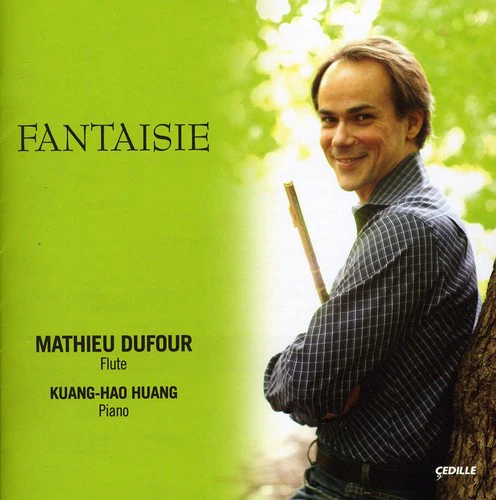
Fantaisie / Dufour, Huang
FANTAISIE • Mathieu Dufour (fl); Kuang-Hao Huang (pn) • ÇEDILLE 90000-121 (57:00)
FAURÉ Fantaisie. GAUBERT Fantaisie. HÜE Fantaisie. DOPPLER Hungarian Pastoral Fantasy. TAFFANEL Fantasy on Themes from Weber’s “Der Freischütz.” BORNE Fantaisie Brilliante on Themes from Bizet’s Carmen
Here are six pieces for flute and piano, all but one by French composers, and all titled “Fantaisie.” Yet except for Fauré, I’d have thought that not one of these composers would come up in conversation other than by flutists and flute fanciers. So I suppose I was a bit surprised to find a number of similarly programmed recitals including these composers and pieces reviewed in the Fanfare Archive.
A release covered in Fanfare 23:1 by John Lambert included the Fauré and Gaubert fantasies as well as a piece by Taffanel, though not his Fantaisie. Another CD, reviewed by Paul Ingram in 28:2, did include Taffanel’s Fantaisie as well as Borne’s. Still another disc reviewed by Lambert in 24:3 included both Borne’s and Hüe’s. And the one not-French composer in the mix here, Albert Franz Doppler, had his Fantaisie turn up on a release reviewed by Lambert in 21:5, which also contained the Borne. So it seems that none of these composers and their fantasies are as obscure as I imagined.
Anyone who knows the flute world is sure to recognize the name Mathieu Dufour. He was and is once again principal flute of the Chicago Symphony Orchestra, a post to which he was appointed at the age of 25 by Daniel Barenboim. The “was” happened during the 2010 season, when Dufour left his post in Chicago to join the Los Angeles Philharmonic on a trial basis. The marriage went sour, and he left abruptly, midseason, to return to Chicago where he’d been allowed to retain his post as a kind of dual citizen. The L.A. divorce was nasty, with some regrettable remarks made by Dufour about the Los Angeles orchestra quoted in the Chicago Sun-Times , remarks for which the flutist later apologized, insisting he’d been misquoted.
Kuang-Hao Huang, Dufour’s piano partner on the disc, is a well-known artist in the Chicago area. He pursues an active performing and teaching career, has concertized throughout the U.S. as well as in England, France, China, and South Korea, and collaborates regularly with chamber-music ensembles.
The works on the CD fall into two groups, plus one that falls into neither. The Fauré, Gaubert, and Hüe fantasies are virtuosic contest pieces written for the annual competitive concours examinations held by the Paris Conservatory. The Borne and Taffanel are examples of the popular 19th-century genre of opera paraphrases, which were written in great numbers—many by Liszt—to tunes from well-known operas of the day. The square peg in the round hole is Franz Doppler, both for being of Hungarian birth and for his Hungarian Pastoral Fantasy, which falls into neither of the above categories. The piece is presumed to be based on Hungarian folk melodies, which may have been manufactured by Doppler rather than borrowed from authentic sources. Doppler’s name rang a bell. It was something I’d read before. He was the composer who assisted Liszt in orchestrating some of his works when Liszt was first learning to orchestrate.
The two opera paraphrases are quite dazzling and not insignificant concert works in their own right. Taffanel mines Der Freischütz for gold and finds far more nuggets of the precious metal in Weber’s opera than I ever have. Borne’s Carmen Fantasy is, if anything, even more brilliant, as the “brilliante” in its title promises. Either Borne was the more technically adept flute master and imaginative composer, or Bizet’s music lends itself better to this sort of treatment than does Weber’s. Perhaps both propositions are true.
Exemplary playing in service to unfamiliar and entertaining music combines with excellent recording to make this a most recommendable release.
FANFARE: Jerry Dubins
FANTAISIE • Mathieu Dufour (fl); Kuang-Hao Huang (pn) • ÇEDILLE 90000-121 (57:00)
FAURÉ Fantaisie. GAUBERT Fantaisie. HÜE Fantaisie. DOPPLER Hungarian Pastoral Fantasy. TAFFANEL Fantasy on Themes from Weber’s “Der Freischütz.” BORNE Fantaisie Brilliante on Themes from Bizet’s Carmen
Here are six pieces for flute and piano, all but one by French composers, and all titled “Fantaisie.” Yet except for Fauré, I’d have thought that not one of these composers would come up in conversation other than by flutists and flute fanciers. So I suppose I was a bit surprised to find a number of similarly programmed recitals including these composers and pieces reviewed in the Fanfare Archive.
A release covered in Fanfare 23:1 by John Lambert included the Fauré and Gaubert fantasies as well as a piece by Taffanel, though not his Fantaisie. Another CD, reviewed by Paul Ingram in 28:2, did include Taffanel’s Fantaisie as well as Borne’s. Still another disc reviewed by Lambert in 24:3 included both Borne’s and Hüe’s. And the one not-French composer in the mix here, Albert Franz Doppler, had his Fantaisie turn up on a release reviewed by Lambert in 21:5, which also contained the Borne. So it seems that none of these composers and their fantasies are as obscure as I imagined.
Anyone who knows the flute world is sure to recognize the name Mathieu Dufour. He was and is once again principal flute of the Chicago Symphony Orchestra, a post to which he was appointed at the age of 25 by Daniel Barenboim. The “was” happened during the 2010 season, when Dufour left his post in Chicago to join the Los Angeles Philharmonic on a trial basis. The marriage went sour, and he left abruptly, midseason, to return to Chicago where he’d been allowed to retain his post as a kind of dual citizen. The L.A. divorce was nasty, with some regrettable remarks made by Dufour about the Los Angeles orchestra quoted in the Chicago Sun-Times , remarks for which the flutist later apologized, insisting he’d been misquoted.
Kuang-Hao Huang, Dufour’s piano partner on the disc, is a well-known artist in the Chicago area. He pursues an active performing and teaching career, has concertized throughout the U.S. as well as in England, France, China, and South Korea, and collaborates regularly with chamber-music ensembles.
The works on the CD fall into two groups, plus one that falls into neither. The Fauré, Gaubert, and Hüe fantasies are virtuosic contest pieces written for the annual competitive concours examinations held by the Paris Conservatory. The Borne and Taffanel are examples of the popular 19th-century genre of opera paraphrases, which were written in great numbers—many by Liszt—to tunes from well-known operas of the day. The square peg in the round hole is Franz Doppler, both for being of Hungarian birth and for his Hungarian Pastoral Fantasy, which falls into neither of the above categories. The piece is presumed to be based on Hungarian folk melodies, which may have been manufactured by Doppler rather than borrowed from authentic sources. Doppler’s name rang a bell. It was something I’d read before. He was the composer who assisted Liszt in orchestrating some of his works when Liszt was first learning to orchestrate.
The two opera paraphrases are quite dazzling and not insignificant concert works in their own right. Taffanel mines Der Freischütz for gold and finds far more nuggets of the precious metal in Weber’s opera than I ever have. Borne’s Carmen Fantasy is, if anything, even more brilliant, as the “brilliante” in its title promises. Either Borne was the more technically adept flute master and imaginative composer, or Bizet’s music lends itself better to this sort of treatment than does Weber’s. Perhaps both propositions are true.
Exemplary playing in service to unfamiliar and entertaining music combines with excellent recording to make this a most recommendable release.
FANFARE: Jerry Dubins
$19.99
Fantaisie / Dufour, Huang—
$19.99
Description
FANTAISIE • Mathieu Dufour (fl); Kuang-Hao Huang (pn) • ÇEDILLE 90000-121 (57:00)
FAURÉ Fantaisie. GAUBERT Fantaisie. HÜE Fantaisie. DOPPLER Hungarian Pastoral Fantasy. TAFFANEL Fantasy on Themes from Weber’s “Der Freischütz.” BORNE Fantaisie Brilliante on Themes from Bizet’s Carmen
Here are six pieces for flute and piano, all but one by French composers, and all titled “Fantaisie.” Yet except for Fauré, I’d have thought that not one of these composers would come up in conversation other than by flutists and flute fanciers. So I suppose I was a bit surprised to find a number of similarly programmed recitals including these composers and pieces reviewed in the Fanfare Archive.
A release covered in Fanfare 23:1 by John Lambert included the Fauré and Gaubert fantasies as well as a piece by Taffanel, though not his Fantaisie. Another CD, reviewed by Paul Ingram in 28:2, did include Taffanel’s Fantaisie as well as Borne’s. Still another disc reviewed by Lambert in 24:3 included both Borne’s and Hüe’s. And the one not-French composer in the mix here, Albert Franz Doppler, had his Fantaisie turn up on a release reviewed by Lambert in 21:5, which also contained the Borne. So it seems that none of these composers and their fantasies are as obscure as I imagined.
Anyone who knows the flute world is sure to recognize the name Mathieu Dufour. He was and is once again principal flute of the Chicago Symphony Orchestra, a post to which he was appointed at the age of 25 by Daniel Barenboim. The “was” happened during the 2010 season, when Dufour left his post in Chicago to join the Los Angeles Philharmonic on a trial basis. The marriage went sour, and he left abruptly, midseason, to return to Chicago where he’d been allowed to retain his post as a kind of dual citizen. The L.A. divorce was nasty, with some regrettable remarks made by Dufour about the Los Angeles orchestra quoted in the Chicago Sun-Times , remarks for which the flutist later apologized, insisting he’d been misquoted.
Kuang-Hao Huang, Dufour’s piano partner on the disc, is a well-known artist in the Chicago area. He pursues an active performing and teaching career, has concertized throughout the U.S. as well as in England, France, China, and South Korea, and collaborates regularly with chamber-music ensembles.
The works on the CD fall into two groups, plus one that falls into neither. The Fauré, Gaubert, and Hüe fantasies are virtuosic contest pieces written for the annual competitive concours examinations held by the Paris Conservatory. The Borne and Taffanel are examples of the popular 19th-century genre of opera paraphrases, which were written in great numbers—many by Liszt—to tunes from well-known operas of the day. The square peg in the round hole is Franz Doppler, both for being of Hungarian birth and for his Hungarian Pastoral Fantasy, which falls into neither of the above categories. The piece is presumed to be based on Hungarian folk melodies, which may have been manufactured by Doppler rather than borrowed from authentic sources. Doppler’s name rang a bell. It was something I’d read before. He was the composer who assisted Liszt in orchestrating some of his works when Liszt was first learning to orchestrate.
The two opera paraphrases are quite dazzling and not insignificant concert works in their own right. Taffanel mines Der Freischütz for gold and finds far more nuggets of the precious metal in Weber’s opera than I ever have. Borne’s Carmen Fantasy is, if anything, even more brilliant, as the “brilliante” in its title promises. Either Borne was the more technically adept flute master and imaginative composer, or Bizet’s music lends itself better to this sort of treatment than does Weber’s. Perhaps both propositions are true.
Exemplary playing in service to unfamiliar and entertaining music combines with excellent recording to make this a most recommendable release.
FANFARE: Jerry Dubins