🎉 Up to 70% Off Selected ItemsShop Sale

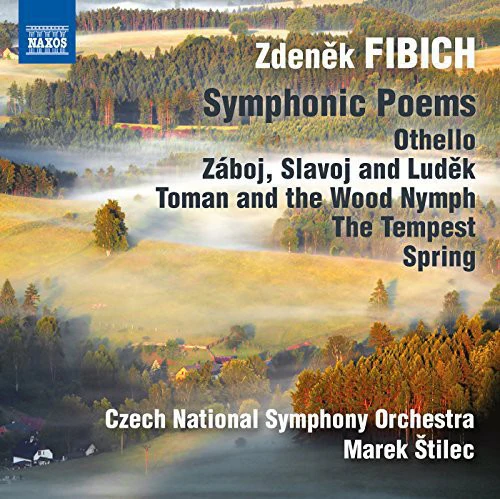
Fibich: Symphonic Poems / Stilec, Czech NSO
Fibich’s colorful symphonic poems have not been neglected on disc, but most of the recordings made to date come from Supraphon and seem to pop in and out of print at random, making them difficult to find. So it’s good to have this ongoing series, especially as it’s very well played and recorded, and Marek Štilec offers compelling interpretations of all five pieces. The music is fun. Fibich was not the melodist that Dvorák was (consider the two Othellos), but he knew how to score for large orchestra, and although the idiom is conservative, it never sounds inhibited. He whips up a fine storm at the start of The Tempest, for example, and Štilec digs in with gusto.
The largest work here, one that will be unfamiliar even to experienced listeners, is Záboj, Slavoj and Ludek. The story comes from a medieval Czech source of some kind, and I frankly have no idea what it’s about. Neither does the booklet note writer, evidently, other than to say that Smetana was inspired by the same source to compose Ma Vlást. Never mind. The music obviously has something to do with militant nationalism, and it’s typically well sustained and confidently structured. You’ll enjoy getting to know it, as you will all five of these works.
If you’re curious, try comparing this setting of Toman and the Wood Nymph to Novák’s very different, more modern setting–or even Sibelius’ tone poem of the same title. Evidently the wood nymph really got around. This is turning out to be an excellent series, and a convenient way to fill out your collection of Czech romantic orchestral music.
-- David Hurwitz, ClassicsToday.com
The largest work here, one that will be unfamiliar even to experienced listeners, is Záboj, Slavoj and Ludek. The story comes from a medieval Czech source of some kind, and I frankly have no idea what it’s about. Neither does the booklet note writer, evidently, other than to say that Smetana was inspired by the same source to compose Ma Vlást. Never mind. The music obviously has something to do with militant nationalism, and it’s typically well sustained and confidently structured. You’ll enjoy getting to know it, as you will all five of these works.
If you’re curious, try comparing this setting of Toman and the Wood Nymph to Novák’s very different, more modern setting–or even Sibelius’ tone poem of the same title. Evidently the wood nymph really got around. This is turning out to be an excellent series, and a convenient way to fill out your collection of Czech romantic orchestral music.
-- David Hurwitz, ClassicsToday.com
Fibich’s colorful symphonic poems have not been neglected on disc, but most of the recordings made to date come from Supraphon and seem to pop in and out of print at random, making them difficult to find. So it’s good to have this ongoing series, especially as it’s very well played and recorded, and Marek Štilec offers compelling interpretations of all five pieces. The music is fun. Fibich was not the melodist that Dvorák was (consider the two Othellos), but he knew how to score for large orchestra, and although the idiom is conservative, it never sounds inhibited. He whips up a fine storm at the start of The Tempest, for example, and Štilec digs in with gusto.
The largest work here, one that will be unfamiliar even to experienced listeners, is Záboj, Slavoj and Ludek. The story comes from a medieval Czech source of some kind, and I frankly have no idea what it’s about. Neither does the booklet note writer, evidently, other than to say that Smetana was inspired by the same source to compose Ma Vlást. Never mind. The music obviously has something to do with militant nationalism, and it’s typically well sustained and confidently structured. You’ll enjoy getting to know it, as you will all five of these works.
If you’re curious, try comparing this setting of Toman and the Wood Nymph to Novák’s very different, more modern setting–or even Sibelius’ tone poem of the same title. Evidently the wood nymph really got around. This is turning out to be an excellent series, and a convenient way to fill out your collection of Czech romantic orchestral music.
-- David Hurwitz, ClassicsToday.com
The largest work here, one that will be unfamiliar even to experienced listeners, is Záboj, Slavoj and Ludek. The story comes from a medieval Czech source of some kind, and I frankly have no idea what it’s about. Neither does the booklet note writer, evidently, other than to say that Smetana was inspired by the same source to compose Ma Vlást. Never mind. The music obviously has something to do with militant nationalism, and it’s typically well sustained and confidently structured. You’ll enjoy getting to know it, as you will all five of these works.
If you’re curious, try comparing this setting of Toman and the Wood Nymph to Novák’s very different, more modern setting–or even Sibelius’ tone poem of the same title. Evidently the wood nymph really got around. This is turning out to be an excellent series, and a convenient way to fill out your collection of Czech romantic orchestral music.
-- David Hurwitz, ClassicsToday.com
$7.00
Original: $19.99
-65%Fibich: Symphonic Poems / Stilec, Czech NSO—
$19.99
$7.00Description
Fibich’s colorful symphonic poems have not been neglected on disc, but most of the recordings made to date come from Supraphon and seem to pop in and out of print at random, making them difficult to find. So it’s good to have this ongoing series, especially as it’s very well played and recorded, and Marek Štilec offers compelling interpretations of all five pieces. The music is fun. Fibich was not the melodist that Dvorák was (consider the two Othellos), but he knew how to score for large orchestra, and although the idiom is conservative, it never sounds inhibited. He whips up a fine storm at the start of The Tempest, for example, and Štilec digs in with gusto.
The largest work here, one that will be unfamiliar even to experienced listeners, is Záboj, Slavoj and Ludek. The story comes from a medieval Czech source of some kind, and I frankly have no idea what it’s about. Neither does the booklet note writer, evidently, other than to say that Smetana was inspired by the same source to compose Ma Vlást. Never mind. The music obviously has something to do with militant nationalism, and it’s typically well sustained and confidently structured. You’ll enjoy getting to know it, as you will all five of these works.
If you’re curious, try comparing this setting of Toman and the Wood Nymph to Novák’s very different, more modern setting–or even Sibelius’ tone poem of the same title. Evidently the wood nymph really got around. This is turning out to be an excellent series, and a convenient way to fill out your collection of Czech romantic orchestral music.
-- David Hurwitz, ClassicsToday.com
The largest work here, one that will be unfamiliar even to experienced listeners, is Záboj, Slavoj and Ludek. The story comes from a medieval Czech source of some kind, and I frankly have no idea what it’s about. Neither does the booklet note writer, evidently, other than to say that Smetana was inspired by the same source to compose Ma Vlást. Never mind. The music obviously has something to do with militant nationalism, and it’s typically well sustained and confidently structured. You’ll enjoy getting to know it, as you will all five of these works.
If you’re curious, try comparing this setting of Toman and the Wood Nymph to Novák’s very different, more modern setting–or even Sibelius’ tone poem of the same title. Evidently the wood nymph really got around. This is turning out to be an excellent series, and a convenient way to fill out your collection of Czech romantic orchestral music.
-- David Hurwitz, ClassicsToday.com