🎉 Up to 70% Off Selected ItemsShop Sale

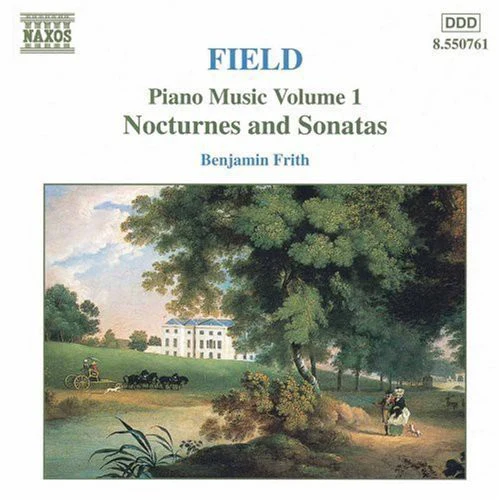
Field: Piano Music Vol 1 - Nocturnes And Sonatas / Frith
Fifteen years before Chopin wrote his first "nocturne", Irish pianist/composer John Field composed his Nocturne No. 1 in E-flat major, followed by at least 15 more pieces in the same style. In these short works for solo piano, Field--who was one of the most celebrated pianists in the world during the first quarter of the 19th century--put form to the idea of a contemplative, lyrical composition, specifically tailored to the piano's expressive capabilities. These "night" pieces are primarily characterized by a dominant, gracefully flowing melody, with most of the harmonic activity in the pianist's left hand. Although other pianists have recorded at least some of Field's Nocturnes--most notably John O'Conor (Telarc) and Miceál O'Rourke (Chandos)--Benjamin Frith's own uniquely inflected, poetic readings have a satisfying aura of intimacy cast in the warm colors of his well-tempered, expertly recorded piano. Although O'Conor's playing is more lyrical, with more fluid legatos, Frith generally takes more time--and these invariably lovely pieces blossom just as fully and brilliantly. The two sonatas are not notable for their originality--they owe much to their dedicatee, Field's teacher Clementi--but they reveal the young composer's gift for understanding the piano's unique voice. This is music for everyone--for any time of day, for any prevailing mood--and we're lucky to have such a fine pianist as Frith joining the Field field. [10/22/1999] --David Vernier, ClassicsToday.com
Fifteen years before Chopin wrote his first "nocturne", Irish pianist/composer John Field composed his Nocturne No. 1 in E-flat major, followed by at least 15 more pieces in the same style. In these short works for solo piano, Field--who was one of the most celebrated pianists in the world during the first quarter of the 19th century--put form to the idea of a contemplative, lyrical composition, specifically tailored to the piano's expressive capabilities. These "night" pieces are primarily characterized by a dominant, gracefully flowing melody, with most of the harmonic activity in the pianist's left hand. Although other pianists have recorded at least some of Field's Nocturnes--most notably John O'Conor (Telarc) and Miceál O'Rourke (Chandos)--Benjamin Frith's own uniquely inflected, poetic readings have a satisfying aura of intimacy cast in the warm colors of his well-tempered, expertly recorded piano. Although O'Conor's playing is more lyrical, with more fluid legatos, Frith generally takes more time--and these invariably lovely pieces blossom just as fully and brilliantly. The two sonatas are not notable for their originality--they owe much to their dedicatee, Field's teacher Clementi--but they reveal the young composer's gift for understanding the piano's unique voice. This is music for everyone--for any time of day, for any prevailing mood--and we're lucky to have such a fine pianist as Frith joining the Field field. [10/22/1999] --David Vernier, ClassicsToday.com
$7.00
Original: $19.99
-65%Field: Piano Music Vol 1 - Nocturnes And Sonatas / Frith—
$19.99
$7.00Description
Fifteen years before Chopin wrote his first "nocturne", Irish pianist/composer John Field composed his Nocturne No. 1 in E-flat major, followed by at least 15 more pieces in the same style. In these short works for solo piano, Field--who was one of the most celebrated pianists in the world during the first quarter of the 19th century--put form to the idea of a contemplative, lyrical composition, specifically tailored to the piano's expressive capabilities. These "night" pieces are primarily characterized by a dominant, gracefully flowing melody, with most of the harmonic activity in the pianist's left hand. Although other pianists have recorded at least some of Field's Nocturnes--most notably John O'Conor (Telarc) and Miceál O'Rourke (Chandos)--Benjamin Frith's own uniquely inflected, poetic readings have a satisfying aura of intimacy cast in the warm colors of his well-tempered, expertly recorded piano. Although O'Conor's playing is more lyrical, with more fluid legatos, Frith generally takes more time--and these invariably lovely pieces blossom just as fully and brilliantly. The two sonatas are not notable for their originality--they owe much to their dedicatee, Field's teacher Clementi--but they reveal the young composer's gift for understanding the piano's unique voice. This is music for everyone--for any time of day, for any prevailing mood--and we're lucky to have such a fine pianist as Frith joining the Field field. [10/22/1999] --David Vernier, ClassicsToday.com